飛鳥川上坐宇須多伎比売命神社(あすかかわかみにいますうすたきひめのみことじんじゃ)
An ancient listed shrine in a cedar grove, guarding the upper reaches of the Asuka River.
This shrine stands at the far end of the village of Inabuchi, on the upper reaches of the Asuka River. It is an old shrine listed in the shrine register of the Engishiki (a code of court procedures compiled in the early 10th century, whose shrine register lists the officially recognised shrines), and enshrines the goddess Usutakihime no Mikoto.
As its name suggests (kawakami means "upriver"), its deity has long been regarded as the guardian of the Asuka River's source. Asuka's water flows down from these upper reaches to the area where the palaces once stood. The shrine sits, in other words, at the beginning of the water that sustained life in the capital.
Every January in Inabuchi, a thick rope called the ozuna ("male rope") is strung across the Asuka River. It has been carried on as a ritual of this shrine.
It is a kanjō-nawa, a sacred rope meant to keep disaster and disease out of the village. The villagers twist straw into rope and replace it each year. Upstream in Kayanomori hangs its partner, the mezuna ("female rope").
The shrine of a water-guarding deity stretches a rope across the entrance to the village. Two roles, protecting the water and marking the boundary, overlap in a single ritual.
The shrine building is surrounded by cedars and the grounds are covered in moss. Apart from lanterns and guardian lion-dogs there is nothing else, and as you climb the stone steps of the approach, light filters through the trees.
It lies further up the river from Inabuchi, a village known for its terraced rice fields. Hardly anyone comes here.
About 15 minutes on foot from the "Inabuchi" stop on the Asuka loop bus from Kintetsu Kashiharajingu-mae Station. You are free to visit.
You can combine it with a walk through the Inabuchi terraced rice fields and along the Asuka River. This is the guardian shrine of the village, so please visit quietly.
Published
NEARBY
南淵請安墓
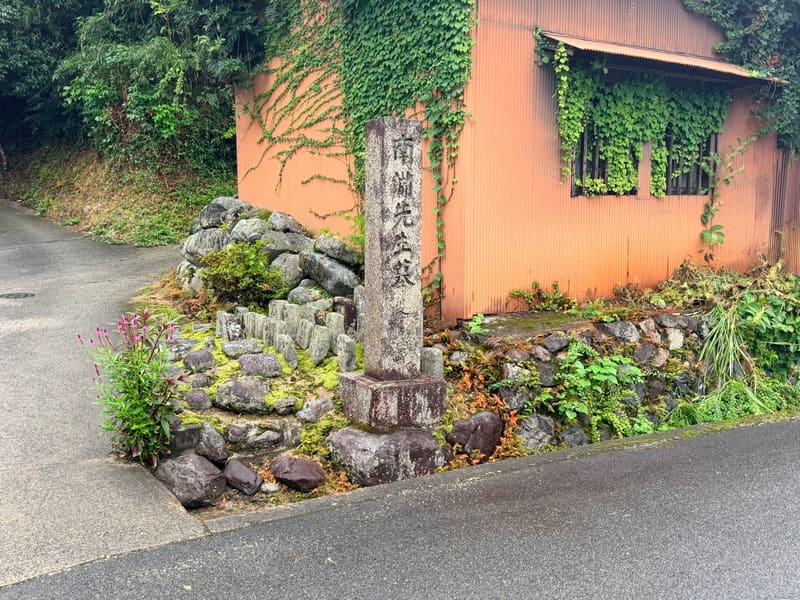
A small mound said to be the grave of a scholar who returned from Sui-dynasty China. Prince Naka no Ōe and Nakatomi no Kamatari came here to study with him.
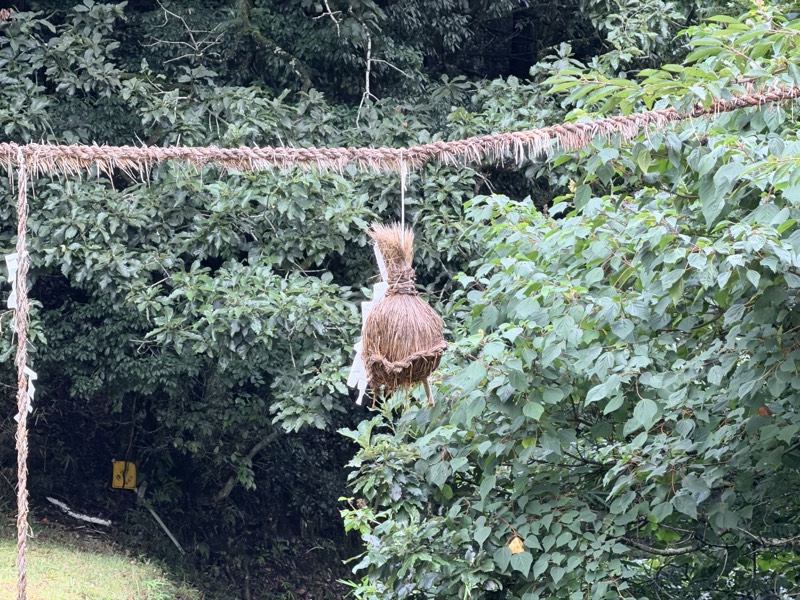
女綱
A rope of rice straw stretched across the upper Asuka River. It forms a pair with Ozuna (Male Rope) downstream.
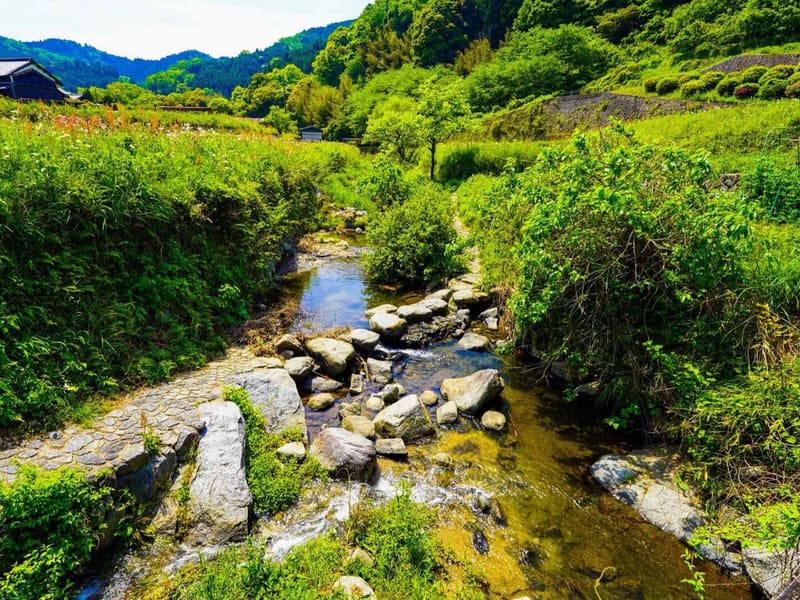
飛鳥川の飛び石
No bridge, just stones set in the riverbed to hop across. A crossing often linked with a poem from the Man'yōshū.