
Published
Three kinds of rain-making were tried in turn, and when at last the empress prayed upstream on the Asuka River, it rained for five days. There is a reason the Nihon Shoki was so careful to set out that sequence.
It was the summer of the year Empress Kōgyoku came to the throne. A severe drought dragged on.
If no water reached the rice fields, there would be no rice that year. Whether it rained was a question bound up with the survival of the state.
The Nihon Shoki (Japan's oldest official chronicle, compiled in 720) records the rain rituals performed at this time in three stages.
First, the methods taught by the hafuri, the village priests, were tried.
Oxen and horses were slaughtered and prayers offered to the gods of the shrines. Markets were moved to other places. Prayers were offered to the river gods. The Shoki lists these three side by side.
Rituals that involved slaughtering oxen and horses are thought to have been rain-making practices brought by immigrants from the Asian mainland. Moving the market probably also stemmed from an old idea of changing the energy of a place.
The result, the record says, was "no effect whatsoever".
Next to act was the chief minister, Soga no Emishi.
In the south courtyard of a temple he set up images of the Buddha and bodhisattvas and of the Four Heavenly Kings, and invited a great number of monks to recite sutras such as the Great Cloud Sutra. Emishi himself took up an incense burner, burned incense and made a vow.
The next day a light rain fell. But on the day after that, they could not make it rain again, and the sutra-reading was called off.
It was a Buddhist ceremony on a national scale. Given the power of the Soga clan at the time, it was about as much effort as could possibly be made. Even so, it ended in a single day of light rain.

On the first day of the eighth month, Empress Kōgyoku went out to the riverside at Minabuchi, on the upper reaches of the Asuka River.
There she knelt, bowed to the four directions, looked up to heaven and prayed.
Thunder rolled, and heavy rain fell. The rain continued for five days and watered the whole land far and wide, the Shoki says.
The people all praised her with one voice as an empress of "supreme virtue" (ikioi-masu), meaning a sovereign whose virtue had reached its utmost.
Let us lay out the three stages again.
The villages' traditional methods brought no rain. Soga no Emishi's Buddhist ceremony brought only one day of light rain. When the empress prayed in person, five days of heavy rain fell.
This account was put together with intent. The Nihon Shoki was compiled in the early 8th century, after the state centred on the emperor had taken shape. For its compilers, the Soga were a clan destined to be struck down.
Empress Kōgyoku reigned only four years, and in the last of them came the Isshi Incident. Emishi set fire to his own residence and died, and the main line of the Soga was destroyed. The rain-ritual entry is placed three years before that.
However hard the Soga prayed to the Buddha, it did not rain; when the empress prayed, it did. This contrast works to prepare readers to accept the justice of the coup.
What actually happened is not known. But it is certain that there was the fact of rain falling, and a choice about whose achievement to credit it to.

The place called "the riverside at Minabuchi" is thought to be around present-day Inabuchi. The view is that Minabuchi became Inabuchi.
Upstream from there stands Asuka-kawakami-niimasu Usutakihime-no-mikoto Shrine. It is an ancient shrine listed in the register of deities in the Engishiki, a book of court procedures from the Heian period (794–1185), and it enshrines the deity who guards the source of the Asuka River.
There is a tradition linking the place of the rain ritual to this shrine. There is no way to confirm it, but a shrine to a water deity at the head of the river, and an empress going there to pray, fit together well.
The water used at the palaces of Asuka flowed down from these upper reaches. There is a logic to standing at the source of the water to pray.

One of this shrine's rituals continues to this day: the Otoko-zuna (Male Rope) of Inabuchi.
Every January a straw rope is replaced across the Asuka River. It is a kanjō-nawa, a sacred rope that keeps evil from entering the village, and further upstream in Kayanomori there is a matching Onna-zuna (Female Rope).
The deity who guards the water's source stretches a rope across the entrance to the village. Two roles, water and boundaries, overlap in a single shrine. At the place where rain was prayed for 1,400 years ago, a rope is still stretched across the river.
Droughts and long rains were often spoken of in connection with the virtue of the ruler. The idea that disturbances in heaven reflect politics on earth came from China.
That is exactly why praying for rain became something the sovereign did in person. If you prayed and it rained, you had virtue; if not, you did not. It was a dangerous gamble too.
Empress Kōgyoku later took the throne a second time as Empress Saimei, and pushed ahead with large-scale construction works in Asuka. She dug canals, piled up stones and built one water facility after another. The project people called the "canal of a mad mind" was one of them.
The empress who prayed for rain at the river's head and the empress who kept digging canals were the same person.
To reach Asuka-kawakami-niimasu Usutakihime-no-mikoto Shrine, take the Asuka loop bus from Kintetsu Kashiharajingu-mae Station to the "Inabuchi" stop, then walk about 15 minutes. It lies further up the river beyond Inabuchi, known for its rice terraces.
The grounds, surrounded by cedar trees, are covered in moss, and there is nothing but stone lanterns and guardian lion-dogs. Hardly anyone visits.
This is the guardian shrine of the local community. Please visit quietly.
A short way back down the river is the Otoko-zuna, and further upstream in Kayanomori is the Onna-zuna. A water deity, a river and ropes: a route on which you can walk all three together.
RELATED SPOT
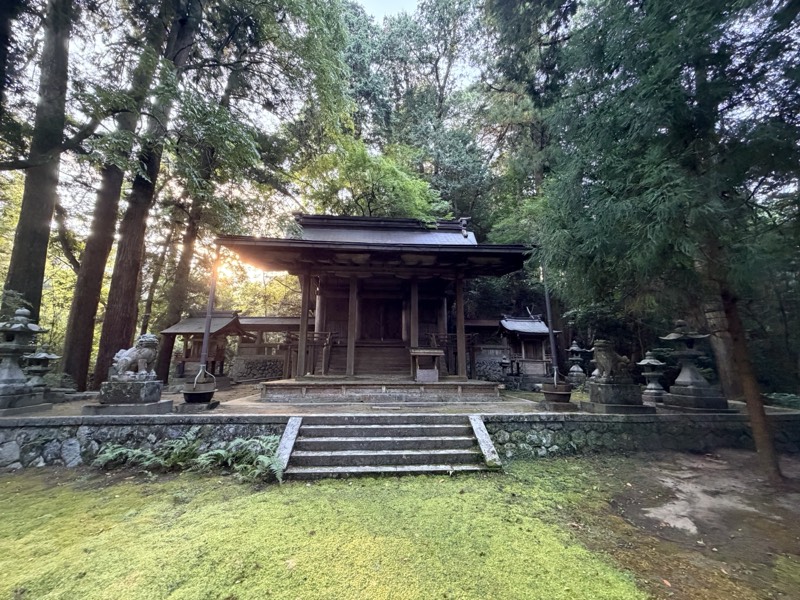
飛鳥川上坐宇須多伎比売命神社
An ancient listed shrine in a cedar grove, guarding the upper reaches of the Asuka River.
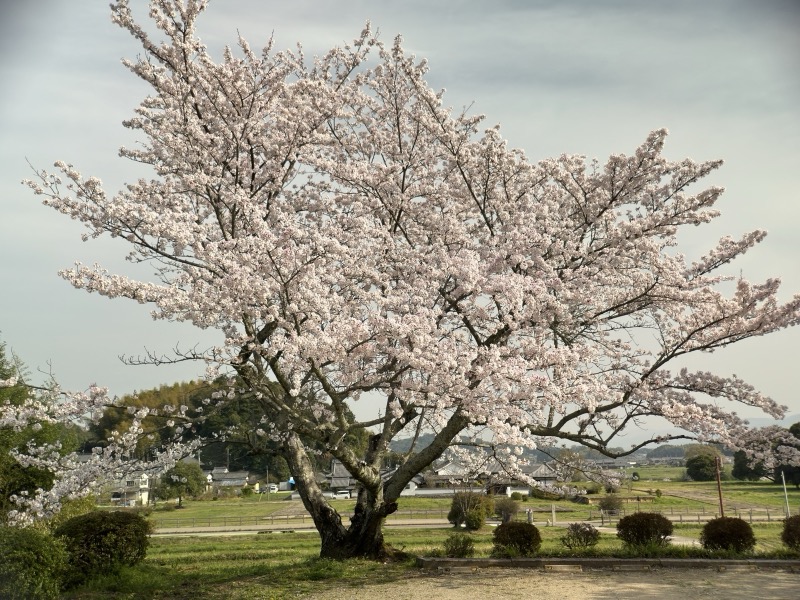
飛鳥川
The river that runs through the village, sung of in the Man'yōshū.
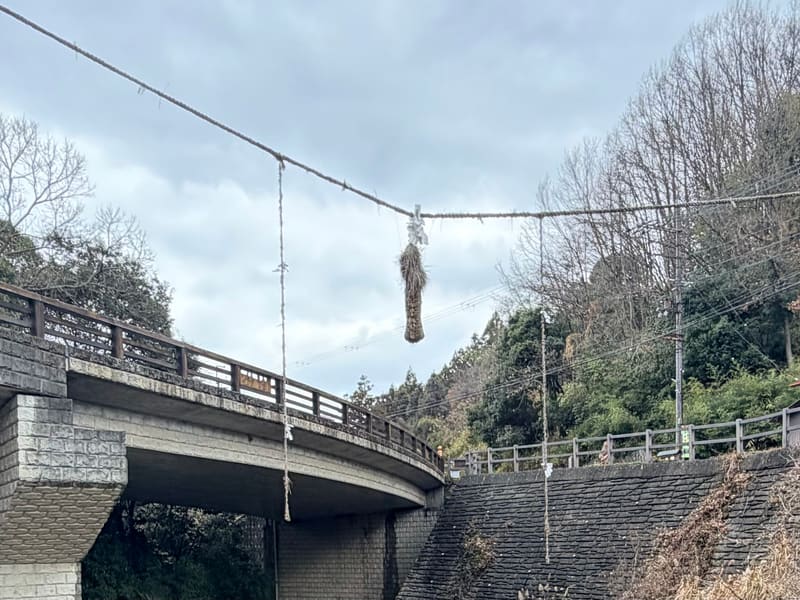
男綱
A rope of rice straw stretched across the Asuka River. It is replaced every year on Coming of Age Day.
RELATED COLUMN
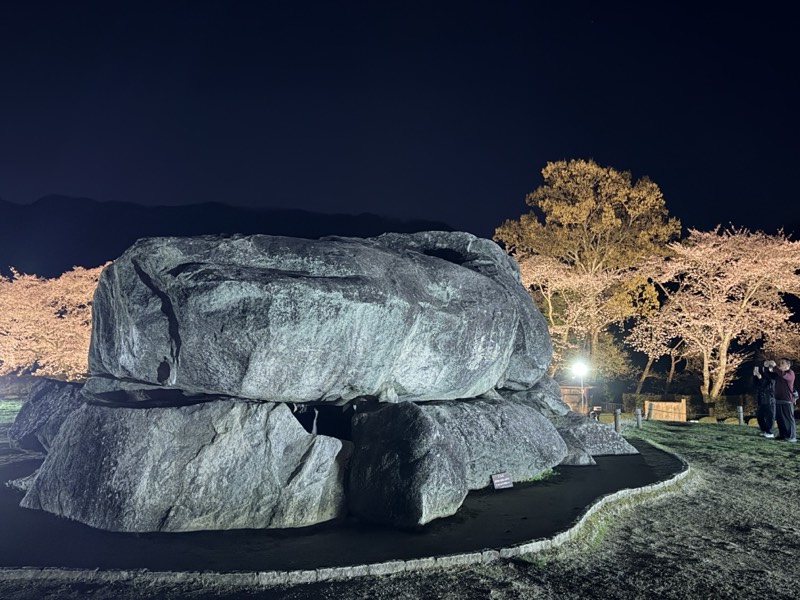 Was Prince Shōtoku Really Soga no Umako? Reading the "Prince = Umako" TheoryAlmost every achievement of Prince Shōtoku comes with the name of Soga no Umako beside it. What if the man…
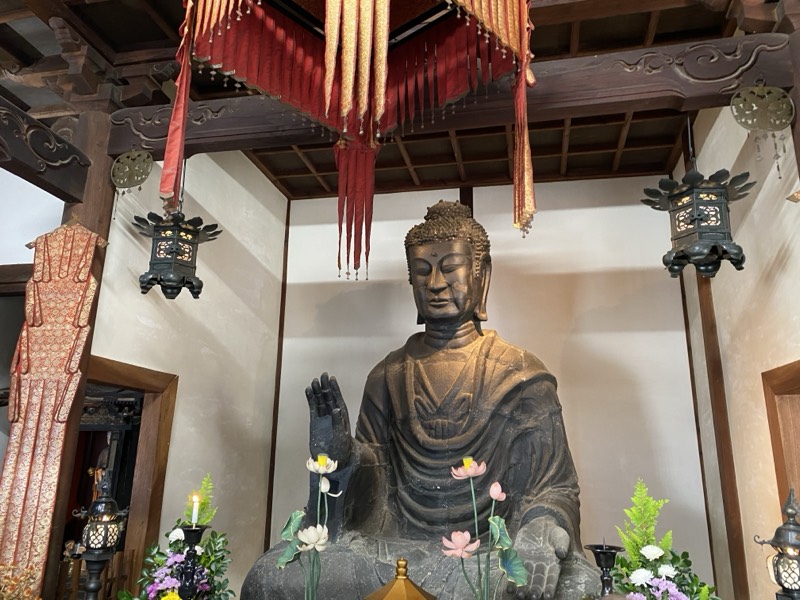 How a Foreign Buddha Became a Japanese Face: Buddhist Statues of Asuka and FujiwaraFrom the Asuka Daibutsu to the Yakushi Triad of Yakushi-ji Temple took about a hundred years. Over that…
 "Ōe" Is Not a Name: Naka-no-Ōe, Furuhito-no-Ōe and Yamashiro-no-ŌeThe "Ōe" in Prince Naka-no-Ōe is not a personal name. It is a term showing eligibility to succeed to the…