
Published
Almost every achievement of Prince Shōtoku comes with the name of Soga no Umako beside it. What if the man really running the country was Umako, and the image of the prince was built from Umako's deeds? We introduce the evidence for this theory and the arguments against it.

The Twelve Cap Ranks, the Seventeen-Article Constitution, the embassies to Sui China, the promotion of Buddhism: textbooks list these as Prince Shōtoku's achievements, but in the Nihon Shoki (Japan's oldest official chronicle, compiled in 720) Soga no Umako appears alongside him in many of them. The Tennōki and Kokki histories of 620 are also said to have been written after the crown prince and the Shima no Ōomi (Umako) deliberated together.
In the reign of Empress Suiko, three people stood at the centre of government: the empress, Umako and the prince. Were the achievements credited to the prince really his? Or did they belong to Umako, who held the real power? That is the question posed by the theory that Prince Shōtoku was Soga no Umako.
This theory holds that the person who actually acted as ruler in Suiko's reign was Umako. The Nihon Shoki, completed in 720, is a history that presents the imperial line as the legitimate one. It could not openly record that the Soga clan had held power equal to a ruler's, so, the argument goes, it transferred Umako's achievements to Umayado, a prince of the imperial house, and portrayed him as the ideal crown prince, "Shōtoku Taishi".
Some go further and suggest that Prince Shōtoku himself was created by splitting off part of Umako's figure. These ideas have mainly been put forward by independent researchers and writers, and they are a minority view among historians.
The account of Wa (as China called Japan) in the Chinese history Sui Shu records that envoys came from Wa in 600. The king of Wa is given the surname Ame and the name Tarishihiko, and the text says the king had a wife and an heir.
Yet according to the Nihon Shoki, the ruler at that time was a woman, Empress Suiko. Who, then, was this king with a wife? Theories include the prince himself, and a man who took the title of king on Suiko's behalf in diplomacy; among them is the view that it was Umako, the real ruler. The Sui envoy Pei Shiqing, who came to Japan in 608, is recorded as having met the king of Wa and spoken with him, and who that king was is also debated.
The mothers of both the prince's father, Emperor Yōmei, and his mother, Princess Hashihito, were daughters of Soga no Iname. The prince was deeply of Soga blood: to Umako he was a nephew, and also a son-in-law, having married Umako's daughter Tojiko no Iratsume. Their interests overlapped almost completely.
Ishibutai Kofun, said to be Umako's tomb, is a square mound about 50 m on each side with one of the largest stone chambers in Japan, bearing comparison with the imperial tombs of the same period. Asuka-dera, which Umako built, was Japan's first full-scale temple and stood at the heart of the realm. The size of the tomb and the temple, the argument goes, shows that Umako's power matched a ruler's.
Underlying this theory is research arguing that the prince's image was created around the time the Nihon Shoki was compiled. Best known is the view set out by Ōyama Seiichi in 1999 in The Birth of "Shōtoku Taishi". It holds that a royal named Prince Umayado did exist, but that the Seventeen-Article Constitution and the saintly figure of "Shōtoku Taishi" were created in a later age.
It has also been suggested that inscriptions and objects associated with the prince at Hōryū-ji were made later rather than in his time. If the prince's achievements become uncertain, room opens up for theories that place Umako in that gap.
On the other hand, there are many objections. First, the Nihon Shoki clearly describes the prince and Umako as different people. The prince died at Ikaruga in 622 and Umako in 626, and each had his own children. The destruction of the prince's son, Prince Yamashiro no Ōe, at the hands of Soga no Iruka in 643 shows that the Soga clan and the prince's line were separate houses.
The inscription on the halo of the Shaka Triad in the Golden Hall of Hōryū-ji records the deaths of the prince and his consort, and that the statue was completed in 623. Many scholars regard it as an inscription of the prince's own time, and it is considered certain at least that a man called Prince Umayado lived and died at Ikaruga.
As for the "male king" of the Sui Shu, there are other interpretations: that the Chinese side wrote without imagining a female ruler, or that Wa presented a male king for diplomatic purposes. It is no proof that the king was Umako.
What many scholars share today is the view that Prince Umayado existed and took part in the government of Suiko's reign, but that we cannot tell how much was his own work and how much belonged to Umako, to Empress Suiko, or to the embellishments of later ages. The "Prince = Umako" theory could be called the boldest attempt to fill that uncertainty.
It is precisely because so much cannot be verified that Prince Shōtoku is still retold again and again.
Ishibutai Kofun, said to be Umako's tomb; Asuka-dera, which Umako built; and the Toyura Palace site, where Empress Suiko took the throne, are all within Asuka Village, and can be visited in half a day by bicycle. Tachibana-dera, where the prince is said to have been born, lies between Ishibutai and Asuka-dera. How close they are lets you feel that these three people lived in the same age and the same place.
RELATED SPOT
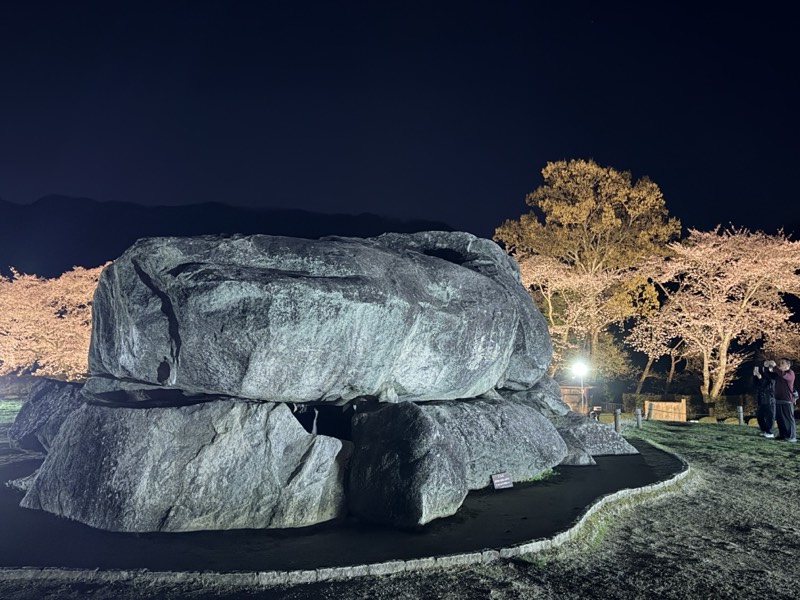
石舞台古墳
One of the largest stone burial chambers in Japan, its giant boulders left bare to the sky. The image most people picture when they think of Asuka.
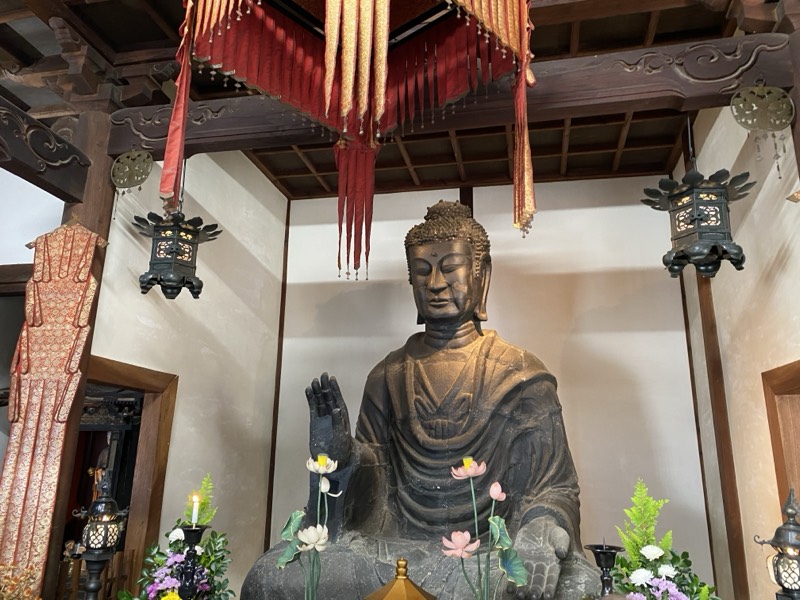
飛鳥寺・蘇我入鹿首塚
Japan's first full-scale Buddhist temple. The Great Buddha of Asuka still sits on the spot where it was made, 1,400 years ago.
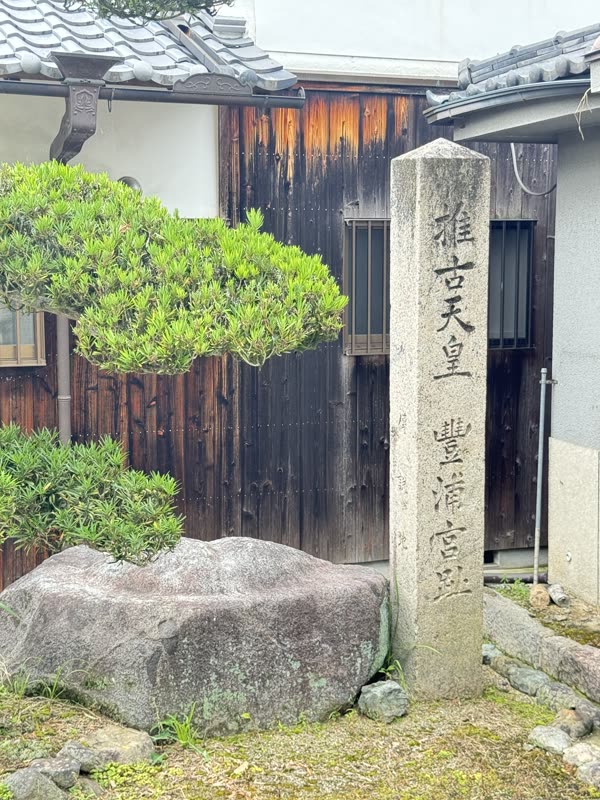
豊浦宮跡
The site of the palace where Empress Suiko took the throne, marking the beginning of the Asuka period.
RELATED COLUMN
 "Ōe" Is Not a Name: Naka-no-Ōe, Furuhito-no-Ōe and Yamashiro-no-ŌeThe "Ōe" in Prince Naka-no-Ōe is not a personal name. It is a term showing eligibility to succeed to the…
 The Bride Who Vanished on Her Wedding Night: How Ochi no Iratsume Came to MarryIt was a match arranged by Nakatomi no Kamatari: the eldest daughter of Soga no Kura-no-Yamada no…
 Where Was the Naniwa Canal? A Discarded Buddha's Road to Zenkō-jiA waterway in Osaka near the sea, or a small pond in Asuka? The "Naniwa no Horie", which the Nihon Shoki…