
Published
It was a match arranged by Nakatomi no Kamatari: the eldest daughter of Soga no Kura-no-Yamada no Ishikawamaro was to marry Prince Naka no Ōe. On the wedding night, a man from her own clan carried her off.
Before the Isshi Incident of 645, Nakatomi no Kamako (later Fujiwara no Kamatari) was laying plans with Prince Naka no Ōe to strike down Soga no Iruka.
To strike at the Soga, they needed an ally inside the Soga. Kamako's eye fell on Soga no Kura-no-Yamada no Ishikawamaro, who belonged to a different branch from the clan's main line.
The way to bind him was marriage. Ishikawamaro's eldest daughter would wed Naka no Ōe. The arrangement was agreed.
But that night, the daughter disappeared.
The Nihon Shoki (Japan's oldest official chronicle, compiled in 720) records that on the night of the wedding a member of the clan carried the girl off and fled. A note in the text gives his name as Musa no Omi. He is thought to be the same person as Soga no Himuka (also called Mukatsu), Ishikawamaro's half-brother.
Ishikawamaro, the chronicle says, lay on his back staring upward, not knowing what to do. It was not just that the match had fallen through. He had broken his promise to Naka no Ōe.

His younger daughter noticed that something was wrong with her father.
She asked the reason, heard what had happened, and then, according to the Nihon Shoki, said: "Do not grieve. Offer me instead. It is not too late."
Her father was overjoyed and presented her. She served faithfully, and her heart never wavered, the entry concludes.
The main text does not give her name. This younger sister is identified as Ochi no Iratsume.
The same event turns up again in an entry four years later.
It is the scene in 649 in which Ishikawamaro, suspected of treason, dies. After telling the story in the main text, the Nihon Shoki adds a different account, introduced with "A certain book says".
There it says that because Himuka stole the eldest daughter, the middle daughter, Ochi no Iratsume, was married off instead. Both the name of the abductor and the name of the daughter who took her place are given plainly.
When accounts differ, the Nihon Shoki sets them side by side, introducing them with "One book says" or "A certain book says". This episode, too, has come down to us with two versions preserved.
In 649, Himuka, the man who had carried off the bride on her wedding night, told Naka no Ōe that Ishikawamaro was plotting treason.
Ishikawamaro made no defence. He went to Yamada-dera, the temple he was building, and took his own life in front of the Buddha hall. When the matter was investigated, no evidence of treason was found.
The daughter who had married Naka no Ōe grieved when she heard of her father's death, and died soon afterwards. The Nihon Shoki records her under the name Miyatsuko-hime.

Ochi no Iratsume bore Naka no Ōe three children: Princess Ōta, Princess Uno no Sarara and Prince Takeru.
Princess Uno no Sarara later became Empress Jitō.
Her elder sister, Princess Ōta, married Emperor Tenmu and gave birth to Prince Ōtsu. Empress Jitō's son was Prince Kusakabe. The generation that would build the Fujiwara capital and the state governed by ritsuryō (law codes) came from here.
So the blood of the daughter who married to fill the gap left on that wedding night went on to flow in the imperial line.
Scenes in which the Nihon Shoki quotes a woman's own words are not common. In this entry, the words the younger sister spoke to her father are preserved.
She filled a hole in a political marriage, yet it is written as her own offer. Readings differ: she may really have said it, or the story may have been shaped afterwards.
What is certain is that this match was part of the preparations for the Isshi Incident, and that Himuka twice threw Ishikawamaro's life into disarray.
The Yamada-dera Temple Site is in Yamada, Sakurai City. It is the site of the temple that Ishikawamaro began and died without seeing finished.
The Asuka Palace Site, said to be the stage of the Isshi Incident, is in Oka, Asuka Village.
RELATED SPOT
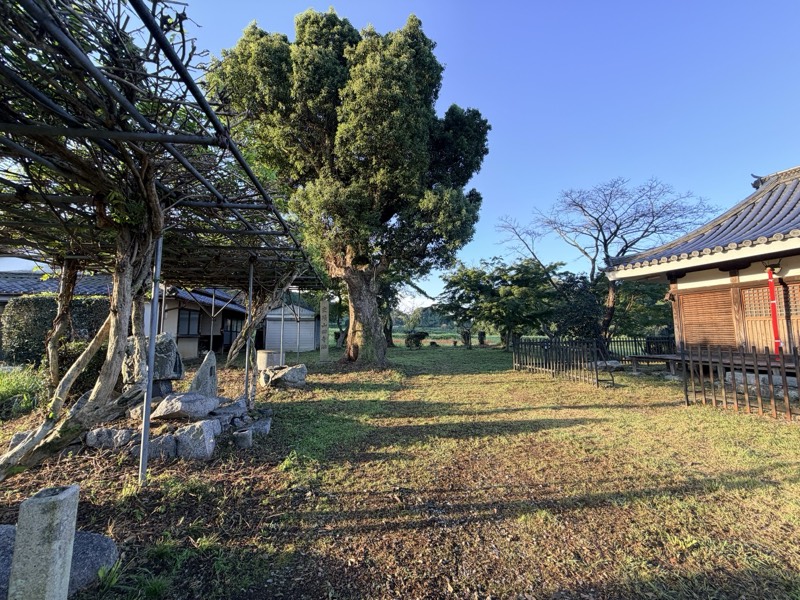
山田寺跡
A temple site where a corridor was excavated just as it had collapsed and been buried.
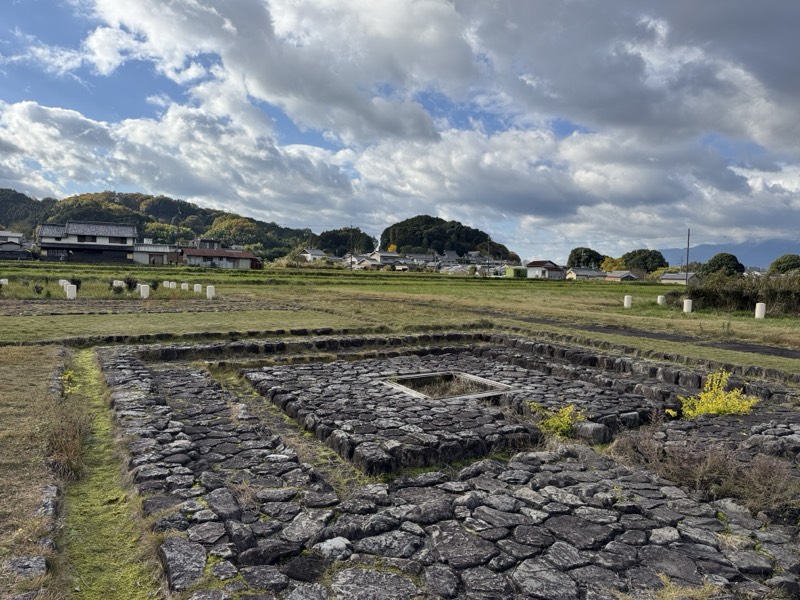
飛鳥宮跡(伝 飛鳥板蓋宮跡)
The political heart of Asuka, where several palaces were built one on top of another.
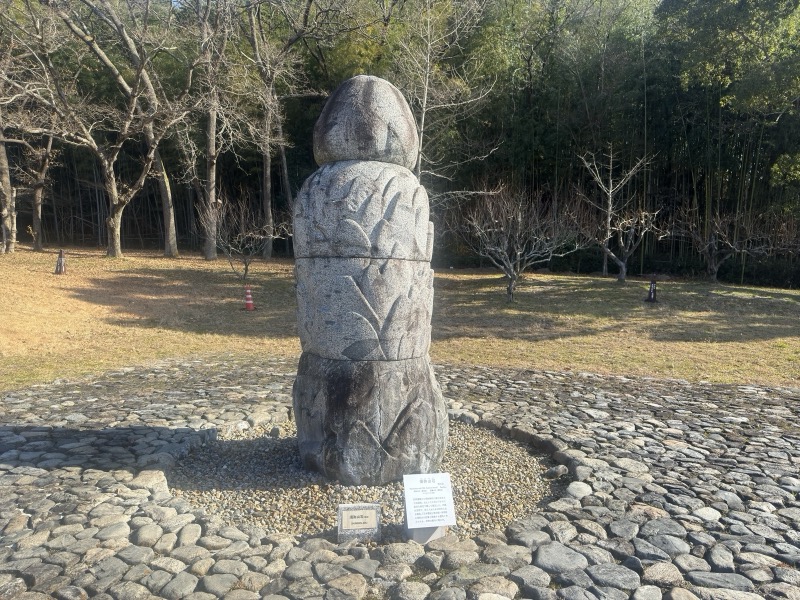
奈良文化財研究所 飛鳥資料館
The Nara National Research Institute's museum, displaying finds from Asuka and the east corridor of Yamada-dera Temple.
RELATED COLUMN
 "Ōe" Is Not a Name: Naka-no-Ōe, Furuhito-no-Ōe and Yamashiro-no-ŌeThe "Ōe" in Prince Naka-no-Ōe is not a personal name. It is a term showing eligibility to succeed to the…Soga no Kura-no-Yamada no Ishikawamaro: The Soga Who Sided Against the SogaBorn into the branch of the Soga clan that kept its storehouses, he joined the side that killed Iruka, and…
 Was Prince Shōtoku Really Soga no Umako? Reading the "Prince = Umako" TheoryAlmost every achievement of Prince Shōtoku comes with the name of Soga no Umako beside it. What if the man…