


1 / 4
山田寺跡(やまだでらあと)
A temple site where a corridor was excavated just as it had collapsed and been buried.
This is the site of a temple founded at the wish of Soga no Kura-yamada no Ishikawa-maro.
Although Ishikawa-maro belonged to the Soga clan, in the Isshi Incident of 645 he sided with Prince Naka-no-Ōe and Nakatomi no Kamatari and joined the plot to kill Soga no Iruka. In the new reform government he served as Minister of the Right.
In 649, however, he was suspected of rebellion and took his own life at this temple, which was still under construction. The Nihon Shoki (Japan's oldest official chronicle, compiled in 720) records that his innocence was later established. Work on the temple stopped for a time, then resumed in the reign of Emperor Tenmu, and the temple was completed.
What makes this temple site special is an excavation carried out in 1982.
The east corridor, which had collapsed and lain buried in the ground, was found in excellent condition. Pillars, lattice windows (renji-mado) and bracket sets were unearthed lying in the same order as when the corridor fell.
There is no other case in which so many parts of an Asuka-period wooden building have survived together. It became a first-class source, letting us study actual architecture from an age older than Hōryū-ji. The finds are on display at the Asuka Historical Museum of the Nara National Research Institute for Cultural Properties.
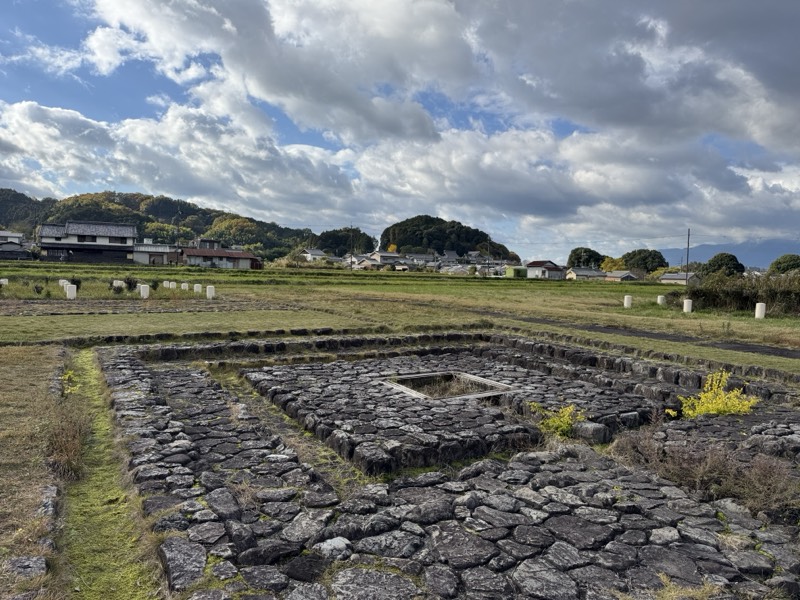
The temple's buildings were laid out in a straight north–south line: south gate, middle gate, pagoda, golden hall and lecture hall. This arrangement, with the pagoda and golden hall one behind the other, is called the Shitennō-ji style.
Compared with Asuka-dera's one pagoda and three golden halls, or Kawara-dera's one pagoda and two golden halls, this plan is simple. Temples with completely different layouts were being built close to one another in the same period.
On 26 July 2026 it was inscribed as a World Heritage Site, as one of the component parts of "Asuka-Fujiwara: Archaeological Sites of Japan's Ancient Capitals and Related Properties."
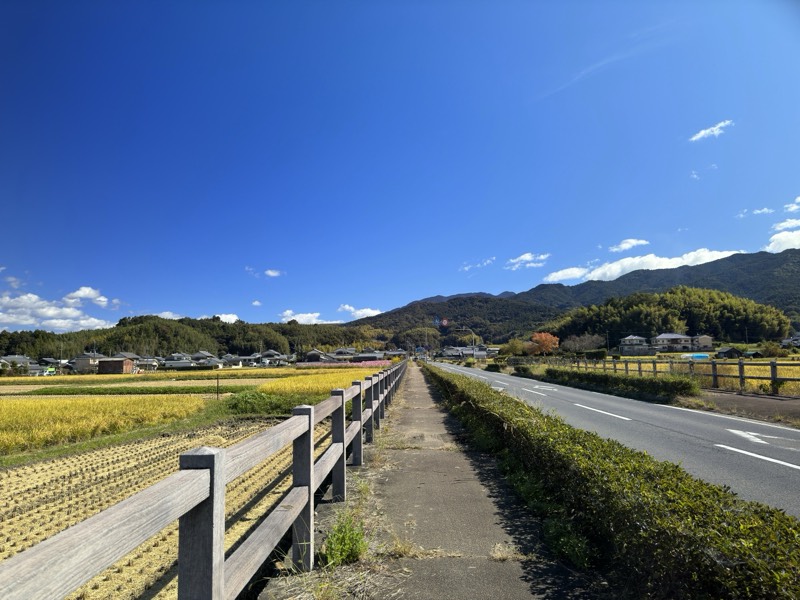
The site is not in Asuka Village but in the city of Sakurai. Take a bus from Kintetsu Sakurai Station to the "Yamadadera-ato" stop; the site is right there.
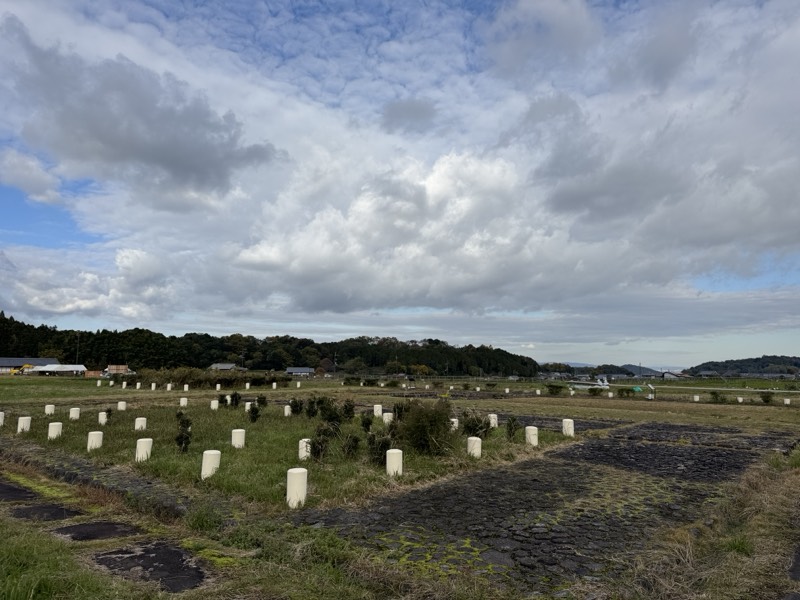
The site has been laid out so that you can see the foundation stones and building platforms. Admission is free.
Published
READ MORE
 Asuka-Fujiwara World Heritage: All 19 Component Sites and How to Visit Them, with Half-Day, One-Day and Two-Day Routes"Asuka-Fujiwara" was inscribed on the World Heritage List in 2026. We list all 19 component sites with their…
 The Asuka Daibutsu: How Much of It Is 1,400 Years Old?In the Kamakura period (1185–1333), lightning set Asuka-dera Temple ablaze. All that survived, the records…How a Foreign Buddha Became a Japanese Face: Buddhist Statues of Asuka and FujiwaraFrom the Asuka Daibutsu to the Yakushi Triad of Yakushi-ji Temple took about a hundred years. Over that…
 The Bride Who Vanished on Her Wedding Night: How Ochi no Iratsume Came to MarryIt was a match arranged by Nakatomi no Kamatari: the eldest daughter of Soga no Kura-no-Yamada no…Soga no Kura-no-Yamada no Ishikawamaro: The Soga Who Sided Against the SogaBorn into the branch of the Soga clan that kept its storehouses, he joined the side that killed Iruka, and…
 Where Was the Palace Before Asuka? From Makimuku to IwareFrom Makimuku at the foot of Mt Miwa, by way of Iware, to Asuka: the seat of royal power moved south across a…
 The Grid Was Laid on the Land Before the Capitals: The Ancient Roads of YamatoThe Kamitsumichi, Nakatsumichi and Shimotsumichi roads run north–south about 2.1 km apart. Only after this…Clan temples and state temples: telling apart the temples of AsukaAsuka-dera, Toyura-dera, Yamada-dera, Kawahara-dera, Daikandai-ji, Moto-Yakushi-ji. Who built them, and for…
NEARBY
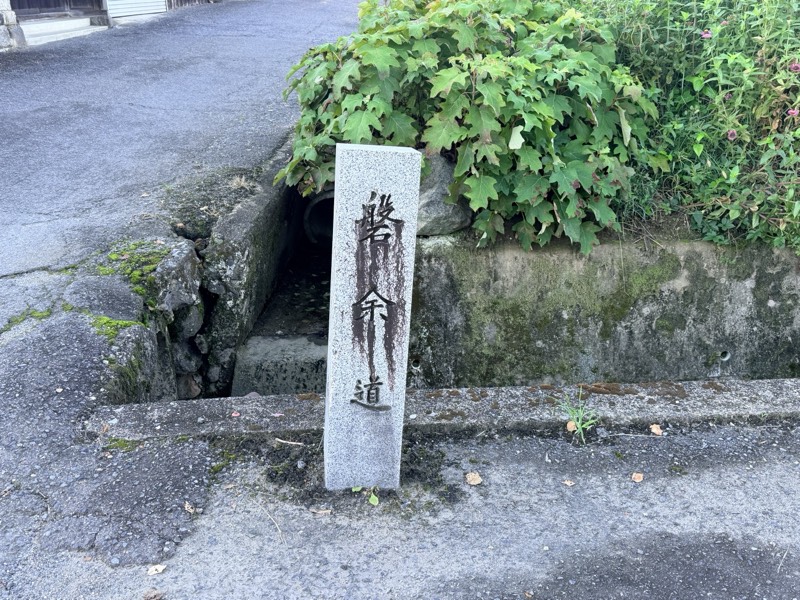
磐余道碑
A stone marker carved with the words "Iware Road," in the hand of the novelist Inoue Yasushi.
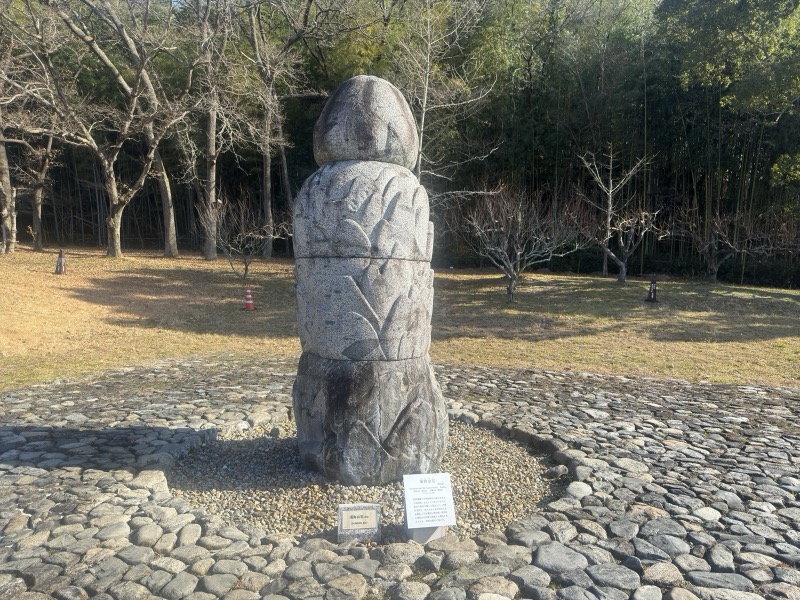
奈良文化財研究所 飛鳥資料館
The Nara National Research Institute's museum, displaying finds from Asuka and the east corridor of Yamada-dera Temple.
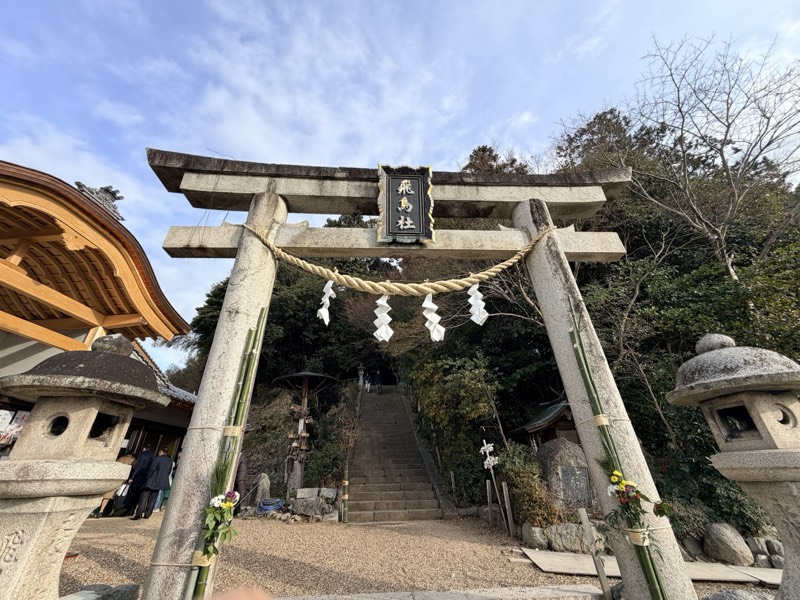
飛鳥坐神社
An ancient Asuka shrine famous for its unusual Onda Festival.