
Published
In the Kamakura period (1185–1333), lightning set Asuka-dera Temple ablaze. All that survived, the records say, were "the Buddha's head and hands." Yet X-ray surveys in 2012 and 2016 tell different stories about that same Buddha.

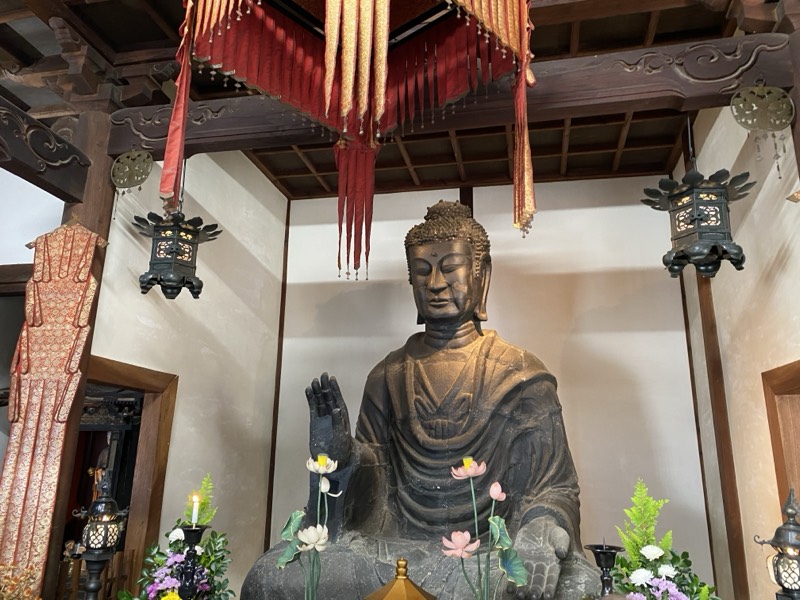
In the main hall of Asuka-dera Temple sits a Buddha of darkened bronze. Known as the Asuka Daibutsu (Great Buddha of Asuka), it is a seated figure of Shaka Nyorai (Shakyamuni Buddha), made in 606 by Kuratsukuri no Tori (also called Tori Busshi, "Tori the Buddhist sculptor") according to the Nihon Shoki (Japan's oldest official chronicle, compiled in 720). It is about 2.75 m tall. Of all the Buddhist statues in Japan whose date is known, it is the oldest.
Even so, it is not a National Treasure but an Important Cultural Property. The reason usually given has been the view that very little of the original statue survives and that most of it consists of later repairs.
So how much of it really is 1,400 years old? Researchers have been working on that question for nearly a century, and there is still no single answer.
The story begins with a fire at the start of the Kamakura period.
The Shōtoku Taishi-den Shiki, a record compiled around 1238, states that the temple burned in a fire caused by lightning in the sixth month of 1196. Another record contains a passage saying that neither the temple nor the pagoda survived; only the Buddha's head and hands remained.
Only the head and hands remained. That one short sentence became the foundation for every assessment that followed.
Modern researchers have tried to separate the original from the repairs by examining the statue's surface.
In 1936 Ishida Mosaku divided the statue into four kinds of material: polished bronze (the face, the left ear, and the index to ring fingers of the right hand); unpolished, as-cast bronze (the back, the left arm and around the chest); areas where the folds of the robe were modelled in clay over the bronze and coated with black ink (the knees, the right palm and the snail-shell curls of hair); and areas where wood had been inserted and coated with ink (the left hand). Of these, he took the polished bronze to be original.
Later assessments differed slightly. Some regarded the forehead and the area around the eyes, the left ear and the three middle fingers of the right hand as original. Some took the hairline, the ridge running from the eyebrows down the bridge of the nose and the incised lines of the eyelids as original. Some held that original bronze also survives in the left palm and the sole of the left foot. Others thought that a good deal of the hair was original.
The details varied, but the overall picture was the same: only the area around the eyes and the fingertips of the right hand survived as they were, and everything else was recast after the fire. For a long time this was the accepted view.
The first to challenge this view with numbers was a team from Waseda University. In July 2012 they brought a portable X-ray analyser into the main hall and measured the metal composition of the statue's surface.
They measured the left side of the bridge of the nose and the right index finger, long considered original, and the area below the nose, the left collar and the top of the left knee, long considered repairs. The results showed almost the same composition everywhere.
What is more, the left knee, supposedly a repair, showed a large amount of copper oxide, which tends to form when metal is exposed to intense heat. A repaired section should have been made after the fire, yet here were signs that it had been in the fire. If so, the knee must already have been there when the fire broke out.
In October of the same year the team announced that most of the Buddha's body was very likely still the original from the Asuka period (late 6th to early 8th century). It overturned the established view.
To test this announcement, a larger survey was carried out in 2015 and 2016, led by Osaka University with the National Museum of Korea, the Tokyo National Research Institute for Cultural Properties, Nara National Museum and others taking part. In June 2016 scaffolding was put up around the Great Buddha so that researchers could reach all the way to the top of its head.
In all, the metal composition was measured at 137 points.
The first result weakened one of the arguments behind Waseda's view. The proportion of heat-formed copper oxide showed no clear difference between the areas thought to be original and those thought to be repairs. Even on the same face of the same fragment, the proportion varied from spot to spot. The report concluded that one should be cautious about judging whether metal had been in a fire from how much copper oxide it contains.
The second result concerned the metal composition itself. This survey too found the face and the body very similar: the proportions of copper, tin and lead almost matched. So far, it agreed with Waseda's findings.
Looked at closely, though, there were differences. The face had slightly more lead, and the body slightly more arsenic and iron. When the ratios of these three elements were plotted on a graph, the face and the body fell into clearly separate clusters.
The report interprets this as follows. Copper that had melted in the fire was gathered up and used to recast the body, which is why the compositions are so similar. During remelting, iron from the soil got mixed in, and some of the lead was driven off by the heat.
From the same fact, that the compositions are almost identical, Waseda concluded "made at the same time," while the 2016 survey concluded "the same copper reused." Neither reading can be ruled out by the numbers alone.
The 2016 survey also gave weight to the quality of the workmanship. The finish of the parts long considered original, around the eyes and on the fingers of the right hand, is clearly different from that of the body. The small differences in the numbers may reflect that difference, the report suggests.
At the same time, the 2016 survey showed that the original parts are more extensive than the accepted view had held.
The original part of the face may extend beyond the eyes to the cheeks, the chin and around the base of the left ear. The right hand differs in composition from the body and appears to have been made separately. Its original parts were found to include not only the index to ring fingers but also the base of the thumb, the webbing between the fingers, the base of the little finger and the upper half of the palm.
For the hair, the composition did not distinguish original from later parts, but judging by how it was made, roughly the front three-quarters of the raised crown of the head (the ushnisha) and the area along the hairline are thought to be original, as are many of the snail-shell curls set into them.
The body may well be a repair. But far more of the face, the right hand and the head survives than had been thought. That, roughly, is the conclusion of the 2016 survey.
Questions have also been raised about the record where it all began.
Does the passage saying that the Buddha's head and hands remained really refer to the Asuka Daibutsu? Rereading the text around it, some researchers think it may refer to a different Buddha. If so, the very premise that "only the head and hands survived" disappears.
Those who read the records, those who look at the statue, those who measure its composition: each has approached the same Buddha in their own way. How much is original still has no single answer.

In the main hall of Asuka-dera you can see the Great Buddha up close.
Start with the face. Does the surface look different between the taut area from the forehead around the eyes and the area below the nose and the cheeks? Next, the right hand: the finish of the fingertips and the palm of the raised hand. Then the body. Compare the folds of the robe and the knees with the face. You will also see lines that look like seams running here and there.
Which parts are 1,400 years old and which are not? Researchers' answers differ, but visitors can check with their own eyes.
And whichever theory you take, this Buddha has remained seated in the place where it was made. Burned, patched and pieced together, for 1,400 years. That much no survey doubts.
RELATED SPOT
飛鳥寺・蘇我入鹿首塚
Japan's first full-scale Buddhist temple. The Great Buddha of Asuka still sits on the spot where it was made, 1,400 years ago.
奈良文化財研究所 飛鳥資料館
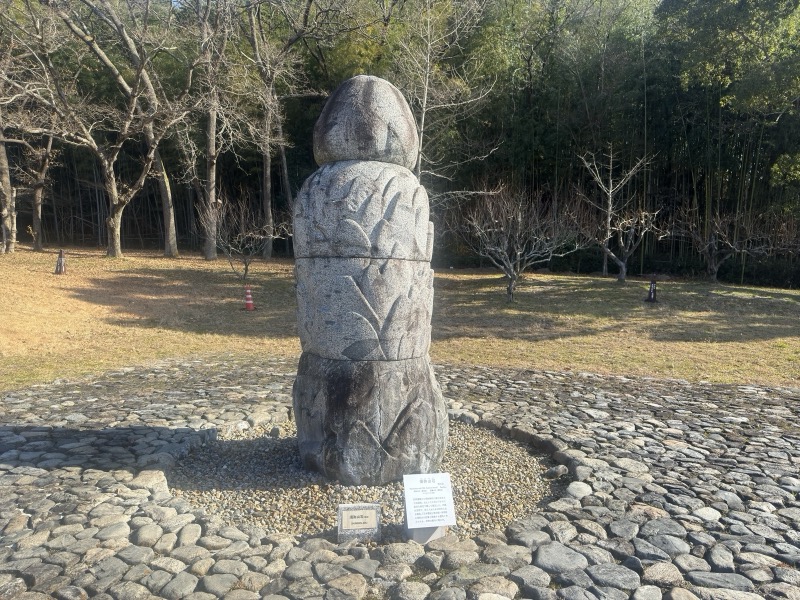
The Nara National Research Institute's museum, displaying finds from Asuka and the east corridor of Yamada-dera Temple.
川原寺跡(弘福寺)
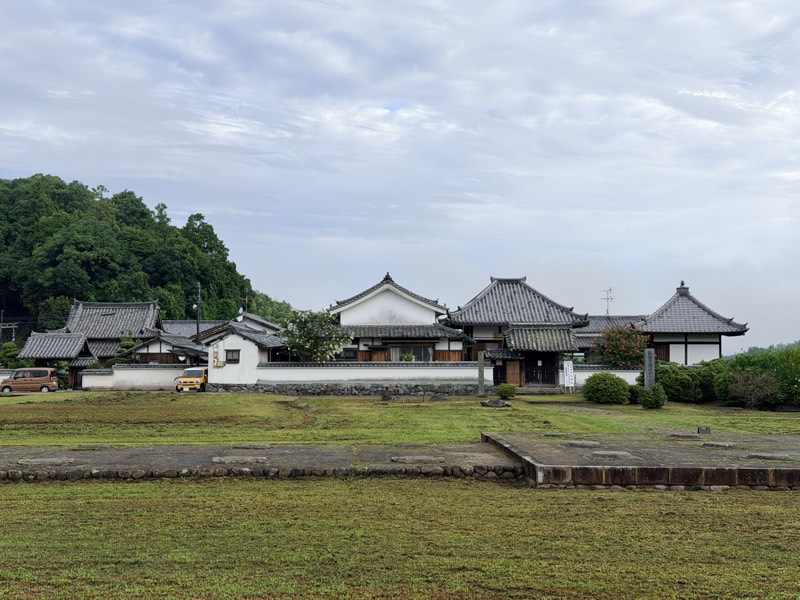
One of the four great temples of Asuka. Its foundation stones still show how large its halls once were.
山田寺跡
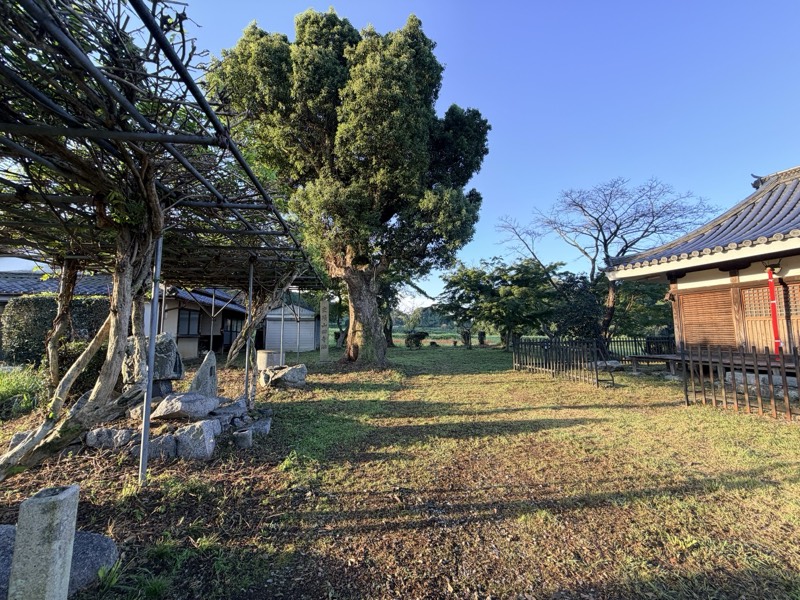
A temple site where a corridor was excavated just as it had collapsed and been buried.
RELATED COLUMN
How a Foreign Buddha Became a Japanese Face: Buddhist Statues of Asuka and FujiwaraFrom the Asuka Daibutsu to the Yakushi Triad of Yakushi-ji Temple took about a hundred years. Over that…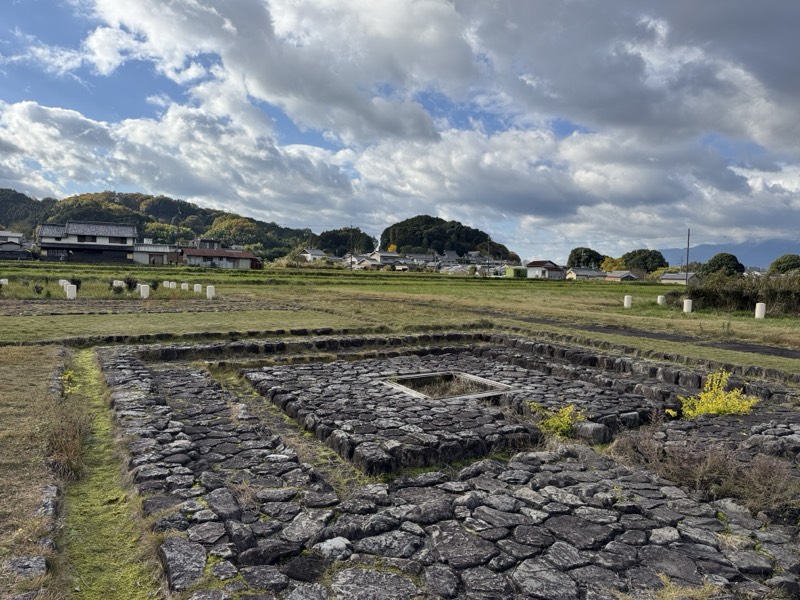 Asuka-Fujiwara World Heritage: All 19 Component Sites and How to Visit Them, with Half-Day, One-Day and Two-Day Routes"Asuka-Fujiwara" was inscribed on the World Heritage List in 2026. We list all 19 component sites with their…
 Where Was the Naniwa Canal? A Discarded Buddha's Road to Zenkō-jiA waterway in Osaka near the sea, or a small pond in Asuka? The "Naniwa no Horie", which the Nihon Shoki…