
Home/Columns/Asuka-Fujiwara World Heritage: All 19 Component Sites and How to Visit Them, with Half-Day, One-Day and Two-Day Routes
Published
"Asuka-Fujiwara" was inscribed on the World Heritage List in 2026. We list all 19 component sites with their locations and highlights at a glance, and suggest a classic walk from Asuka Station, half-day routes for three areas, a walk into Oku-Asuka, and one- and two-day routes that cover them all.

"Asuka-Fujiwara: Archaeological Sites of Japan's Ancient Capitals and Related Properties" was inscribed as a World Cultural Heritage Site on 26 July 2026. It has 19 component sites of three kinds: palace sites, temple sites and tombs. They are centred on Asuka Village and extend into Kashihara to the north and Sakurai to the east.
Most are buried archaeological sites, and at many of them all you can see above ground are foundation stones, platforms, grass and an information board. Why these 19 were chosen is explained in our column "The Birth of Japan as a State". Here we focus on a practical list and routes for visiting them.
Asuka Palace Site (Oka, Asuka Village): the site where four palaces were built one on top of another between 630 and 694. Free to visit.
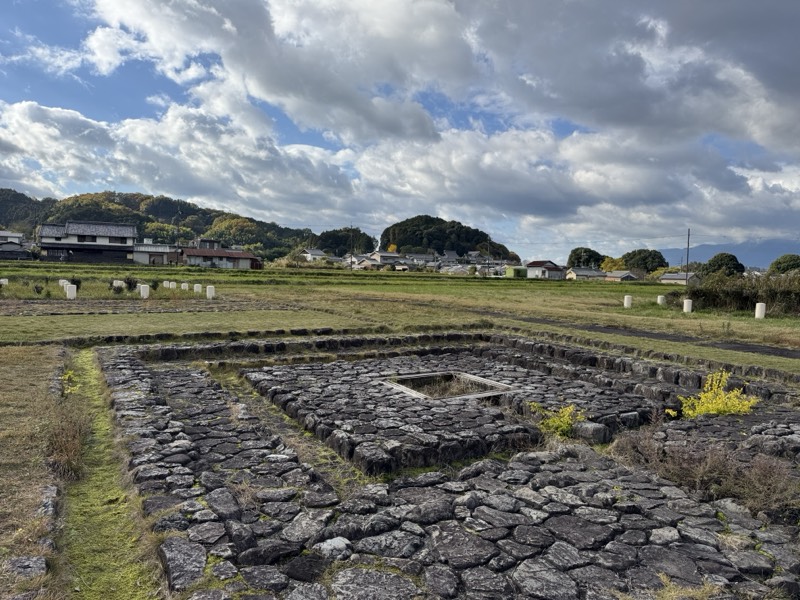 SPOTAsuka Palace Site (traditionally the Asuka Itabuki Palace Site)飛鳥宮跡(伝 飛鳥板蓋宮跡)The political heart of Asuka, where several palaces were built one on top of another.Access: About 5 minutes on foot from the "Oka-hashimoto" stop on the Asuka loop bus from Kintetsu Kashiharajingu-mae StationSee the spot page →
Asuka Palace Garden Site (Oka, Asuka Village): the remains of a garden attached to the Asuka Palace, adjoining the palace site on its northwest.
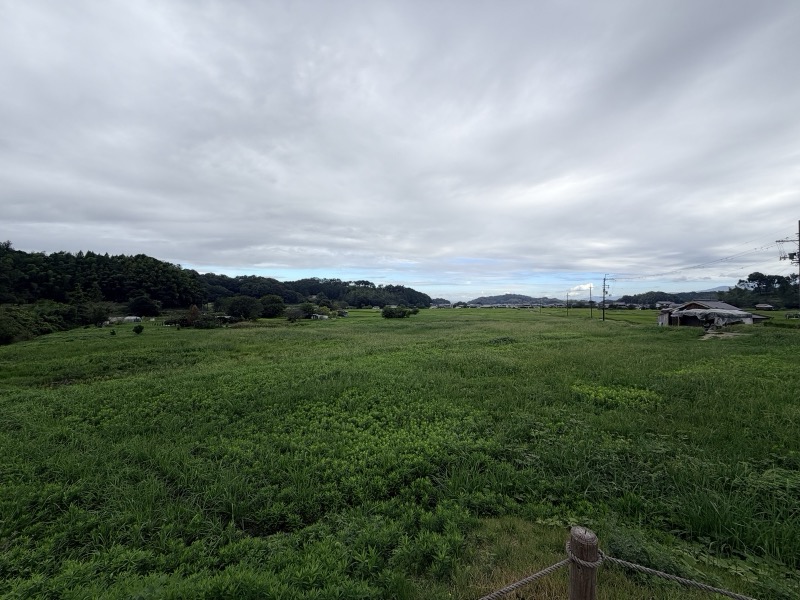 SPOTAsuka Palace Garden Site (Asukakyō-ato Enchi)飛鳥京跡苑池The site of a palace garden, regarded as the earliest example of a Japanese garden.Access: About 5 minutes on foot from the "Oka-Hashimoto" stop on the Asuka loop bus from Kintetsu Kashiharajingu-mae StationSee the spot page →
Asuka Mizuochi Site (Asuka, Asuka Village): the site of Japan's first water clock, built by Prince Naka no Ōe. Free to visit.
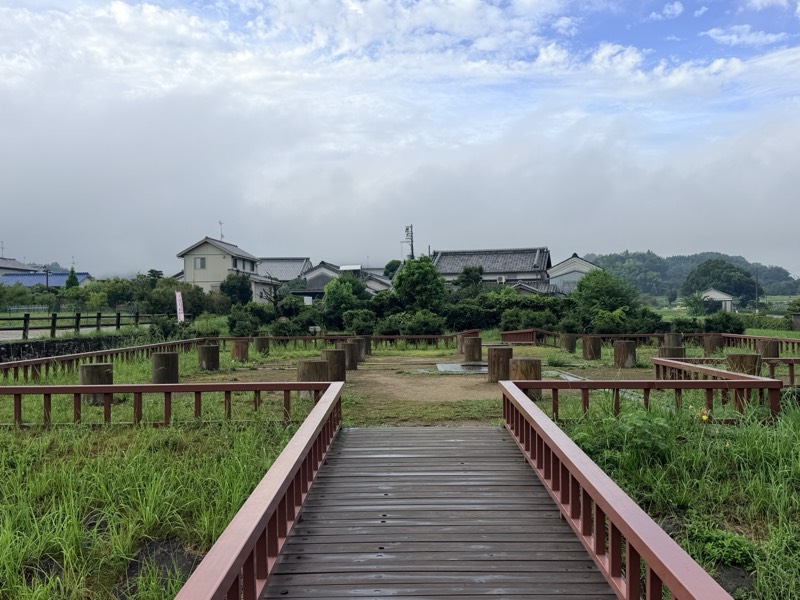 SPOTAsuka Mizuochi Site飛鳥水落遺跡The site of Japan's first water clock, built by Prince Naka-no-Ōe.Access: About 3 minutes on foot from the "Asuka" stop on the Asuka loop bus from Kintetsu Kashiharajingu-mae StationSee the spot page →
Sakafuneishi Site (Oka, Asuka Village): a ritual site made up of the Sakafuneishi stone on the hill and the Turtle-Shaped Stone Basin below it. The Sakafuneishi is free; the turtle basin has an admission fee and set opening hours.
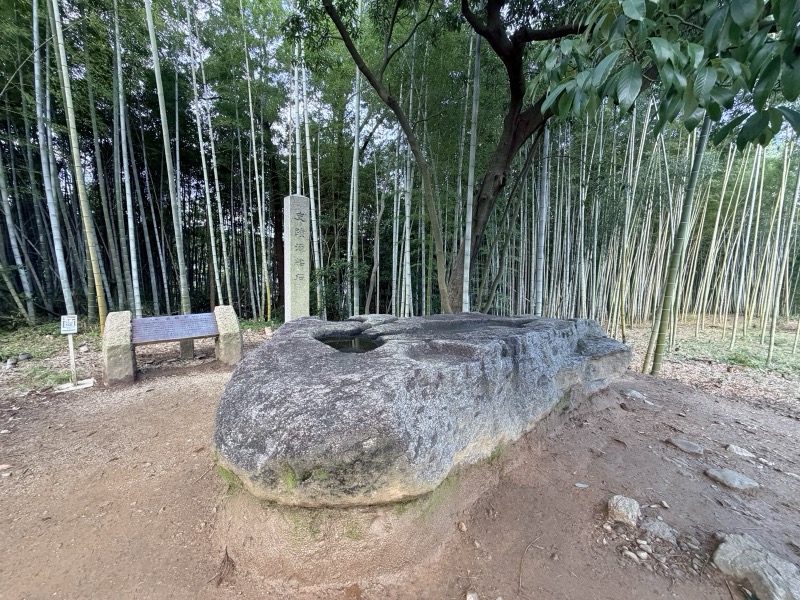 SPOTSakafuneishi酒船石A mysterious stone carved with circles and channels, lying in a bamboo grove on top of a hill.Access: About 5 minutes on foot from the "Man'yō Bunkakan Nishiguchi" stop on the Asuka loop bus from Kintetsu Kashiharajingu-mae StationSee the spot page →
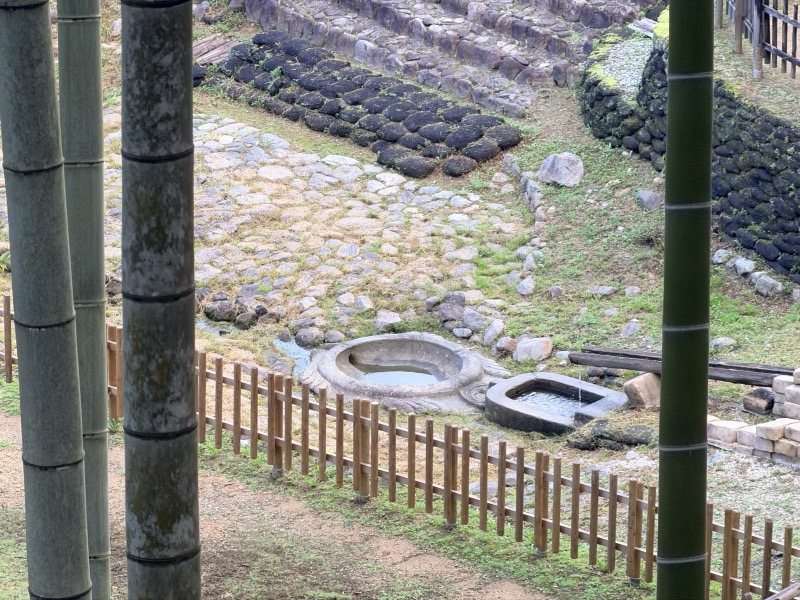 SPOTKamegata Sekizōbutsu (Turtle-shaped Stone Basin)亀形石造物A ritual site from the reign of Empress Saimei, with stonework designed to channel water.Access: About 3 minutes on foot from the "Man'yō Bunkakan Nishiguchi" stop on the Asuka loop bus from Kintetsu Kashiharajingu-mae StationSee the spot page →
Asuka-dera Temple Site (Asuka, Asuka Village): Japan's first full-scale temple, where the Great Buddha of Asuka still sits in its original place. Admission fee.
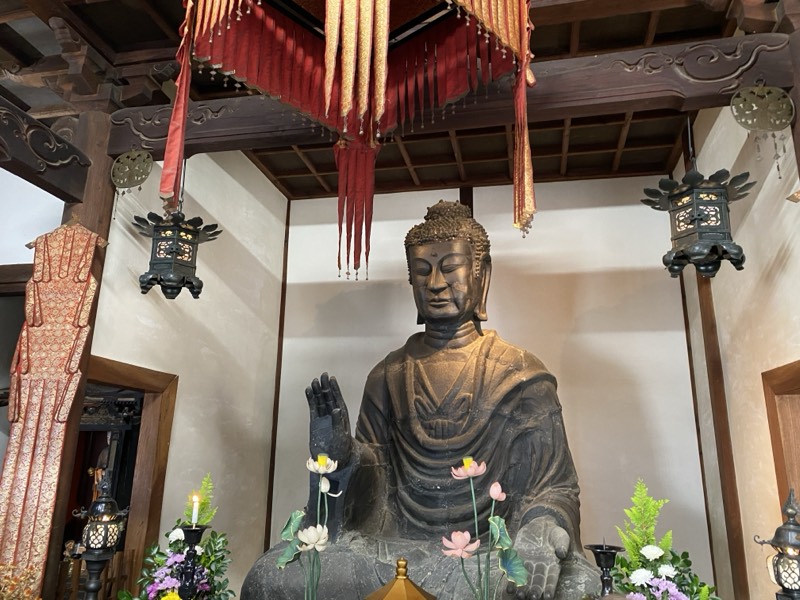 SPOTAsuka-dera Temple and the Head Mound of Soga no Iruka飛鳥寺・蘇我入鹿首塚Japan's first full-scale Buddhist temple. The Great Buddha of Asuka still sits on the spot where it was made, 1,400 years ago.Access: Right by the "Asuka Daibutsu-mae" stop on the Asuka loop bus from Kintetsu Kashiharajingu-mae StationSee the spot page →
Kawara-dera Temple Site (Kawahara, Asuka Village): the site of a great temple thought to have been built by Emperor Tenchi in memory of his mother, Empress Saimei. The temple site is free to visit.
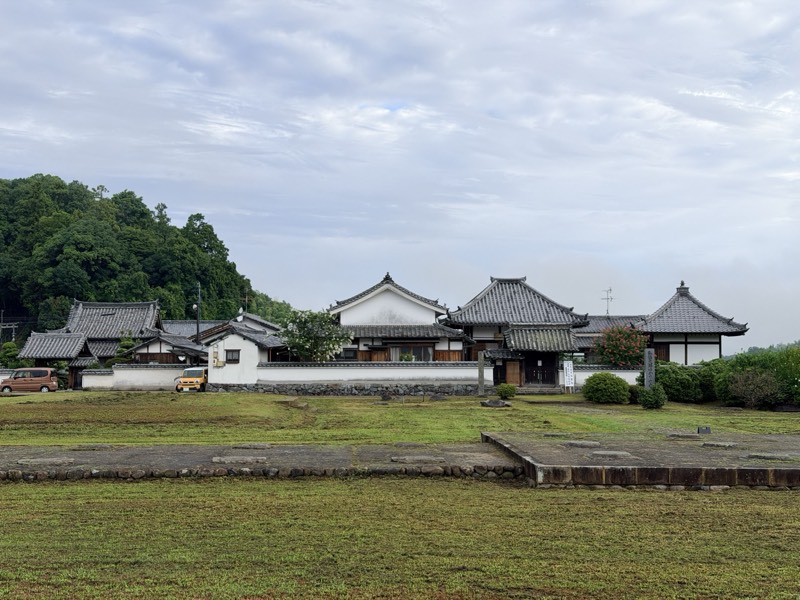 SPOTKawara-dera Temple Site (Gufuku-ji Temple)川原寺跡(弘福寺)One of the four great temples of Asuka. Its foundation stones still show how large its halls once were.Access: Right by the "Kawahara" stop on the Asuka loop bus from Kintetsu Kashiharajingu-mae StationSee the spot page →
Tachibana-dera Temple Site (Tachibana, Asuka Village): a temple said to stand on the birthplace of Prince Shōtoku. Admission fee.
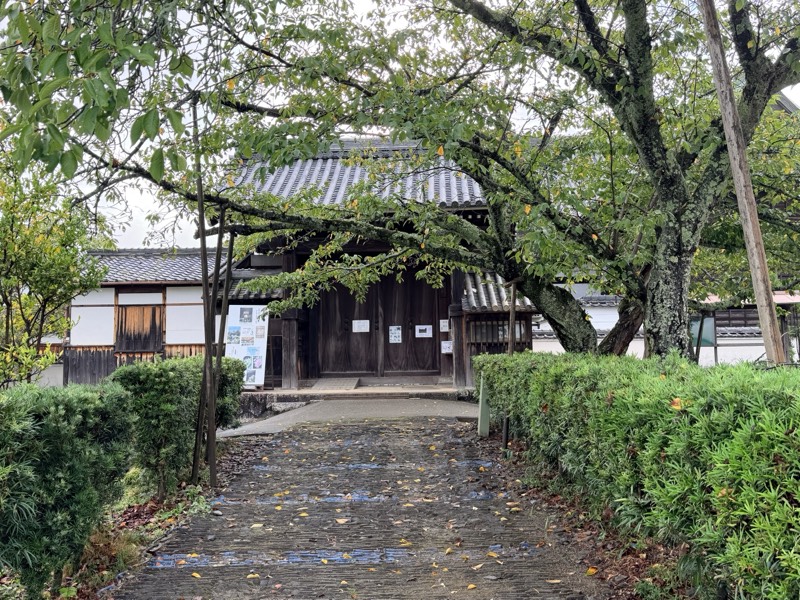 SPOTTachibana-dera Temple橘寺The temple said to stand on the birthplace of Prince Shōtoku, home to the two-faced Nimenseki stone.Access: About 3 minutes on foot from the "Kawahara" stop on the Asuka loop bus from Kintetsu Kashiharajingu-mae StationSee the spot page →
Yamada-dera Temple Site (Yamada, Sakurai): the temple site where a corridor was found buried just as it had collapsed. The foundation stones and platforms have been laid out, and it is free to visit.
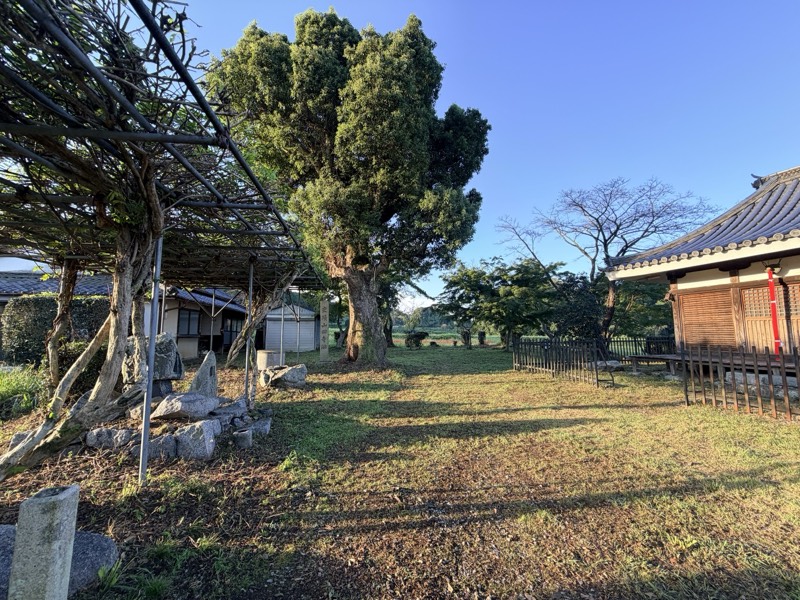 SPOTYamada-dera Temple Site山田寺跡A temple site where a corridor was excavated just as it had collapsed and been buried.Access: Right by the "Yamadadera-ato" bus stop, by bus from Kintetsu Sakurai StationSee the spot page →
Hinokuma-dera Temple Site (Hinokuma, Asuka Village): a temple site linked to the Yamato no Aya, a clan of immigrant origin. A thirteen-storey stone pagoda stands in the grounds.
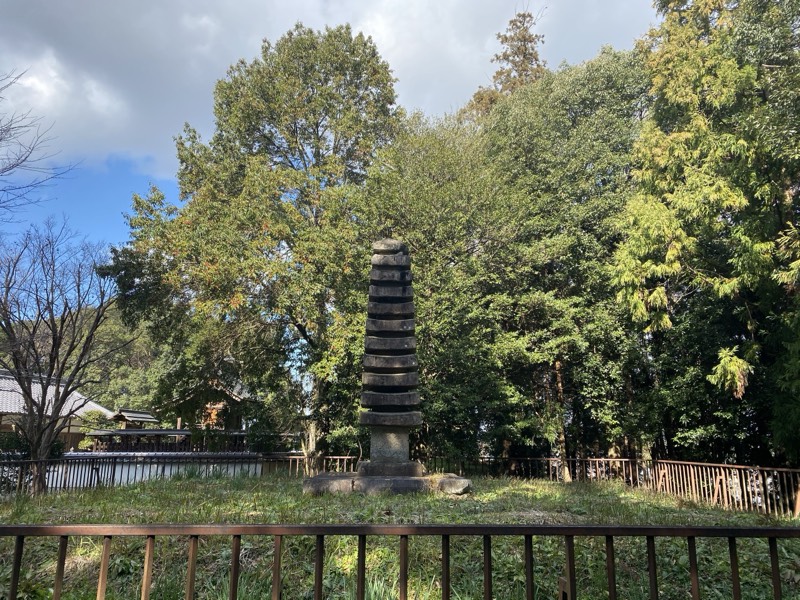 SPOTHinokuma-dera Temple Site / Omiashi Shrine檜隈寺跡/於美阿志神社A temple site linked to the Yamato no Aya, a clan of immigrant origin, with a thirteen-storey stone pagoda.Access: About 20 minutes on foot from Kintetsu Asuka StationSee the spot page →
Ishibutai Kofun (Shimanoshō, Asuka Village): a square tomb whose earth mound has vanished, leaving its huge stone chamber exposed. The leading theory is that it is the tomb of Soga no Umako. Admission fee.
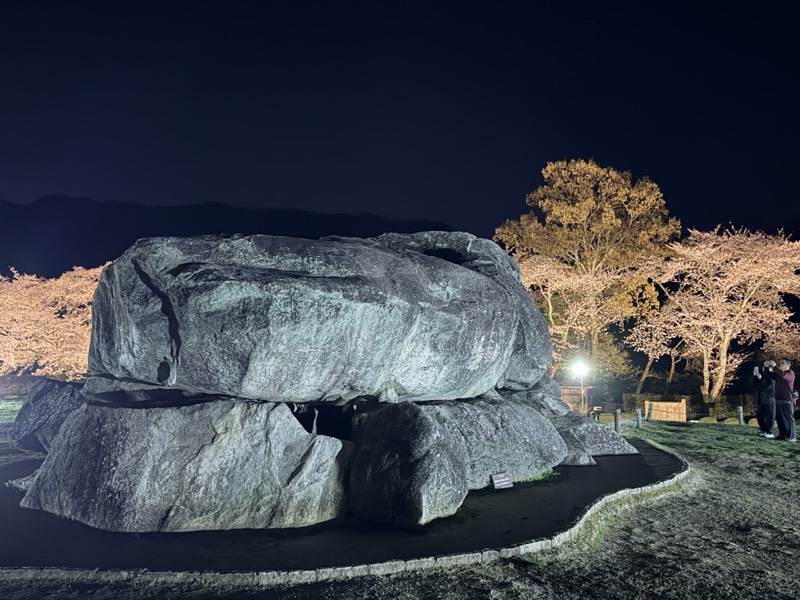 SPOTIshibutai Kofun石舞台古墳One of the largest stone burial chambers in Japan, its giant boulders left bare to the sky. The image most people picture when they think of Asuka.Access: Short walk from the "Ishibutai" stop on the Asuka loop bus from Kintetsu Kashiharajingu-mae StationSee the spot page →
Shōbuike Kofun (Shōbu-chō, Kashihara): a square tomb with two house-shaped stone coffins side by side. The chamber is protected by a shelter building.
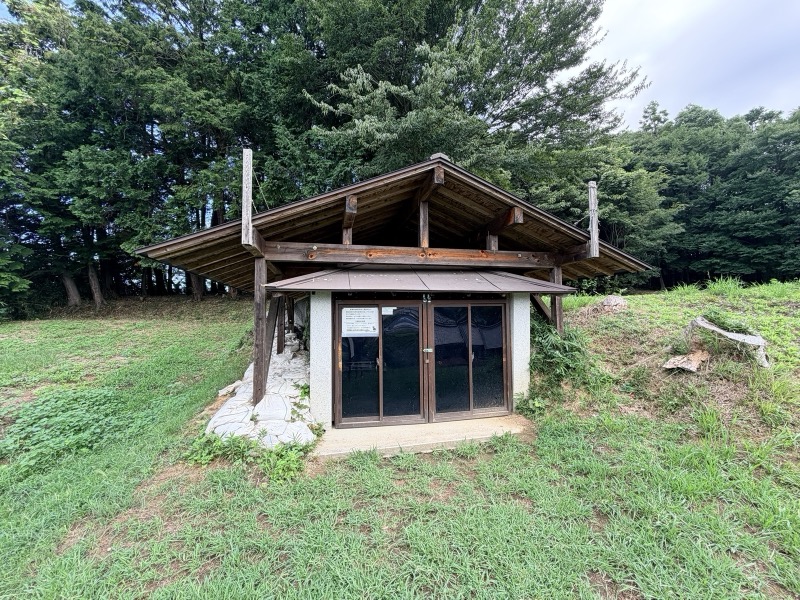 SPOTShōbuike Kofun菖蒲池古墳A square mound about 30 m on each side, with two house-shaped sarcophagi side by side. The stone chamber is inside a protective shelter.Access: About 15 minutes on foot from Kintetsu Okadera StationSee the spot page →
Kengoshizuka Kofun (Koshi, Asuka Village): an octagonal tomb widely thought to be that of Empress Saimei. Its restoration was completed in 2022, and its slopes of fitted cut stone shine brightly on the hilltop.
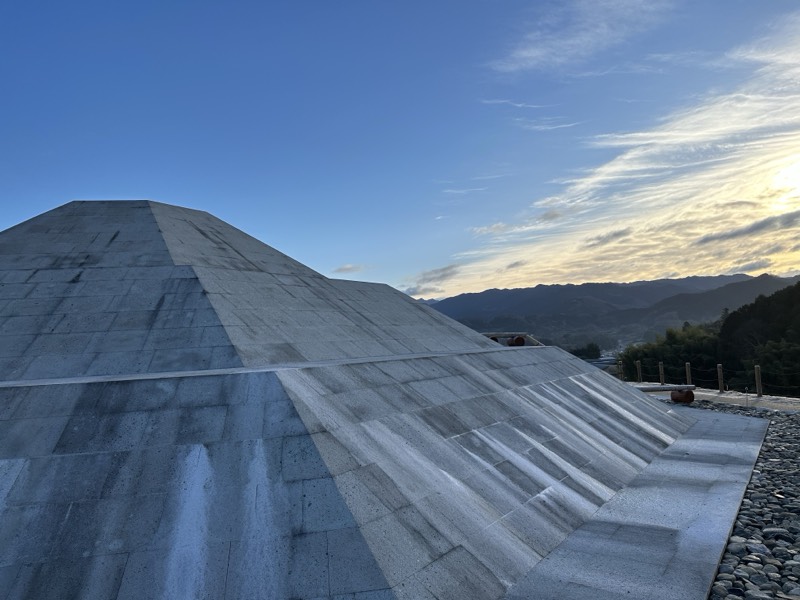 SPOTKengoshizuka Kofun牽牛子塚古墳An octagonal burial mound, now widely thought to be the tomb of Empress Saimei.Access: About 25 minutes on foot from Kintetsu Asuka StationSee the spot page →
Fujiwara Palace Site (Takadono-chō and other districts, Kashihara): the heart of Fujiwara-kyō, Japan's first full-scale planned capital, also known for its seasonal flower fields. Free to visit.
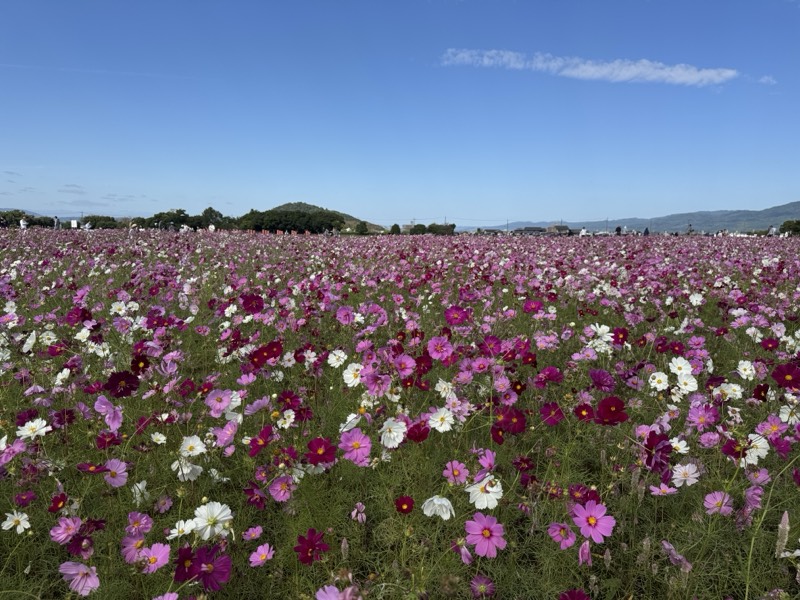 SPOTFujiwara Palace Site藤原宮跡The heart of Japan's first full-scale planned capital, also known for its seasonal flower fields.Access: From the "Kashihara-shi Fujiwarakyō Shiryōshitsu" stop and others, by bus from Kintetsu Yamato-Yagi StationSee the spot page →
Daikandaiji Temple Site (Koyama, Asuka Village, and nearby): the site of the largest state temple of the Asuka-Fujiwara era, which had a nine-storey pagoda.
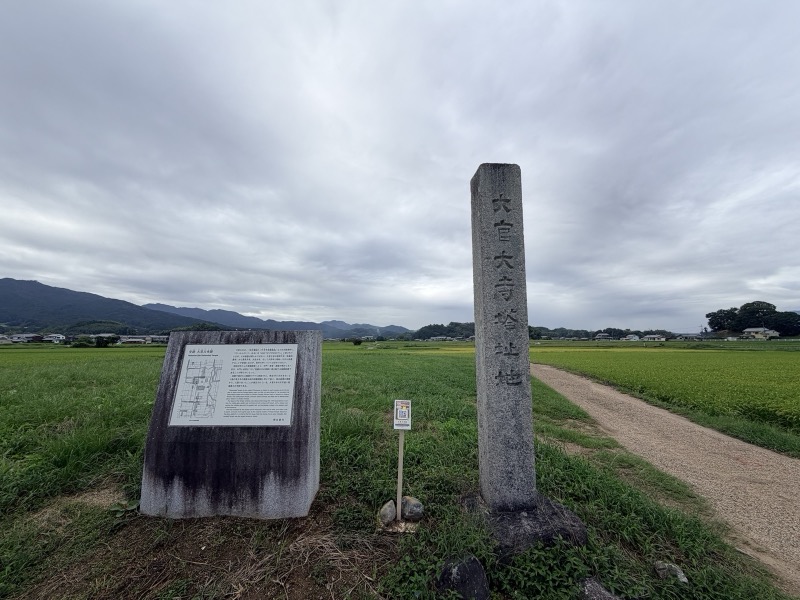 SPOTDaikandaiji Temple Site大官大寺跡The site of the largest state temple of Asuka-Fujiwara, once crowned by a nine-storey pagoda.Access: Bus from Kintetsu Kashiharajingu-mae Station, or by bicycle from Kintetsu Asuka StationSee the spot page →
Moto-Yakushiji Temple Site (Kidono-chō, Kashihara): the site of a state temple with twin pagodas, whose foundation stones remain in their original positions.
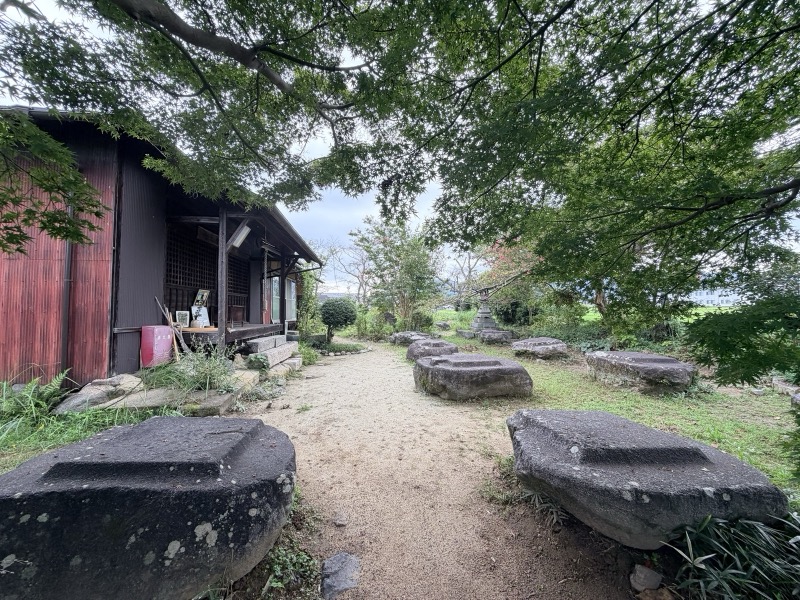 SPOTMotoyakushiji Temple Site本薬師寺跡The site of a state temple with twin pagodas, where foundation stones remain in their original positions.Access: About 10 minutes on foot east of Kintetsu Unebigoryōmae StationSee the spot page →
Mausoleum of Emperor Tenmu and Empress Jitō (Noguchi, Asuka Village): an octagonal tomb in which the two were buried together. It is managed by the Imperial Household Agency, and visitors pay their respects in front of the torii.
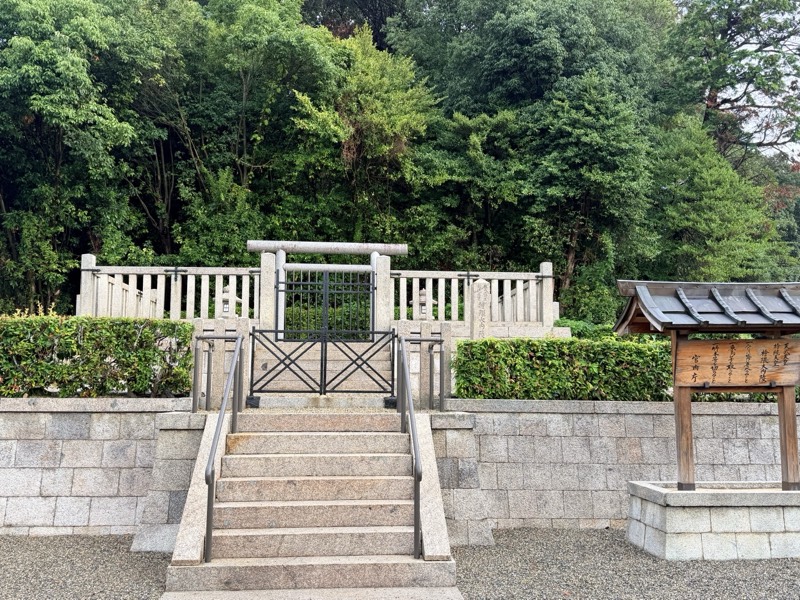 SPOTMausoleum of Emperor Tenmu and Empress Jitō天武・持統天皇陵One of the few octagonal imperial tombs whose occupants can be confirmed from written records.Access: About 10 minutes on foot from Kintetsu Asuka StationSee the spot page →
Nakaoyama Kofun (Hirata, Asuka Village): a small octagonal tomb thought to hold the cremated remains of Emperor Monmu.
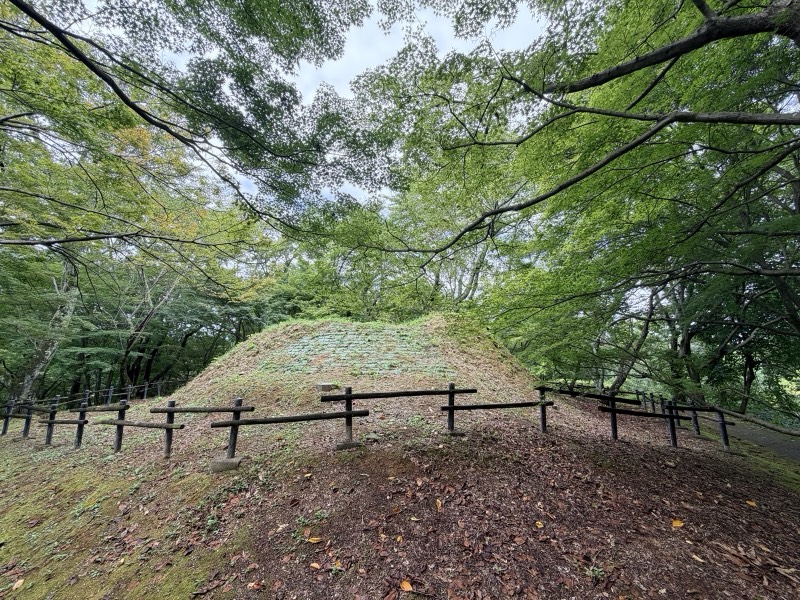 SPOTNakaoyama Kofun中尾山古墳A small octagonal mound thought to be the tomb of the cremated Emperor Monmu.Access: About 15 minutes on foot from Kintetsu Asuka StationSee the spot page →
Kitora Kofun (Abeyama, Asuka Village): a round tomb known for its chamber painted with the Four Gods and a star chart. At the neighbouring Shijin no Yakata you can see a full-size model of the chamber and films of the paintings.
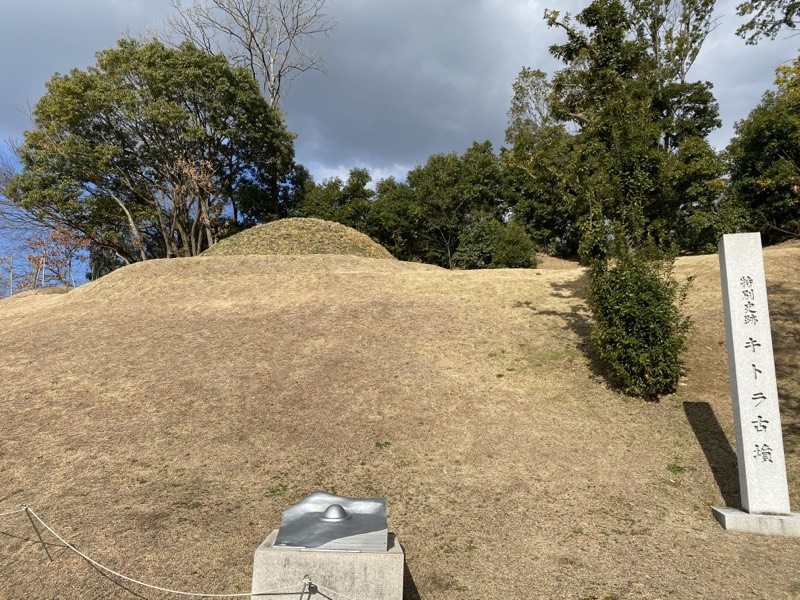 SPOTKitora Kofunキトラ古墳A two-tiered round burial mound famous for its chamber painted with the Four Gods and a map of the stars.Access: About 20 minutes on foot from Kintetsu Asuka StationSee the spot page →
Takamatsuzuka Kofun (Hirata, Asuka Village): a round tomb where brilliantly coloured wall paintings were found. The paintings are presented through copies and models at the nearby Takamatsuzuka Mural Hall.
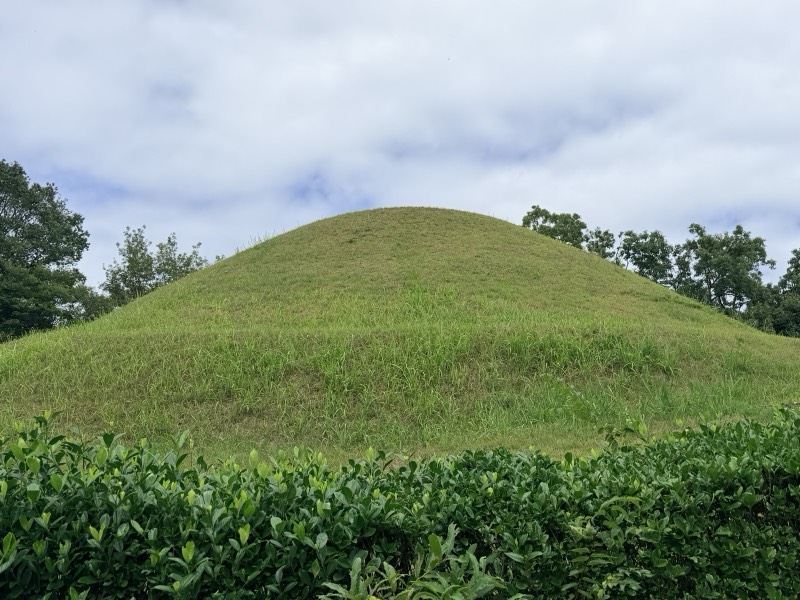 SPOTTakamatsuzuka Kofun高松塚古墳A round burial mound where brilliantly coloured paintings of court ladies were found: the defining archaeological discovery of post-war Japan.Access: About 15 minutes on foot from Kintetsu Asuka StationSee the spot page →
The 19 sites fall into three broad areas: "central Asuka", around Asuka-dera and the Asuka Palace Site; the southwestern "tomb hills", from the Tenmu-Jitō mausoleum to Takamatsuzuka and Kitora; and "Fujiwara-kyō" to the north.
You get around by a combination of the Asuka loop bus (Kame Bus), rental bicycles and walking. The central area is walkable, but a bicycle is handy for linking all three areas.
Admission is charged at Asuka-dera, Tachibana-dera, Ishibutai Kofun and the Turtle-Shaped Stone Basin, among others; most of the other sites are free and open at any time. Since many are just grass and an information board, checking each spot page beforehand to see what there is to see will change how they look when you arrive.
Asuka Station → Oni no Manaita and Oni no Setchin → Mausoleum of Emperor Tenmu and Empress Jitō → (Kameishi) → Kawara-dera Site → Tachibana-dera → Ishibutai Kofun
This is the easiest route, starting on foot from Kintetsu Asuka Station. It is about 12 minutes from the station to the Oni no Manaita and Oni no Setchin stones. The Tenmu-Jitō mausoleum is just beyond, and Kameishi lies on the way east from there. The Kawara-dera Site and Tachibana-dera face each other across the road, and Ishibutai Kofun is about 1 km east of Tachibana-dera. The walk is a little over 4 km, taking in 4 component sites plus some of Asuka's best-loved stone monuments, the Oni no Setchin and Kameishi. To return, take the loop bus from the Ishibutai stop.
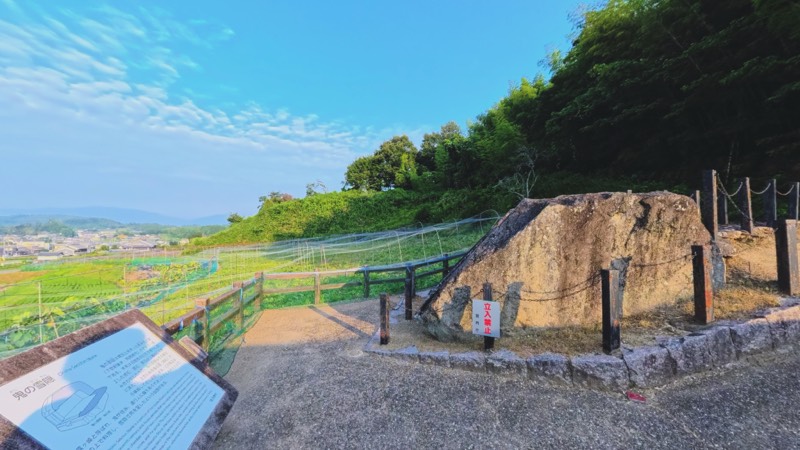 SPOTOni no Manaita and Oni no Setchin (the Ogre's Chopping Board and Toilet)鬼の俎・鬼の雪隠The pieces of a kofun burial chamber, split apart on either side of a slope.Access: About 12 minutes on foot from Kintetsu Asuka StationSee the spot page →
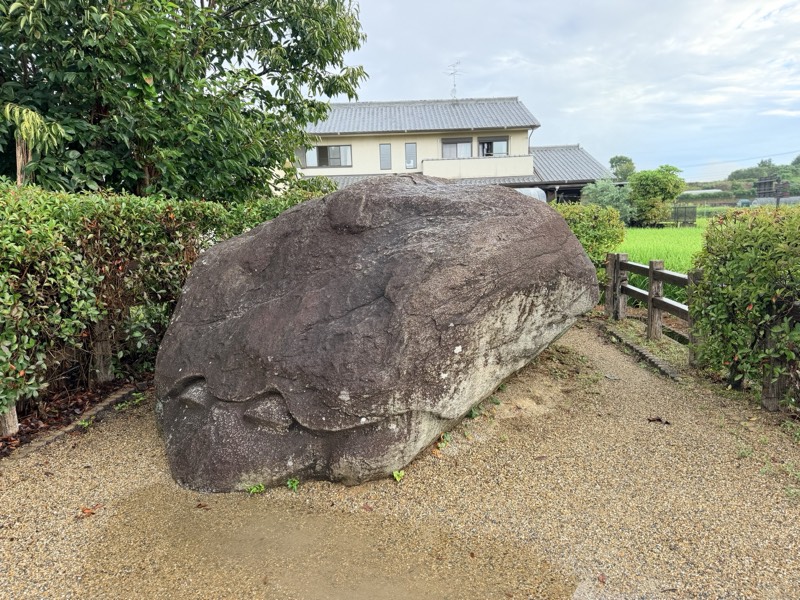 SPOTKameishi (Turtle Stone)亀石A granite boulder with a turtle's face, loved for its friendly look. One of Asuka's best-known stone monuments.Access: About 20 minutes on foot from Kintetsu Asuka StationSee the spot page →
Asuka Mizuochi Site → Asuka-dera → Sakafuneishi Site → Asuka Palace Site → Asuka Palace Garden Site → Kawara-dera Site → Tachibana-dera → Ishibutai Kofun
This route links 8 sites over about 3–4 km on foot. Get off the loop bus at "Asuka", start walking from the Mizuochi Site, and finish at the Ishibutai bus stop. From Asuka-dera to the Asuka Palace Site is about a 10-minute walk south. The Kawara-dera Site and Tachibana-dera face each other across the road.
Kengoshizuka Kofun → Shōbuike Kofun → Mausoleum of Emperor Tenmu and Empress Jitō → Nakaoyama Kofun → Takamatsuzuka Kofun → Hinokuma-dera Site → Kitora Kofun
Starting from Kintetsu Asuka Station, this route covers 7 sites in a little over 5 km by bicycle. It includes three octagonal tombs (Kengoshizuka, Tenmu-Jitō and Nakaoyama) and two painted tombs (Takamatsuzuka and Kitora), letting you feel the Fujiwara era, when the shape of a tomb showed rank. Stop at the Takamatsuzuka Mural Hall and Shijin no Yakata to see the paintings too.
Yamada-dera Site → Daikandaiji Site → Fujiwara Palace Site → Moto-Yakushiji Site
From the Yamada-dera Site northeast of Asuka, across the heart of Fujiwara-kyō to the Moto-Yakushiji Site in the west, this route links 4 sites in about 5 km, a little over an hour by bicycle. About 1 km east of the Fujiwara Palace Site are Mount Kagu, the mountain of Empress Jitō's poem, and Amanokaguyama Shrine at its foot. From the Moto-Yakushiji Site it is about 10 minutes' walk to Kintetsu Unebigoryōmae Station.
Kitora Kofun → Kurihara Tsukaana Kofun (Mausoleum of Emperor Monmu) → Asakaze Pass → Inabuchi rice terraces (Scarecrow Road) → Ozuna
This route heads east from the World Heritage Kitora Kofun to the gateway of Oku-Asuka, the upper Asuka River valley. Past the Kurihara Tsukaana Kofun, which the Imperial Household Agency designates as the tomb of Emperor Monmu, the road climbs and runs along a narrow path through bamboo groves to the Asakaze Pass, which looks down over the Inabuchi rice terraces. Walk down through the terraces and, in autumn, you reach the "Scarecrow Road", lined with entries from the scarecrow contest. Finally, walk beneath the ozuna sacred rope stretched across the Asuka River. The walk is a little over 3 km, and you can take the loop bus home from the "Inabuchi" stop. It shows you the countryside side of Asuka, quite different from its historic sites.
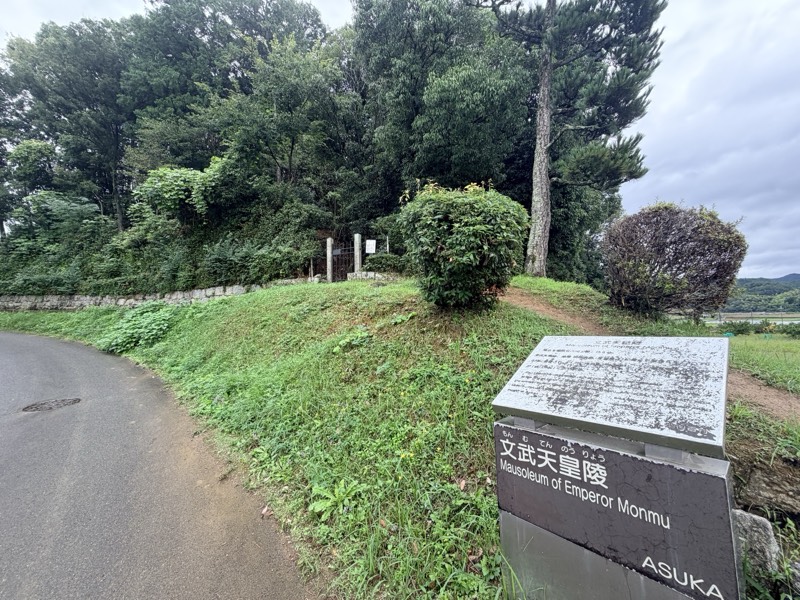 SPOTKurihara Tsukaana Kofun (Mausoleum of Emperor Monmu)栗原塚穴古墳(文武天皇陵)The tomb designated by the Imperial Household Agency as Emperor Monmu's, at odds with the archaeological view.Access: About 15 minutes on foot from Kintetsu Asuka StationSee the spot page →
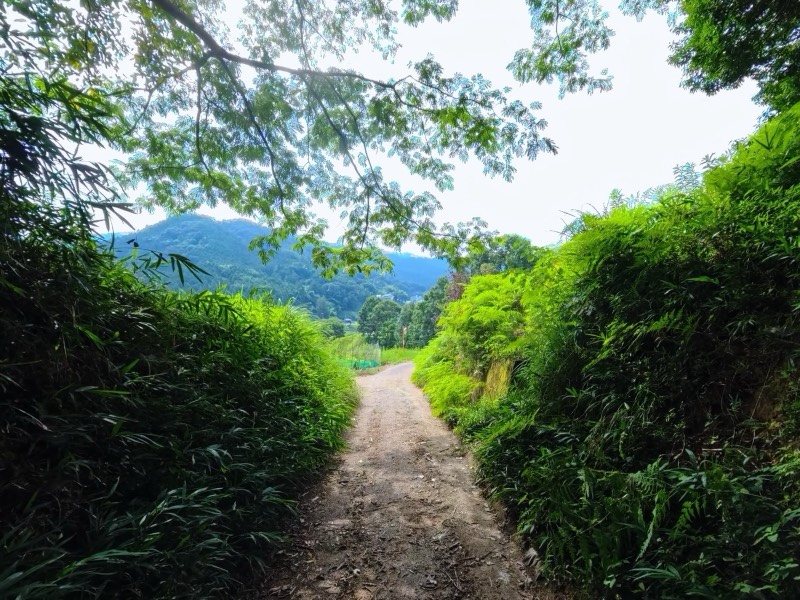 SPOTAsakaze-tōge Pass朝風峠A pass overlooking the Inabuchi terraced rice fields, reached by a narrow path through bamboo thickets.Access: About 40 minutes on foot from Kintetsu Asuka StationSee the spot page →
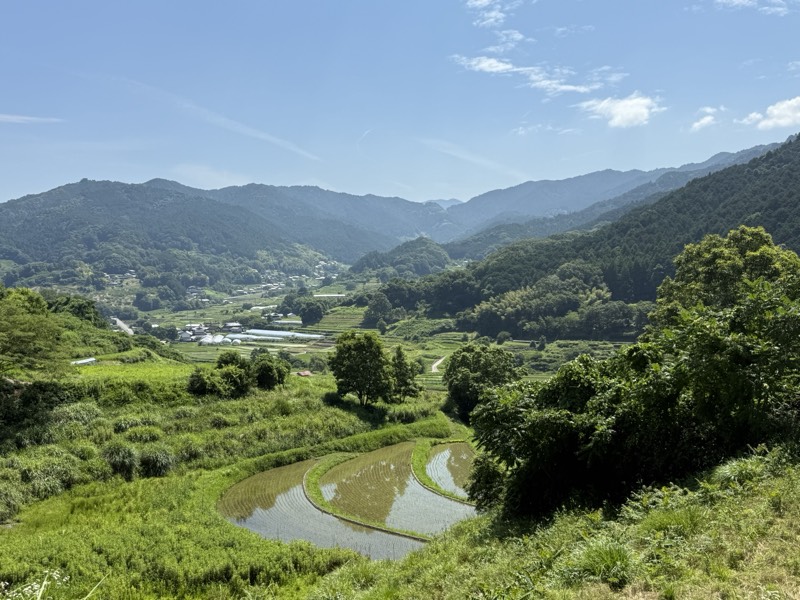 SPOTInabuchi Terraced Rice Fields稲渕の棚田One of Japan's 100 finest terraced rice fields. In autumn, giant scarecrows appear.Access: About 10 minutes on foot from the "Inabuchi" stop on the Asuka loop bus from Kintetsu Kashiharajingu-mae StationSee the spot page →
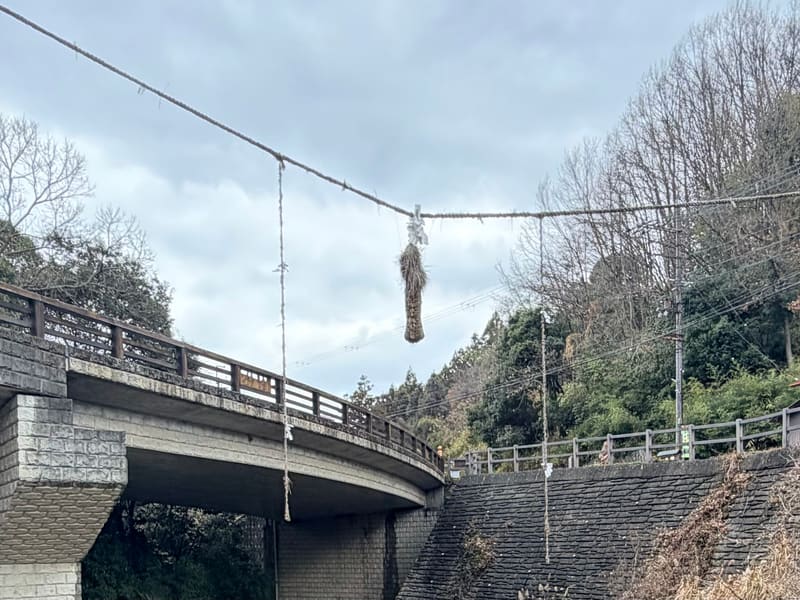 SPOTOzuna (Male Rope)男綱A rope of rice straw stretched across the Asuka River. It is replaced every year on Coming of Age Day.Access: Right by the "Inabuchi" stop on the Asuka loop bus from Kintetsu Kashiharajingu-mae StationSee the spot page →
By bicycle you can visit all 19 sites in a single day. Rent a bicycle at Asuka Station, ride Route 3 through the tomb hills, then head about 1 km east from the Tenmu-Jitō mausoleum into the central area of Route 2. From north of Asuka-dera, continue to the Daikandaiji and Yamada-dera sites, ride Route 4 through Fujiwara-kyō and finish at the Moto-Yakushiji Site. Allow about 17 km; with time at each site, it takes from morning to evening.
Day 1: Routes 3 and 2. Ride the tomb hills from Asuka Station, enter the central area in the afternoon and finish at Ishibutai Kofun. There is also time to see the paintings at Shijin no Yakata and the Takamatsuzuka Mural Hall.
Day 2: Route 4, Fujiwara-kyō. Stand in the wide fields of the Fujiwara Palace Site to view the Three Mountains of Yamato, and go on to Mount Kagu. Climb Amakashi Hill, which overlooks Asuka, and you can trace from above the places you walked the day before.
Many of the component sites lie among rice fields and hamlets. Please do not enter private land or walk on the ridges between paddies; view the sites from the road. At some, such as the Tenmu-Jitō mausoleum, you cannot enter the mound.
Knowing what lies beneath your feet makes the same patch of grass look different. Following the 19 sites in order, you see palaces settle in one place, temples rise, and the shapes of tombs begin to speak of rank: you walk, in a day or two, through the century or so in which the structure of the state took shape.
RELATED SPOT
飛鳥宮跡(伝 飛鳥板蓋宮跡)
The political heart of Asuka, where several palaces were built one on top of another.
飛鳥京跡苑池
The site of a palace garden, regarded as the earliest example of a Japanese garden.
飛鳥水落遺跡
The site of Japan's first water clock, built by Prince Naka-no-Ōe.
酒船石
A mysterious stone carved with circles and channels, lying in a bamboo grove on top of a hill.
飛鳥寺・蘇我入鹿首塚
Japan's first full-scale Buddhist temple. The Great Buddha of Asuka still sits on the spot where it was made, 1,400 years ago.
川原寺跡(弘福寺)
One of the four great temples of Asuka. Its foundation stones still show how large its halls once were.
橘寺
The temple said to stand on the birthplace of Prince Shōtoku, home to the two-faced Nimenseki stone.
石舞台古墳
One of the largest stone burial chambers in Japan, its giant boulders left bare to the sky. The image most people picture when they think of Asuka.
牽牛子塚古墳
An octagonal burial mound, now widely thought to be the tomb of Empress Saimei.
菖蒲池古墳
A square mound about 30 m on each side, with two house-shaped sarcophagi side by side. The stone chamber is inside a protective shelter.
天武・持統天皇陵
One of the few octagonal imperial tombs whose occupants can be confirmed from written records.
中尾山古墳
A small octagonal mound thought to be the tomb of the cremated Emperor Monmu.
高松塚古墳
A round burial mound where brilliantly coloured paintings of court ladies were found: the defining archaeological discovery of post-war Japan.
檜隈寺跡/於美阿志神社
A temple site linked to the Yamato no Aya, a clan of immigrant origin, with a thirteen-storey stone pagoda.
キトラ古墳
A two-tiered round burial mound famous for its chamber painted with the Four Gods and a map of the stars.
山田寺跡
A temple site where a corridor was excavated just as it had collapsed and been buried.
大官大寺跡
The site of the largest state temple of Asuka-Fujiwara, once crowned by a nine-storey pagoda.
藤原宮跡
The heart of Japan's first full-scale planned capital, also known for its seasonal flower fields.
本薬師寺跡
The site of a state temple with twin pagodas, where foundation stones remain in their original positions.
鬼の俎・鬼の雪隠
The pieces of a kofun burial chamber, split apart on either side of a slope.
亀石
A granite boulder with a turtle's face, loved for its friendly look. One of Asuka's best-known stone monuments.
栗原塚穴古墳(文武天皇陵)
The tomb designated by the Imperial Household Agency as Emperor Monmu's, at odds with the archaeological view.
朝風峠
A pass overlooking the Inabuchi terraced rice fields, reached by a narrow path through bamboo thickets.
稲渕の棚田
One of Japan's 100 finest terraced rice fields. In autumn, giant scarecrows appear.
男綱
A rope of rice straw stretched across the Asuka River. It is replaced every year on Coming of Age Day.
RELATED COLUMN
Where Japan as a State Began: The 19 Sites of the Asuka-Fujiwara World Heritage PropertyIt was inscribed on 26 July 2026. All that was chosen were the remains of palaces, temples and tombs, and…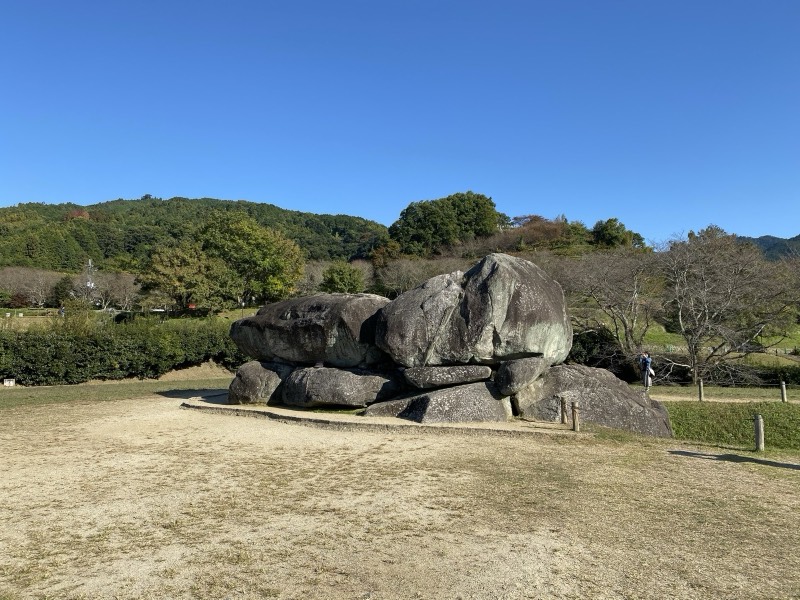 Why Did People Stop Building Kofun?For more than three hundred years, burial mounds kept growing larger. During the 7th century they shrank, and…Clan temples and state temples: telling apart the temples of AsukaAsuka-dera, Toyura-dera, Yamada-dera, Kawahara-dera, Daikandai-ji, Moto-Yakushi-ji. Who built them, and for…