1 / 5
菖蒲池古墳(しょうぶいけこふん)
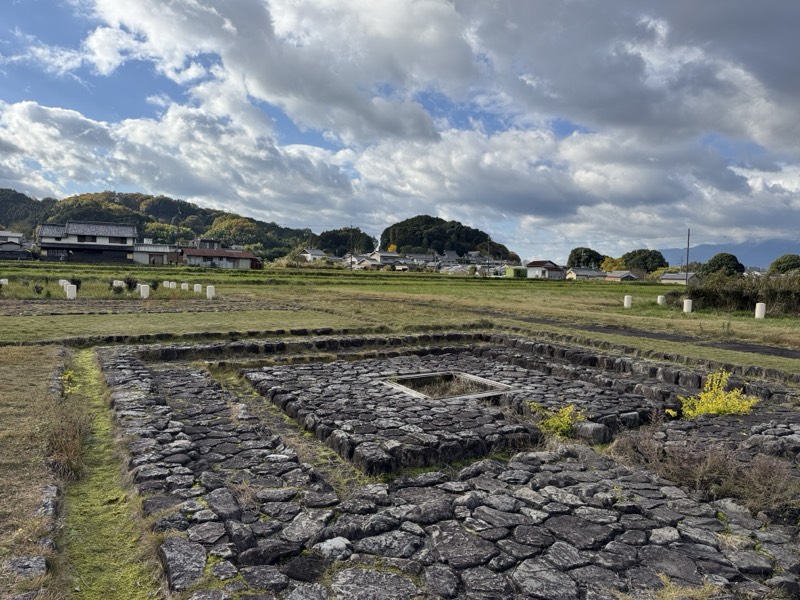
A square mound about 30 m on each side, with two house-shaped sarcophagi side by side. The stone chamber is inside a protective shelter.
This tomb was built in the mid-7th century, during the Asuka period. It lies on the southern slope of Amakashi Hill, the range of hills west of the Asuka basin where the Asuka Palace Site and other sites are found.
Administratively it belongs to Kashihara City, but it is within walking distance of central Asuka. It has long been known as the kofun (ancient burial mound) containing the two most elegant house-shaped sarcophagi in Japan, and the stone chamber was designated a Historic Site of Japan in 1927.
The chamber is a corridor-style stone chamber built at the base of the mound, with the passage opening centrally (the so-called "two-sleeved" type), and it opens to the south. The burial room is about 7.2 m long, 2.4 m wide and 2.2 m high. The length of the entrance passage is not known. The centre of the burial room coincides with the centre of the mound.
Inside, two house-shaped sarcophagi stand side by side. They have lids shaped like roofs, which means the tomb was built to bury two people. No other sarcophagi of this form are known, and they are considered extremely rare.
The person buried here has not been identified, but it has been suggested that it was someone connected with the Soga clan.
The mound is square. Square mounds were used for the tombs of Chinese emperors and the like, and building a tomb in this shape in Japan is thought to show that the person buried was powerful.
The burial facility follows the corridor-style stone chamber of the Kofun period, but the mound is much smaller than that of Ishibutai Kofun. This suggests that, by the Asuka period, the age of showing power through the size of one's tomb was drawing to a close.
Only the stone chamber had been designated a Historic Site, and the shape and size of the mound were completely unknown. So from fiscal 2009, Kashihara City carried out excavations over four years.
They showed that the mound was square, about 30 m on each side, built in two tiers, with rammed earth (hanchiku) used in parts of its base. The slopes were finished with dark reddish-brown soil, and a single row of base stones ran around the foot of both the upper and lower tiers. The flat terrace at the foot of the upper tier and the forecourt in front of the mound were covered with gravel.
A moat ran around the east, north and west sides of the mound, its bottom also covered with gravel. Outside it was a two-tier outer bank, the upper terrace of which was paved with stones. This was not simply a tomb covered with heaped earth: even its surroundings were carefully built.
Following these excavations, the mound and its surroundings were added to the Historic Site designation in 2015.
Around the time Fujiwara-kyō (the Fujiwara capital) was built, the tomb was altered. The moat around the mound was filled in, and buildings with posts set directly in the ground and stone-lined channels were built on top. Only about half a century after it was built as a tomb, the land was put to a different use.
Traces of a landslide caused by an earthquake have also been found at the south-west corner of the mound.
On 26 July 2026 it was inscribed on the World Heritage List as one of the component parts of "Asuka-Fujiwara: Archaeological Sites of Japan's Ancient Capitals and Related Properties."
The stone chamber is housed in a protective shelter, and the interior is not normally open to the public. On top of the hill stand a stone monument reading "Historic Site, Shōbuike Kofun" and an information board, and the view opens out over the village to the hills.
About 15 minutes on foot from Kintetsu Okadera Station. The mound is at the top of a flight of steps. Rammed earth found in the excavations can be seen at the Kashihara City Museum of History.
Published
NEARBY
亀石
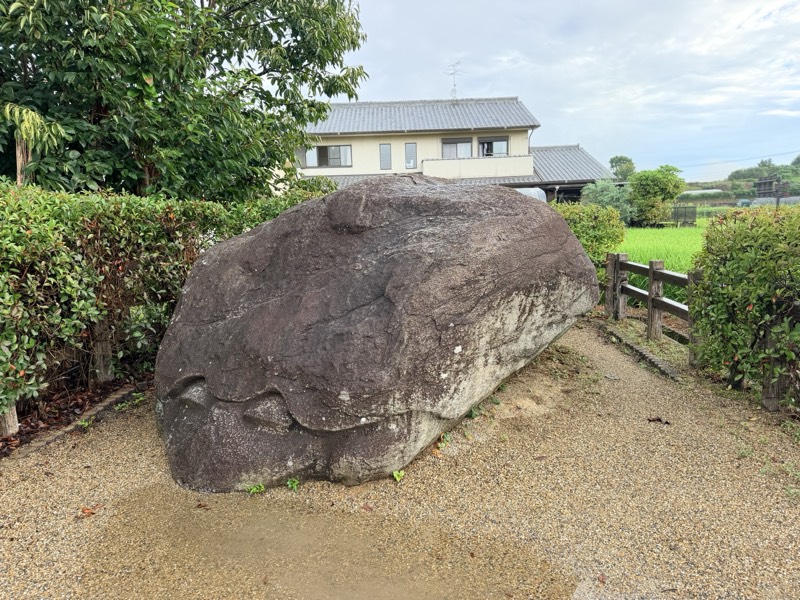
A granite boulder with a turtle's face, loved for its friendly look. One of Asuka's best-known stone monuments.
小泊瀬稚雀神社
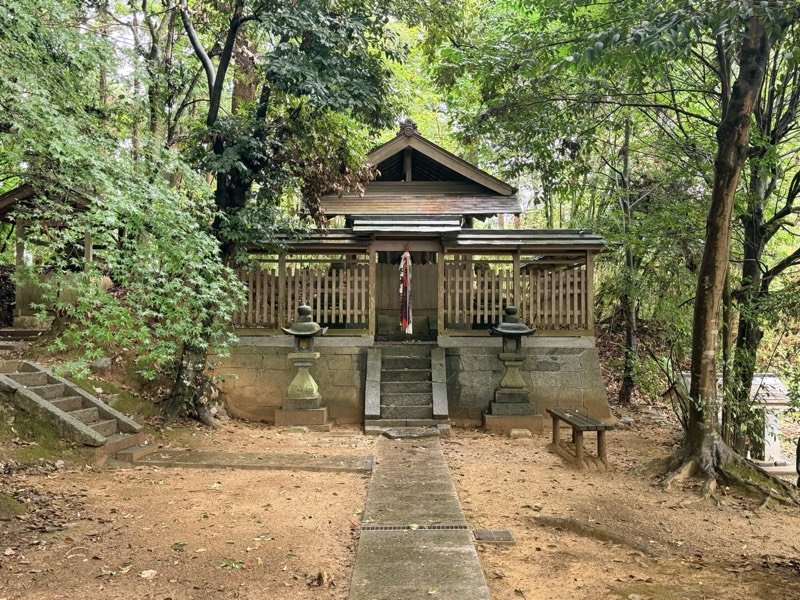
A small shrine dedicated to Emperor Buretsu, standing where it looks towards the tomb of Emperor Tenmu and Empress Jitō.
天武・持統天皇陵
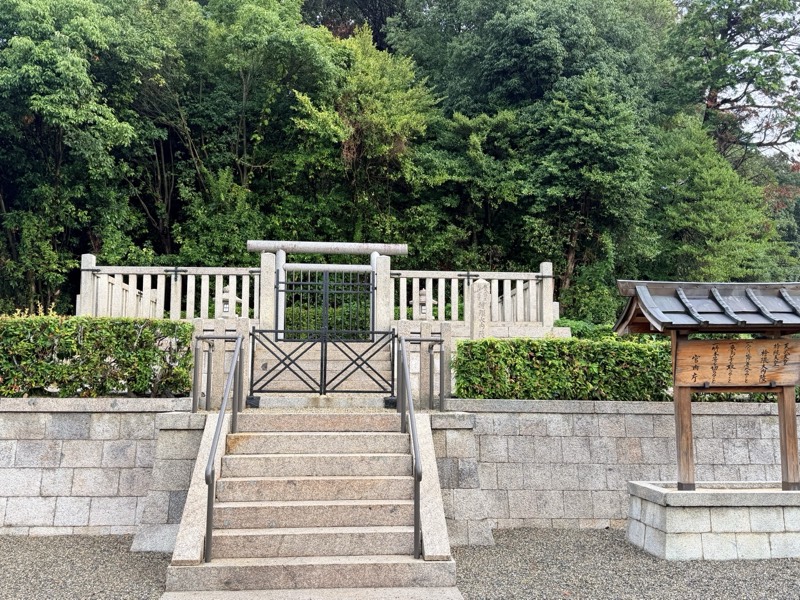
One of the few octagonal imperial tombs whose occupants can be confirmed from written records.