


1 / 3
亀石(かめいし)
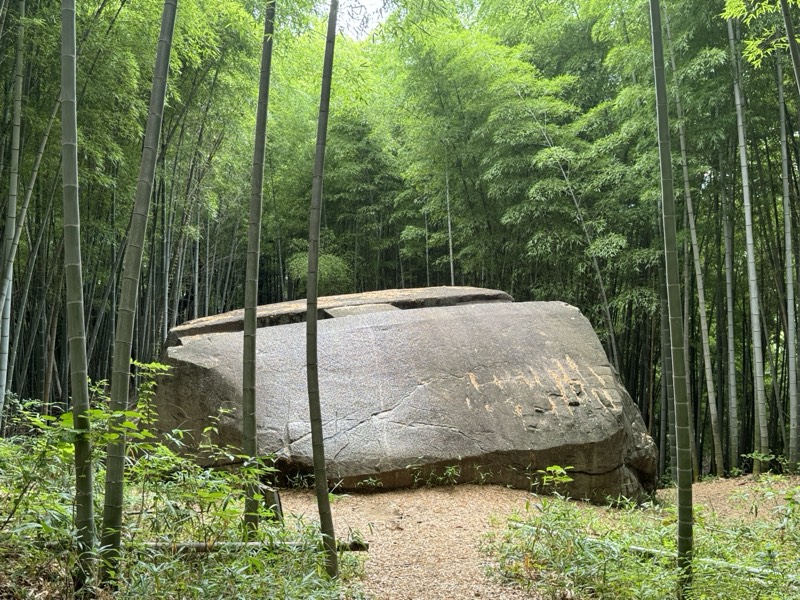
A granite boulder with a turtle's face, loved for its friendly look. One of Asuka's best-known stone monuments.
At the edge of the Kawahara hamlet, right beside the road, sits a carved granite boulder about 3.6 m long, 2.1 m wide and 1.8 m high.
With its rounded body and a face pushed forward, complete with carved eyes and mouth, it really does look like a crouching turtle. Of all the mysterious stone monuments of Asuka, it is the one with the most charm.
No one knows when it was made, by whom, or why.
Some say it marked the boundary of Kawara-dera temple; others think it stood in a garden or a ritual site. None of these theories is conclusive. It is believed to date from the Asuka period (late 6th to early 8th century), but even that is not certain.
The lower part of the stone is buried, so its full shape is unknown.
A legend is told about this stone.
Long ago, the people of Yamato (the Nara basin) and Kawachi (the Osaka side) fought over water. Yamato lost, its lake dried up, and all the turtles living in it died. Feeling sorry for them, the villagers carved a turtle in stone to honour their memory.
There is another well-known legend.
The turtle first faced north. Then it turned east, and now it faces southwest. When it finally turns to face due west, the whole of Yamato will sink into a sea of mud.
West is the direction of Taima, the side said to have won the water dispute. The very idea that the stone is slowly turning shows how long people have been watching it.
About a 20-minute walk from Kintetsu Asuka Station. It sits right by the road with no fence, so you can see it at any time, free of charge.
Kawara-dera temple ruins and Tachibana-dera temple are close by, so you can visit them together. The stone is surrounded by rice fields, and the scenery behind it changes with the seasons.
Published
READ MORE
 What Were They Made For? Asuka's Mysterious StonesTwo holes cut into an 800-tonne boulder, a slab carved with circles and channels, a turtle with a face…
 Asuka-Fujiwara World Heritage: All 19 Component Sites and How to Visit Them, with Half-Day, One-Day and Two-Day Routes"Asuka-Fujiwara" was inscribed on the World Heritage List in 2026. We list all 19 component sites with their…
NEARBY
小泊瀬稚雀神社
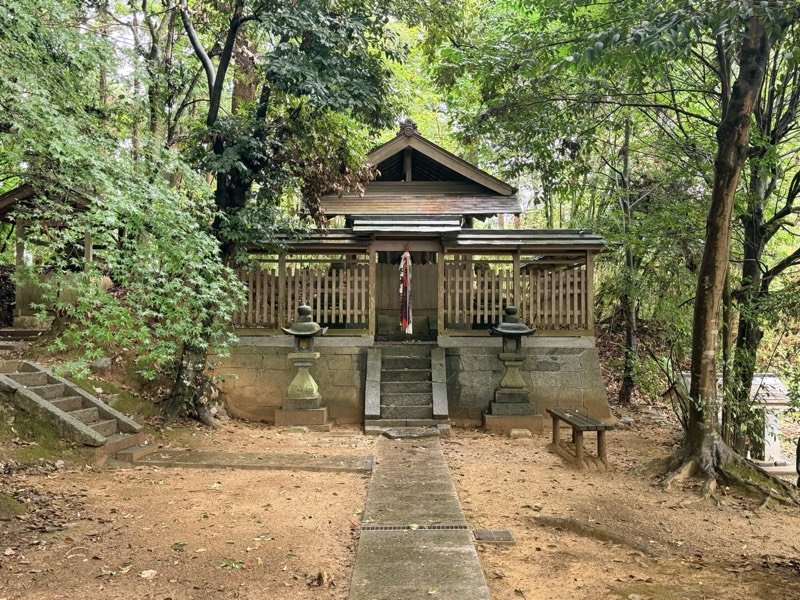
A small shrine dedicated to Emperor Buretsu, standing where it looks towards the tomb of Emperor Tenmu and Empress Jitō.
菖蒲池古墳
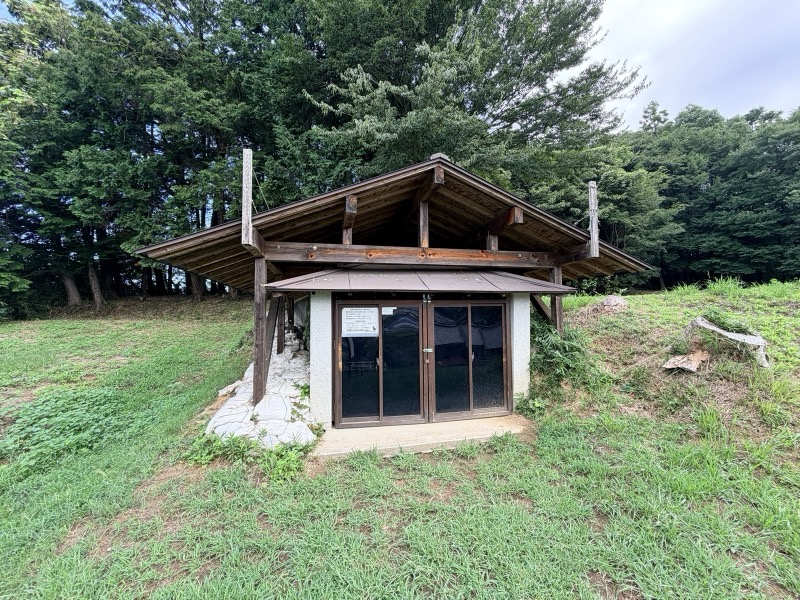
A square mound about 30 m on each side, with two house-shaped sarcophagi side by side. The stone chamber is inside a protective shelter.
天武・持統天皇陵
One of the few octagonal imperial tombs whose occupants can be confirmed from written records.