


1 / 4
橘寺(たちばなでら)
The temple said to stand on the birthplace of Prince Shōtoku, home to the two-faced Nimenseki stone.
This temple is said to stand where Prince Shōtoku was born. According to tradition, Emperor Kinmei had a detached palace here, and the prince was born while his father, Emperor Yōmei, and his mother, Princess Anahobe no Hashihito, were staying in it.
It is counted as one of the seven temples founded by Prince Shōtoku. Its formal name is Buttōzan Jōgūōin Bodai-ji, and it belongs to the Tendai school of Buddhism.
Excavations have shown that the original temple faced east, with its pagoda, golden hall and lecture hall lined up in a straight row from east to west. This layout is different again from those of Asuka-dera and Kawara-dera.
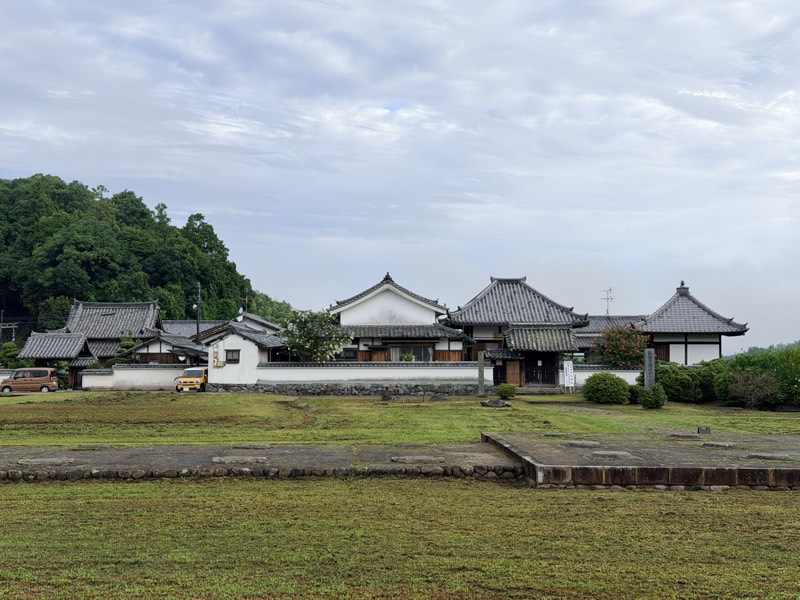
The present main hall (Taishidō) was rebuilt in 1864 and enshrines a seated statue of Prince Shōtoku as its main image. Surrounded by rice fields, the temple halls seem to float on their own: one of the best-known views in Asuka.
In the temple grounds stands a stone monument called Nimenseki, the "two-faced stone." A face is carved on each side, left and right, of a single stone.
One face is said to be good and the other evil, representing the two sides of the human heart. It is about 1 m tall. It is one of the stone monuments scattered around Asuka, and when and why it was made is not known.
Flowers of every season are planted in the grounds: lotus blooms in early summer and cosmos in autumn.
The lotus is regarded as the temple's own flower, after a legend that lotus blossoms rained down and piled up when Prince Shōtoku lectured on the Shōman Sutra.
On 26 July 2026 it was inscribed as a World Heritage Site, as one of the components of "Asuka-Fujiwara: Archaeological Sites of Japan's Ancient Capitals and Related Properties."
Take the Asuka loop bus from Kintetsu Kashiharajingu-mae Station to the "Kawahara" stop, then walk about 3 minutes. There is an admission fee.
The site of Kawara-dera is just to the north, facing it across the road. Kameishi (Turtle Stone) is also only a few minutes' walk away.
Published
READ MORE
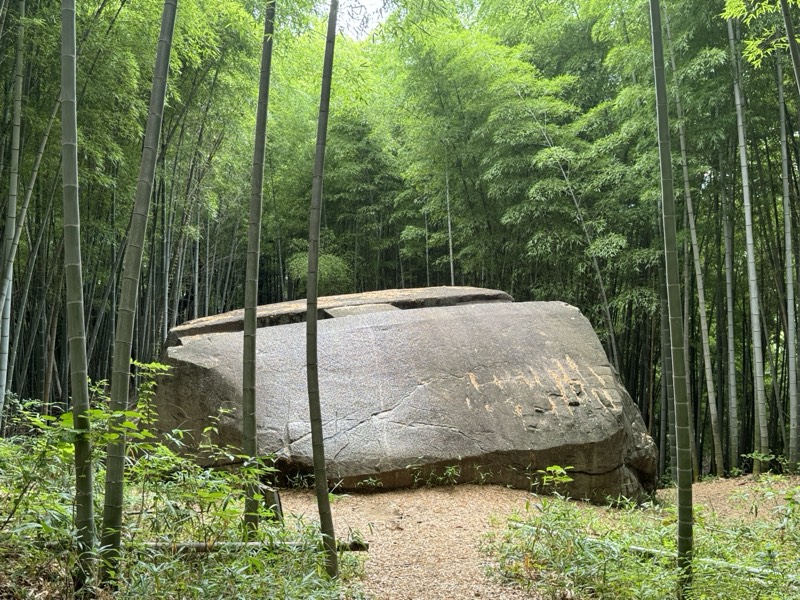 What Were They Made For? Asuka's Mysterious StonesTwo holes cut into an 800-tonne boulder, a slab carved with circles and channels, a turtle with a face…
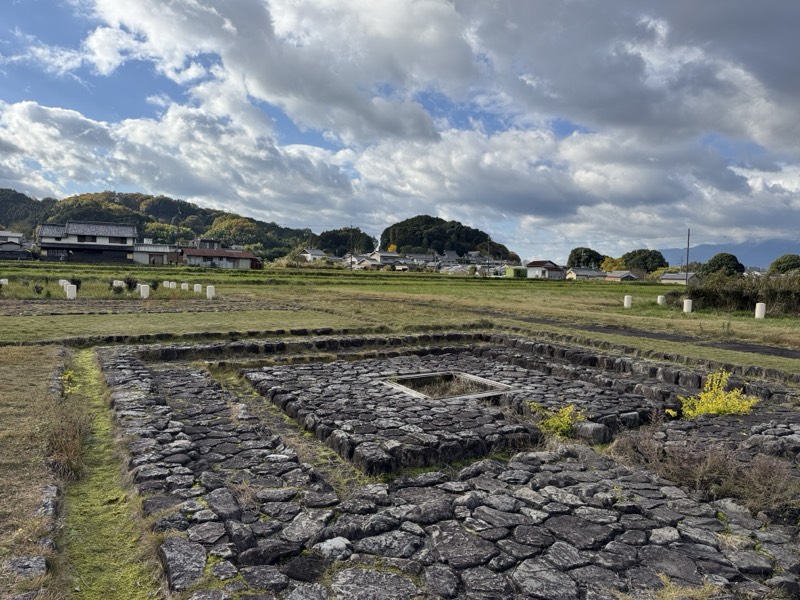 Asuka-Fujiwara World Heritage: All 19 Component Sites and How to Visit Them, with Half-Day, One-Day and Two-Day Routes"Asuka-Fujiwara" was inscribed on the World Heritage List in 2026. We list all 19 component sites with their…
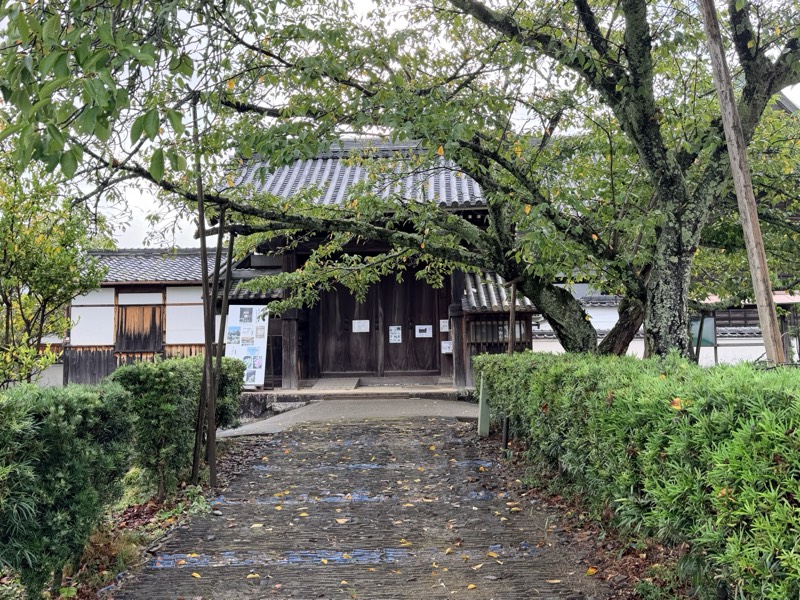 Who Was Prince Shōtoku? Born at Tachibana-dera, Moved to IkarugaThe Twelve Cap Ranks, the Seventeen-Article Constitution, the embassies to Sui China: Prince Shōtoku…
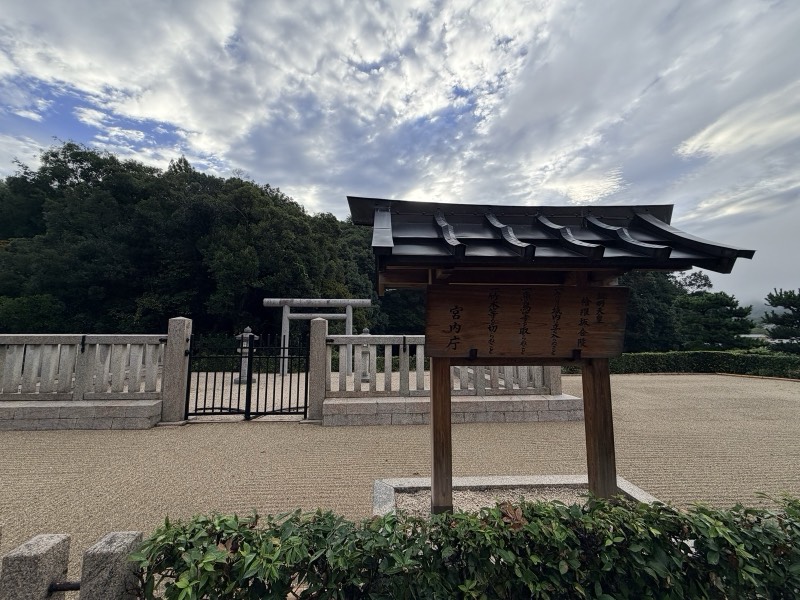 Emperor Kinmei, the Link in the Chain: The Bloodline Leading to Today's Imperial FamilyFrom the accession of his father, Emperor Keitai, to the reigns of the children who took the throne one after…
NEARBY
川原寺跡(弘福寺)
One of the four great temples of Asuka. Its foundation stones still show how large its halls once were.
飛鳥川
The river that runs through the village, sung of in the Man'yōshū.
飛鳥京跡苑池
The site of a palace garden, regarded as the earliest example of a Japanese garden.