


1 / 2
川原寺跡(弘福寺)(かわらでらあと(ぐふくじ))
One of the four great temples of Asuka. Its foundation stones still show how large its halls once were.
This is the site of a temple once counted among the four great temples of Asuka, along with Asuka-dera, Yakushi-ji and Daikandai-ji.
It is thought to have been built by Emperor Tenji on the site of Empress Saimei's Kawara Palace, to pray for the soul of his mother, Empress Saimei. No reliable record of the year it was founded survives.
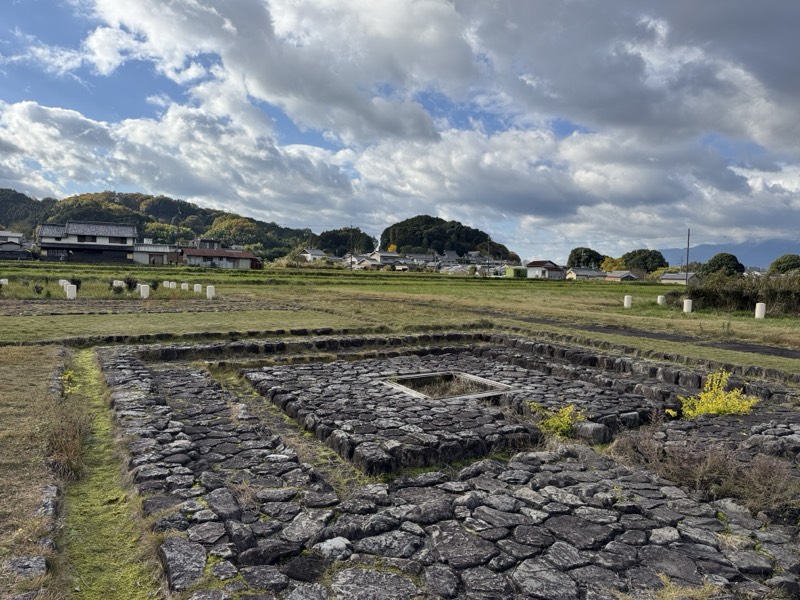
The temple's distinctive feature is its layout. Through the middle gate, the central golden hall stood straight ahead, and in front of it the pagoda on the east faced a second golden hall (the west golden hall) on the west. A pagoda and a golden hall standing as a pair is a layout found nowhere else in Japan.
Asuka-dera had one pagoda and three golden halls, Yamada-dera one pagoda and one golden hall, and Kawara-dera one pagoda and two golden halls. Every temple in Asuka was laid out differently, showing that Japanese temple architecture was still searching for its form.
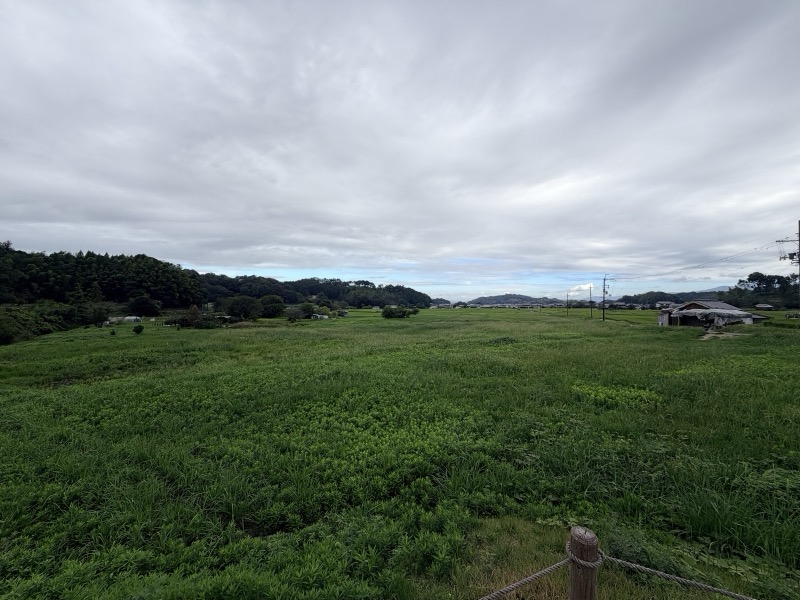
The foundation stones have been laid out for visitors, so you can walk around and trace the positions and sizes of the buildings.
The foundation stones of the central golden hall were made of menō (agate), described as a kind of marble. It is a special stone not used at any other temple in Asuka.
This is taken as a sign that the temple was founded at an emperor's wish.
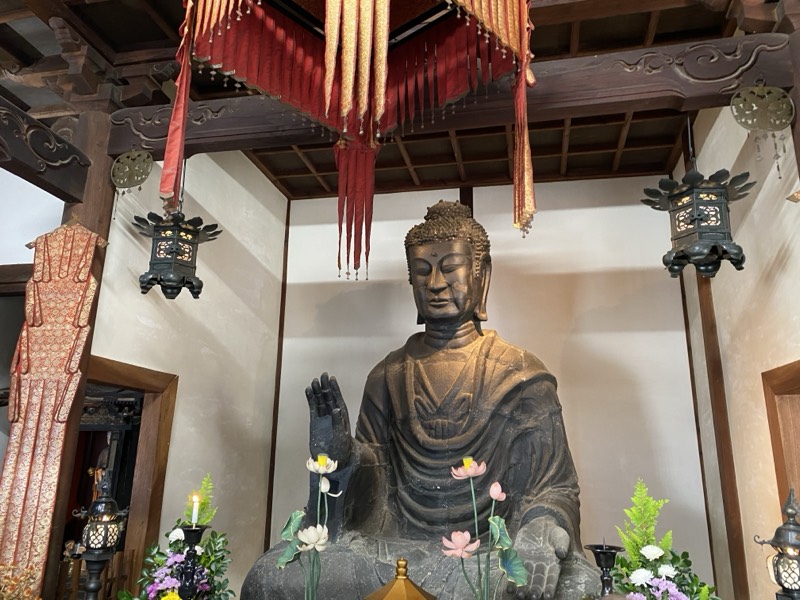
In one corner of the site stands Gufuku-ji, which carries on the temple's lineage. It belongs to the Buzan school of Shingon Buddhism.
Kawara-dera was not moved to the new capital at Heijō-kyō (Nara) but stayed in Asuka, carrying on and shrinking over time through fires in the Kamakura period (1185–1333) and other events. Of Asuka's four great temples, only this one and Asuka-dera survived as temples on their original sites.
On 26 July 2026 it was inscribed as a World Heritage Site, as one of the components of "Asuka-Fujiwara: Archaeological Sites of Japan's Ancient Capitals and Related Properties."
Right by the "Kawahara" stop on the Asuka loop bus from Kintetsu Kashiharajingu-mae Station. There is no charge to see the temple site.
Tachibana-dera is just to the south across the road, so the two temple sites face each other. Walk along the Asuka River and you will reach the Asuka Palace site and Amakashi Hill.
Published
READ MORE
 Asuka-Fujiwara World Heritage: All 19 Component Sites and How to Visit Them, with Half-Day, One-Day and Two-Day Routes"Asuka-Fujiwara" was inscribed on the World Heritage List in 2026. We list all 19 component sites with their…
 The Asuka Daibutsu: How Much of It Is 1,400 Years Old?In the Kamakura period (1185–1333), lightning set Asuka-dera Temple ablaze. All that survived, the records…How a Foreign Buddha Became a Japanese Face: Buddhist Statues of Asuka and FujiwaraFrom the Asuka Daibutsu to the Yakushi Triad of Yakushi-ji Temple took about a hundred years. Over that…Clan temples and state temples: telling apart the temples of AsukaAsuka-dera, Toyura-dera, Yamada-dera, Kawahara-dera, Daikandai-ji, Moto-Yakushi-ji. Who built them, and for…
NEARBY
飛鳥川
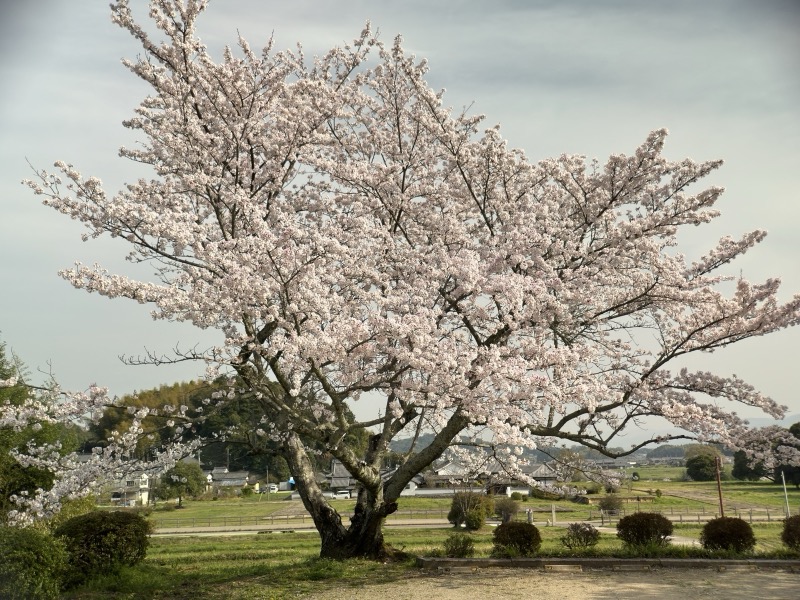
The river that runs through the village, sung of in the Man'yōshū.
橘寺
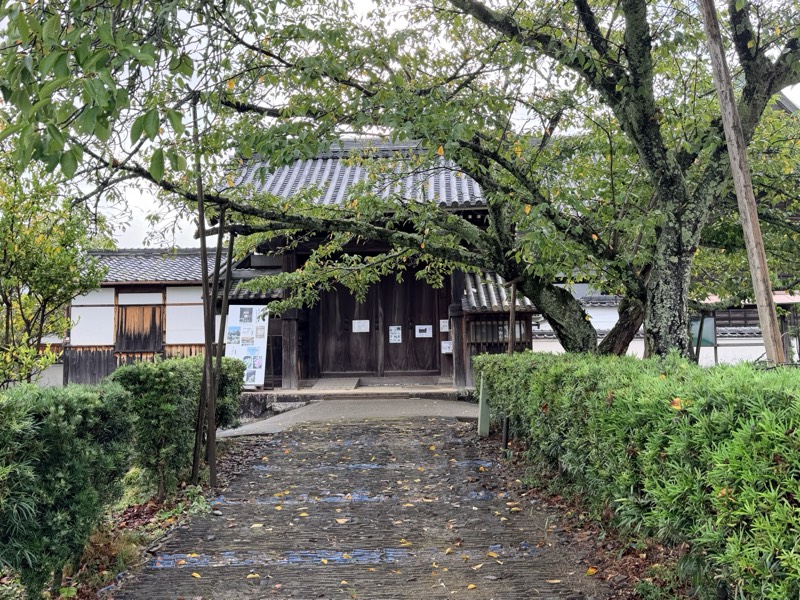
The temple said to stand on the birthplace of Prince Shōtoku, home to the two-faced Nimenseki stone.
飛鳥京跡苑池
The site of a palace garden, regarded as the earliest example of a Japanese garden.