
Published
Asuka-dera, Toyura-dera, Yamada-dera, Kawahara-dera, Daikandai-ji, Moto-Yakushi-ji. Who built them, and for what? Once you grasp that, temple ruins start to look different.

The country's first full-scale Buddhist temple was built in Asuka: Asuka-dera Temple, also called Hōkō-ji.
It was founded by Soga no Umako. Construction began in 588 and was completed in 596. For it, the Korean kingdom of Baekje sent temple carpenters, masters of tile-making, masters of casting the spire finials for pagodas, and painters. The technology was imported along with the craftsmen.
Its layout was unique too: a pagoda in the centre, with golden halls (main halls) on three sides, east, west and north. This "one pagoda, three halls" plan has no other example in Japan.
This temple was also the first building to be roofed with tiles. Until then all buildings had been roofed with thatch or boards. A huge building with a gleaming roof, visible from anywhere in the village, suddenly appeared.
Asuka-dera was a temple the Soga clan built with their own wealth and ran for their own benefit. Temples like this are called ujidera, clan temples.
They held memorial rites for the clan's ancestors, prayed for the clan's prosperity, and housed monks connected with the clan. Above all, they displayed the clan's power in visible form.
Many of the temples built in Asuka shared this character.
Toyura-dera was a temple the Soga built on the site of Empress Suiko's Toyura Palace, and is said to have been Japan's first nunnery. Today its foundation platform survives beneath the grounds of Kōgen-ji Temple.
Yamada-dera was begun in 641 by Soga no Kura-no-Yamada no Ishikawa-maro. Tachibana-dera is traditionally associated with Prince Shōtoku.

Hinokuma-dera was the temple of the Yamato no Aya clan, who had come from the Asian mainland. Today its foundation stones and a thirteen-storey stone pagoda remain, and Omiashi Shrine stands in its grounds.
Each powerful clan had its own temple. Look at which clan built a temple where, and you can read the power map of the time directly.
The period when temples began to be built coincides with the period when kofun (ancient burial mounds) were getting smaller.
Until then, clans had built tombs as if in competition, pouring in labour and wealth and showing their power through size. That investment shifted to temples.
A pagoda rises, tiles are laid, a golden Buddha is installed in the main hall. As a device for display, this worked better than a burial mound. And a temple was also a place where memorial rites for the ancestors went on and on.
The place for honouring the dead had moved from the tomb to the temple.
Yamada-dera shows the character of a clan temple especially clearly.
Soga no Kura-no-Yamada no Ishikawa-maro sided with Prince Naka no Ōe in the Isshi Incident. He married his daughter to the prince and became Minister of the Right. In 641 he began building his own temple.
But in 649, falsely accused of plotting rebellion, he took his own life at this temple. The accusation is said to have been groundless, and the Nihon Shoki (Japan's oldest official chronicle, compiled in 720) records that Prince Naka no Ōe later regretted it.
Work on the temple continued after that. In 685, under Emperor Tenmu, the eyes of its principal image, a jōroku (about 4.8 m) Buddha, were ceremonially opened, 44 years after construction began.
Only the head of this Buddha survives. It was moved to Kōfuku-ji Temple in the Kamakura period (1185–1333), later went missing, and was found in 1937 beneath the altar platform of Kōfuku-ji's East Golden Hall. It is known as the Kōfuku-ji Buddha Head.
In the 1982 excavation, the east corridor was unearthed just as it had fallen. Its timbers are the oldest surviving members of any wooden building.
Meanwhile, a temple of a different character appeared.
This was Kudara Ōdera, which Emperor Jomei began building in 639. It is said to be the first temple built by a sovereign, and the history of kanji, state temples, begins here.
Whereas a clan temple was for the clan, a state temple was for the country. It was built with state funds, maintained by the state, and prayed for the peace of the state. The monks who entered it were monks recognised by the state.
Kudara Ōdera was called Takechi Ōdera in Emperor Tenmu's time and was renamed Daikandai-ji in 677. In Emperor Monmu's time it was rebuilt in a corner of Fujiwara-kyō, and a nine-storey pagoda is said to have been raised there. The Daikandai-ji Temple Site at the northern edge of Asuka Village today is where it stood.
The name Daikan, "great government", itself expresses the temple's standing.


Kawahara-dera was built on the site of the Kawahara Palace, which Empress Saimei used as her palace for a time. The leading view is that Emperor Tenchi built it to pray for the repose of Empress Saimei.
It had one pagoda on the east and two golden halls, a "one pagoda, two halls" layout known as the Kawahara-dera style. Together with Asuka-dera, Daikandai-ji and Moto-Yakushi-ji, it was counted among the Four Great Temples of Asuka.
Moto-Yakushi-ji was founded in 680 by Emperor Tenmu to pray for the recovery of his empress from illness. That empress later became Empress Jitō, and after Tenmu's death she took over its construction. The temple built for the wife was finished by the wife herself.
Both were built not for a particular clan, but for the imperial family and the state.

The distinction between clan temples and state temples became clear as an institution in Emperor Tenmu's time.
In 680 the emperor issued an edict limiting the temples maintained by the government to a small number, and declaring that the government would have nothing to do with the rest. Here the line was drawn between temples the state looked after and temples the clans kept for themselves.
Around the same time, systems for managing monks and nuns were also put in place. The state decided who could become a monk and which temple he belonged to. Faith itself had entered the system.
From an age when clans competed to build temples to an age when the state placed them: it was a change in the same direction as the shrinking of the kofun and the principle of public ownership of land and people.
The arrangement of the buildings shows how the centre of gravity shifted.
At Asuka-dera the pagoda stood in the centre, surrounded on three sides by golden halls. The pagoda was the star. Since relics of the Buddha were enshrined in the pagoda, this was only natural.
At Kawahara-dera the pagoda moves to the east and there are two golden halls. At Moto-Yakushi-ji, the golden hall is at the centre with two pagodas standing to its left and right. The pagoda steps down from the leading role, and the golden hall and its Buddhist images take centre stage.
From temples for venerating relics to temples for venerating images. Over a hundred years, what was at the heart of a temple was replaced.
In 710 the capital moved to Heijō-kyō (Nara), and the temples moved too.
Asuka-dera became Gangō-ji, and the one left in Asuka came to be called Moto-Gangō-ji. Daikandai-ji became Daian-ji, and Moto-Yakushi-ji became Yakushi-ji.
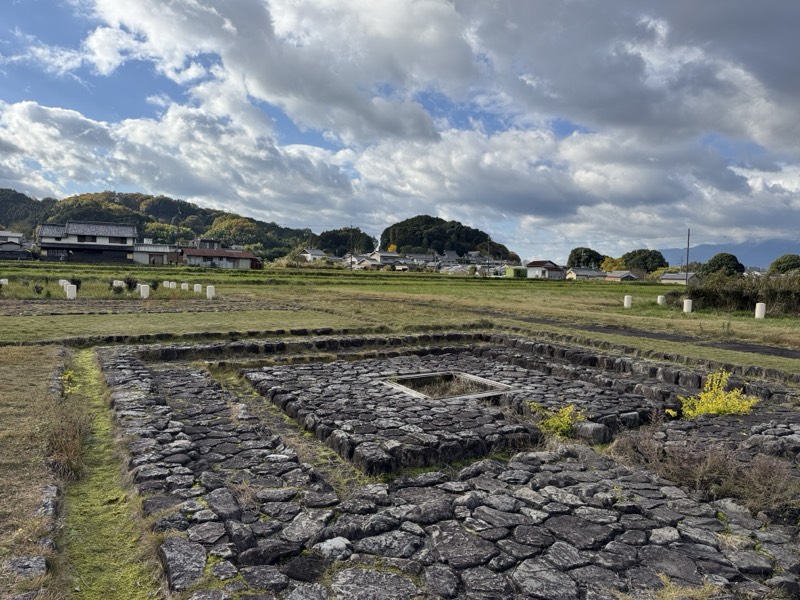
Some temples did not move. Kawahara-dera stayed in Asuka, and so did Yamada-dera. Both eventually declined, and today only their foundation stones and platforms remain.
The temples that moved have continued to this day in the streets of Nara, and those that stayed behind returned to the fields. That, too, is what it meant for the capital to move.
Here are the temple sites you can visit today, divided by character.
Clan temples: Asuka-dera (Soga no Umako), Toyura-dera beneath Kōgen-ji (the Soga clan), the Yamada-dera Temple Site (Soga no Kura-no-Yamada no Ishikawa-maro), the Hinokuma-dera Temple Site (the Yamato no Aya clan), and Tachibana-dera.
State temples: the Kawahara-dera Temple Site, the Daikandai-ji Temple Site and the Moto-Yakushi-ji Temple Site.
Only at Asuka-dera does the Asuka Daibutsu still sit in the main hall. All the others are foundation stones or flat ground among the rice fields.

When you look at a row of foundation stones, picture whose wealth set them in place and for whom prayers were offered there, and the same stones will look different.
RELATED SPOT
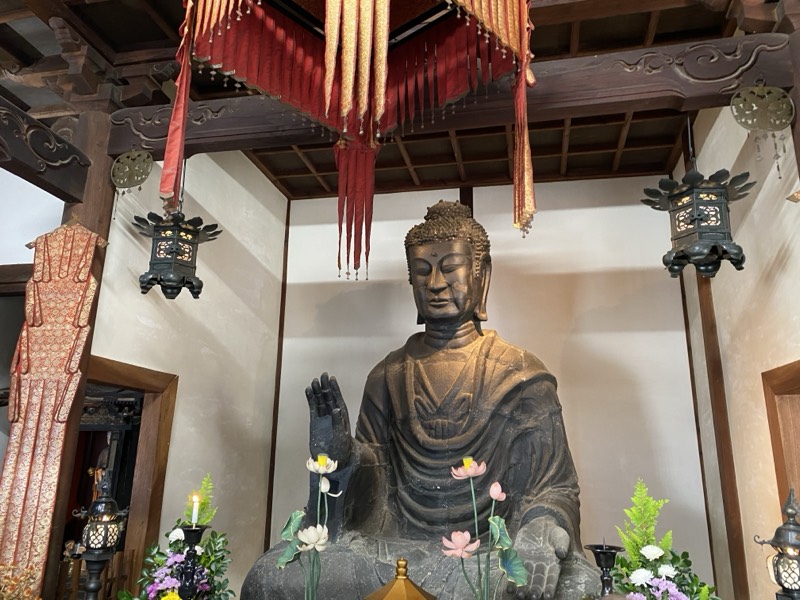
飛鳥寺・蘇我入鹿首塚
Japan's first full-scale Buddhist temple. The Great Buddha of Asuka still sits on the spot where it was made, 1,400 years ago.
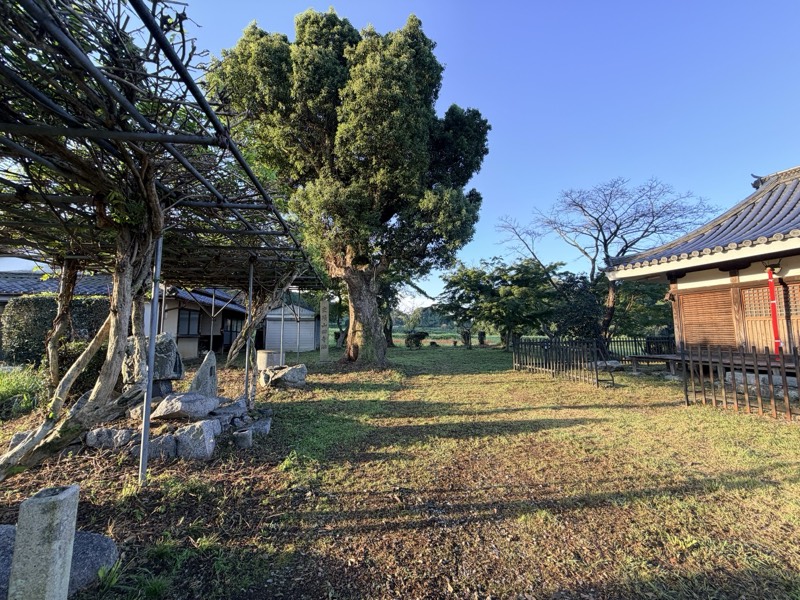
山田寺跡
A temple site where a corridor was excavated just as it had collapsed and been buried.
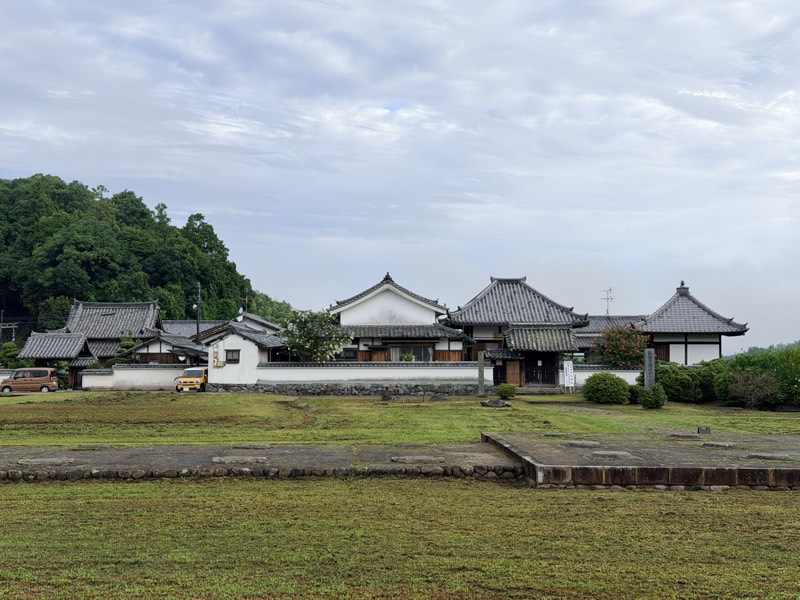
川原寺跡(弘福寺)
One of the four great temples of Asuka. Its foundation stones still show how large its halls once were.
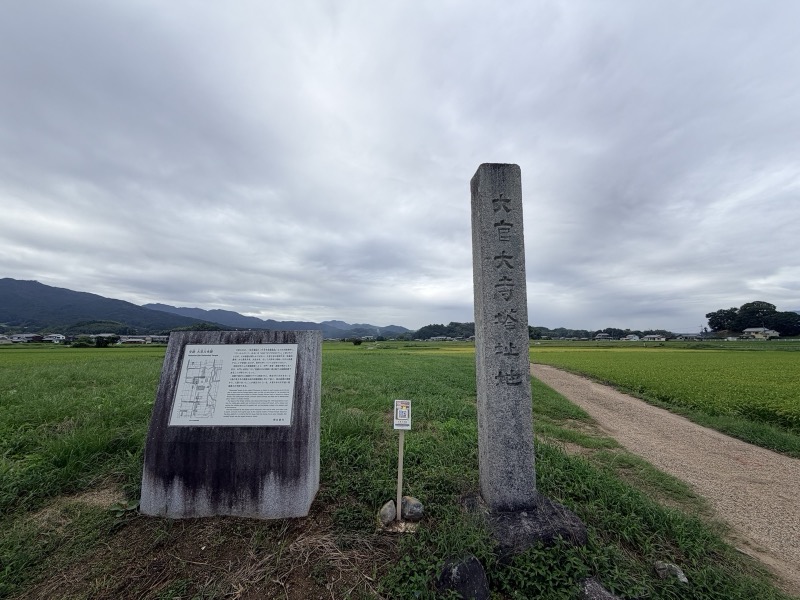
大官大寺跡
The site of the largest state temple of Asuka-Fujiwara, once crowned by a nine-storey pagoda.
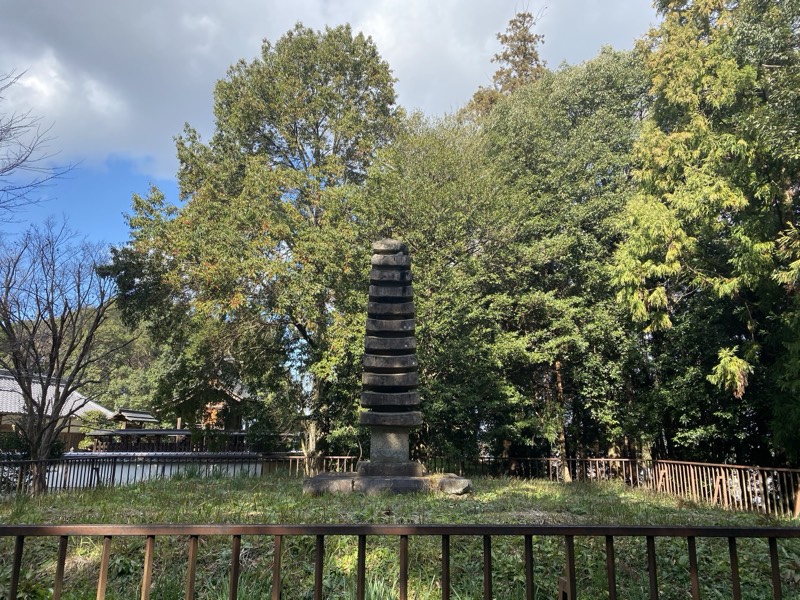
檜隈寺跡/於美阿志神社
A temple site linked to the Yamato no Aya, a clan of immigrant origin, with a thirteen-storey stone pagoda.
RELATED COLUMN
 Asuka-Fujiwara World Heritage: All 19 Component Sites and How to Visit Them, with Half-Day, One-Day and Two-Day Routes"Asuka-Fujiwara" was inscribed on the World Heritage List in 2026. We list all 19 component sites with their…How a Foreign Buddha Became a Japanese Face: Buddhist Statues of Asuka and FujiwaraFrom the Asuka Daibutsu to the Yakushi Triad of Yakushi-ji Temple took about a hundred years. Over that…
 Where Was the Naniwa Canal? A Discarded Buddha's Road to Zenkō-jiA waterway in Osaka near the sea, or a small pond in Asuka? The "Naniwa no Horie", which the Nihon Shoki…