
Published
A waterway in Osaka near the sea, or a small pond in Asuka? The "Naniwa no Horie", which the Nihon Shoki names as the place where a Buddhist statue was thrown away, still has two candidates today.
In 552, King Seong of the Korean kingdom of Baekje sent a gilt-bronze Buddhist statue to Japan. This is the scene usually said to mark the official introduction of Buddhism.
The court was divided over whether to accept it. Soga no Iname asked to be allowed to worship it, and was given permission. Mononobe no Okoshi and Nakatomi no Kamako, on the other hand, objected that it would bring down the wrath of the native gods.
Then an epidemic broke out. The Mononobe and their allies argued that it was the Buddha's doing, burned the temple and threw the statue into the "Naniwa no Horie" (the Naniwa canal). So the Nihon Shoki (Japan's oldest official chronicle, compiled in 720) records.
It is the story of Buddhism's arrival, yet what it actually describes is the newly arrived Buddha being thrown away.
The story has a sequel. It is found not in the Shoki, however, but in the Zenkō-ji engi, the founding legend of Zenkō-ji Temple, written later.
The statue sunk in the canal was not lost for good. When a man from Shinano Province (present-day Nagano) named Honda Yoshimitsu was passing through Naniwa, the Buddha called out to him from the water. Yoshimitsu carried it home on his back and later built a temple to enshrine it. That, the story goes, is Zenkō-ji in Shinano.
The temple's name comes from his name (Yoshimitsu can also be read Zenkō). Its principal image is the Ikkō Sanzon Amida Nyorai, an Amida Buddha triad. It is still guarded as an absolute hidden Buddha that no one is allowed to see.
A discarded Buddha becomes the most widely venerated hidden Buddha in Japan. As a story, it could hardly be better constructed.
The two stories do not fit neatly together, however.
The statue in the Shoki is a Shaka (the historical Buddha). The principal image of Zenkō-ji is an Amida Buddha, and in the form of a triad sharing a single halo. It is a different Buddha altogether.
The Zenkō-ji legend took shape long after Buddhism's official introduction. A later age gave an answer to the question of where the discarded Buddha went. That seems the most natural reading.
Even so, this legend has been handed down for a long time, and has drawn many people to Shinano. Whether or not the story is true, the story itself has had power for well over a thousand years.
So where was the "Naniwa no Horie"?
A horie is a channel dug to carry water. The Nihon Shoki records that Emperor Nintoku had a canal dug at Naniwa. Read plainly, it would be that waterway, which ran through what is now the city of Osaka. It was close to the sea, and it makes sense as the place where envoys from Baekje would arrive.
That is the first candidate.
The other candidate is in Asuka.
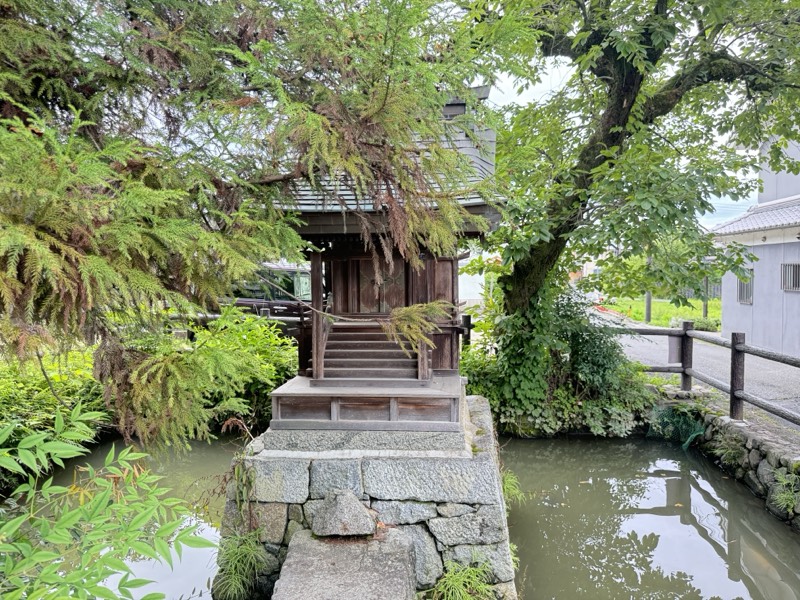
In the grounds of Kōgen-ji Temple in Toyura there is a small pond called Naniwa-ike (Naniwa Pond). A tradition there says this is where the statue was thrown.

There is a reason for this location. Kōgen-ji stands where Soga no Iname purified his "Mukuhara house" and made it into a temple. This is precisely where the discarded Buddha had originally been kept.
The house that accepted the Buddha was here, and the pond where it was thrown away is right next to it. As a story, this version actually fits better.
In addition, the head of a gilt-bronze Buddha has been found nearby, and it is kept at the temple.
If you choose the canal in Osaka, the geography, close to the sea, makes sense. But the question remains why anyone would carry the statue all the way from Asuka to Naniwa to throw it away.
If you choose the pond in Asuka, the whole story takes place right next to where the Buddha was kept. But the word horie, "canal", is an odd one to use for a small inland pond.
The Shoki does not pin down the location. Both readings are possible, and both have weak points. Nothing conclusive has been found.
What can be said is that this tradition has survived in Asuka, the pond has been given a name, and it is still cared for today. Whether the story began here or became attached to this place later is unknown. Even so, the very fact that it has been told for well over a thousand years is the shape this land's memory takes.
Naniwa Pond is in the grounds of Kōgen-ji Temple. A small shrine stands in the middle of the pond, reached by a stone bridge.
Beneath the same grounds lies the platform of the lecture hall of Toyura-dera Temple, and beneath that, the remains of Toyura Palace. The place where the country split over whether to accept the Buddha became, just as it was, Japan's first nunnery.
Immediately to the east is the Toyura Palace Site, and to the north the foot of Amakashi Hill. The beginnings of Asuka are gathered within walking distance.
RELATED SPOT
向原寺(豊浦寺跡)
A temple standing on the site of Toyura-dera, Japan's first nunnery, with the Naniwa Pond tied to the legend of Buddhism's arrival.
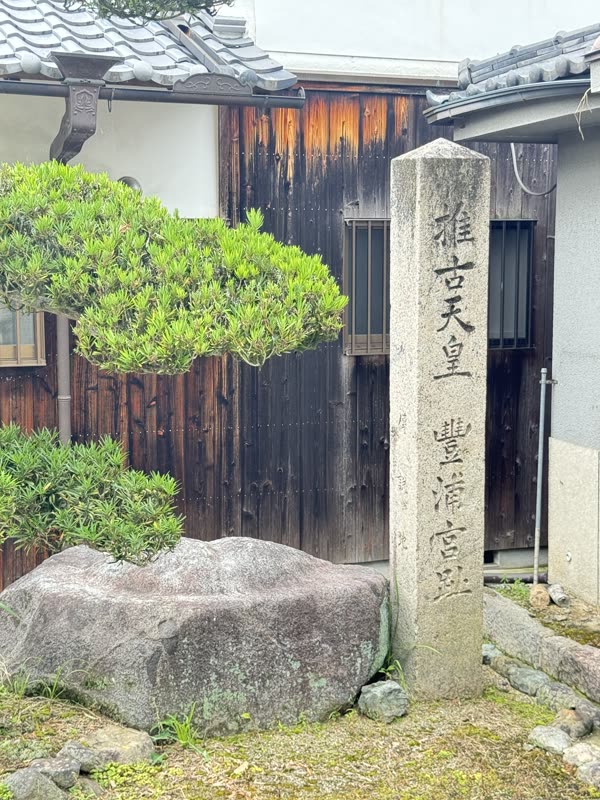
豊浦宮跡
The site of the palace where Empress Suiko took the throne, marking the beginning of the Asuka period.
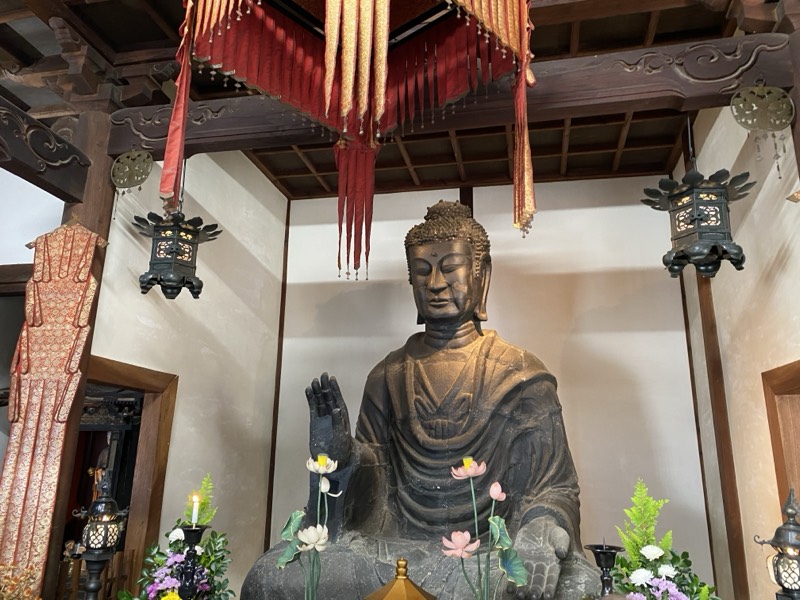
飛鳥寺・蘇我入鹿首塚
Japan's first full-scale Buddhist temple. The Great Buddha of Asuka still sits on the spot where it was made, 1,400 years ago.
RELATED COLUMN
How a Foreign Buddha Became a Japanese Face: Buddhist Statues of Asuka and FujiwaraFrom the Asuka Daibutsu to the Yakushi Triad of Yakushi-ji Temple took about a hundred years. Over that…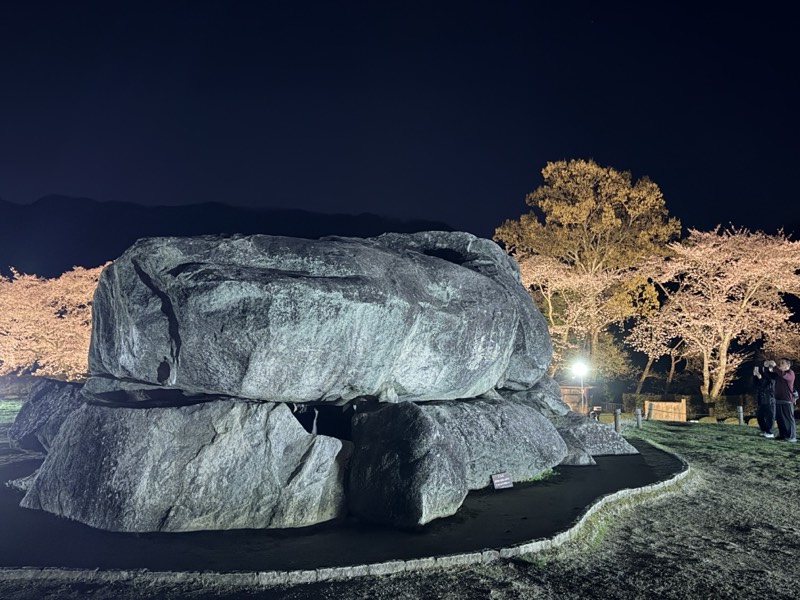 Was Prince Shōtoku Really Soga no Umako? Reading the "Prince = Umako" TheoryAlmost every achievement of Prince Shōtoku comes with the name of Soga no Umako beside it. What if the man…
 "Ōe" Is Not a Name: Naka-no-Ōe, Furuhito-no-Ōe and Yamashiro-no-ŌeThe "Ōe" in Prince Naka-no-Ōe is not a personal name. It is a term showing eligibility to succeed to the…