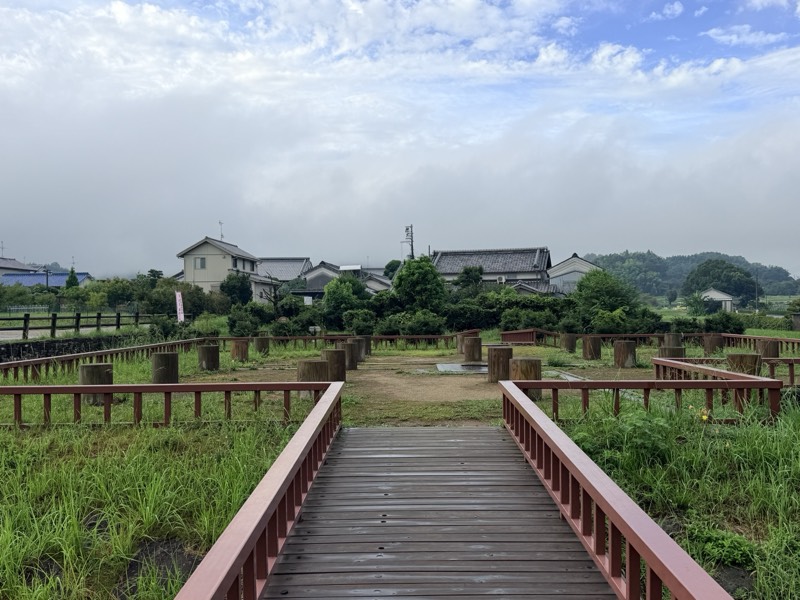
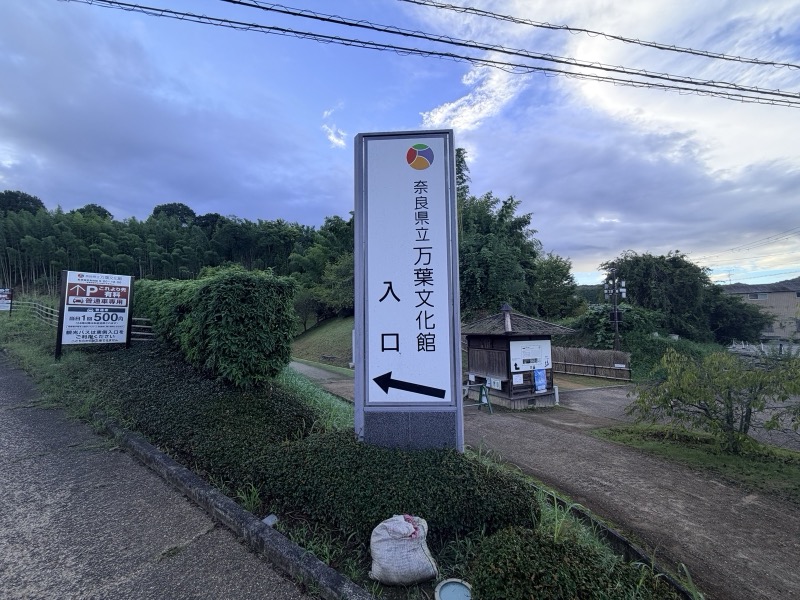
1 / 2
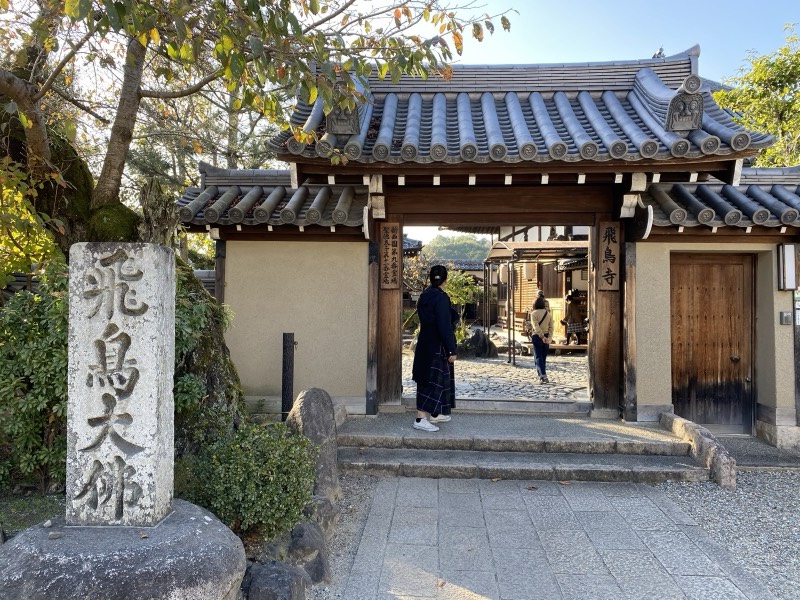
飛鳥寺・蘇我入鹿首塚(あすかでら・そがのいるかくびづか)
Japan's first full-scale Buddhist temple. The Great Buddha of Asuka still sits on the spot where it was made, 1,400 years ago.
Founded at the wish of Soga no Umako, Asuka-dera was the first full-scale Buddhist temple in Japan. Construction began in 588 and the main buildings were complete by 596.
It was originally called Hōkō-ji and later Gangō-ji. Its formal name today is Torigatayama Angoin, and it belongs to the Buzan school of Shingon Buddhism.
Before this, Japan had no buildings with tiled roofs or pillars set on stone bases. Temple carpenters and tile makers were invited from the Korean kingdom of Baekje, bringing the technology with them. Asuka-dera is where Japanese architecture first learned to build with stone and tile.
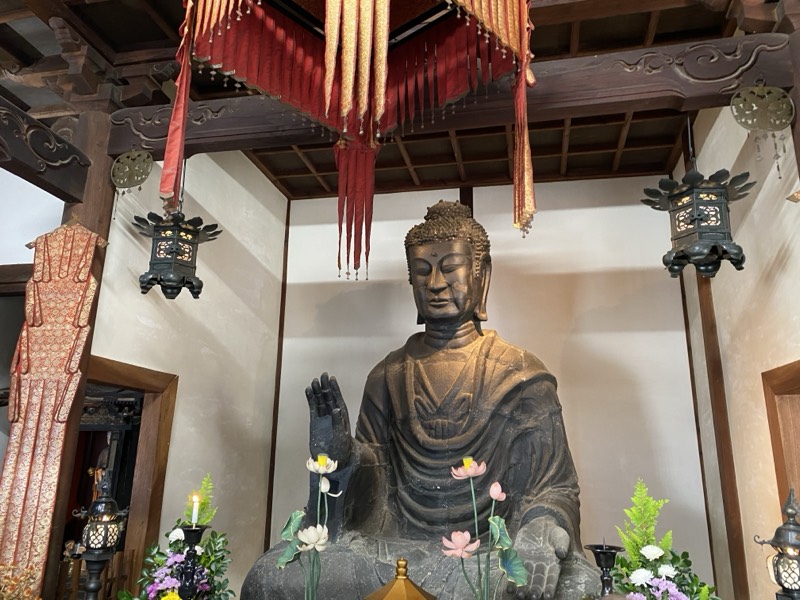
The temple's main image is a seated bronze Shakyamuni Buddha known as the Asuka Daibutsu. It is said to have been made in 609 by the sculptor Kuratsukuri no Tori, and is considered the oldest surviving Buddhist statue in Japan. It stands about 2.75 m tall and is an Important Cultural Property.
Look at the long face, the almond-shaped eyes and the faint smile. The eyes are set at slightly different heights, so the expression changes depending on whether you see it from the front or from an angle. It looks quite unlike the more polished Buddhas of later centuries.
The statue was badly damaged by repeated fires. In 1196 lightning set the hall ablaze, and much of the original bronze was lost in later repairs.
Even so, parts of the upper face and some fingers of the right hand are thought to be original. Above all, the Buddha is believed never to have been moved in 1,400 years, sitting on the same pedestal all that time.
The temple burned, the halls were lost, the capital moved away, and only the Buddha stayed. No other Buddhist statue in Japan has remained in one place for so long.
The original temple had a pagoda at its centre, surrounded on the east, west and north by three main halls. This layout is unknown elsewhere in Japan and is thought to resemble temples of the Korean kingdom of Goguryeo.
Today's Great Buddha sits where the central hall once stood. The temple grounds are a National Historic Site, and the base stone that held the pagoda's central pillar still remains.
In 718, when the capital moved to Heijō-kyō (Nara), the temple moved with it. That temple is Gangō-ji in Nara today.
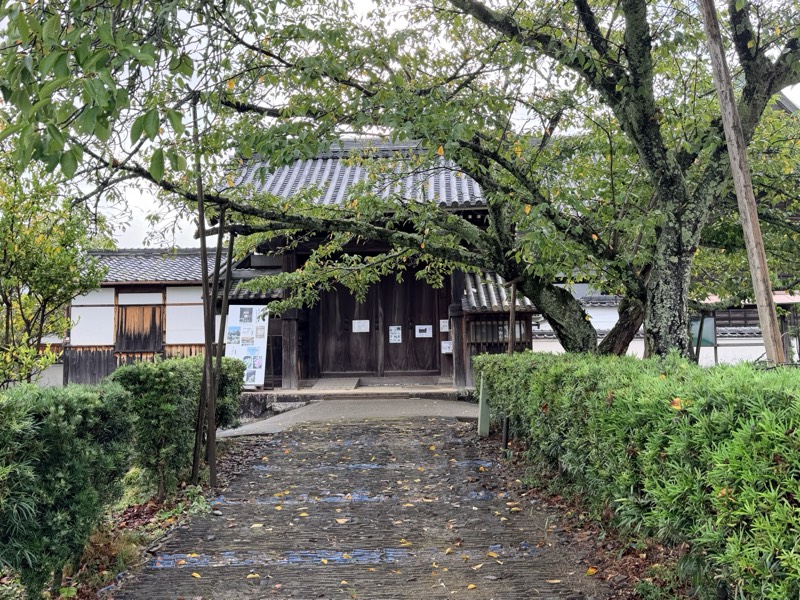
But a temple remained in Asuka too, known as the original Gangō-ji. It declined after the fire of 1196, and the present main hall was rebuilt in 1826. Compared with the great complex of the past, only one small hall now stands.
In the field just outside the west gate stands a lone five-tiered stone stupa. It is said to mark the grave of the head of Soga no Iruka, who was assassinated in the Isshi Incident of 645, the coup that ended the Soga clan's power.
The glory of the Soga, who built Asuka-dera, and their downfall face each other only a few dozen metres apart. It is one of the most dramatic views in Asuka.
The stupa itself appears to date from the Kamakura period (1185–1333) or later, and no one knows when the legend began.
Right by the "Asuka Daibutsu-mae" stop on the Asuka loop bus from Kintetsu Kashiharajingu-mae Station. There is an admission fee, and photography is allowed inside the hall.
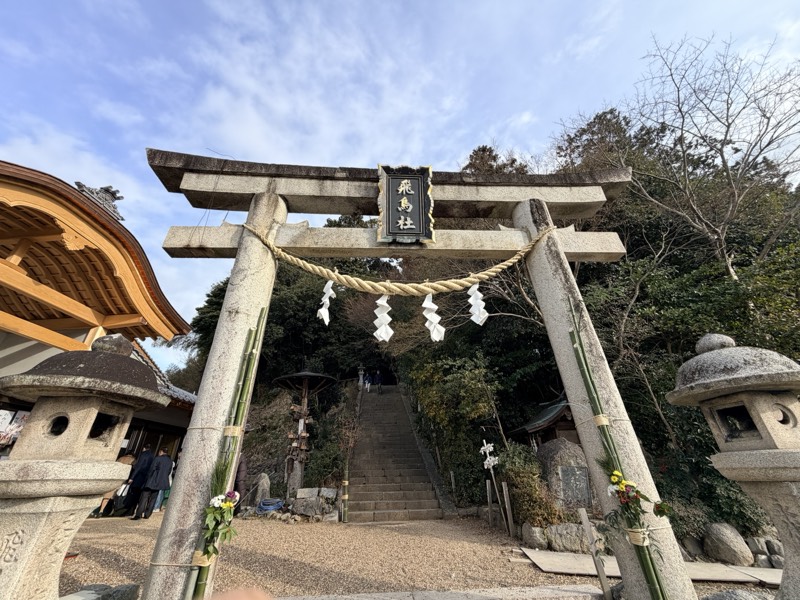
Asuka-niimasu Shrine is a five-minute walk away and the Asuka Palace site about ten minutes. Beyond the head mound you can see Amakashi Hill.
Published
READ MORE
 Asuka-Fujiwara World Heritage: All 19 Component Sites and How to Visit Them, with Half-Day, One-Day and Two-Day Routes"Asuka-Fujiwara" was inscribed on the World Heritage List in 2026. We list all 19 component sites with their…
 Near Asuka and Far Asuka: Two Asukas Seen from NaniwaAsuka is not only the village in Nara. Around Habikino and Taishi in Osaka Prefecture there is another Asuka…
 Who Was Prince Shōtoku? Born at Tachibana-dera, Moved to IkarugaThe Twelve Cap Ranks, the Seventeen-Article Constitution, the embassies to Sui China: Prince Shōtoku…
 Was Prince Shōtoku Really Soga no Umako? Reading the "Prince = Umako" TheoryAlmost every achievement of Prince Shōtoku comes with the name of Soga no Umako beside it. What if the man…
 The Asuka Daibutsu: How Much of It Is 1,400 Years Old?In the Kamakura period (1185–1333), lightning set Asuka-dera Temple ablaze. All that survived, the records…How a Foreign Buddha Became a Japanese Face: Buddhist Statues of Asuka and FujiwaraFrom the Asuka Daibutsu to the Yakushi Triad of Yakushi-ji Temple took about a hundred years. Over that…Zenshin-ni: The First Person in Japan to Become a Nun Was an 11-Year-Old GirlIn 584, three people took holy orders in Asuka. All three were women, daughters of immigrant families. A…Where Japan as a State Began: The 19 Sites of the Asuka-Fujiwara World Heritage PropertyIt was inscribed on 26 July 2026. All that was chosen were the remains of palaces, temples and tombs, and…
 Where Was the Naniwa Canal? A Discarded Buddha's Road to Zenkō-jiA waterway in Osaka near the sea, or a small pond in Asuka? The "Naniwa no Horie", which the Nihon Shoki…
 Jōe: Home After Twelve Years of Study in China, Dead the Same YearThe eldest son of Fujiwara no Kamatari crossed to Tang China at the age of eleven. He came back in the autumn…
 The Ones Who Came Back Across the Sea: What the Overseas Students Brought HomeTo Sui China, then to Tang. Some spent decades across the sea before coming home. What they brought back was…
 Why Did People Stop Building Kofun?For more than three hundred years, burial mounds kept growing larger. During the 7th century they shrank, and…
 飛鳥 and 明日香: two ways of writing the same placeThe ruins and the historical period are written 飛鳥, the village is written 明日香. Both are read "Asuka", so why…Clan temples and state temples: telling apart the temples of AsukaAsuka-dera, Toyura-dera, Yamada-dera, Kawahara-dera, Daikandai-ji, Moto-Yakushi-ji. Who built them, and for…
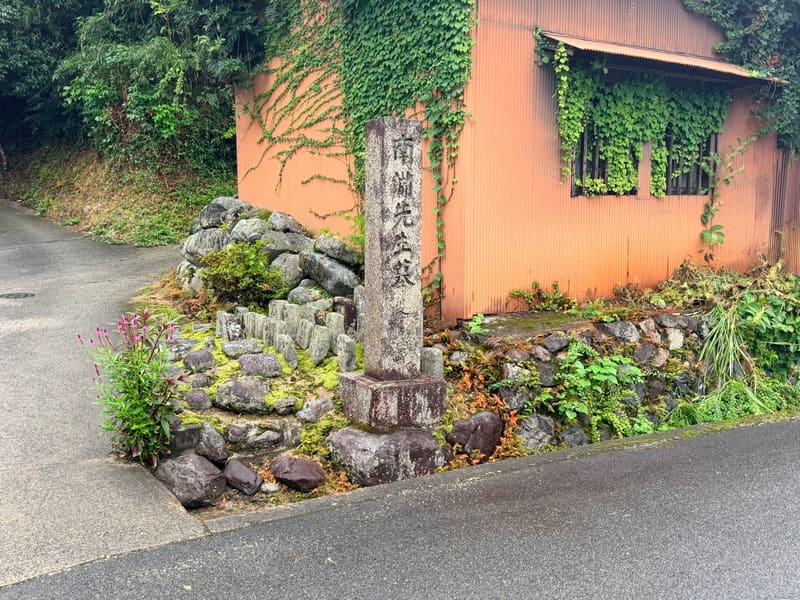 Minabuchi no Shōan: The School That Prepared the Taika ReformsPrince Naka no Ōe and Nakatomi no Kamatari went to study with a scholar who had spent more than thirty years…
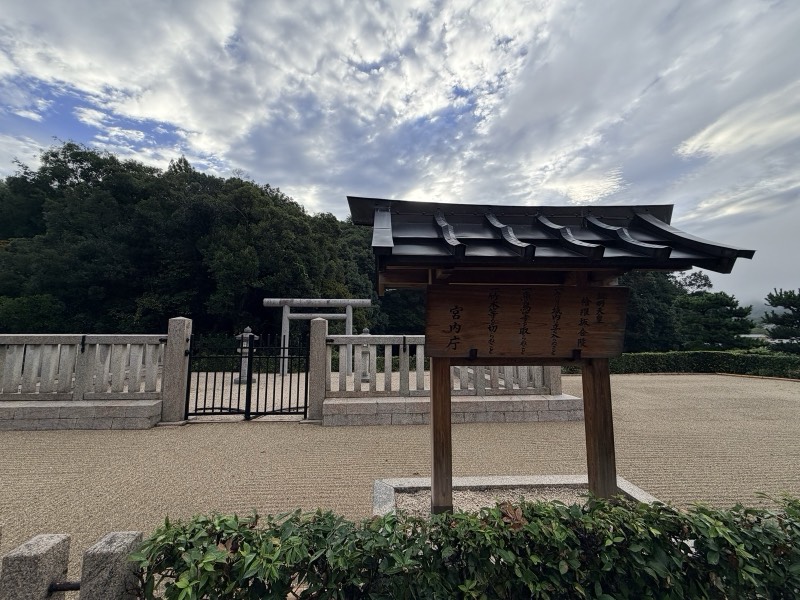 Emperor Kinmei, the Link in the Chain: The Bloodline Leading to Today's Imperial FamilyFrom the accession of his father, Emperor Keitai, to the reigns of the children who took the throne one after…
NEARBY