
Published
Prince Naka no Ōe and Nakatomi no Kamatari went to study with a scholar who had spent more than thirty years on the continent after travelling with an embassy to Sui China. His school is said to have stood on a sloping road in Inabuchi.

In 608, among the students who travelled to Sui China with Ono no Imoko was Minabuchi no Shōan. The Nihon Shoki (Japan's oldest official chronicle, compiled in 720) records him as "Minabuchi no Ayahito Shōan". He is thought to have come from a family of immigrant descent, and the years of his birth and death are unknown.
Shōan returned in 640, more than thirty years after he had left.
Those thirty years were a time of upheaval on the continent. The Sui, to which Shōan had travelled, fell ten years after he arrived. The Tang rose in its place and set about building a system of government based on ritsuryō (law codes). Shōan witnessed, from beginning to end, one dynasty falling and the next assembling the machinery of the state.
At the time, Japan was in the hands of the Soga clan. The state rested on a balance of power among powerful clans, each holding its own land and people. A system with the sovereign at its centre, keeping household registers, holding land and people as the state's, and governing by law, which the Tang had already put into practice, existed nowhere yet.
What is certain is that Shōan, back home, was one of the few people who could tell what he had seen on the continent.
The Nihon Shoki records that Prince Naka no Ōe and Nakatomi no Kamatari went together to Shōan to study "the teachings of Zhou and Kong". Zhou and Kong are the Duke of Zhou and Confucius; in other words, Confucianism.
And on the way there and back, the chronicle says, the two worked out their plan to overthrow the Soga.
In 645, Soga no Iruka was killed in the Isshi Incident. The rebuilding of government that followed is what we call the Taika Reforms. Household registers were compiled, the state took hold of land and people, and officials were posted to the provinces. Japan was drawing closer to the kind of state Shōan had seen on the continent.
But all the chronicle actually says is that they went to study Confucianism. How far Shōan taught them the concrete contents of the law codes is not recorded. What we do know is what the two who studied with him did afterwards.
The picture closely resembles Chōshū twelve hundred years later.
The young men who attended Yoshida Shōin's school, the Shōka Sonjuku, drove the Meiji Restoration. Shōin himself was executed without seeing the Restoration. It was his students who acted.
The two who attended Shōan's school likewise went on to rebuild the country after studying there. What became of Shōan afterwards is not known. There is not even a record of whether he lived to see the Isshi Incident.
The teacher's name survives, but not what he did. Instead, what survives are the deeds of those who studied with him. The record of people called teachers often takes this form.
There are differences, of course. Shōin acted himself, wrote, and left a great many words behind. All that remains of Shōan is a brief mention in the Nihon Shoki. What they share is just one thing: a country changed because of a school.
At a corner of the road climbing through the village of Inabuchi stands a stone monument inscribed "Tomb of Master Minabuchi". The small mound behind it has long been said to be Shōan's grave. The school, too, is said to have been somewhere around here.
A little further down, stepping stones still cross the Asuka River. To come up to Inabuchi from the area of the Asuka palaces, you have to cross this river. The road that Prince Naka no Ōe and Nakatomi no Kamatari walked must have crossed the river somewhere too.
Hop across the stones and climb the slope. Somewhere along the way, the two were talking. This is a place where you can picture that single line of the chronicle on the road itself.
RELATED SPOT
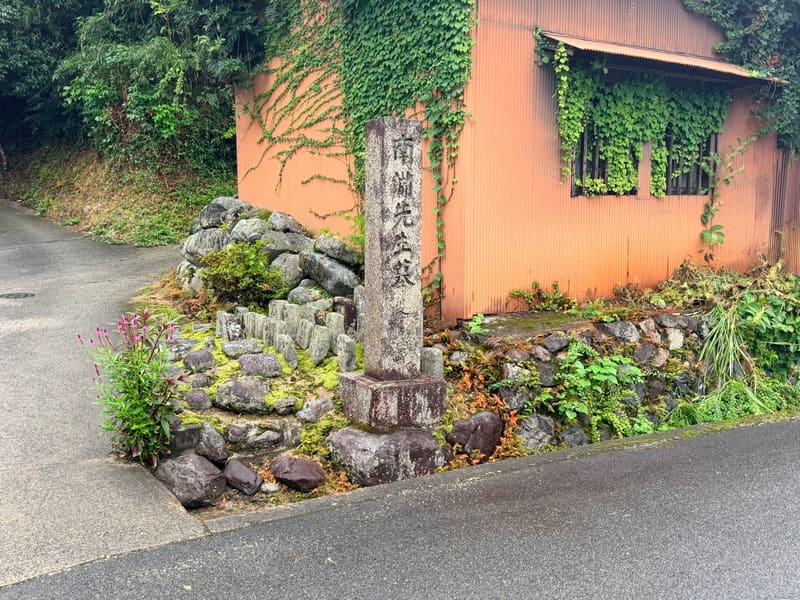
南淵請安墓
A small mound said to be the grave of a scholar who returned from Sui-dynasty China. Prince Naka no Ōe and Nakatomi no Kamatari came here to study with him.
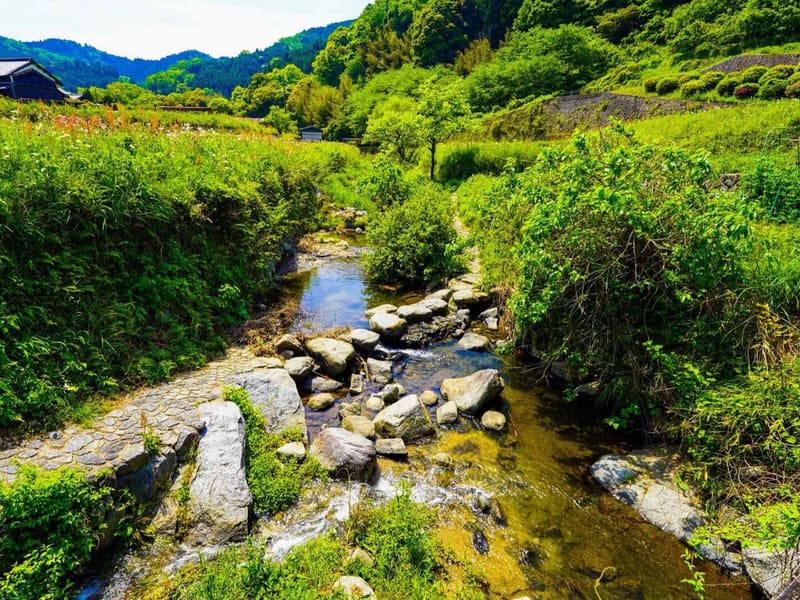
飛鳥川の飛び石
No bridge, just stones set in the riverbed to hop across. A crossing often linked with a poem from the Man'yōshū.
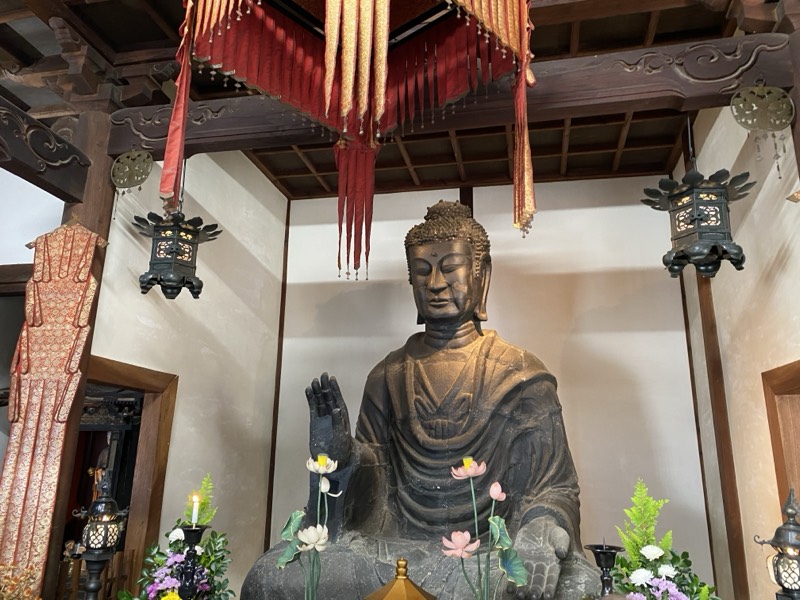
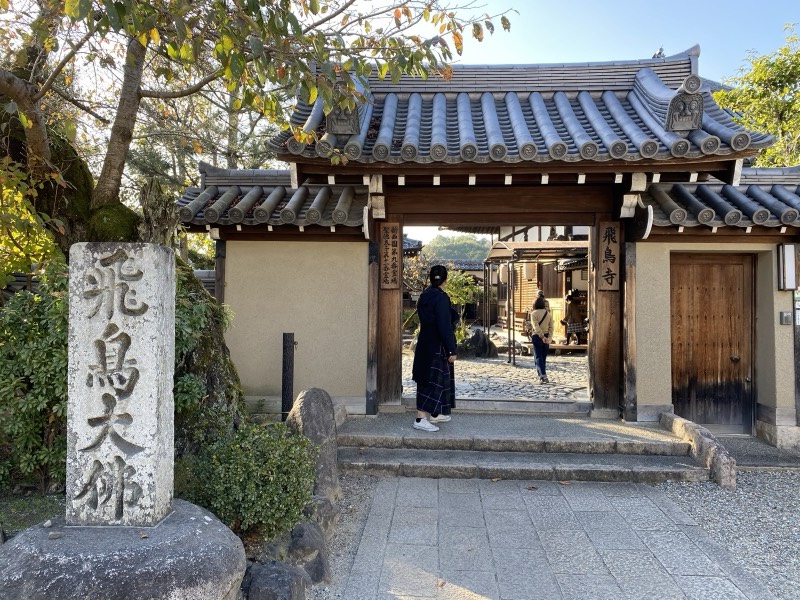
飛鳥寺・蘇我入鹿首塚
Japan's first full-scale Buddhist temple. The Great Buddha of Asuka still sits on the spot where it was made, 1,400 years ago.
RELATED COLUMN
 The Ones Who Came Back Across the Sea: What the Overseas Students Brought HomeTo Sui China, then to Tang. Some spent decades across the sea before coming home. What they brought back was…
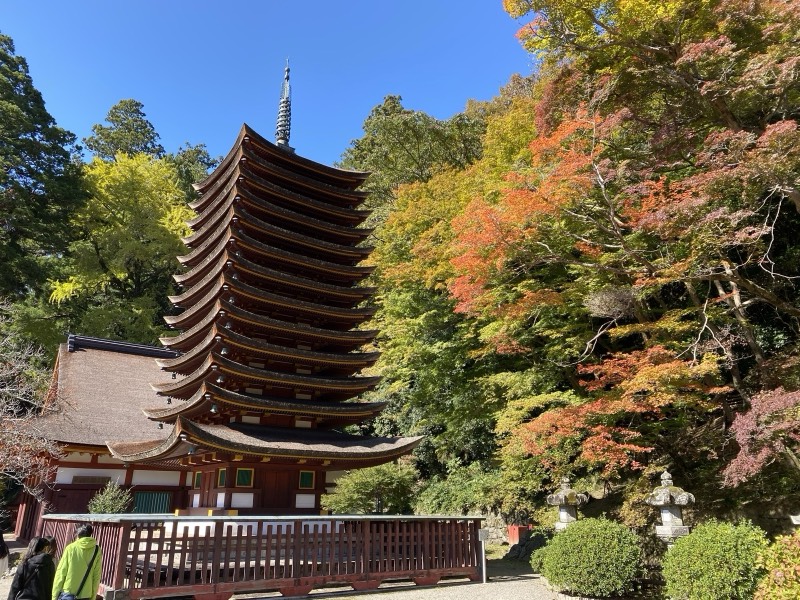 Jōe: Home After Twelve Years of Study in China, Dead the Same YearThe eldest son of Fujiwara no Kamatari crossed to Tang China at the age of eleven. He came back in the autumn…
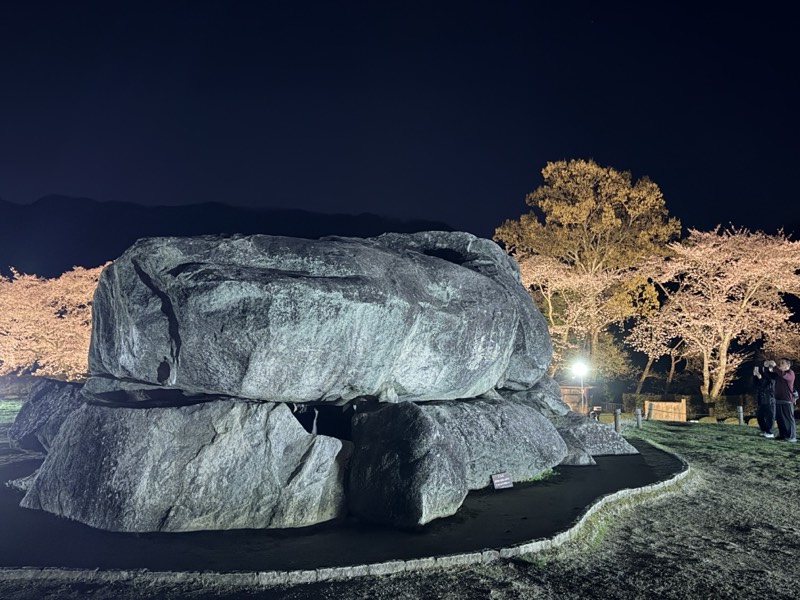 Was Prince Shōtoku Really Soga no Umako? Reading the "Prince = Umako" TheoryAlmost every achievement of Prince Shōtoku comes with the name of Soga no Umako beside it. What if the man…