
Published
To Sui China, then to Tang. Some spent decades across the sea before coming home. What they brought back was not objects but the very framework of a state.
In 607, Ono no Imoko crossed to Sui China. He was the envoy who carried the famous letter from "the Son of Heaven where the sun rises".
But the following year, 608, was more significant. When Imoko crossed the sea again that year, eight students and student monks went with him. Envoys simply go and come back; students stay on. For years, sometimes for decades.
The Nihon Shoki (Japan's oldest official chronicle, compiled in 720) lists the eight by name. Among them were three who would later move Asuka.
Min, Takamuko no Kuromaro and Minabuchi no Shōan.
They went to Sui, but Sui fell in 618. In the middle of their studies the dynasty changed, and it became Tang. They witnessed at first hand a new dynasty rebuilding its institutions.
Min returned in 632. Takamuko no Kuromaro and Minabuchi no Shōan returned in 640, thirty-two years after they had crossed.
Minabuchi no Shōan opened a private school in Asuka. The Nihon Shoki records that Prince Naka no Ōe and Nakatomi no Kamatari attended it and talked together on the way there and back. The Isshi Incident of 645 came five years later.

Min also ran a school, and Soga no Iruka is said to have studied there. So the same learning was being studied by those who struck and the man who was struck down.
After the Isshi Incident, Min and Takamuko no Kuromaro were appointed kuni no hakase (national scholars), entrusted with designing the new government. The two men who had spent decades watching institutions in Tang were placed at the heart of remaking the state.
Takamuko no Kuromaro later crossed to Tang again in 654, this time as an envoy, and died in Chang'an. He made the crossing twice, and the second time he did not come back.
From 630 the destination became Tang. This was the beginning of the embassies to Tang (kentōshi).
The 653 embassy included Dōshō. In Chang'an he studied under Xuanzang, the same Xuanzang who inspired the monk Tripitaka in Journey to the West.
After returning, Dōshō built a meditation hall in the south-east corner of Asuka-dera Temple, lived there and taught the Hossō school of Buddhism. He is also said to have travelled the provinces digging wells and building bridges. There is even a story that it was Dōshō who built the Uji Bridge.

He died in 700 and, at his own request, was cremated at Ōbara. The Shoku Nihongi (the official chronicle that continues the Nihon Shoki) states: "Cremation in the realm began with him." Cremation in Japan, then, began with this man.
On the same ship in 653 was Jōe, the eldest son of Nakatomi no Kamatari. He was eleven. He came home twelve years later and died within the same year.
In 702, Awata no Mahito crossed to Tang as shissetsushi, the envoy bearing the imperial staff of authority.
Tang was then under the rule of Empress Wu Zetian, and Mahito met her. Chinese histories recorded this envoy's bearing and manners favourably.
This embassy is said to have conveyed the country name "Nihon" (Japan) to Tang. Until then the Chinese had called the country Wa. This was the envoy who formally announced the change of name.
After returning, Mahito rose as high as chūnagon (Middle Counsellor). He was an envoy who came back not only having studied institutions, but having had his country's name recognised.
Among the 702 mission was Yamanoue no Okura, then a low-ranking official. He later became governor of Chikuzen and is known as the poet of the "Dialogue on Poverty" in the Man'yōshū (Japan's oldest anthology of poetry).
Not everyone made it home.
Abe no Nakamaro, who crossed in 717, passed the Tang civil service examinations and served Emperor Xuanzong. He mixed with Li Bai and Wang Wei and lived as a Tang official. In 753 he finally boarded a ship for home, but it was driven off course by a storm and washed up in Annam (present-day Vietnam).
Nakamaro returned to Chang'an and spent the rest of his life in Tang. He died in 770, aged 72, without ever setting foot in Japan again.
Ama no hara furisake mireba Kasuga naru Mikasa no yama ni ideshi tsuki kamo. "I gaze up at the wide plain of heaven: is that the moon that rose over Mount Mikasa at Kasuga?" This poem is said to have been composed while he waited for his ship home.
Some who crossed on the same ship in 717 did come home safely: Kibi no Makibi and Genbō.
Makibi spent eighteen years in Tang and brought back calendars, works on military strategy, musical instruments and surveying instruments. He later rose to udaijin (Minister of the Right). There are almost no other cases of someone who went abroad to study becoming a minister.
Genbō brought back more than 5,000 scrolls of Buddhist scripture and became sōjō, the highest rank of monk, drawing close to the centre of government, but he was eventually demoted to Dazaifu in Kyushu and died there.
The embassies to Tang themselves were halted in 894 on the advice of Sugawara no Michizane. Nearly three centuries of voyages came to an end.
Laid out like this, it becomes clear that what they brought back was not objects.
What Minabuchi no Shōan and Min brought back was a way of thinking about how to build a state. What Dōshō brought back was Buddhist learning, and a whole new way of burial. What Awata no Mahito brought back was the fact that the country's name had been recognised.
They lived abroad for decades, learned the language, understood institutions from the inside, and came back. Ships sank again and again, and some never returned. That the court kept sending them anyway was surely because what people brought back was the greatest gain of all.
Behind the palaces and temples of Asuka, and the institutions created there, stand the people who came back across the sea.
RELATED SPOT
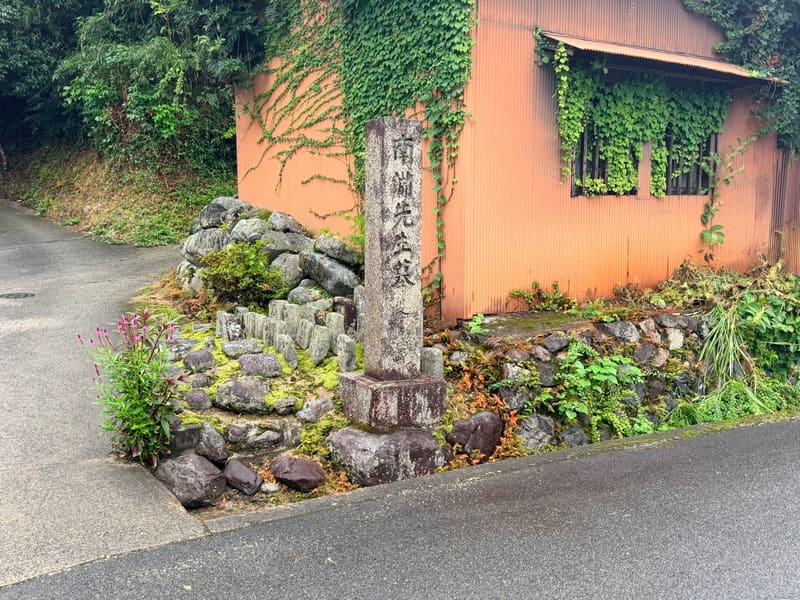
南淵請安墓
A small mound said to be the grave of a scholar who returned from Sui-dynasty China. Prince Naka no Ōe and Nakatomi no Kamatari came here to study with him.
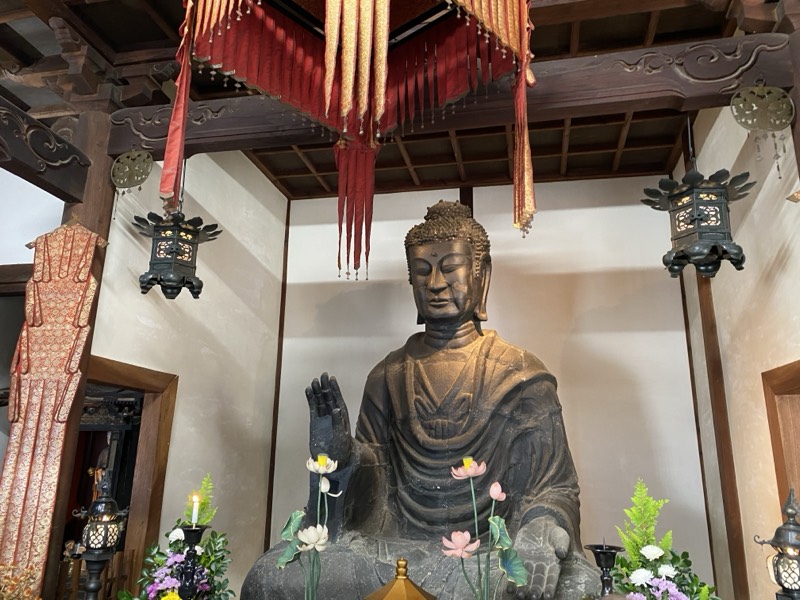
飛鳥寺・蘇我入鹿首塚
Japan's first full-scale Buddhist temple. The Great Buddha of Asuka still sits on the spot where it was made, 1,400 years ago.
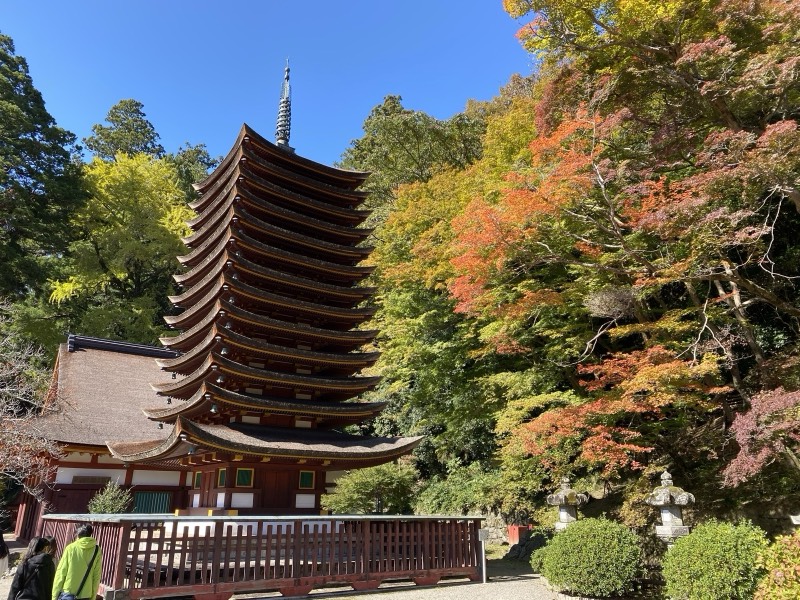
談山神社
A mountain shrine said to be where the plot behind the Taika Reforms was hatched. Its wooden thirteen-storey pagoda is the only one in the world.
RELATED COLUMN
Jōe: Home After Twelve Years of Study in China, Dead the Same YearThe eldest son of Fujiwara no Kamatari crossed to Tang China at the age of eleven. He came back in the autumn… Who Was Prince Shōtoku? Born at Tachibana-dera, Moved to IkarugaThe Twelve Cap Ranks, the Seventeen-Article Constitution, the embassies to Sui China: Prince Shōtoku…Minabuchi no Shōan: The School That Prepared the Taika ReformsPrince Naka no Ōe and Nakatomi no Kamatari went to study with a scholar who had spent more than thirty years…