
Published
The eldest son of Fujiwara no Kamatari crossed to Tang China at the age of eleven. He came back in the autumn of his twenty-third year, and died at the end of that same year. The one who wrote that he was poisoned was a member of his own family.

Jōe is said to have been born in 643. He was the eldest son of Nakatomi no Kamatari (later Fujiwara no Kamatari).
Two years after his birth came the Isshi Incident of 645. He spent his childhood during the years when his father, having struck down Soga no Iruka together with Prince Naka no Ōe, was rising to the centre of power.
In 653 an embassy was sent to Tang China, and Jōe joined it as a student monk. He was eleven by the traditional Japanese count.
On the same ship was Dōshō, the monk who would later study under Xuanzang and bring the Hossō school of Buddhism to Japan.
Jōe is said to have entered Chang'an, lived at the Huiri Daochang monastery and studied under the master Shentai. Chang'an was then at the height of its prosperity as the capital of Tang, and students from many countries gathered there.
His stay lasted twelve years. He left as a child and returned as an adult.
In 665 he returned to Japan on the ship of the Tang envoy Liu Degao.
And on the 23rd day of the 12th month of the same year, he died. He was 23. Only a few months had passed since his return.
A man who had spent twelve years studying and had finally come home died within the same year. It is extremely abrupt.
A strange account of this death survives.
The Tōshi Kaden is a history of the Fujiwara family compiled by the family itself, by Fujiwara no Nakamaro, in the mid-8th century. It says, in effect, that Jōe was envied by a man from Baekje, who poisoned him.
A record left by his own family says he was murdered, and even names the culprit as a man from Baekje. And yet the Nihon Shoki (Japan's oldest official chronicle, compiled in 720) makes no mention of it.
665, the year Jōe came home, was a difficult time for Japan.
Two years earlier, in 663, came the Battle of Hakusukinoe (Baekgang). The army Japan had sent to help the Korean kingdom of Baekje was heavily defeated by the allied forces of Tang and Silla. Baekje fell, and many refugees crossed to Japan.
They brought skills and learning with them and were welcomed at court. Meanwhile here was Kamatari's eldest son, back after twelve years in Tang with a Tang education. From Baekje's point of view, he had studied under the very Tang that had destroyed their country.
It cannot be said that there were no seeds of conflict. But this is only what the Kaden says, and no other record supports it.
There is another way of looking at it.
Jōe was a monk. Kamatari had a second son, Fuhito, born in 659. When Jōe died, Fuhito was seven.
Had Jōe lived and returned to lay life, the eldest son might have inherited leadership of the Fujiwara. In fact Fuhito inherited, and his descendants went on to dominate the court in the Nara and Heian periods. Nakamaro was Fuhito's grandson.
In other words, for Nakamaro, the author of the Kaden, Jōe stood outside his own line of descent. Writing his death up as a poisoning by an outsider was also a way of tidying up the family history.
Was the poisoning real, or an explanation added later? There is nothing to decide it.
There is another old theory about Jōe: that he was really a son of Emperor Kōtoku, taken in and raised by Kamatari.
It appears in records handed down at Tōnomine, and there is no way to verify it. But when one tries to explain the weight of the treatment he received, sent abroad to study at state expense at the age of eleven, there is room for stories like this to arise.
The thirteen-storey pagoda of Tanzan Shrine is said to have been built by Jōe. According to the shrine's account of its origins, after returning from Tang he moved his father Kamatari's grave from Settsu (around present-day Osaka) to Tōnomine and built the pagoda over it.
But the dates do not match. Kamatari died in 669, four years after Jōe. Someone who died first cannot move the grave of a father who died later.
The year of the reburial given in the account is 678. By then Jōe had been dead for thirteen years.
Even so, this story has been told for a long time. The eldest son, who spent twelve years in Tang and died soon after coming home, builds a pagoda over his father's grave. A story that cannot stand as fact has lived on as the temple's founding legend. Perhaps there is a wish at work in it: a wish to let someone who died young accomplish something.
The place to visit with a connection to Jōe is Tanzan Shrine, east of Asuka Village. Its thirteen-storey pagoda still stands.
Dōshō, who crossed to Tang on the same ship, built a meditation hall in the south-east corner of Asuka-dera Temple after his return and lived there. The two sailed on the same ship, but their paths afterwards were very different.
RELATED SPOT
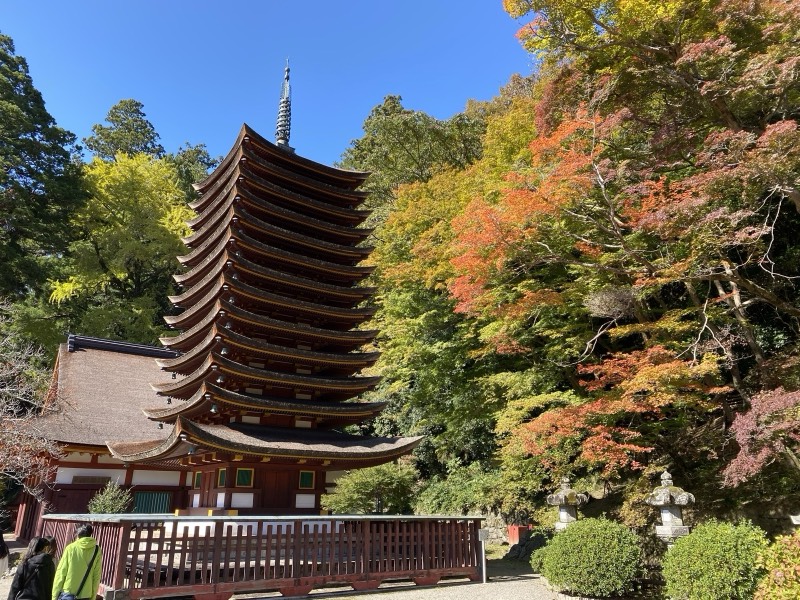
談山神社
A mountain shrine said to be where the plot behind the Taika Reforms was hatched. Its wooden thirteen-storey pagoda is the only one in the world.
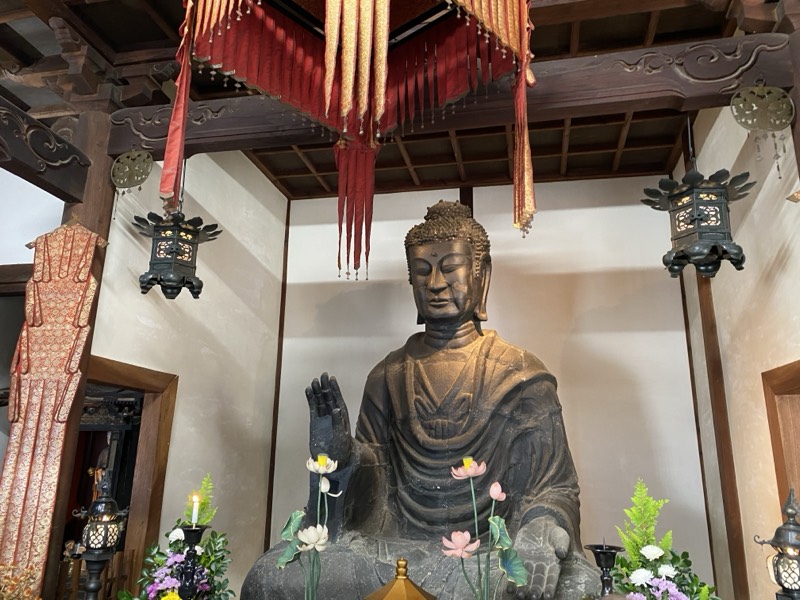
飛鳥寺・蘇我入鹿首塚
Japan's first full-scale Buddhist temple. The Great Buddha of Asuka still sits on the spot where it was made, 1,400 years ago.
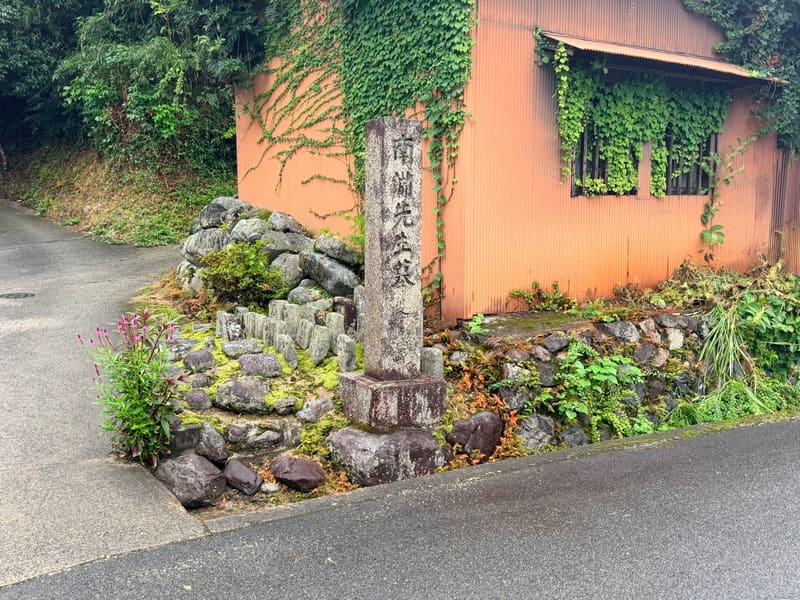
南淵請安墓
A small mound said to be the grave of a scholar who returned from Sui-dynasty China. Prince Naka no Ōe and Nakatomi no Kamatari came here to study with him.
RELATED COLUMN
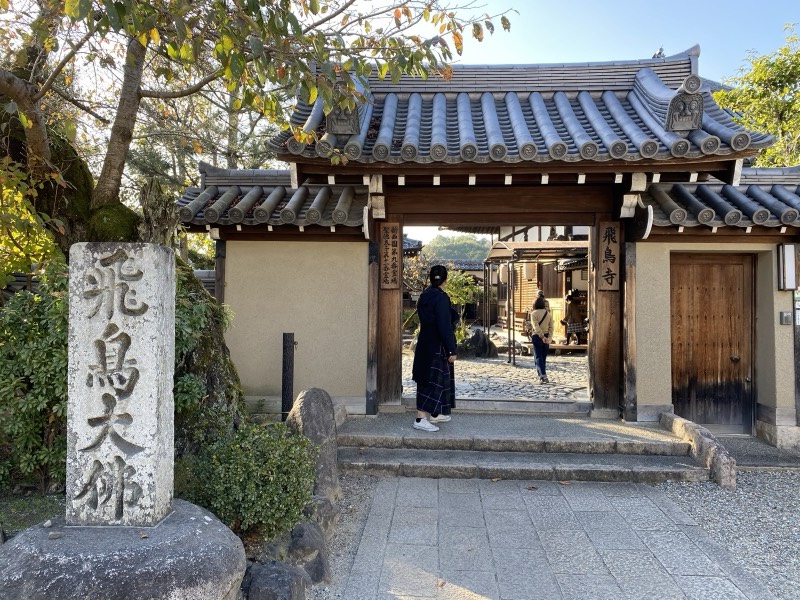 The Ones Who Came Back Across the Sea: What the Overseas Students Brought HomeTo Sui China, then to Tang. Some spent decades across the sea before coming home. What they brought back was…
 Was Prince Shōtoku Really Soga no Umako? Reading the "Prince = Umako" TheoryAlmost every achievement of Prince Shōtoku comes with the name of Soga no Umako beside it. What if the man…
 Who Was Prince Shōtoku? Born at Tachibana-dera, Moved to IkarugaThe Twelve Cap Ranks, the Seventeen-Article Constitution, the embassies to Sui China: Prince Shōtoku…