
Published
The ruins and the historical period are written 飛鳥, the village is written 明日香. Both are read "Asuka", so why are the characters different? And what does "Asuka" mean in the first place?
Walking around this village, you will notice two ways of writing its name side by side.
Asuka-dera Temple, the Asuka Palace Site, the Asuka period, Asuka Historical National Government Park: all written 飛鳥. Yet the address is Asuka Village written 明日香, and so is the village office.
Both are read "Asuka", and both refer to the same place.

明日香 is thought to have come first. 飛鳥 is a set of characters assigned to the name later.
The clue is a makurakotoba, a fixed "pillow word" placed before certain words in classical poetry. In old poems, the place name Asuka is preceded by the phrase tobu tori no, "of the flying birds". "Tobu tori no Asuka", "Asuka of the flying birds", had become a set expression.
The Man'yōshū (Japan's oldest anthology of poetry) contains this poem:
Tobu tori no / Asuka no sato o / okite inaba / kimi ga atari wa / miezu ka mo aramu. "If I go away and leave behind the village of Asuka of the flying birds, will I no longer be able to see the place where you are?"
It is said to have been composed when the capital moved from Fujiwara-kyō to Heijō-kyō, and is attributed to Empress Genmei. Its meaning: once I leave the village of Asuka behind, will the place where you live pass out of sight?
What deserves attention here is the writing. The place name is written 明日香, and tobu tori no, "of the flying birds", is attached in front of it.
Because tobu tori no Asuka was always used as a single phrase, the pillow word itself eventually came to be used to write the place name.
That is why 飛鳥, literally "flying bird", is read "Asuka": the characters and the sound do not match. No rule of reading can explain it. It is as if the first half of a stock phrase had been borrowed for the place's signboard.
Why tobu tori no came to be attached to Asuka in the first place is not clear either.

There is a passage in the Nihon Shoki (Japan's oldest official chronicle, compiled in 720) where the spelling 飛鳥 appears in official use.
It records that in 686 Emperor Tenmu changed the era name to Akamitori (Shuchō, "red bird") and at the same time named his palace Asuka no Kiyomihara no Miya, written with 飛鳥.
An era change named after a bird, and a palace named 飛鳥, "flying bird", appear side by side in the same entry. One view holds that the spelling 飛鳥 took hold around this time.
So much for the characters. But where did the sound come from? That has not been settled, and there are several theories.
One links it to the word asuka written 安宿, "a place of peaceful dwelling": the land where people who had come over from the Asian mainland settled down in peace. The traces of these immigrant groups are strong in this area, starting with Hinokuma, so in that sense the idea makes sense.
Others explain it by the landscape. Suka is an old word for a sandbar or sandy ground, and on this reading the name describes land formed by a river. Considering that the villages grew up on sediment carried down by the Asuka River, this is plausible too.

There is also a theory that it derives from the Soga. This land was the home base of the Soga clan, and the idea is that a phrase meaning "the land of the Soga" shifted over time into "Asuka".
None of them is conclusive. Tracing the origin of a place name means following a sound from before it was ever written down, so in most cases there is no way to confirm it.

In 710 the capital moved to Heijō-kyō (Nara). People, government offices and temples all moved with it.
Asuka-dera was one of them. The temple rebuilt in Heijō-kyō was called Gangō-ji, and the one left behind in Asuka came to be called Moto-Gangō-ji, the "original" Gangō-ji. The original has to be labelled "original": that is what moving means.
Place names moved too. Nara City still has a district called Asuka, written 飛鳥. There is an Asuka-chō, and there are Asuka elementary and junior high schools. These are thought to have been brought by people who moved from Asuka and carried the name of their old home to the new place.
Place names seem fixed to the land, but they travel with people.
Today's Asuka Village was created in 1956, when three villages merged: Takaichi, Sakaai and Asuka (飛鳥).
One of the three was called Asuka Village, written 飛鳥. If its name had simply been used for the new merged village, it would have looked to the other two as though they had been swallowed up. In mergers, the decision is often made not to adopt any of the old village names.
The name chosen was 明日香. It was a return to the old spelling and, at the same time, the name of none of the former villages. People also read it as "the fragrance of tomorrow", from its characters.
In 1980 a law was enacted covering this village alone, commonly called the Asuka Act. It preserves the whole village as a historic landscape and, in return, supports residents whose lives are restricted because of it. The name "Asuka Village", written 明日香, appears in the title of the law as well.

To sum up, it works roughly like this.
飛鳥 is used for the name of the period, the names of archaeological sites and words referring to ancient times: the Asuka period, Asuka-dera Temple, the Asuka Palace Site, the Asuka Palace Garden Site. The park developed by the national government is likewise Asuka Historical National Government Park, written 飛鳥.
明日香 is used as today's administrative place name: Asuka Village, the Asuka Village Office, the Asuka Act.
Neither one is the "correct" one. The difference is whether you call the same land by its ancient name or by its present-day administrative name.
There are exceptions, though: Asuka-niimasu Shrine, the Asuka River and Asuka Station are all written 飛鳥. Shrines, rivers and stations have names of their own, separate from administrative boundaries.

Get off at Asuka Station (飛鳥), walk around Asuka Village (明日香), see the Asuka Palace Site (飛鳥) and pass in front of the Asuka Village Office (明日香).
In a single day you will see both signboards many times. Rather than a source of confusion, it is a kind of proof that this land has gone on being called by this name for 1,300 years.
The same sound has survived while its characters changed. When you look up at the plaque reading "Asuka-sha" (飛鳥社) on the torii of Asuka-niimasu Shrine, remembering why those characters are read "Asuka" will change the way you see it a little.
RELATED SPOT
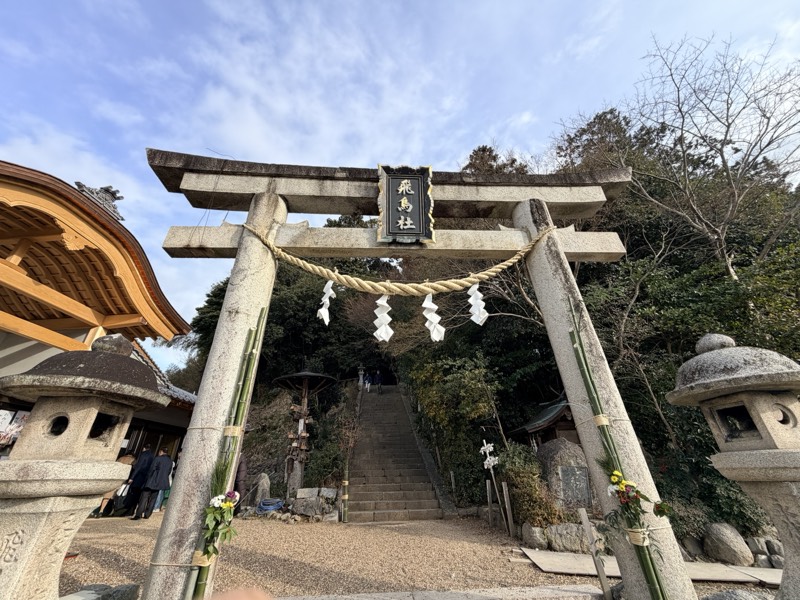
飛鳥坐神社
An ancient Asuka shrine famous for its unusual Onda Festival.
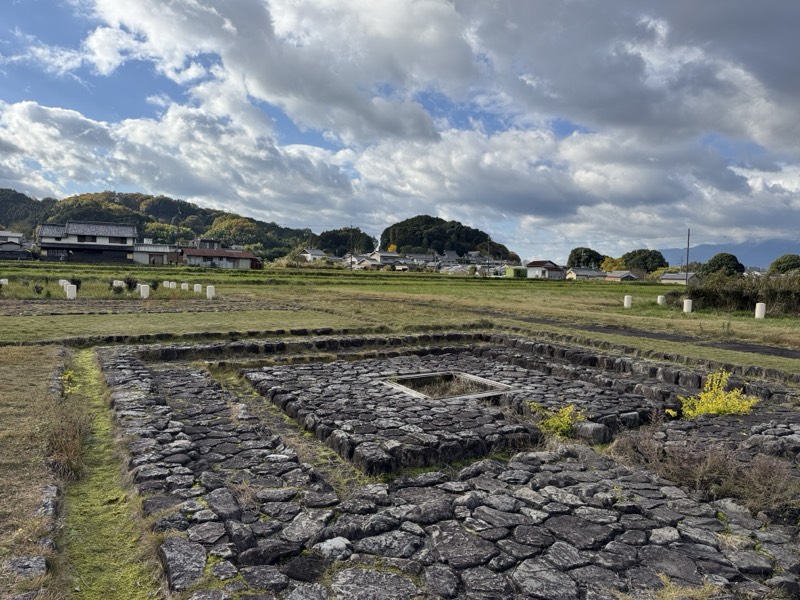
飛鳥宮跡(伝 飛鳥板蓋宮跡)
The political heart of Asuka, where several palaces were built one on top of another.
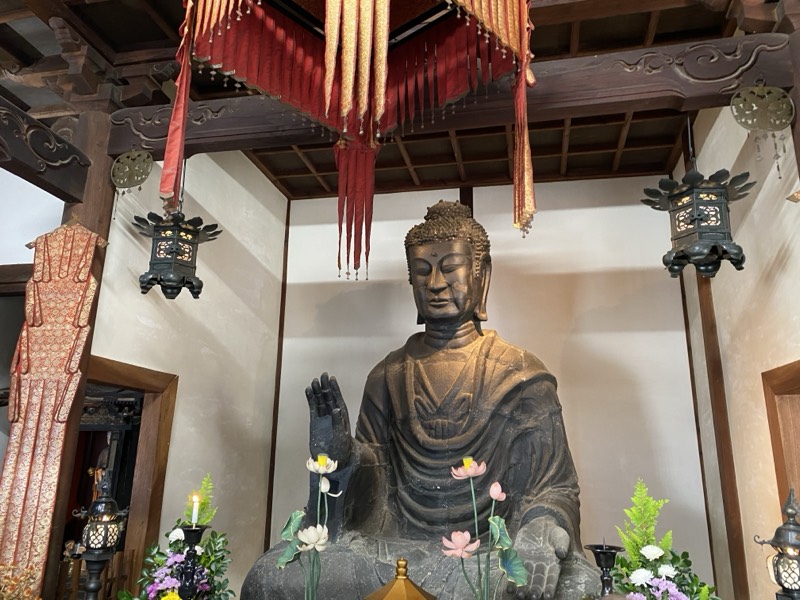
飛鳥寺・蘇我入鹿首塚
Japan's first full-scale Buddhist temple. The Great Buddha of Asuka still sits on the spot where it was made, 1,400 years ago.
RELATED COLUMN
 Was Prince Shōtoku Really Soga no Umako? Reading the "Prince = Umako" TheoryAlmost every achievement of Prince Shōtoku comes with the name of Soga no Umako beside it. What if the man…How a Foreign Buddha Became a Japanese Face: Buddhist Statues of Asuka and FujiwaraFrom the Asuka Daibutsu to the Yakushi Triad of Yakushi-ji Temple took about a hundred years. Over that…
 After the Oath: What Became of Emperor Tenmu's PrincesIn 679 Emperor Tenmu made six princes swear at Yoshino never to fight one another. It is well known that the…