


1 / 3
飛鳥坐神社(あすかにいますじんじゃ)
An ancient Asuka shrine famous for its unusual Onda Festival.
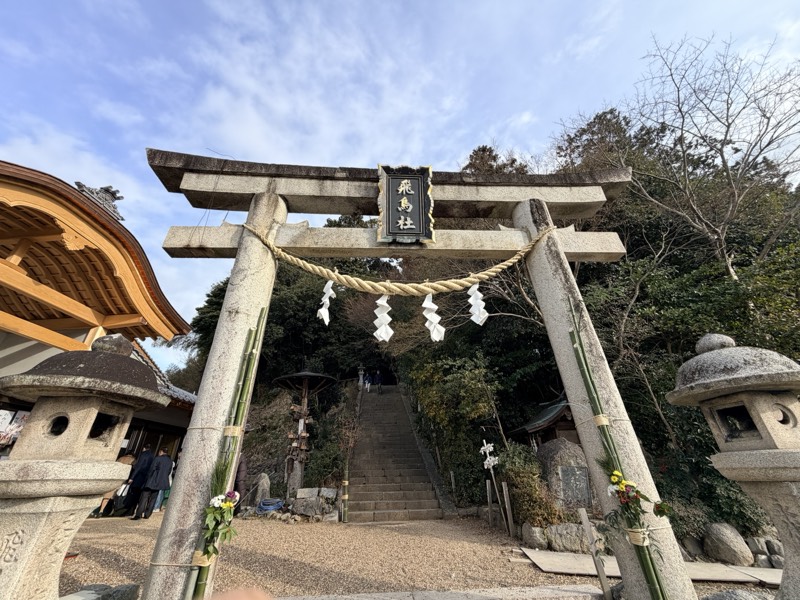
This ancient shrine stands on the slope of Torigatayama. It is listed as a Myōjin Taisha, a shrine of the highest rank, in the register of shrines in the Engishiki of the Heian period (794–1185), and it also appears in the Nihon Shoki (Japan's oldest official chronicle, compiled in 720) in an entry for 686.
Four deities are enshrined here, led by Kotoshironushi no Kami. As the guardian deities of the land of Asuka, the shrine has continued since the days when the palaces stood here.
What made the shrine famous is the Onda Festival, held every year on the first Sunday of February. It is designated an Intangible Folk Cultural Property of Nara Prefecture.
A tengu (long-nosed goblin) and Otafuku (a plump, smiling woman) appear and, starting with the motions of ploughing a rice field, act out everything up to the intimacy of a married couple, with plenty of humour. The festival prays for abundant harvests and for descendants, and it is sometimes counted among the three most unusual festivals of western Japan.
Taking home one of the "fuku no kami" (lucky papers) scattered at the end is said to bring the blessing of children, and on this day the grounds are packed with people.
Many stones called yōseki stand in the grounds. They are shaped like male genitals and reflect the shrine's character as a home of deities of union and of childbirth.
They may come as a surprise at first, but they are a simple form of faith that prays for crops to ripen and for life to be passed on from generation to generation. They are of a piece with the Onda Festival itself.
The shrine buildings were lost in a fire in the Shōwa period (1926–1989) and rebuilt using the former buildings of the Upper Shrine of Niukawakami Shrine in Yoshino.
Passing through the torii, stone steps run straight ahead, and the main shrine stands at the top. The grounds are surrounded by trees, and auxiliary shrines line the approach along the way.
About 5 minutes on foot from the "Asuka Daibutsu-mae" stop on the Asuka loop bus from Kintetsu Kashiharajingu-mae Station. It is about 5 minutes' walk from Asuka-dera Temple, and many people drop in after seeing the Great Buddha.
Visitors are welcome at any time, free of charge.
Published
READ MORE
 飛鳥 and 明日香: two ways of writing the same placeThe ruins and the historical period are written 飛鳥, the village is written 明日香. Both are read "Asuka", so why…Onda Matsuri: Acting Out the Rice Farming Year, All the Way to MarriageOn the first Sunday of February, the grounds of Asuka-niimasu Shrine fill with people for a festival in which…
NEARBY
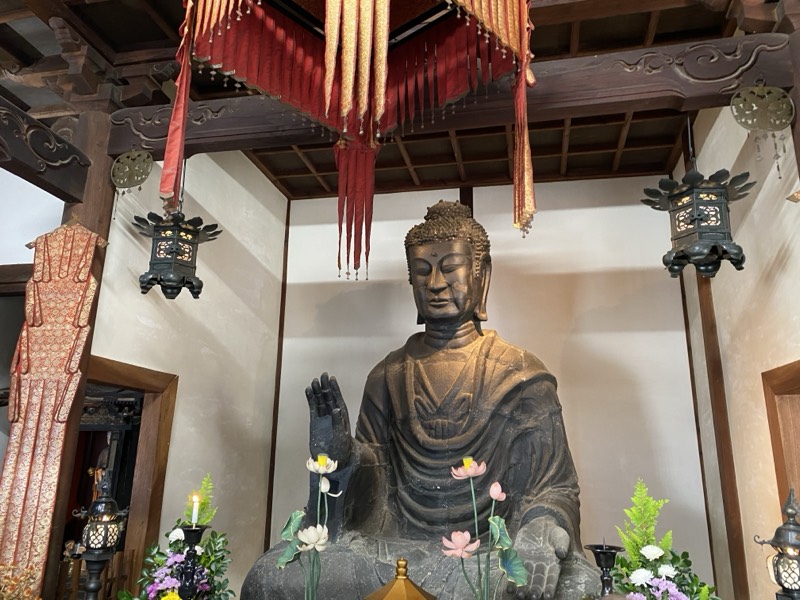
飛鳥寺・蘇我入鹿首塚
Japan's first full-scale Buddhist temple. The Great Buddha of Asuka still sits on the spot where it was made, 1,400 years ago.
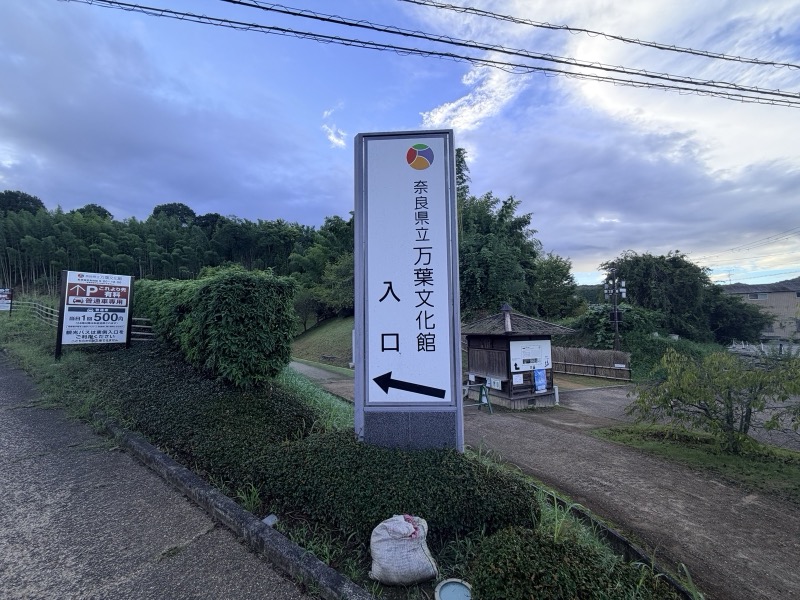
奈良県立万葉文化館
A centre for ancient culture built around the Man'yōshū.
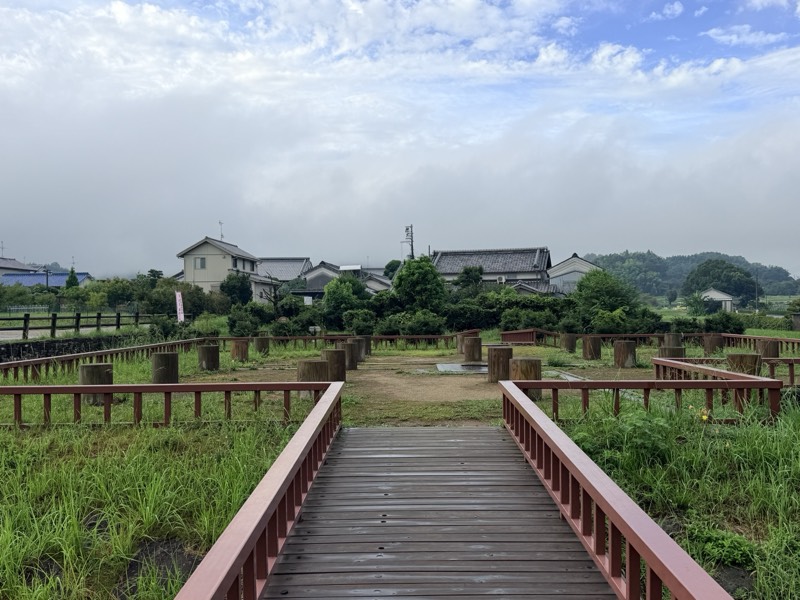
飛鳥水落遺跡
The site of Japan's first water clock, built by Prince Naka-no-Ōe.