
Published
On the first Sunday of February, the grounds of Asuka-niimasu Shrine fill with people for a festival in which a tengu (long-nosed goblin) spanks visitors on the bottom, ploughs a rice field and finally acts out a married couple's lovemaking.

The Onda Matsuri is held every year on the first Sunday of February, the coldest time of year, when nothing has yet been planted in the fields.
The venue is Asuka-niimasu Shrine. On most days only a few visitors drift through its grounds, but on this one day they are packed so tight there is barely room to stand. The festival is designated an Intangible Folk Cultural Property of Nara Prefecture.
When the festival begins, a tengu, an okina (old man) and a performer wearing a bull mask come out into the grounds.
In their hands they carry sasara, bamboo sticks split into fine strips at the end, and they go around whacking visitors on the bottom with them.
It hurts, but it is welcome. Being struck is said to knock off bad luck so that you get through the year safely. People are chased, they run, there is laughter. This commotion is how the festival starts.
When the drum sounds, the motions of farm work begin on the stage in front of the main hall.
Driving the bull to turn the soil, levelling the ground, sowing seed, planting the seedlings: each step is acted out in the same order as real work in the paddies.
The bull is, of course, a costume with a person inside. It refuses to obey, bucks around and wanders off to the side, and every time it does, the crowd laughs.
Performing the farm work at this time of year has a meaning. The coming year's work in the fields is being shown, once, in advance.
Once the rice planting is done, the scene changes.
The tengu and Otafuku (a round-faced, good-humoured woman) appear, meet, marry and act out a couple's lovemaking. The gestures are explicit, and the grounds dissolve in laughter.
Finally, the paper the two of them used is thrown into the crowd. It is called fuku no kami, "lucky paper," and taking some home is said to bring the blessing of children. People stretch out their hands and practically fight over it. This is the festival's climax.

Seen from outside, it is a bizarre festival. In fact it is sometimes counted among the "three great strange festivals of western Japan" (though there is no settled list for groupings like this).
Its content, however, is not weird for the sake of being weird. It is based on an idea called yoshuku, "celebrating in advance."
You act out first what you want to happen, and then it comes true. The rice planting and the married couple both rest on the same logic.
That the rice will ripen; that people will be born and families continue: for a farming village these two wishes were inseparable. Performing the farm work and the couple's union as one continuous sequence was therefore a natural pairing.
The grounds of Asuka-niimasu Shrine are lined with many stones called yōseki, carved in the shape of the male organ.
They are startling the first time you see them, but they simply express the shrine's character as home to deities of union and of childbirth. They point in exactly the same direction as the Onda Matsuri.
Taken on its own the festival may look outlandish, but seen in the context of the whole shrine, it makes perfect sense.
The Onda Matsuri is not unique to Asuka. Onda-sai, ta-asobi, otaue shinji: the names differ, but rites that act out farm work at the start of the year are found in many places.
Most of them end with the rice planting. Asuka's is well known because it goes further and performs the couple's union too, without leaving anything out.
One way to see it is that a form once found in many places has survived here.
Several start-of-the-year rites are still carried on in this village.
In January, the male rope is rehung in Inabuchi and the female rope in Kayanomori. These are kanjō-nawa, sacred ropes that keep evil from entering the village, made from straw from that year's terraced rice fields.
The Onda Matsuri in February, the rope-hanging rite in January: both take place while the fields are still idle. Before the farm work begins, people pray in advance for a safe year. They belong to the same sequence of the season.
It is held every year on the afternoon of the first Sunday of February. The start time can change from year to year, so check with the shrine or the village tourist information.
The grounds are small and get very crowded. Some say the view is better from the top of the stone steps, but those spots fill up early.
This is a mountain valley in winter. You will be standing still for a long time, so dress warmly.
Being hit with a sasara is good luck, not a misfortune. Running away is part of the festival too, so don't be too on guard.
If you take photos, don't block other people's view. For local people this is not a show but their own sacred rite.
About 5 minutes on foot from the "Asuka Daibutsu-mae" stop on the Asuka loop bus from Kintetsu Kashiharajingu-mae Station, right near Asuka-dera Temple.
RELATED SPOT
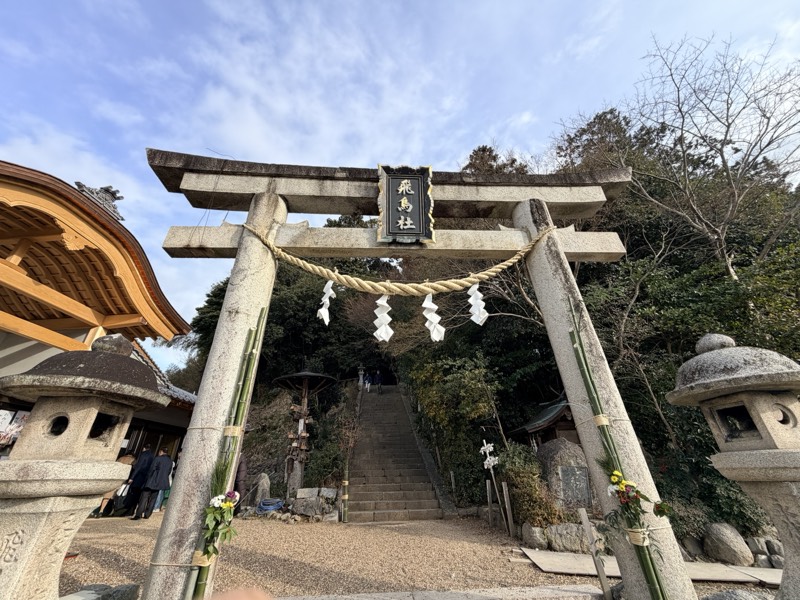
飛鳥坐神社
An ancient Asuka shrine famous for its unusual Onda Festival.
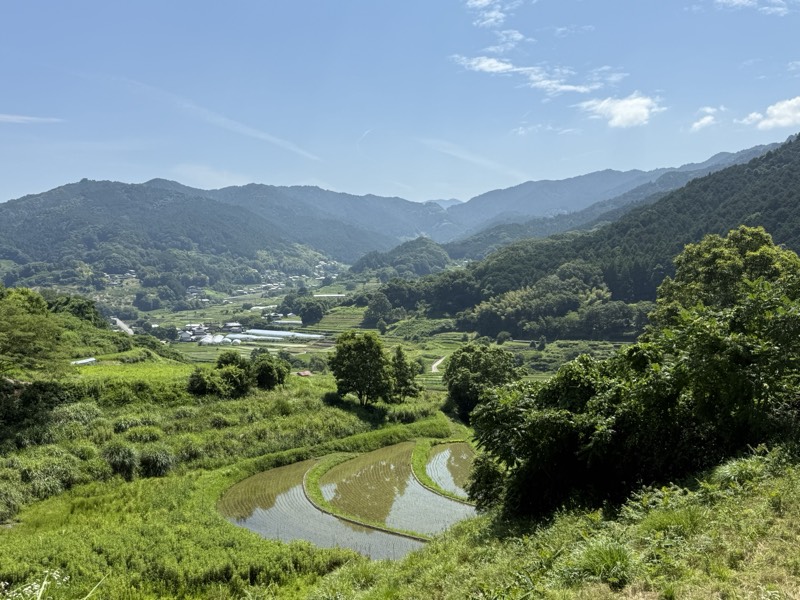
稲渕の棚田
One of Japan's 100 finest terraced rice fields. In autumn, giant scarecrows appear.
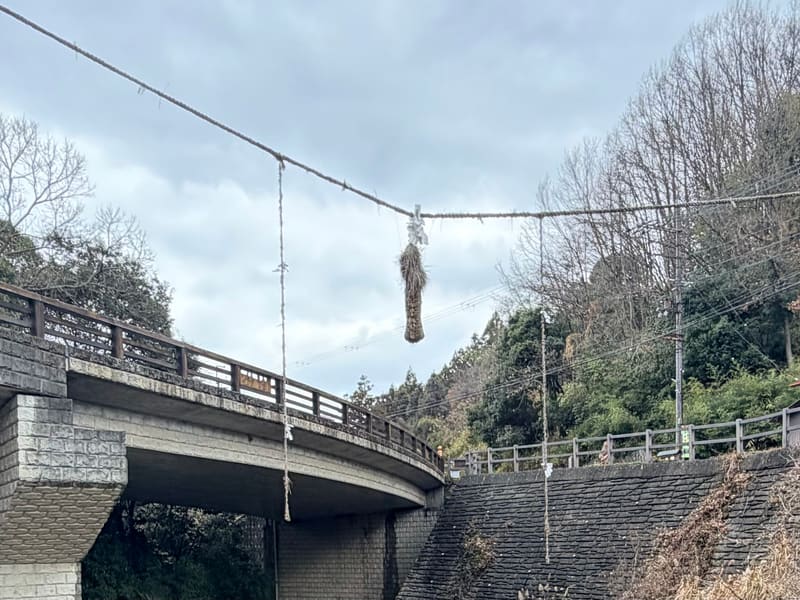
男綱
A rope of rice straw stretched across the Asuka River. It is replaced every year on Coming of Age Day.
RELATED COLUMN
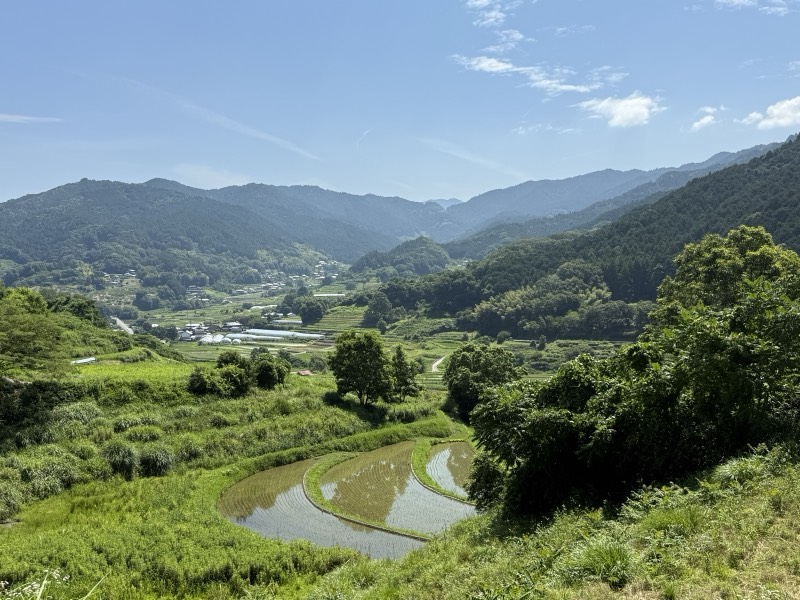 Ozuna and Mezuna: Two Ropes in One Valley, One Shinto and One BuddhistTwo ropes of rice straw hang across the Asuka River. Downstream in Inabuchi a Shinto priest is invited…
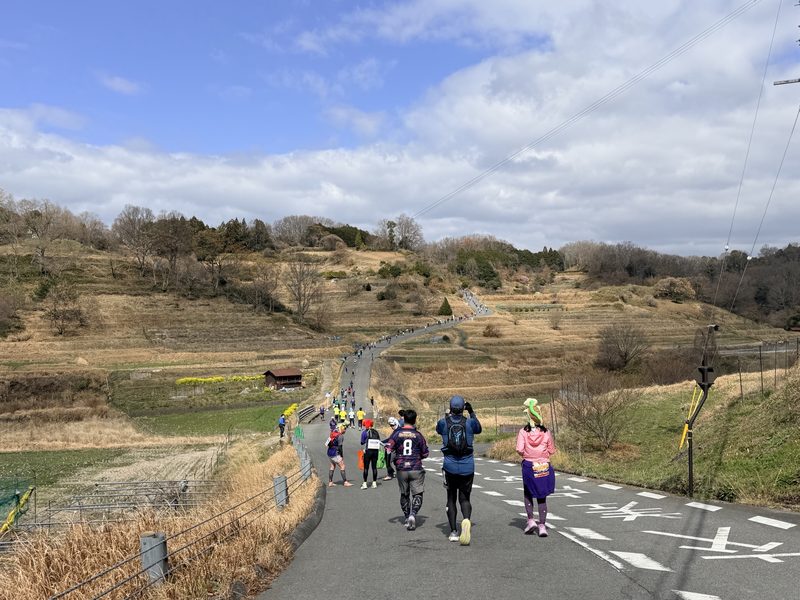 Remembered, Not Timed: Running the Asuka Half Marathon Past Ruins and Rice TerracesEvery March, 3,000 runners race past the historic sites and terraced rice fields of Asuka Village. Starting…
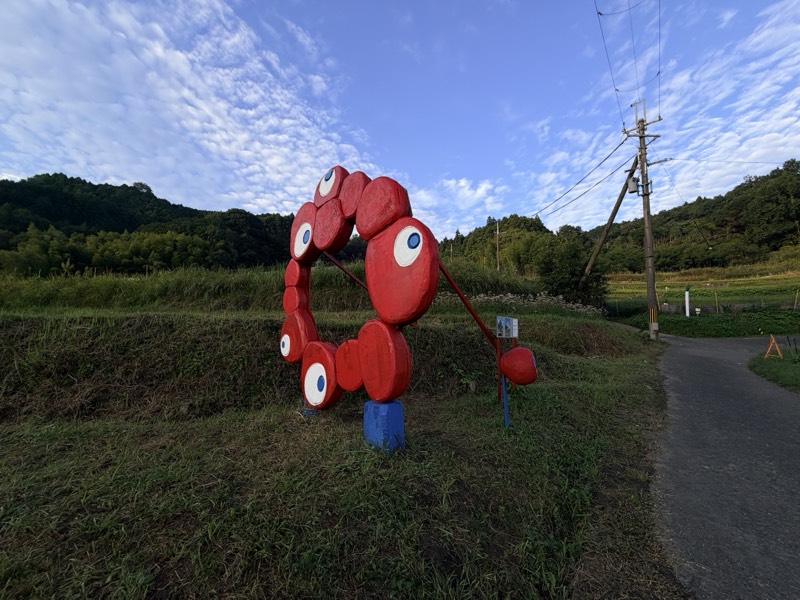 Rice Terraces Full of Chuckles: The 31st Scarecrow ContestThe theme of the 2026 scarecrow contest is "Kusu", the Japanese sound of a stifled chuckle. A village just…