


1 / 4
稲渕の棚田(いなぶちのたなだ)
One of Japan's 100 finest terraced rice fields. In autumn, giant scarecrows appear.
These terraced rice fields spread over the south-facing slopes of Inabuchi, on the upper reaches of the Asuka River. Around 300 paddies of all sizes are stacked in steps along the valley.
In 1999 they were chosen by the Ministry of Agriculture, Forestry and Fisheries as one of the "100 Best Terraced Rice Fields of Japan."
In 2011, the area of Inabuchi, Kayanomori and Nyūdani was selected as a national Important Cultural Landscape under the name "Cultural Landscape of Oku-Asuka."
It was chosen not only for its beauty. What was valued was that the whole system for growing rice in the mountains survives intact: the way the water channels are drawn, the way the ridges between paddies are built, and the way the village and its fields relate to each other.
Every autumn a scarecrow contest is held. Scarecrows sent in from inside and outside the village line the paths through the terraces, and at the centre stands a towering "jumbo scarecrow."
The theme changes every year, so you will never see the same one twice. Each year's mood and events take shape as scarecrows.
At this time of year, red spider lilies line the ridges, set against the green of the rice before harvest. This is the season for which the Inabuchi terraces are best known.
But the terraces look completely different in every season.
In early summer, the flooded paddies reflect the sky, tier upon tier. In summer the rice grows tall and the whole slope turns green, and in winter, after the harvest, cone-shaped stacks of rice straw called nio dot the fields.
In any season, you can see across to the hills and village on the other side of the valley.
About 10 minutes on foot from the "Inabuchi" stop on the Asuka loop bus from Kintetsu Kashiharajingu-mae Station. You can also walk up the slope south from Ishibutai Kofun.
The terraces are not a visitor attraction but working farmland where rice is still grown. Please stay off the ridges between the paddies and enjoy the view from the road.
Published
READ MORE
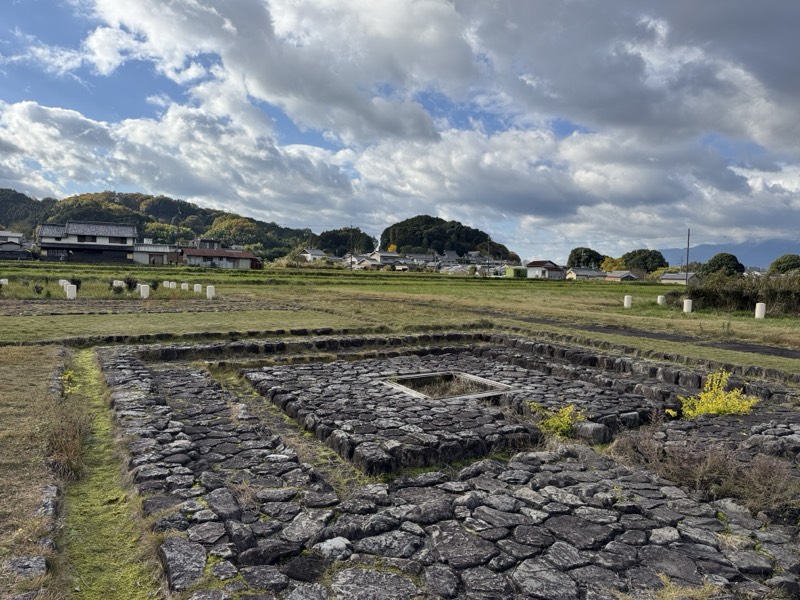 Asuka-Fujiwara World Heritage: All 19 Component Sites and How to Visit Them, with Half-Day, One-Day and Two-Day Routes"Asuka-Fujiwara" was inscribed on the World Heritage List in 2026. We list all 19 component sites with their…
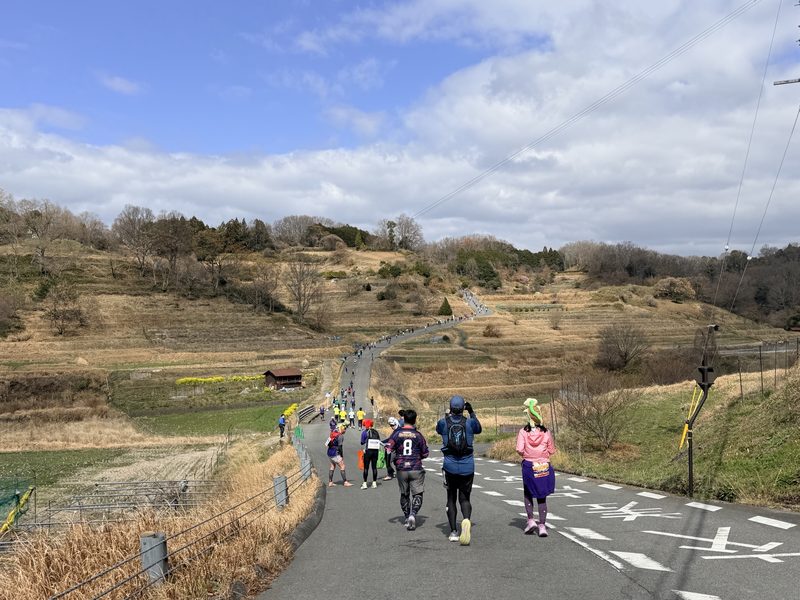 Remembered, Not Timed: Running the Asuka Half Marathon Past Ruins and Rice TerracesEvery March, 3,000 runners race past the historic sites and terraced rice fields of Asuka Village. Starting…
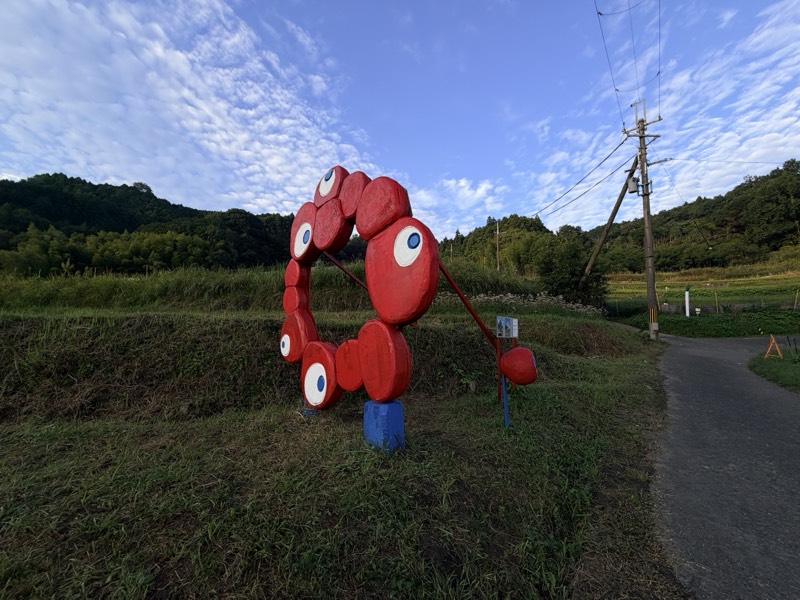 Rice Terraces Full of Chuckles: The 31st Scarecrow ContestThe theme of the 2026 scarecrow contest is "Kusu", the Japanese sound of a stifled chuckle. A village just…
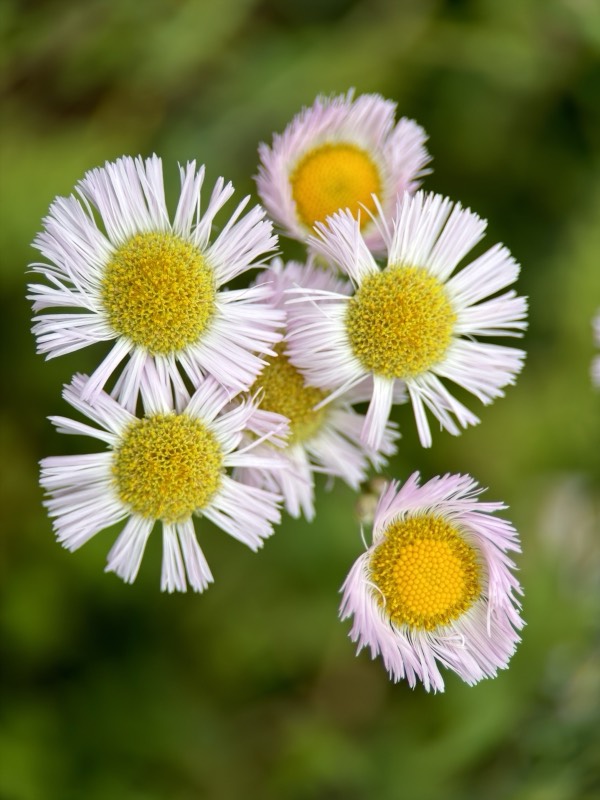 Spring Flowers at Your Feet in Asuka: Most of Them NewcomersSmall flowers bloom along the roadsides and the ridges between rice paddies. Once you know their names, your…
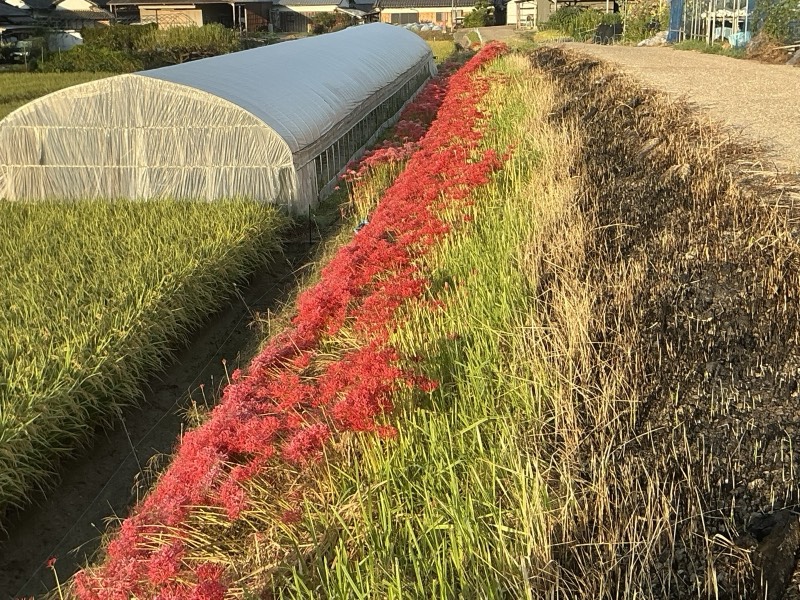 Why do red spider lilies bloom in single lines along the paddy ridges?Red runs along the edges of the rice fields, as straight as if drawn with a ruler. It did not grow there on…
 The Asuka Act: this landscape rests on the restrictions its residents live withCross the village boundary and the scenery changes noticeably. The landscape of Asuka has not survived by…
 Onda Matsuri: Acting Out the Rice Farming Year, All the Way to MarriageOn the first Sunday of February, the grounds of Asuka-niimasu Shrine fill with people for a festival in which…
 Asuka Ruby: Winter in Asuka Is Also Strawberry SeasonIf you spend your time looking only at kofun and palace sites you may not notice, but winter in this village…
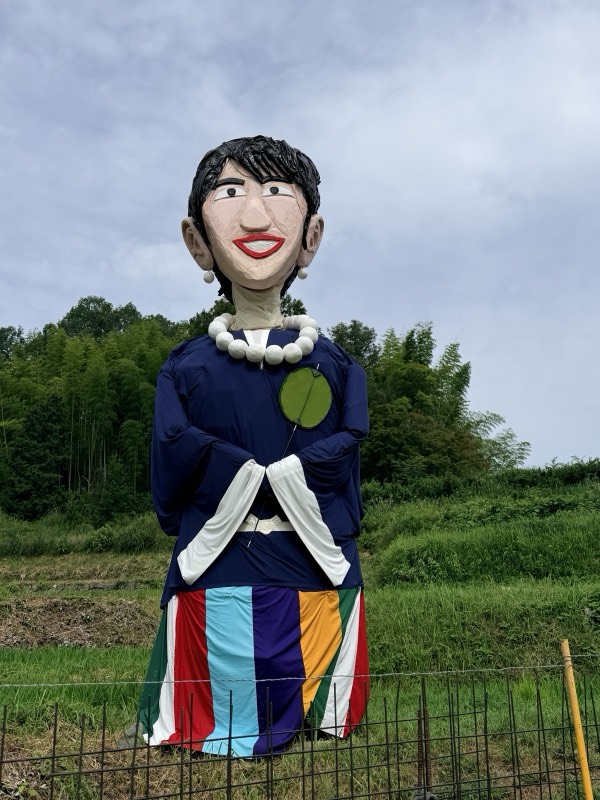 Jumbo Scarecrows: That Year in Japan, Standing in the Rice TerracesEvery autumn, a scarecrow so big you have to look up at it appears in the Inabuchi terraced rice fields. Its…
NEARBY
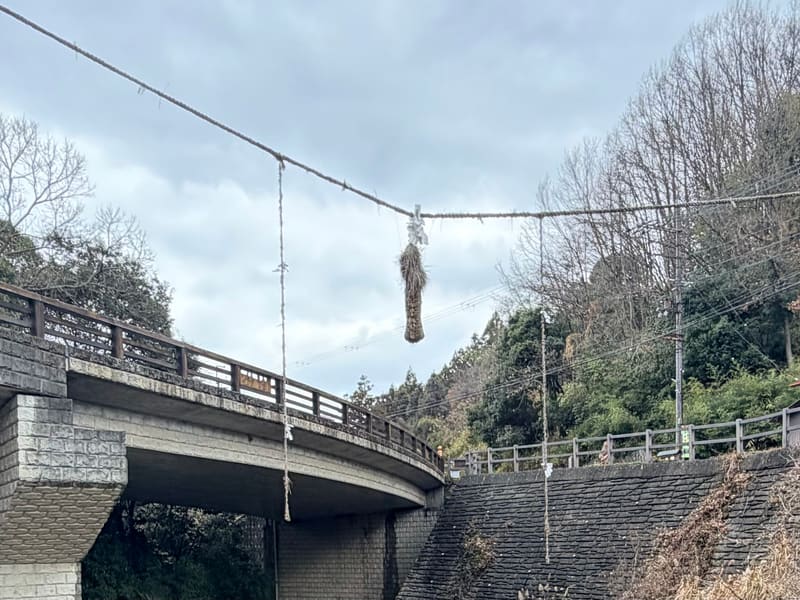
男綱
A rope of rice straw stretched across the Asuka River. It is replaced every year on Coming of Age Day.
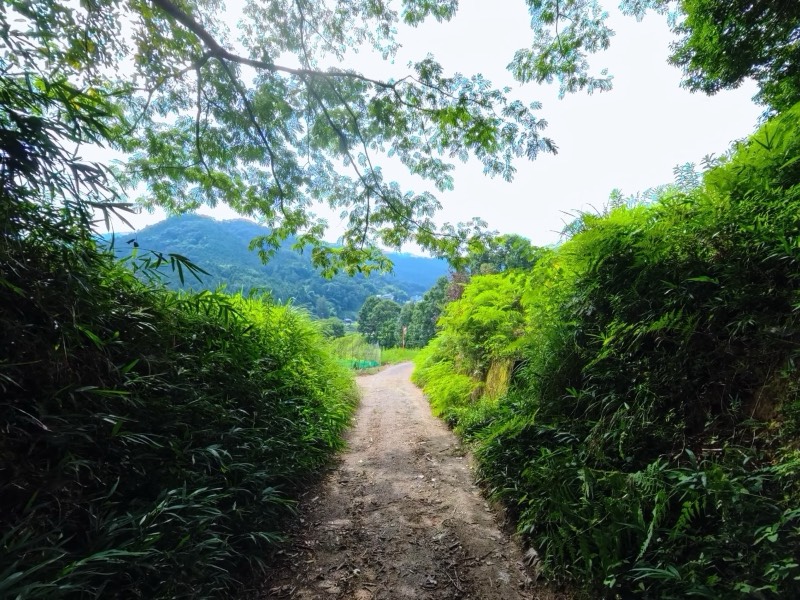
朝風峠
A pass overlooking the Inabuchi terraced rice fields, reached by a narrow path through bamboo thickets.
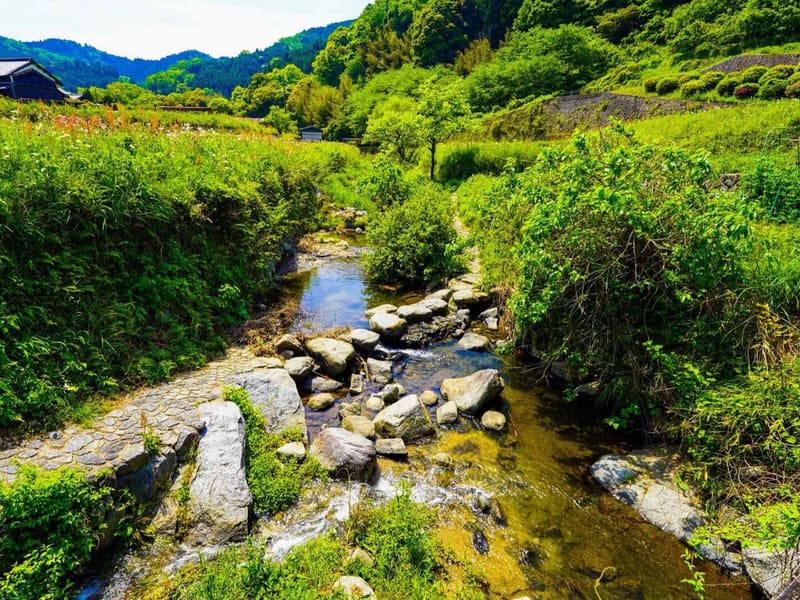
飛鳥川の飛び石
No bridge, just stones set in the riverbed to hop across. A crossing often linked with a poem from the Man'yōshū.