
Published
Cross the village boundary and the scenery changes noticeably. The landscape of Asuka has not survived by chance: there is a law that applies to this village alone.

From the observation deck on Amakashi Hill you can take in the Asuka palace sites, the Three Mountains of Yamato and the Fujiwara Palace Site all at once.
Turn your gaze north and you can see the scenery switch. On the Kashihara City side, mid- and high-rise buildings stand in rows, large billboards rise, and shops line the main roads.
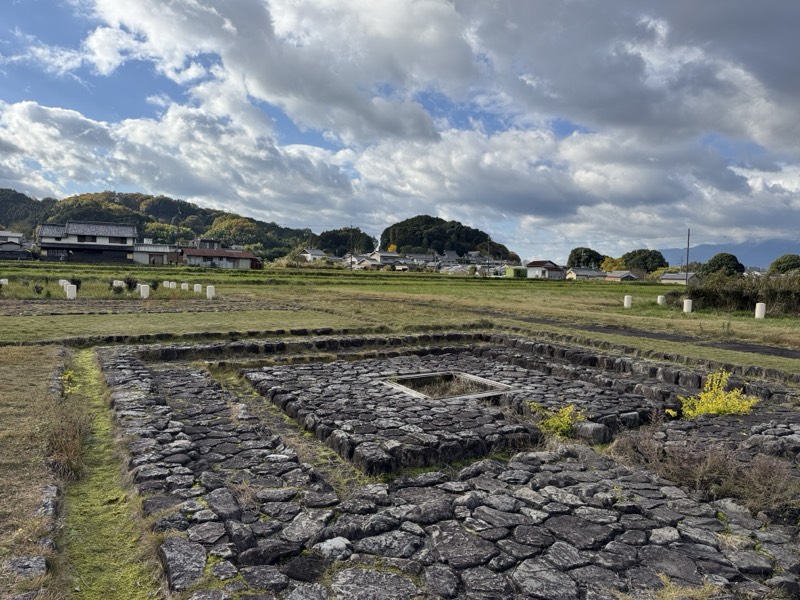
On the village side there is none of that. There are almost no buildings taller than two storeys, roofs are tiled, and colours are subdued. Among the fields, villages and hills, little blocks the view.
This difference is no accident.
In 1980 a law was enacted covering Asuka Village alone.
Its formal title is the Act on Special Measures concerning the Preservation of Historic Landscape and the Improvement of the Living Environment in Asuka Village. Because that is long, it is called the Asuka Act.
A law made for just one village is without precedent.
Its history goes back to the Ancient Capitals Preservation Act of 1966. This law protects the historic landscapes of ancient capitals such as Kyoto, Nara and Kamakura, and Asuka Village was included.
But this village had special circumstances. The ruins are not in one part of the village: the whole village sits on top of them. Palace sites, temple sites and kofun (ancient burial mounds) all lie among the fields and houses.
In the 1970s, the wave of housing development reached this area too. It is on a Kintetsu railway line and within commuting distance of Osaka. If development went ahead, the remains underground would be dug up and the landscape would change.
But tightening the rules would leave the people who lived there unable to build houses. A system was needed that could uphold both preservation and daily life. That is how the Asuka Act of 1980 came about.
The Asuka Act divides the village into two broad zones.
Class 1 Historic Landscape Preservation Districts are the areas central to preserving the historic landscape. Changes to their current state are strictly limited, with the aim of keeping them just as they are. The surroundings of the palace sites and kofun, and the hills, fall into this class.
Class 2 Historic Landscape Preservation Districts are areas where significant changes to the current state are restricted. They include villages and farmland, and building is allowed if it meets the standards.
The important point is that almost the entire village falls into one or the other. In the other ancient capitals, part of the city area is designated; in this village, there is nowhere to escape to.
Building a house, rebuilding one, extending one. Changing the shape of the land. Cutting down trees. Putting up signs. All of these require permission.
And even when building is allowed, the details are closely prescribed. Take roofs as an example.
In shape, the roof must be a pitched roof: gabled, hip-and-gable, hipped, pyramidal or lean-to. Single-pitch (shed) roofs and offset "maneki" roofs are not permitted. Extremely shallow pitches, and pitches that are too steep, are also ruled out.
Roofing materials are limited to traditional Japanese-style (J-type) tiles, straw, cypress bark (hiwada), copper sheet, wood, or materials that look similar to these. What is more, Japanese-style tiles must be smoked ibushi tiles. In other words, the flat tiles, slate and coloured steel sheet commonly sold today cannot be used as they are.
Exterior walls are prescribed in the same way. Surfaces must be finished in earth, plaster, wooden boards, or materials that look similar. If the walls are finished without exposed posts, for example with sprayed coatings, the colour must stay within a range such as white, beige or grey.
There are also standards for height, number of storeys and where a building stands on its plot. That is why, walking around the village, you hardly ever see a building taller than two storeys.
Even new houses look somehow calm because each has passed through all of these conditions one by one. The subdued colours of convenience-store signs are for the same reason.
The examples given here apply to the districts with villages; the standards vary by district and by what is being built. Anyone actually building checks with the village office.
Put the other way round, it also means residents cannot build the house they want on their own land. Something as small as how the roof is tiled, or the colour of an outer wall, is subject to permission.
The Asuka Act is not a law that only imposes limits. As the words "Improvement of the Living Environment" in its title suggest, the other half is a system of support.
The national government sets an Asuka Village Development Plan and bears a higher than usual share of the cost of roads, water supply and sewerage, and public facilities. An Asuka Village Development Fund was also set up, and the returns from it have supported village projects.
Asuka Historical National Government Park was also established within this framework.
If preservation is demanded, the burden is not to be placed on the village alone. That is all part of the one law.

That said, the constraints on daily life do not disappear.
When children start families of their own, it is hard to build a house near their parents. Farmland cannot be turned into housing land. Even if you want to open a shop, what you can build is limited. Procedures take time.
As these add up, younger people look for homes outside the village. The population falls, and so do the hands available to keep the fields going.
National advisory councils have also pointed out repeatedly that preserving this village's historic landscape into the future requires harmony with stable livelihoods for residents and the promotion of local industry. More than 40 years after the law was made, that remains the challenge.
The rice terraces are the same. The landscape of Inabuchi, selected as one of Japan's 100 Best Rice Terraces, survives because it is maintained as working farmland. Repairing the ridges, clearing the channels, looking after the banks where the red spider lilies bloom: if no one tends them, within a few years they go back to forest.
To visitors, the landscape of Asuka Village looks as if it has "survived just as it was".
In reality, it is closer to say it has been kept, rather than that it has survived. It is held in that state by legal restrictions, by money spent, and by residents accepting inconvenience.
The breadth of the view from Amakashi Hill is made of a promise that no tall buildings will go up. The roofs match in colour because each person who built a house followed the standards.
When you take a photo, or say how peaceful it is, if you remember a little of what lies behind it, I think walking through this village will mean something different.
Places prepared for visitors and places that are not are mixed together. The paths between the fields are residents' roads and farm roads.
Do not park on the road. Do not walk onto paddy ridges or private land. Do not step inside fences. These are very obvious things, but where ruins and homes are this close together, the boundaries are hard to see.
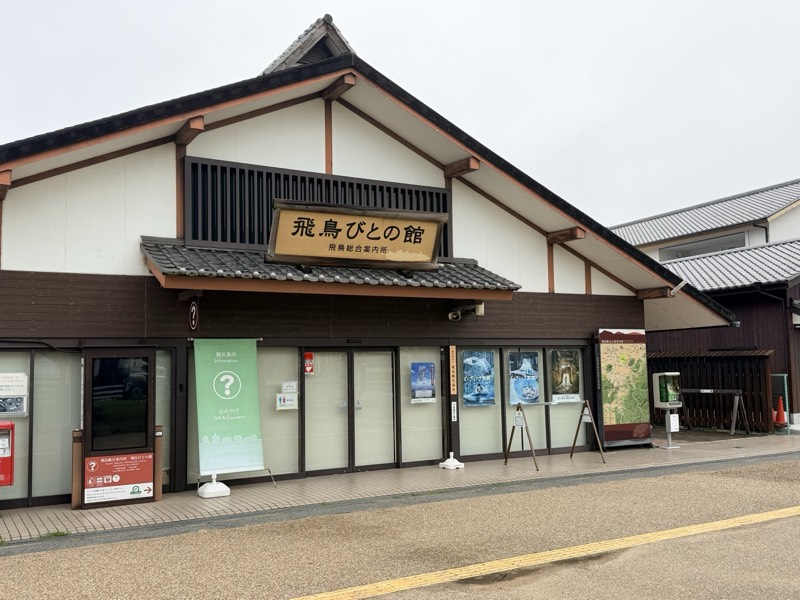
Each district of Asuka Historical National Government Park has a car park, and at the Asuka Historical Park Museum you can learn how the whole village came to be. Stop there first before you set out, and what you see will change.
RELATED SPOT
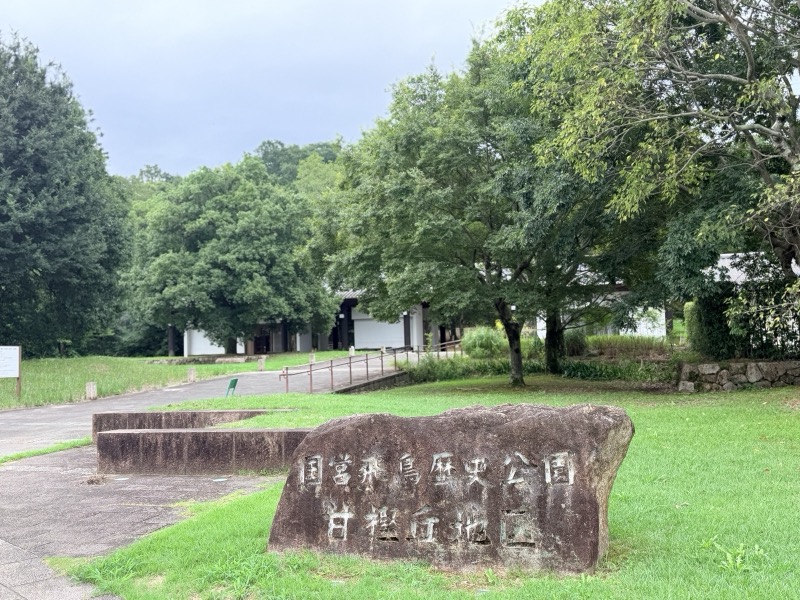
甘樫丘
A hill with views over all of Asuka, said to have been the site of the Soga clan's residences.
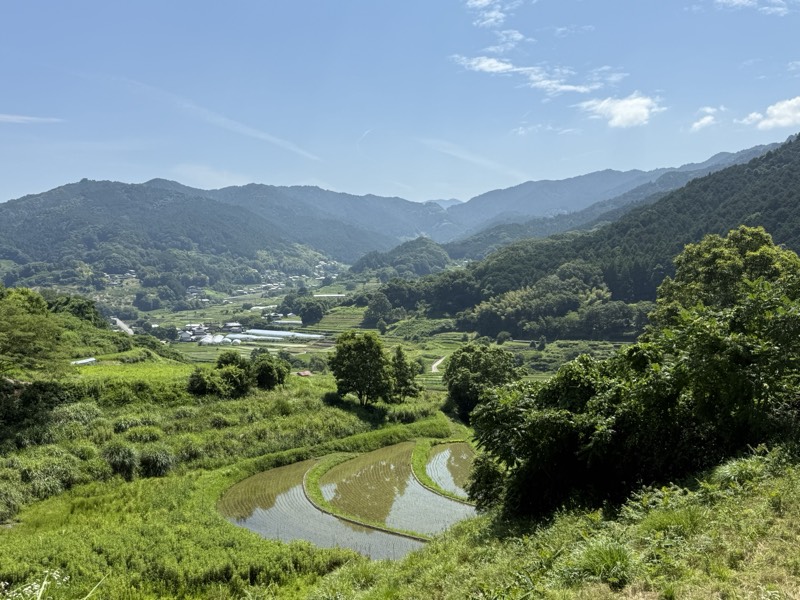
稲渕の棚田
One of Japan's 100 finest terraced rice fields. In autumn, giant scarecrows appear.
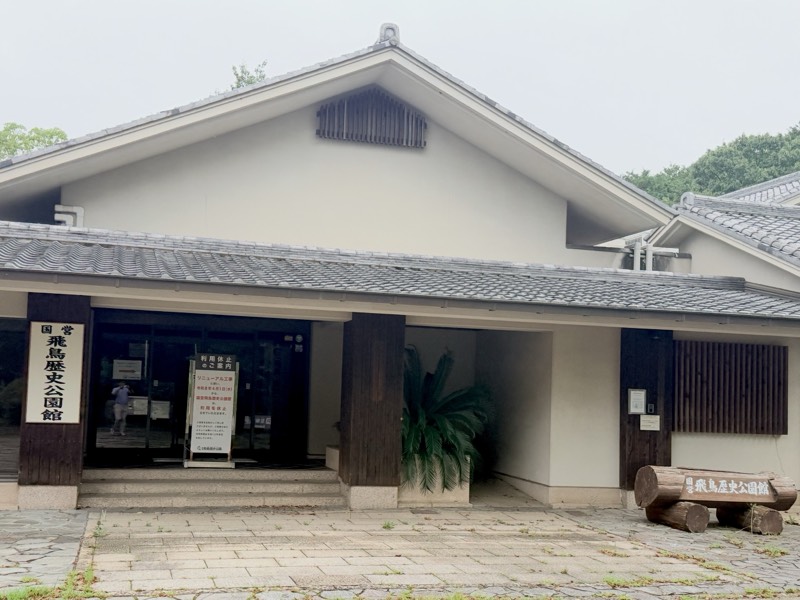
飛鳥歴史公園館
The information centre for the Asuka Historical National Government Park.
RELATED COLUMN
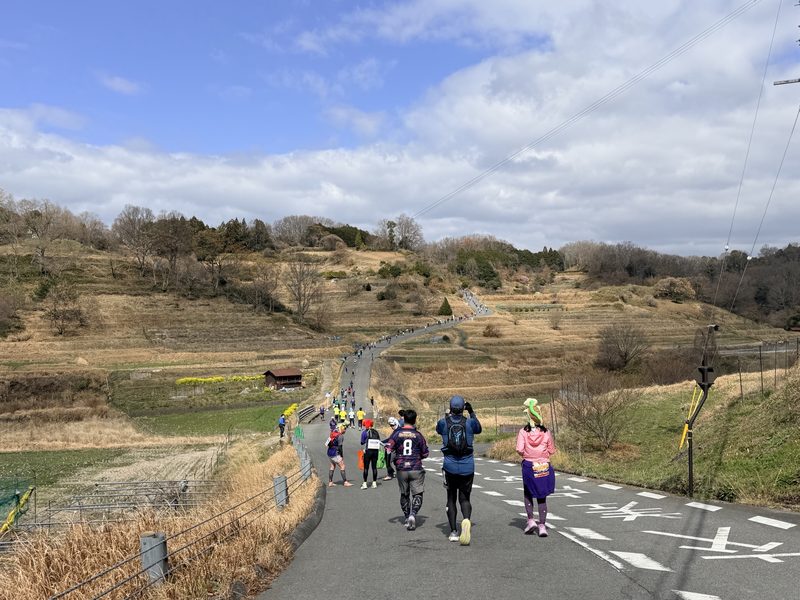 Remembered, Not Timed: Running the Asuka Half Marathon Past Ruins and Rice TerracesEvery March, 3,000 runners race past the historic sites and terraced rice fields of Asuka Village. Starting…
 Asuka Ruby: Winter in Asuka Is Also Strawberry SeasonIf you spend your time looking only at kofun and palace sites you may not notice, but winter in this village…
 Asuka-Fujiwara World Heritage: All 19 Component Sites and How to Visit Them, with Half-Day, One-Day and Two-Day Routes"Asuka-Fujiwara" was inscribed on the World Heritage List in 2026. We list all 19 component sites with their…