
Published
If you spend your time looking only at kofun and palace sites you may not notice, but winter in this village is greenhouse season. Inside them, a large strawberry developed in Nara is ripening.
Walk through Asuka Village in winter and you will notice white plastic greenhouses dotted among the harvested rice fields.
Most of them are for strawberries. Nara Prefecture, which includes this village, is a strawberry-growing region.
And one of the main varieties grown there is Asuka Ruby.
Asuka Ruby is a strawberry bred at the Nara Prefectural Agricultural Experiment Station. It was registered as a variety in 2000.
Its parents are Asuka Wave and Nyohō. Asuka Wave was also bred by Nara Prefecture, so Asuka Ruby carries on that line.
Its registered name is written Asukarubī in katakana, and it is sold as Asuka Ruby in a mix of hiragana and katakana. Either way, the name comes from this place.
The name comes from its colour.
The berries are large and roundly conical. The skin is a glossy deep red, and when you cut one open, the flesh is reddish too. Many varieties are white inside, so this is an easy feature to spot.
The flesh is slightly firm and very juicy. Sweetness and acidity are well balanced: it is not a type where sweetness alone comes to the fore.
You will hardly ever find it in supermarkets elsewhere in Japan.
That is because it is mainly eaten within Nara Prefecture. As of 2021, Asuka Ruby accounted for about 30 percent of the prefecture's strawberry acreage, making it a mainstay alongside Kotoka. Even so, Nara as a whole is not a large producer, so not much leaves the prefecture.
It is on sale from around December to around May. Its season runs from winter into spring.
Nara is also a prefecture that has produced one strawberry variety after another.
First came Asuka Wave, then Asuka Ruby from it, and later Kotoka. After that came Tamahime and Nanoka.
Each has its own character. Asuka Ruby is large with some tartness; Kotoka has a rich sweetness, and so on. Tasting them side by side where they are grown shows the difference.

You can go strawberry picking in Asuka Village.
Several farms take visitors, in addition to facilities run with the involvement of the village's regional development corporation. The season is roughly from late December to around May, but it varies with each year's growth and bookings. In almost all cases you need a reservation.
The quickest way to get details is probably to ask at Asukabito no Yakata (Asuka General Information Centre) or the village tourist information.
In winter the leaves are down, so the views are open for walking among the kofun, and it is strawberry season too. Not a bad combination.

There is one story here that is particular to this village.
Asuka Village has detailed rules on the height, roof shape and colour of buildings. These restrictions, based on the Asuka Act (a special national law protecting the village's historic landscape), are one reason the village's scenery has been preserved.
White plastic greenhouses stand out in that scenery. Even so, they are there, because this is farming.
Protecting the landscape does not just mean holding buildings back. Fields are tilled, greenhouses go up, crops are harvested, and that is how people make a living. If that cycle stops, the very scenery you are trying to protect will disappear first.
The same goes for the terraced rice fields and the field ridges lined with red spider lilies. They survive because people keep farming them. The white of the greenhouses is proof of that, too.
In season they are sold at the village's farm stands, the roadside station (michi-no-eki) and around the tourist information centres.
Asuka Ruby may be slightly firm, but it is still a strawberry and won't keep long. Choose them planning to eat them the same day you buy them.
See the kofun, walk the palace sites, and finally buy some strawberries to take home. In a village where almost everything is about 1,300 years ago, taking home something being grown today is not a bad way to end the day.
RELATED SPOT
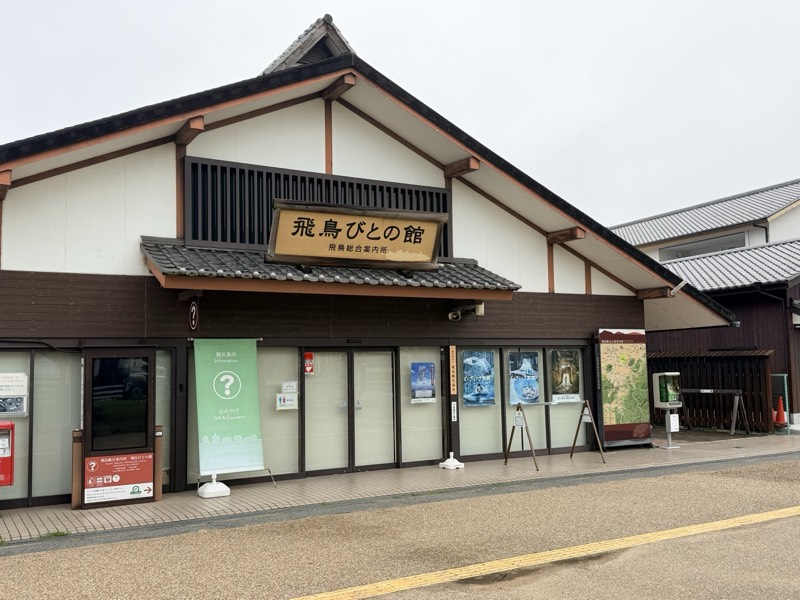
飛鳥びとの館
The tourist information centre at the Asuka roadside station. A good place to start exploring.
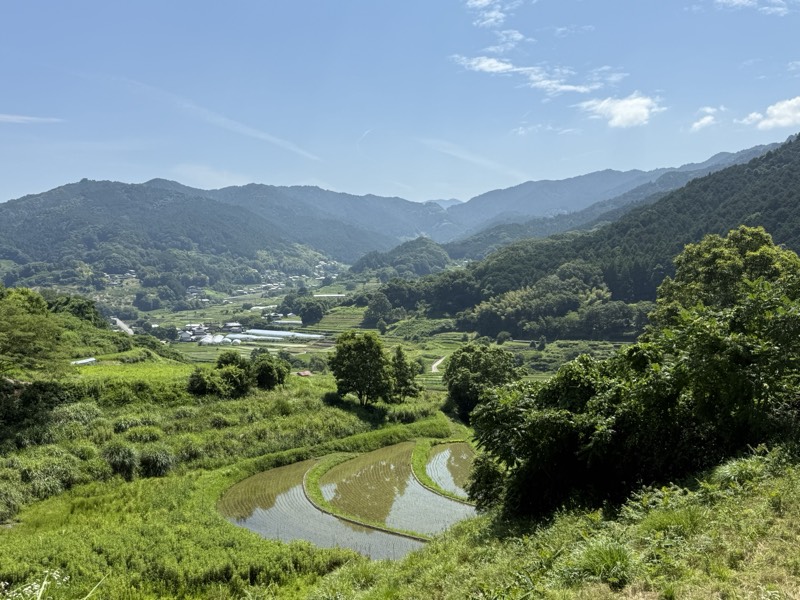
稲渕の棚田
One of Japan's 100 finest terraced rice fields. In autumn, giant scarecrows appear.
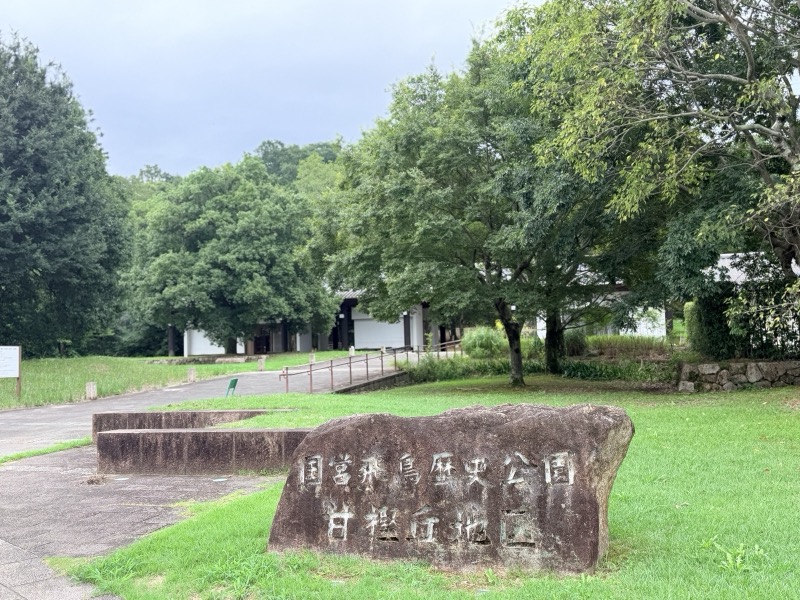
甘樫丘
A hill with views over all of Asuka, said to have been the site of the Soga clan's residences.
RELATED COLUMN
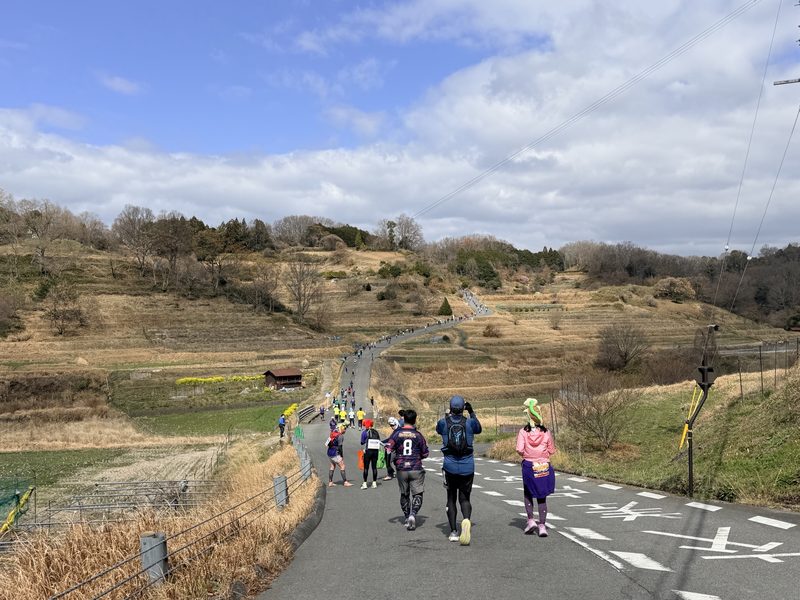 Remembered, Not Timed: Running the Asuka Half Marathon Past Ruins and Rice TerracesEvery March, 3,000 runners race past the historic sites and terraced rice fields of Asuka Village. Starting…The Asuka Act: this landscape rests on the restrictions its residents live withCross the village boundary and the scenery changes noticeably. The landscape of Asuka has not survived by…
 Rice Terraces Full of Chuckles: The 31st Scarecrow ContestThe theme of the 2026 scarecrow contest is "Kusu", the Japanese sound of a stifled chuckle. A village just…