


1 / 3
甘樫丘(あまかしのおか)
A hill with views over all of Asuka, said to have been the site of the Soga clan's residences.
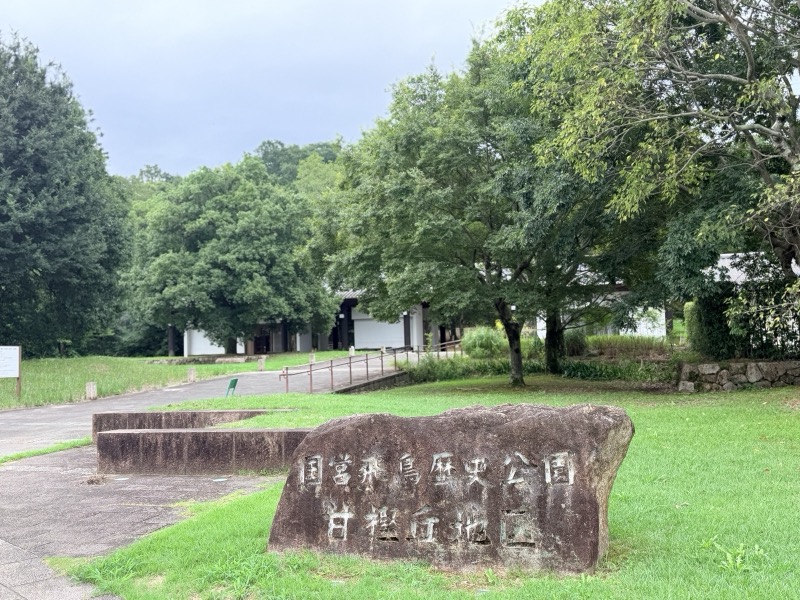
This hill, about 148 m high, stands almost in the centre of Asuka. It has been laid out as the Amakashi Hill Area of the Asuka Historical National Government Park.
From the observation point near the top you can see the villages and fields of Asuka, as well as the three mountains of Yamato: Unebi, Miminashi and Ama-no-Kaguyama. Both the Asuka Palace Site and Asuka-dera Temple lie below you from this hill.
The Nihon Shoki (Japan's oldest official chronicle, compiled in 720) records that Soga no Emishi and his son Iruka built their houses side by side on "Amakashi no Oka" and fortified them like a stronghold.
To build a residence on a hill looking down on the palace: how unusual that was, and how it was received, gives a sense of the mood leading up to the Isshi Incident of 645.
Excavations since 2005 have found the remains of 7th-century buildings at the eastern foot of the hill. This is called the Amakashi Hill Eastern Foot Site.
Buildings stood on level ground created with stone walls, and burnt earth and charcoal were also found. The site has attracted attention for its possible link to the Soga residences, but it has not been confirmed to be the residences themselves.
The hill has a "Man'yō Plant Trail" planted with plants that appear in the Man'yōshū (Japan's oldest anthology of poetry).
It is about a 15-minute climb from the foot to the observation point. There are both paved and earth paths, and an open area on the way where you can rest.
Right by the "Amakashi-no-oka" stop on the Asuka loop bus from Kintetsu Kashiharajingu-mae Station. Admission is free and the park is open at all hours.
At the foot of the hill are the Toyura Palace Site (Kōgen-ji Temple), Amakashi-niimasu Shrine and the Furumiya site, and to the east are Asuka-dera Temple and the Mizuochi site. If you climb up here first and take in the whole area before you start exploring Asuka, the routes you take afterwards will make more sense.
Published
READ MORE
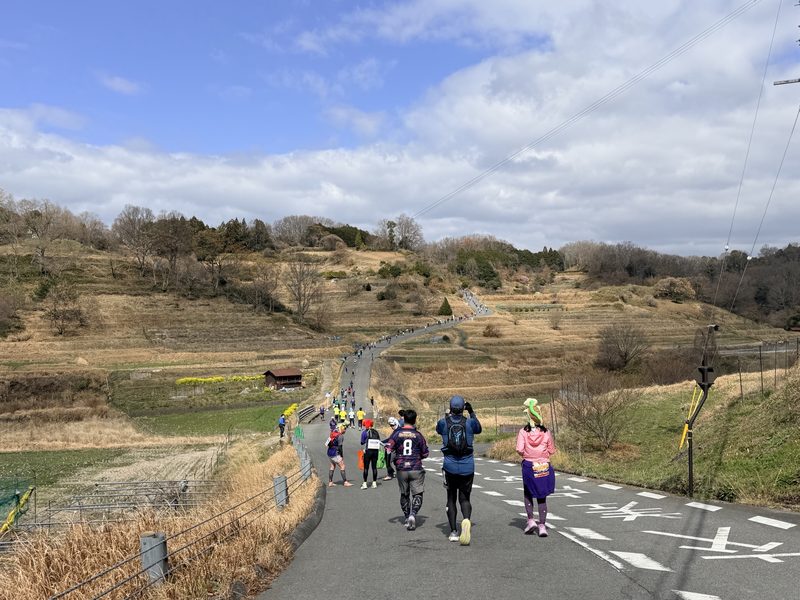 Remembered, Not Timed: Running the Asuka Half Marathon Past Ruins and Rice TerracesEvery March, 3,000 runners race past the historic sites and terraced rice fields of Asuka Village. Starting…
 Man'yōshū Basics: Sōmon, Banka and Zōka, Hanka and Answering PoemsWalk around Asuka and you meet poems from the Man'yōshū everywhere. Here is a summary of what makes them more…
 "Ōe" Is Not a Name: Naka-no-Ōe, Furuhito-no-Ōe and Yamashiro-no-ŌeThe "Ōe" in Prince Naka-no-Ōe is not a personal name. It is a term showing eligibility to succeed to the…
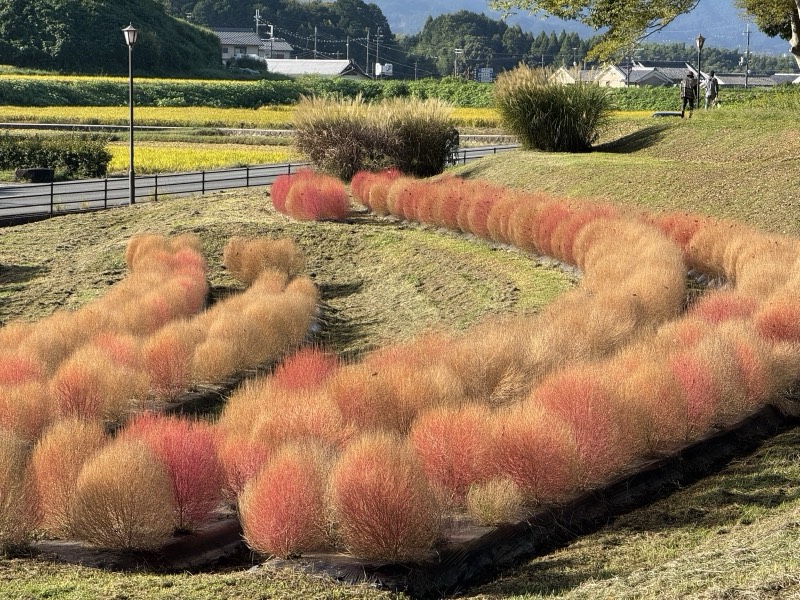 Is Amakashi Hill Really Today's Amakashi Hill?The Nihon Shoki says Soga no Emishi and Soga no Iruka had their mansions here. Yet excavation has found…
 Putting Your Hand in Boiling Water: Kukatachi, a Trial by OrdealThose who lie are scalded; the honest come away unhurt. According to the Nihon Shoki, this trial was held on…
 Spring Flowers at Your Feet in Asuka: Most of Them NewcomersSmall flowers bloom along the roadsides and the ridges between rice paddies. Once you know their names, your…
 The night sky over Asuka: when watching the stars was the state's businessWith few street lights, the sky seems to come closer once the sun goes down. And in this village, how the…
 The Asuka Act: this landscape rests on the restrictions its residents live withCross the village boundary and the scenery changes noticeably. The landscape of Asuka has not survived by…
 Asuka Ruby: Winter in Asuka Is Also Strawberry SeasonIf you spend your time looking only at kofun and palace sites you may not notice, but winter in this village…
NEARBY
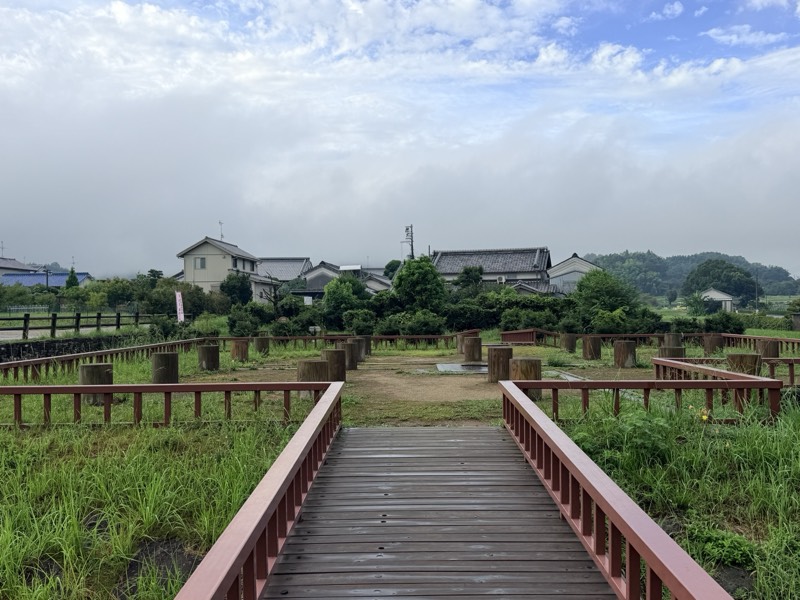
飛鳥水落遺跡
The site of Japan's first water clock, built by Prince Naka-no-Ōe.
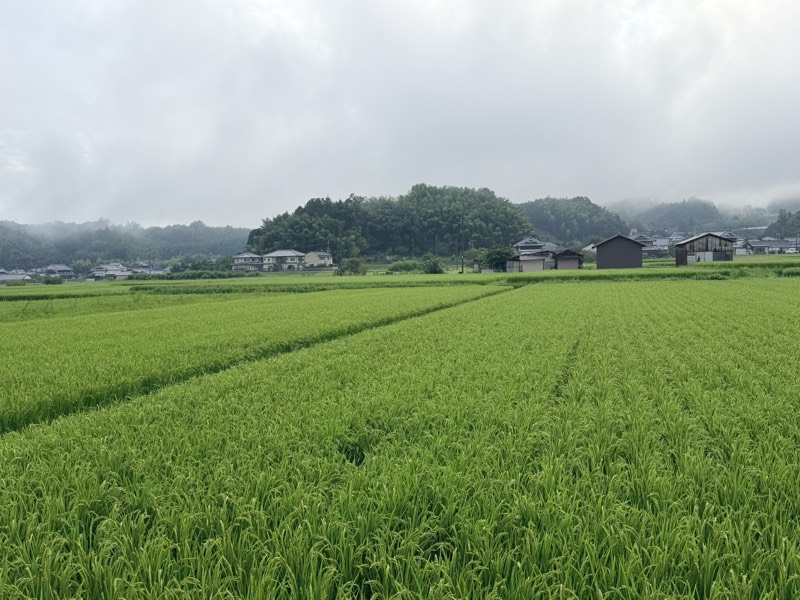
石神遺跡
Empress Saimei's banquet grounds, where the Shumisen Stone was unearthed.
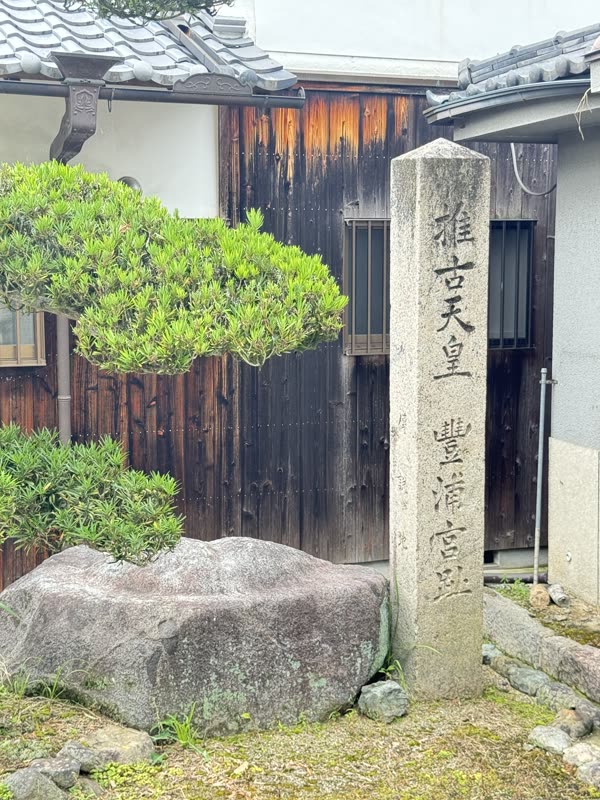
豊浦宮跡
The site of the palace where Empress Suiko took the throne, marking the beginning of the Asuka period.