1 / 3
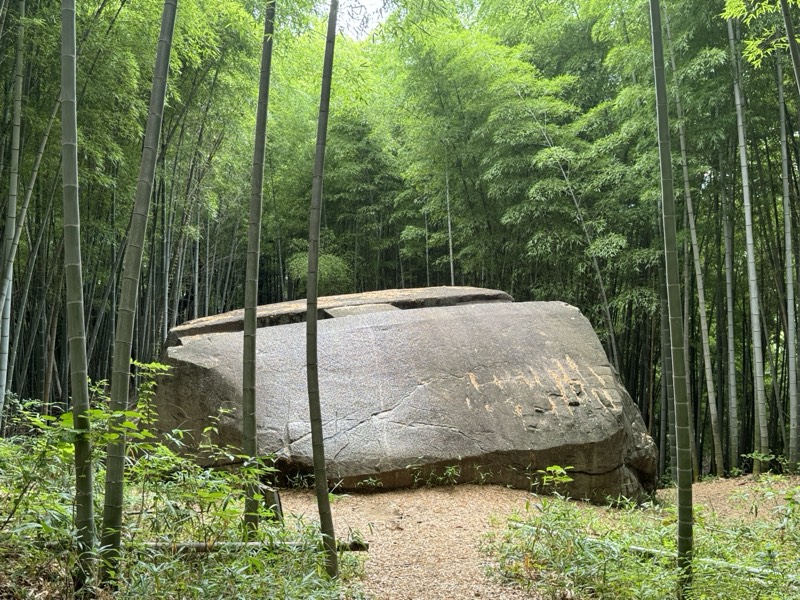
石神遺跡(いしがみいせき)
Empress Saimei's banquet grounds, where the Shumisen Stone was unearthed.
The area to the northwest of, and adjoining, the former precinct of Asuka-dera Temple is known as the Ishigami site. Just to the south is the Asuka Mizuochi Site, and the two are known to have been connected by a passage.
Almost nothing can be seen on the surface. After excavation the ground was filled in again, and today there are only rice fields and grassland. An information board by the road tells you that this is an archaeological site.
The site first drew attention in 1902–1903, when two stone objects, the Shumisen Stone and the Sekijinzō (Stone Figures), were dug up from the rice fields.
Both were hollowed out inside and fitted with a mechanism for spouting water. No other Asuka-period stone objects with a fountain function are known.
Shumisen (Mount Sumeru) is the mountain said in Buddhist cosmology to rise at the centre of the world. The Nihon Shoki (Japan's oldest official chronicle, compiled in 720) mentions several times that Empress Saimei made a model of Mount Sumeru and entertained the Emishi (people of northeastern Japan) and envoys from abroad. It is one of the rare cases where a written record can be linked to an actual object.
The two stone objects are now on display at the Asuka Historical Museum (Nara National Research Institute for Cultural Properties). Besides the originals, you can also see the Shumisen Stone reconstructed in four tiers.
Full-scale excavation began in 1981. Work has continued since then, revealing that remains from different periods overlap in complex ways, centred on the time of Empress Saimei (655–667).
Broadly, they fall into three periods: the reigns of Empress Saimei and Emperor Tenmu, and the Fujiwara Palace period. The same place was in use throughout the whole time Asuka served as the capital.
In Empress Saimei's time, the site was divided into eastern and western sections by a great wall running east–west and long corridor-like buildings.
In the western section, large buildings with corridors have been found. This is thought to have been a space for everyday use, and it was connected by a passage to the Mizuochi site to the south.
The eastern section was arranged around a well. To its north stood groups of buildings with posts sunk directly into the ground, enclosed in squares, and stone-lined drains ran in all directions. The areas around the buildings and the open spaces are thought to have been paved with stone.
A stone-paved square, stone objects fitted as fountains, and compounds of buildings: taken together, these suggest that in Empress Saimei's time the Ishigami site was part of a facility for banquets.
Here the court would receive the Emishi and Hayato peoples, or envoys from across the sea, hold ceremonies of submission and serve food and drink. That is why it is sometimes called the guest house of Asuka.
At the Mizuochi site just to the south stood Japan's first water clock, built in the same reign of Empress Saimei. A facility for telling the time and a facility for entertaining guests stood side by side, linked by a passage.
Right by the "Asuka" stop on the Asuka loop bus from Kintetsu Kashiharajingu-mae Station. It is a short walk from the Mizuochi site, Asuka-dera Temple and Amakashi Hill.
Admission is free and there are no fences. However, since the remains have been filled in, all you will see is the information board and a few markers showing where they lie. If you want to see the stone objects found here, head a few minutes north to the Asuka Historical Museum.
Published
NEARBY
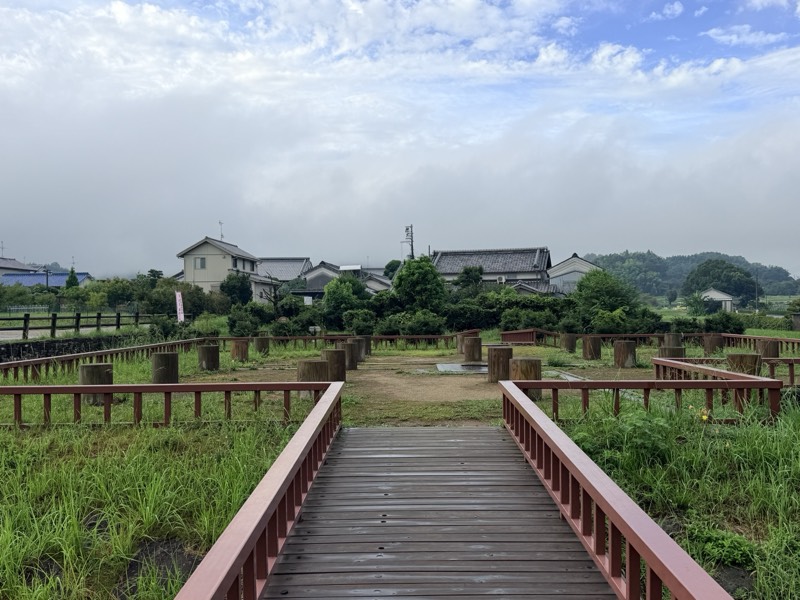
飛鳥水落遺跡
The site of Japan's first water clock, built by Prince Naka-no-Ōe.
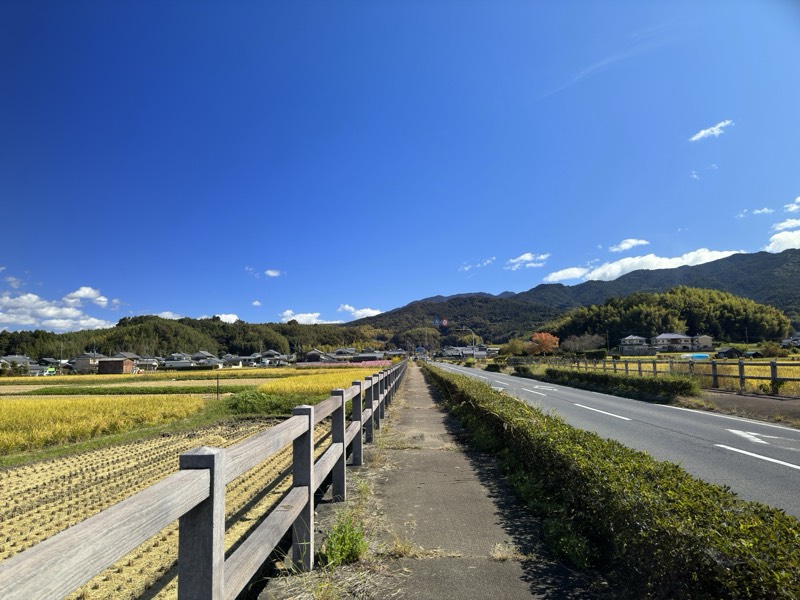
山田道
An ancient official road running east–west through Asuka. It welcomed envoys from Sui China and led to Yamada-dera Temple.
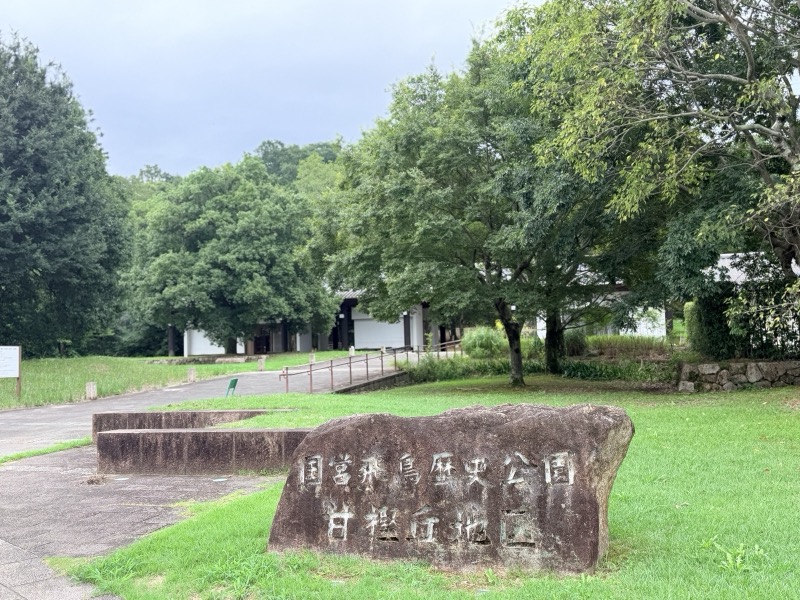
甘樫丘
A hill with views over all of Asuka, said to have been the site of the Soga clan's residences.