
Published
Walk around Asuka and you meet poems from the Man'yōshū everywhere. Here is a summary of what makes them more enjoyable to read: how the poems are classified, their forms, and the difference between envoys and exchanged poems.

The Man'yōshū is the oldest surviving anthology of Japanese poetry. Its 20 books contain about 4,500 poems.
The latest poem was composed by Ōtomo no Yakamochi at New Year in 759. The prevailing theory is that Yakamochi himself made the final compilation. It is thought, however, that the anthology was not compiled by one person in one go but took shape as several collections were brought together in stages.
Its poets range from emperors, members of the imperial family and aristocrats to nameless farmers and soldiers heading off to guard Kyushu. Many of the poems date from the 7th century, when the capital was in Asuka; Asuka was the very stage of the Man'yōshū.
The poems of the Man'yōshū are divided by content into three main categories, called budate.
Zōka (miscellaneous poems) are poems for public occasions, composed at court ceremonies, royal excursions, banquets, on journeys and so on. Despite the character for "miscellaneous," it does not mean "other." Book 1 opens with zōka, and Emperor Jomei's kunimi poem (Book 1, poem 2), in which the emperor climbs heavenly Mount Kagu and looks out over his land, belongs here too.
Sōmon are poems in which people convey their feelings to each other. Love poems are at the centre, but poems exchanged between parents and children, siblings and friends are included too. The word means "hearing each other," that is, exchanging messages.
Banka are poems mourning a death. The word originally referred to songs sung by those who pulled the cart carrying a coffin. They include poems composed on the deaths of emperors and princes, and poems mourning people who died while travelling.
There are also groups of poems with names of their own, such as hiyuka (allegorical poems, expressing feelings through objects), azuma-uta (poems of the people of the eastern provinces) and sakimori-uta (poems of the frontier guards sent to defend Kyushu and their families).
There are also different poetic forms.
Tanka have 31 syllables in a 5-7-5-7-7 pattern. This is the same form as modern tanka, and it accounts for over 90 percent of the poems in the Man'yōshū.
Chōka (long poems) repeat 5-7 many times and close with 7-7. There are about 260 of them. Kakinomoto no Hitomaro's chōka are especially famous; he showed his power in banka mourning the deaths of princes and in poems praising the emperor.
Sedōka are six-line poems in a 5-7-7-5-7-7 pattern. In some the first and second halves form something like a question and answer, and it is said they were originally sung by two people in turn.
A chōka is often followed by short poems. These are called hanka (envoys).
A hanka sums up the content of the chōka or adds feelings it left unsaid, and it is by the same poet as the chōka. Yamanoue no Okura's "Shirokane mo / kugane mo tama mo / nanisemu ni / masareru takara / ko ni shikame ya mo" ("What use are silver, gold and jewels? What treasure could surpass a child?"), added to his chōka about his love for his children, is one example.
Because of the character han, "return," people often assume a hanka is a reply to someone. In fact it is a poem for savouring one's own chōka again, not an answer to anyone.
People also responded in verse to poems sent to them. In later times these were called henka (reply poems), but in the Man'yōshū the headnotes call them "answering poems," written with either of two characters both read kotauru. A sent poem paired with its answering poem is called a zōtōka (exchange of poems).
A well-known example is the pair exchanged by Nukata no Ōkimi and Prince Ōama at the hunt at Gamōno. To Nukata no Ōkimi's "Akanesasu / murasakino yuki / shimeno yuki / nomori wa mizu ya / kimi ga sode furu" ("Going through the fields of purple gromwell, through the forbidden fields, you wave your sleeve. Won't the field warden see?"), Prince Ōama answered "Murasaki no / nioeru imo o / nikuku araba / hitozuma yue ni / ware koime ya mo" ("If I hated you, lovely as the purple gromwell, would I long for you, knowing you are another's wife?"). The headnote reads "The poem with which the Crown Prince answered."
As a love exchange you might expect them among the sōmon, but these two are classed as zōka. That classification is one of the clues behind the view that they were light entertainment composed at a banquet.
In the Man'yōshū, poems are preceded by a heading recording who composed them, when and on what occasion. This is called a daishi (headnote). Notes added after a poem, recording traditions or alternative accounts, are called sachū (left notes), because in vertical writing they appear to the left of the poem.
A poem from when Emperor Tenmu went out to Ikazuchi Hill, Empress Jitō's poem about Mount Kagu: we know when and where poems were composed thanks to headnotes and left notes. Whether those accounts can be taken at face value, however, is often debated among scholars.
When the Man'yōshū was compiled, neither hiragana nor katakana yet existed. All the poems are written in kanji (Chinese characters). Japanese was written by borrowing the meaning of a character or just its sound, and characters used this way are called man'yōgana.
For example, Empress Jitō's "Haru sugite / natsu kitarurashi / shirotae no / koromo hoshitari / ame no Kaguyama" is written in the original as 春過而 夏来良之 白妙能 衣乾有 天之香来山. Some poems have no single agreed reading, and new readings are still being proposed today.
After the capital moved to Fujiwara-kyō, Prince Shiki wrote of the deserted Asuka:
Uneme no / sode fukikaesu / Asukakaze / miyako o tōmi / itazura ni fuku
"The Asuka wind that once fluttered the sleeves of the court ladies now, with the capital far away, blows in vain." The uneme were ladies who served at court. The Asuka River, Ikazuchi Hill, Amakashi Hill and many other places around the village appear in Man'yōshū poems. At the Nara Prefecture Complex of Man'yō Culture you can see Japanese-style paintings inspired by the anthology and displays on daily life of the time. Keep the categories and forms of the poems in the back of your mind as you walk, and the poems on the information boards should become a little easier to read.
RELATED SPOT
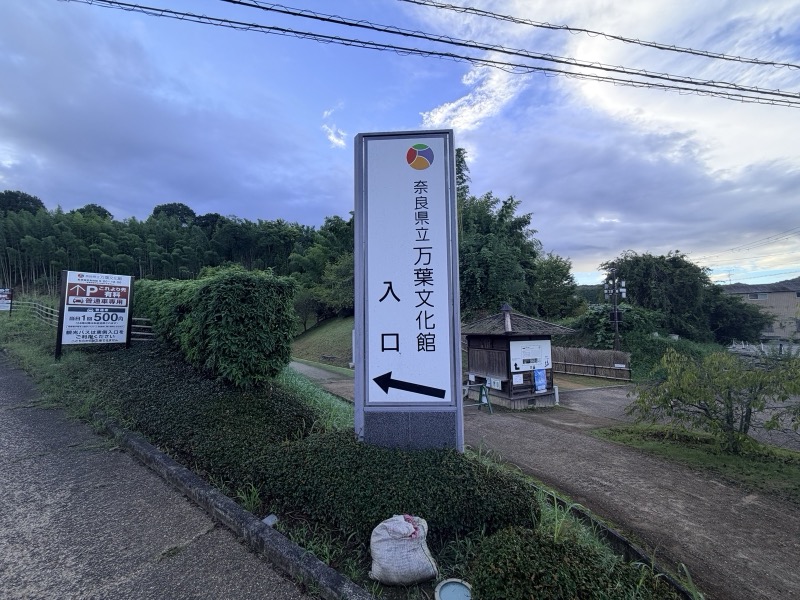
奈良県立万葉文化館
A centre for ancient culture built around the Man'yōshū.
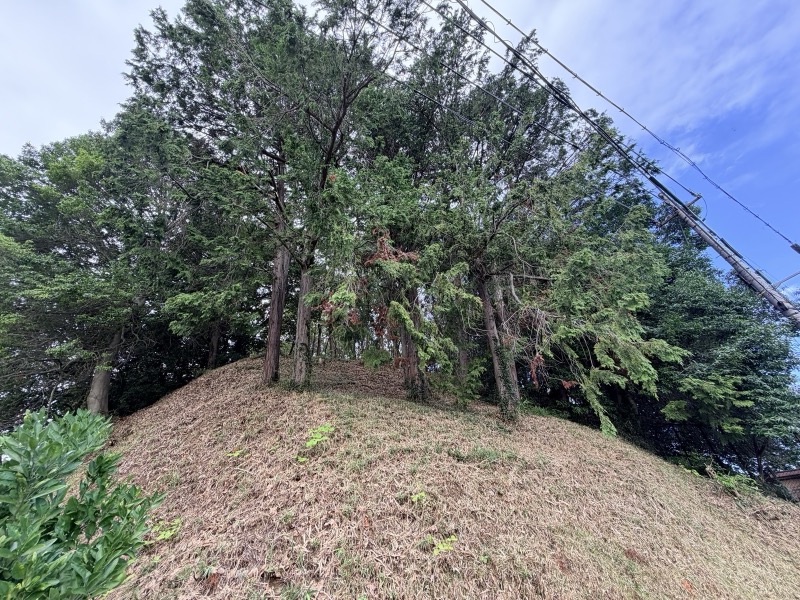
雷丘
A small hill with a story about catching thunder. The area to its east is a proposed site of the Oharida Palace.
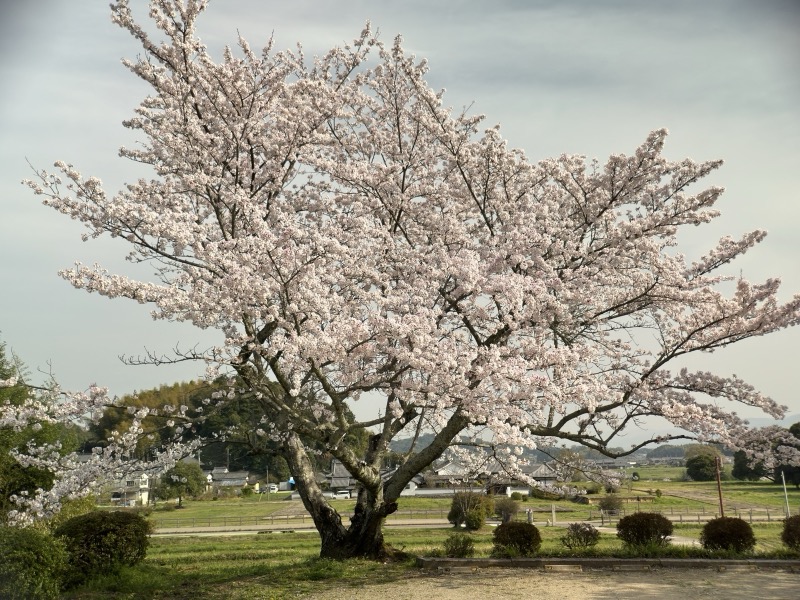
飛鳥川
The river that runs through the village, sung of in the Man'yōshū.
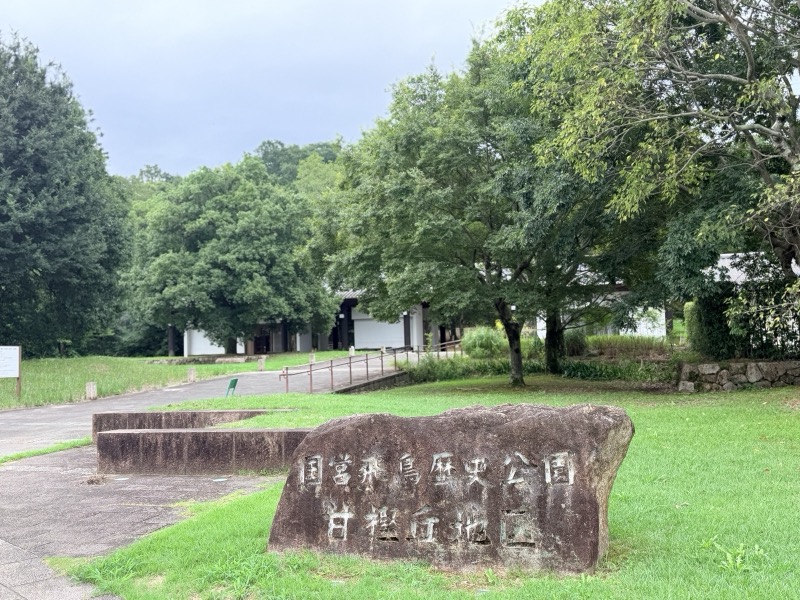
甘樫丘
A hill with views over all of Asuka, said to have been the site of the Soga clan's residences.
RELATED COLUMN
 Spring Flowers at Your Feet in Asuka: Most of Them NewcomersSmall flowers bloom along the roadsides and the ridges between rice paddies. Once you know their names, your…
 Whom Was "You Waving Your Sleeve" For? Nukata no Ōkimi and the Poems of GamōnoNukata no Ōkimi had a daughter with Prince Ōama and is thought to have later gone over to Emperor Tenchi. In…
 What Did the White Robes Announce? Empress Jitō's Poem of Heavenly Mount KaguEmpress Jitō's poem about Mount Kagu begins "Spring has passed, and summer seems to have come." It is loved…