
Published
Empress Jitō's poem about Mount Kagu begins "Spring has passed, and summer seems to have come." It is loved as a poem about early-summer scenery, but there is also a reading that sees the empress's own ambition in it.

Poem 28 in Book 1 of the Man'yōshū (Japan's oldest anthology of poetry) is attributed to Empress Jitō:
Haru sugite / natsu kitarurashi / shirotae no / koromo hoshitari / ame no Kaguyama
"Spring has passed, and summer, it seems, has come: robes of pure white are spread out to dry on heavenly Mount Kagu." It is known as a poem of early-summer scenery, with white robes standing out against the green mountain.
Many people may know it from the Hyakunin Isshu (the classic anthology of one hundred poets) in the form "natsu kinikerashi ... koromo hosu chō." Chō means "so they say": it is hearsay, as in "robes are dried there, I am told."
The wording changed when the poem was taken into the Shin Kokin Wakashū (an imperial poetry anthology of the early 13th century). The Man'yōshū version has hoshitari: it is a poem about seeing robes being dried right before one's eyes.
Mount Kagu is one of the Three Mountains of Yamato. From Fujiwara-kyō, the capital Empress Jitō built, it can be seen to the southeast.
Unlike the other two mountains it is given the epithet ame no, "heavenly," because of a legend that it came down from heaven. A surviving fragment of the Iyo Province Fudoki (a regional gazetteer) tells of a mountain that descended from heaven and split in two, one half landing in Yamato as Mount Kagu and the other in Iyo.
Poem 2 in Book 1 of the Man'yōshū, by Emperor Jomei, also describes climbing heavenly Mount Kagu to perform kunimi, "viewing the land." The emperor looked out over his realm from a height and praised its abundance; Mount Kagu was also a stage for rituals of this kind.
For people in ancient times, the smooth turning of the seasons was also proof that the country was well governed.
So some commentators explain Empress Jitō's poem not simply as admiration of early summer, but as a poem in which the monarch, who governed the country and presided over its rites, witnessed the arrival of the season on a sacred mountain.
Some go further and read Empress Jitō's own ambition in this poem.
After her husband Emperor Tenmu died, Jitō sought to put her son Prince Kusakabe on the throne. But Kusakabe died in 689 without ever reigning. Jitō took the throne herself the following year, and in 697 handed it to her grandson Prince Karu (Emperor Monmu). She devoted her whole life to keeping the throne in her own bloodline.
This reading lays the poem over that life. On "heavenly" Mount Kagu, linked to the heavens, pure white robes are drying. They can be read as the seasonal change of clothes, and at the same time as the pure garments worn for sacred rites. Looking out at the heavenly mountain from her new capital and announcing "spring has passed, summer has come" was also, on this reading, a declaration that the age of herself and her bloodline had arrived.
There is also discussion likening Empress Jitō to Amaterasu, the sun goddess and ancestral deity of the imperial line. Because the myth in which Amaterasu sends her grandson Ninigi down to earth resembles the way Jitō passed the throne to her grandson Monmu, some suggest the myth itself was shaped in Jitō's time. The historical writer Seki Yūji, among others, has written about the relationship between Amaterasu and Empress Jitō.
These, however, are not things that can be drawn from the words of the poem itself; they are interpretations made by laying it over Empress Jitō's life.
New theories have appeared about how to read the poem itself, too. In 2007, the scholar Tetsuno Masahiro argued that it can be read with the mountain as the subject: "Mount Kagu is drying its robes." Is it a poem about gazing at robes that people have hung out, or about the mountain itself putting on its summer clothes? How to read these mere 31 syllables is still not settled.
From the Fujiwara Palace site you can see Mount Kagu to the southeast. Visit in early summer and compare it with the view Empress Jitō may have seen.
RELATED SPOT
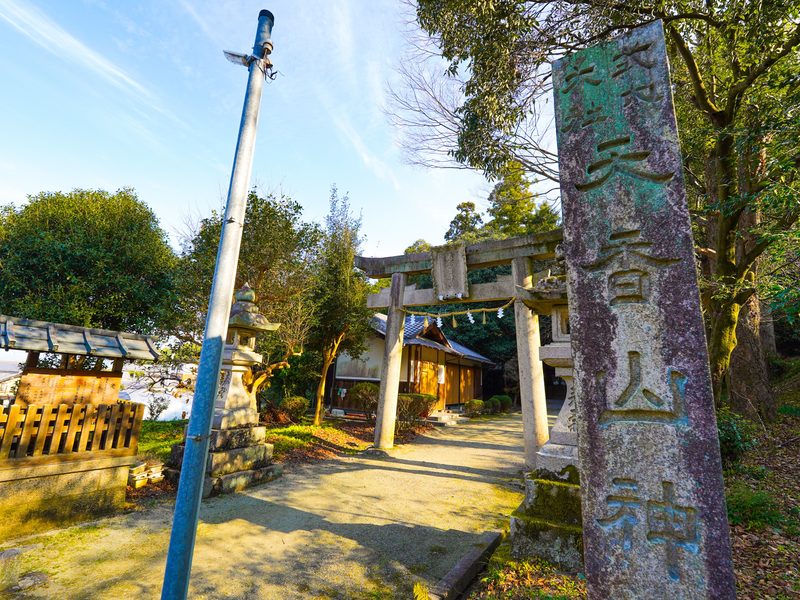
天香山神社
An ancient shrine at the northern foot of Mount Kagu, one of the Three Mountains of Yamato. It honours a god of divination, and brings you close to the mountain of Empress Jitō's poem of white robes drying.
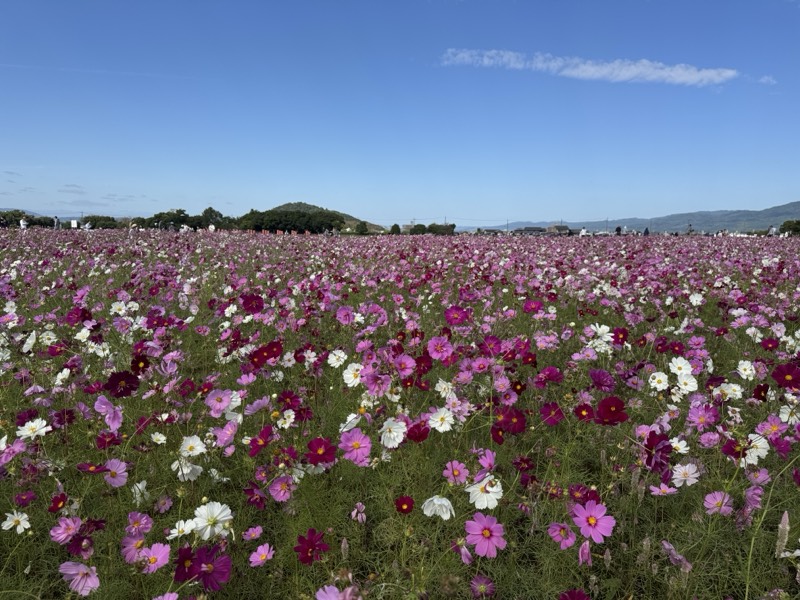
藤原宮跡
The heart of Japan's first full-scale planned capital, also known for its seasonal flower fields.
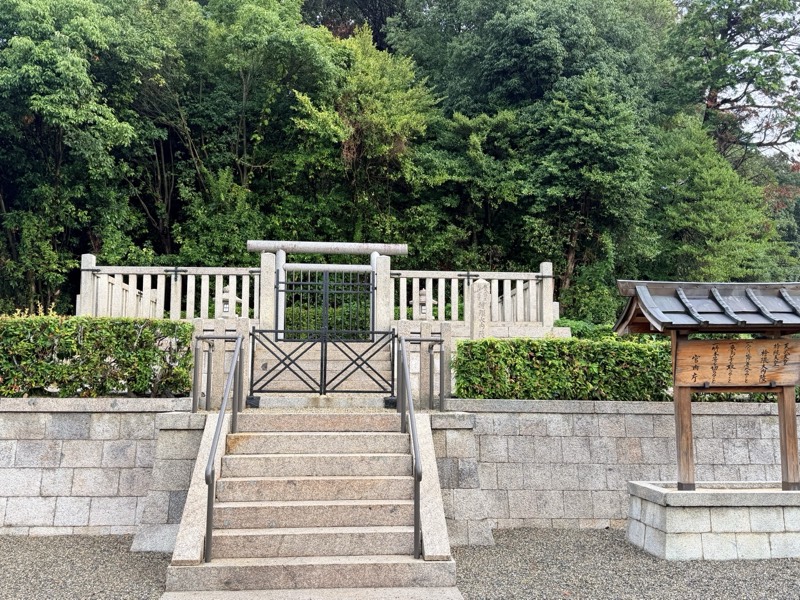
天武・持統天皇陵
One of the few octagonal imperial tombs whose occupants can be confirmed from written records.
RELATED COLUMN
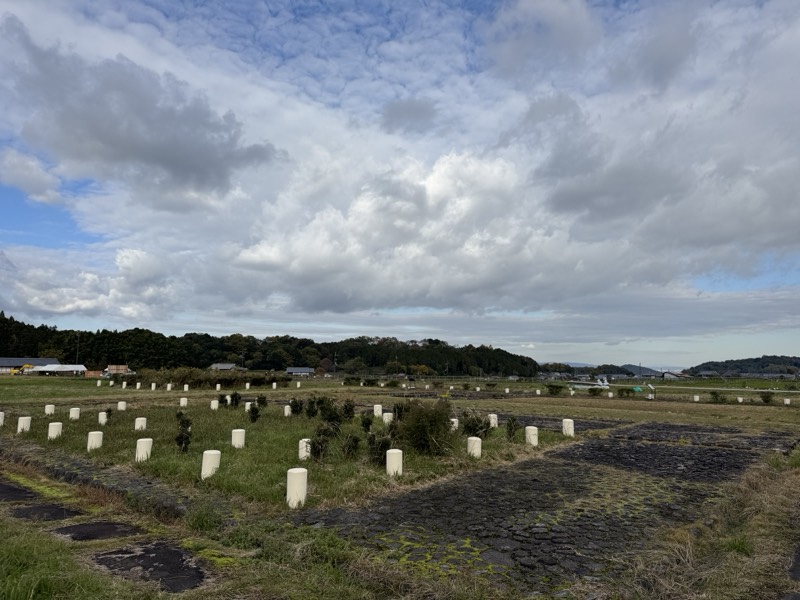 Whose Successor Was Empress Jitō? Tenmu's Empress, and Tenchi's DaughterAs the empress who completed the ritsuryō state (a state governed by law codes), she is usually spoken of in…After the Oath: What Became of Emperor Tenmu's PrincesIn 679 Emperor Tenmu made six princes swear at Yoshino never to fight one another. It is well known that the…Prince Takechi: The Eldest Son Far from the Throne, Yet Called "Mikoto"The man given command of the army in the Jinshin War was a 19-year-old eldest son. Because of his mother's…