1 / 5
天香山神社(あまのかぐやまじんじゃ)
An ancient shrine at the northern foot of Mount Kagu, one of the Three Mountains of Yamato. It honours a god of divination, and brings you close to the mountain of Empress Jitō's poem of white robes drying.
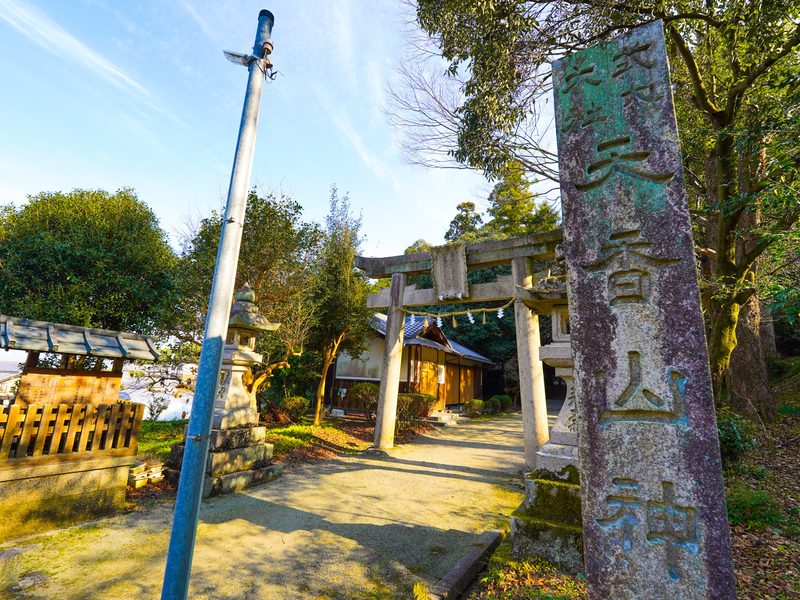
This shrine stands at the northern foot of Mount Kagu (Amanokaguyama), one of the Three Mountains of Yamato, about 1 km east of the Fujiwara Palace site. Pass through the torii from the lane between the rice fields and you enter a quiet precinct surrounded by tall cedars.
It is an old shrine, listed in the shrine register of the Engishiki (a code of court procedures compiled in the early 10th century) as Amenokaguyama ni Masu Kushimachi no Mikoto Shrine. The stone pillar at the entrance is carved "Shikinai Taisha", marking it as one of the major shrines listed in the Engishiki.
The deity enshrined here is Kushimachi no Mikoto, regarded as a god who presides over divination.
In the Kojiki's story of the Heavenly Rock Cave, the gods take the shoulder bone of a stag from Mount Kagu, burn it with wood of the hahaka tree from Mount Kagu, and read the omens. Hahaka is thought to be the Japanese bird cherry, and the tree is planted in the shrine grounds. Since the age of myth, Mount Kagu has been a mountain for seeking the will of the gods.
Of the Three Mountains of Yamato, only Mount Kagu bears the epithet ama no, "heavenly". This comes from a legend that it came down from heaven; a surviving fragment of the Iyo Province Fudoki tells of a mountain that descended from heaven and split in two, one half becoming Mount Kagu in Yamato.
Kunitokotachi Shrine stands at the summit and Amanoiwato Shrine at the southern foot, so the whole mountain is a place of worship.
This is the mountain in Empress Jitō's poem in the Man'yōshū (Japan's oldest anthology of poetry):
Haru sugite / natsu kitarurashi / shirotae no / koromo hoshitari / ame no Kaguyama
"Spring has passed, and summer, it seems, has come: robes of pure white are spread out to dry on heavenly Mount Kagu." From Fujiwara-kyō, the capital Empress Jitō built, Mount Kagu could be seen to the southeast.
The Man'yōshū also preserves a poem in which Emperor Jomei climbs Mount Kagu to view the land. For the people of the capital, Mount Kagu was a special mountain that announced the turning of the seasons and from which the ruler surveyed the realm.
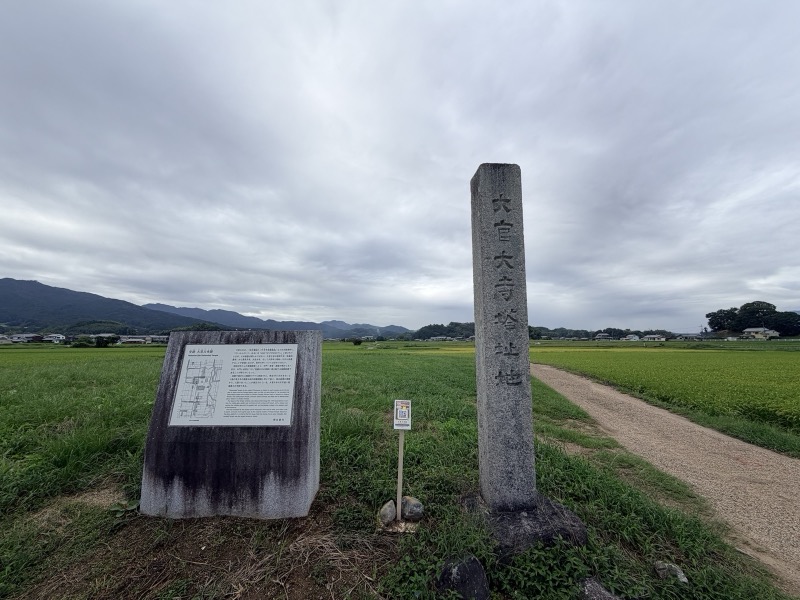
About 15 minutes' walk east of the Fujiwara Palace site. A path beside the shrine grounds leads up to the summit of Mount Kagu. Stand in the fields of the Fujiwara Palace site and look at the mountain, then visit the shrine at its foot, and the scenery of Empress Jitō's poem comes closer.
Published