


1 / 5
藤原宮跡(ふじわらきゅうせき)
The heart of Japan's first full-scale planned capital, also known for its seasonal flower fields.
This was the heart of Fujiwara-kyō, which served as the capital for 16 years, from 694 to 710. Three rulers, Empress Jitō, Emperor Monmu and Empress Genmei, governed from here.
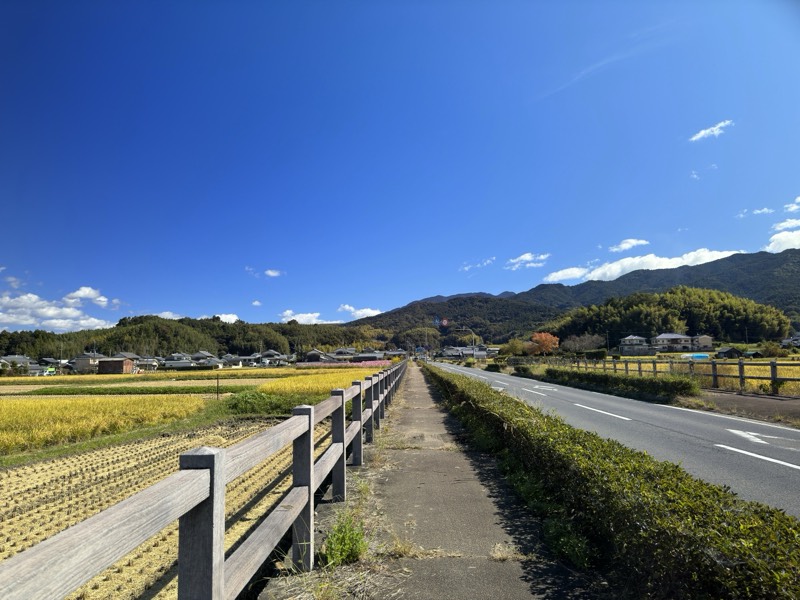
It belongs to the city of Kashihara rather than Asuka Village, but it is within walking distance of Asuka.
Fujiwara-kyō was the first full-scale capital in Japan to adopt the jōbō system, a grid plan. Streets were laid out like a chessboard and people lived within the blocks, following the model of capitals in Tang China.
Until then, the palaces of Asuka held only the ruler's residence and government offices; they were not cities. With Fujiwara-kyō, a planned, divided "capital city" appeared for the first time. The later capitals of Heijō-kyō (Nara) and Heian-kyō (Kyoto) inherited this form.
The palace covered an area about 1 km square. It was surrounded by a great wall pierced by twelve gates.
At the centre stood the Daigokuden (Great Hall of State), where the emperor conducted government business and ceremonies. To its south was the Chōdō-in, where officials lined up, and further south the Chōshūden-in. This layout also followed the Tang model and set the pattern for later palaces.
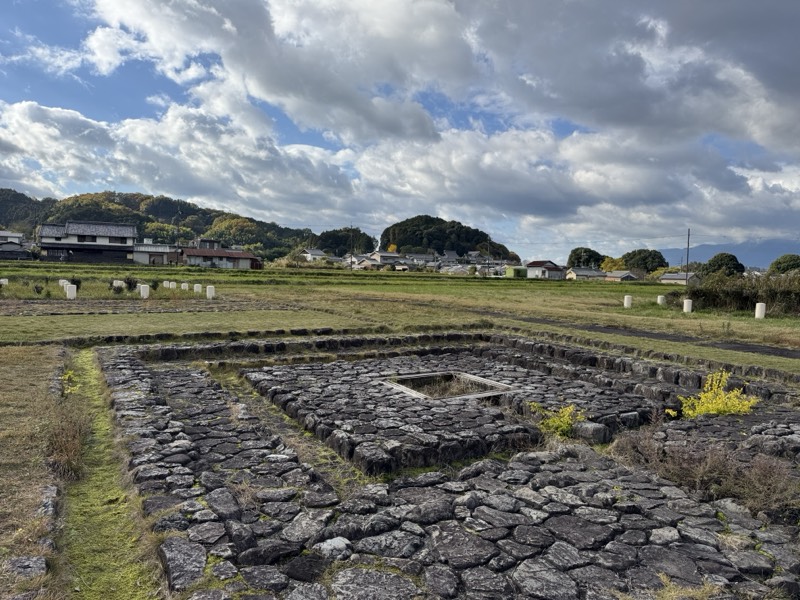
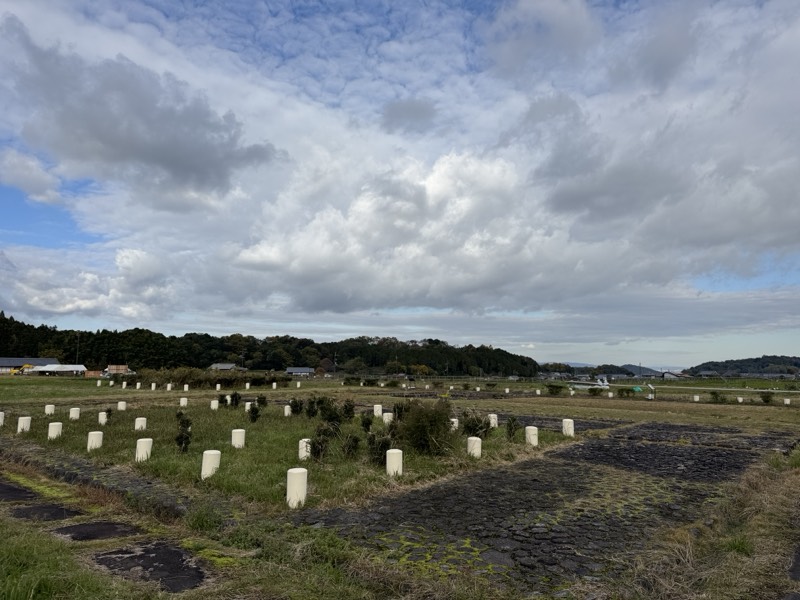
Today all that remains on the surface is the platform of the Daigokuden and markers showing where pillars stood.
Whereas the Asuka palaces were rebuilt for each new ruler, Fujiwara-kyō was designed from the start as a city.
It was here that the ritsuryō law codes were completed, coins were issued and the country's name was fixed as "Nihon" (Japan). The end of the Asuka period and the beginning of the ritsuryō state (a state governed by law codes) changed places on this spot.
And yet, after only 16 years, the capital moved to Heijō-kyō. There are several theories as to why, such as problems with drainage or the city growing larger than planned, but the reason is not clear.
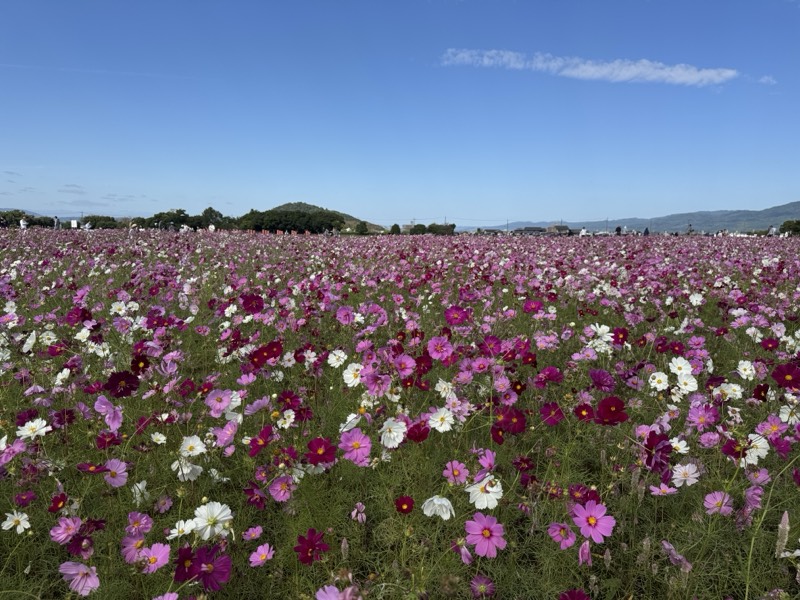
The site has been left as a vast open field, and flowers are planted there each season.
Rapeseed blossoms in spring, yellow cosmos in early summer and lotuses in summer are followed in autumn by a sea of cosmos, said to number about three million. Land where no buildings may be built, in order to protect the remains, has ended up as one of the finest flower fields in Nara Prefecture.
Around the autumn equinox, red spider lilies bloom in a single line along the ridges dividing the field.
With nothing in the way, you can look all around at the three mountains of Yamato: Unebi, Miminashi and Ama-no-Kaguyama.
Fujiwara-kyō was placed in the middle of these three mountains. To the east you can see Kaguyama, the mountain in Empress Jitō's poem: Haru sugite / natsu kitarurashi / shirotae no / koromo hoshitari / Ame no Kaguyama: "Spring has passed and summer seems to have come: white robes are hung out to dry on heavenly Mount Kagu." The ridgelines there are almost exactly the ones the people of the Asuka period saw.
It was designated a Special Historic Site of Japan in 1952. On 26 July 2026 it was inscribed as a World Heritage Site, as one of the component parts of "Asuka-Fujiwara: Archaeological Sites of Japan's Ancient Capitals and Related Properties."
Take a bus from Kintetsu Yamato-Yagi Station to the "Kashihara-shi Fujiwarakyō Shiryōshitsu" stop, among others. At this Kashihara City Fujiwara-kyō Exhibition Room, a reconstructed model shows what the capital looked like. Admission is free.
Published
READ MORE
 Asuka-Fujiwara World Heritage: All 19 Component Sites and How to Visit Them, with Half-Day, One-Day and Two-Day Routes"Asuka-Fujiwara" was inscribed on the World Heritage List in 2026. We list all 19 component sites with their…
 What Did the White Robes Announce? Empress Jitō's Poem of Heavenly Mount KaguEmpress Jitō's poem about Mount Kagu begins "Spring has passed, and summer seems to have come." It is loved…
 Whose Successor Was Empress Jitō? Tenmu's Empress, and Tenchi's DaughterAs the empress who completed the ritsuryō state (a state governed by law codes), she is usually spoken of in…
 Women Who Soared through Asuka: The Five at the Heart of a Japan Heritage StoryThree reigning empresses (Suiko, Kōgyoku/Saimei and Jitō), the poet Nukata no Ōkimi, and the nun Zenshin-ni…
 The Grid Was Laid on the Land Before the Capitals: The Ancient Roads of YamatoThe Kamitsumichi, Nakatsumichi and Shimotsumichi roads run north–south about 2.1 km apart. Only after this…
 The Original Didn't Follow the Book: Fujiwara-kyō Seen from Chang'anFujiwara-kyō placed its palace at the centre of the capital, just as the Chinese classic the Rites of Zhou…
 A Century of Women Rulers: Empress Jitō and East Asia in Her TimeIn 690, the year Empress Jitō took the throne in Japan, Wu Zetian became emperor in Tang China. Half a…Where Japan as a State Began: The 19 Sites of the Asuka-Fujiwara World Heritage PropertyIt was inscribed on 26 July 2026. All that was chosen were the remains of palaces, temples and tombs, and…Why Was Fujiwara-kyō Abandoned After Only Sixteen Years?Japan's first full-scale planned capital was abandoned after just sixteen years. Poor drainage, the position…
 A hundred years after "utterly unreasonable": how the ritsuryō state was builtIn 600 the first envoys sent to the Sui court in China came home having been told by the emperor that their…
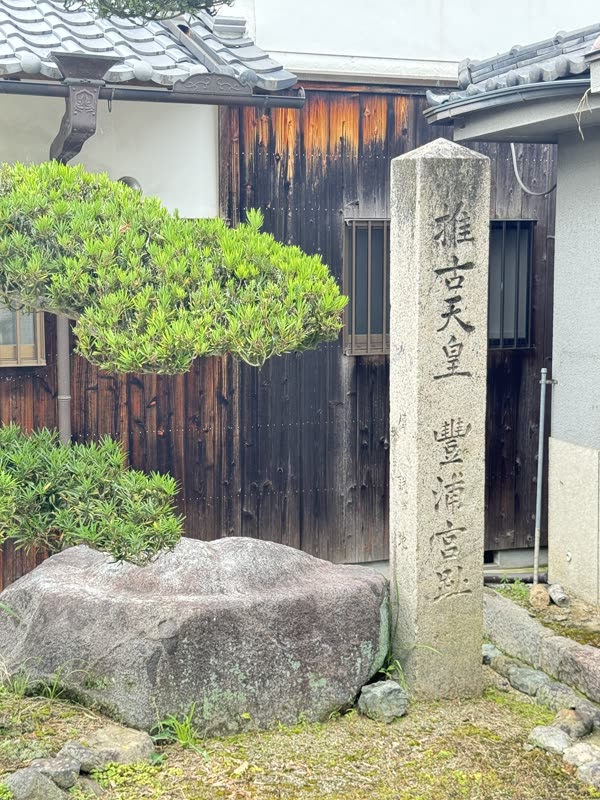 Why did the palaces of Asuka keep moving?Toyura, Oharida, Okamoto, Itabuki, Kawahara, Kiyomihara. Over a hundred years the palace moved again and…
NEARBY
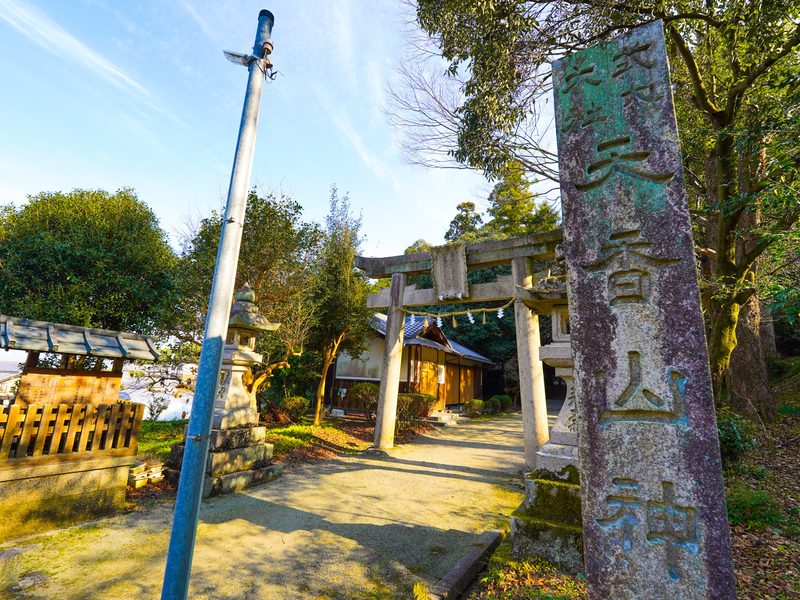
天香山神社
An ancient shrine at the northern foot of Mount Kagu, one of the Three Mountains of Yamato. It honours a god of divination, and brings you close to the mountain of Empress Jitō's poem of white robes drying.
本薬師寺跡
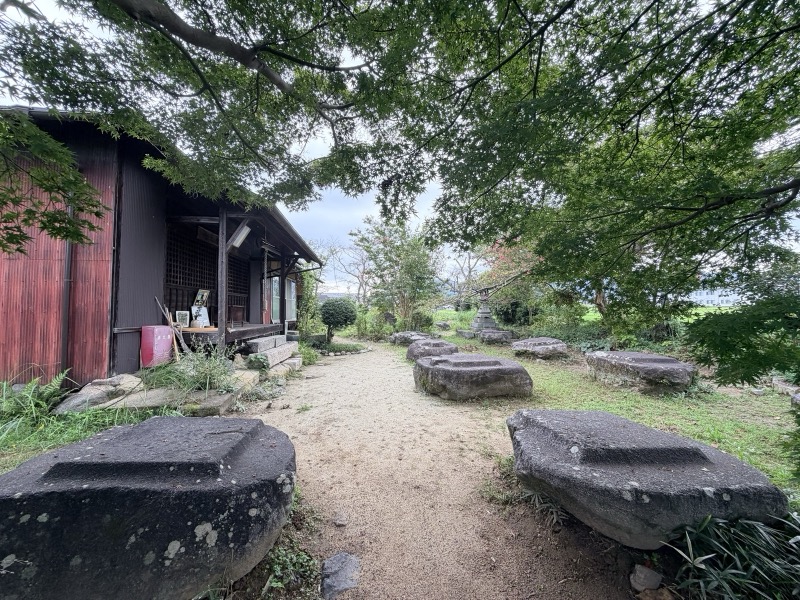
The site of a state temple with twin pagodas, where foundation stones remain in their original positions.