
Published
Japan's first full-scale planned capital was abandoned after just sixteen years. Poor drainage, the position of the palace, and what an embassy to Tang China brought back after a gap of thirty years: several theories are told.

In 694 the capital was moved to Fujiwara-kyō. It was not a palace that moved with each new ruler, as the palaces of Asuka had, but a permanent capital laid out on a grid. It was Japan's first full-scale planned capital city.
In 710, however, the capital moved again, to Heijō-kyō (Nara). Fujiwara-kyō had served three reigns, those of Empress Jitō, Emperor Monmu and Empress Genmei, for a mere sixteen years.
Why was a capital built on such a scale abandoned so quickly? No record survives that settles the question, and several theories are told.
What sets Fujiwara-kyō apart is the position of its palace. The palace, where the emperor lived and government business was conducted, was placed almost exactly in the centre of the city.
This is thought to follow an ancient Chinese ideal: the capital described in the Kaogongji (Record of Trades) section of the Zhou li (Rites of Zhou), with the king's palace at its centre. In other words, an ideal from a book was transferred directly onto the land.
Every capital from Heijō-kyō onwards places the palace at the northern edge. Fujiwara-kyō alone is the exception.
One of the leading theories is a problem with drainage.
Fujiwara-kyō was built on low ground surrounded by the Three Mountains of Yamato. Because the capital sat lower than its surroundings, water did not drain away well.
On top of this came the layout, with the palace in the centre. Waste water from the people living in the city flowed downhill, following the lie of the land, and the palace lay in its path.
Tens of thousands of people are thought to have lived in the capital at the time. That would mean the emperor's residence stood where sewage, including human waste, ended up.
Some suggest that this led to outbreaks of disease. The Shoku Nihongi (the official chronicle that continues the Nihon Shoki) does record epidemics in the Fujiwara-kyō period, but it does not say that drainage was the cause. This view is an inference drawn from the city's layout and terrain.
Another theory looks to influences from abroad.
At the Battle of Hakusukinoe (Baekgang) in 663, Japan was defeated by the allied forces of Tang China and the Korean kingdom of Silla. After that, contact with Tang broke off. No embassy to Tang (kentōshi) was sent after 669.
In the meantime Japan's close partner was Silla. Tang and Silla eventually fell out with each other, and Japan received the goods and learning of the continent through Silla.
In 702, while Fujiwara-kyō was still in use, embassies to Tang resumed after a gap of more than thirty years. The mission was led by Awata no Mahito.
The envoys returned in 704. Then, in 708, the move to Heijō-kyō was ordered.
One theory sees significance in this four-year interval. Perhaps those who had seen the real Tang capital reported that Fujiwara-kyō was the wrong shape.
The model Fujiwara-kyō is said to have followed was an ideal passed down through books. What the envoys actually saw was a real capital with the palace city at its northern edge and a great avenue running south from it. A capital with the palace in the middle no longer existed anywhere on the continent.
This theory has no firm evidence either. It is a fact, however, that Heijō-kyō, built after the move, placed its palace at the northern edge.
Neither the drainage theory nor the embassy theory has to be the single right answer. Both factors may have been at work together.
You find out that a place is hard to live in by living there. You find out that the shape of your capital is outdated by looking abroad. If both realisations came at the same time, the short span of sixteen years makes sense.
Put another way, Fujiwara-kyō was a capital where Japan "learned by trying". It was the first time Japan built a planned capital on its own, and Heijō-kyō was designed on the basis of that experience. Its abandonment could itself be seen as a step towards the next capital.
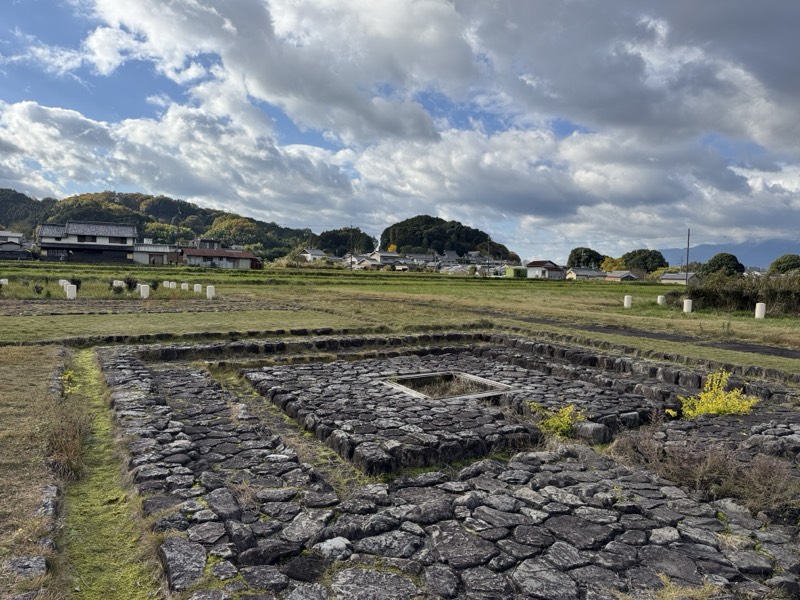
At the Fujiwara Palace Site, the platform of the Daigokuden (Great Hall of State) and the positions of its pillars are marked out. There are no buildings around it, and you can take in all three of the Three Mountains of Yamato at once.
Standing here, you can tell that you are at the bottom of a basin ringed by the three mountains. Looking at the terrain, you can also guess which way the water would flow. There is no better place to go and test the drainage theory for yourself.
Within the former bounds of Fujiwara-kyō, the sites of Moto-Yakushiji Temple and Daikandaiji Temple also remain. Walking round them as well gives you a real sense of the size of the capital that was abandoned after sixteen years.
RELATED SPOT
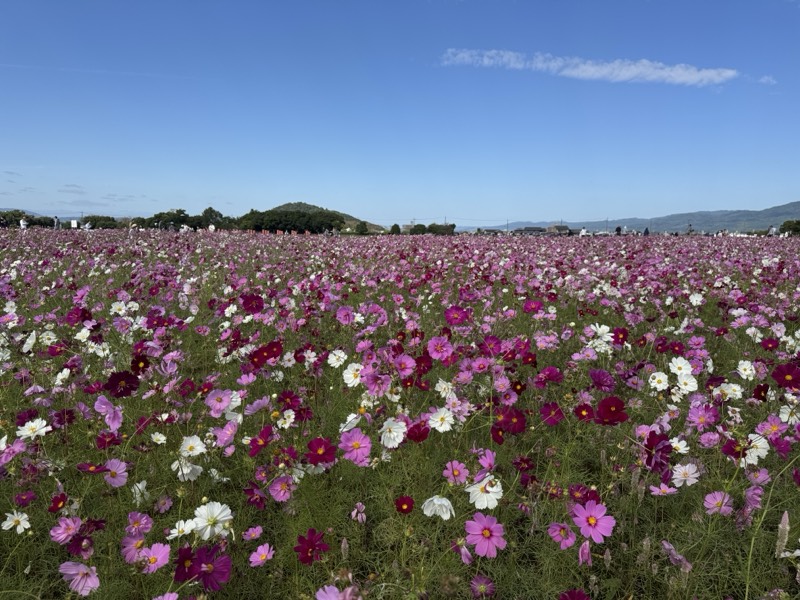
藤原宮跡
The heart of Japan's first full-scale planned capital, also known for its seasonal flower fields.
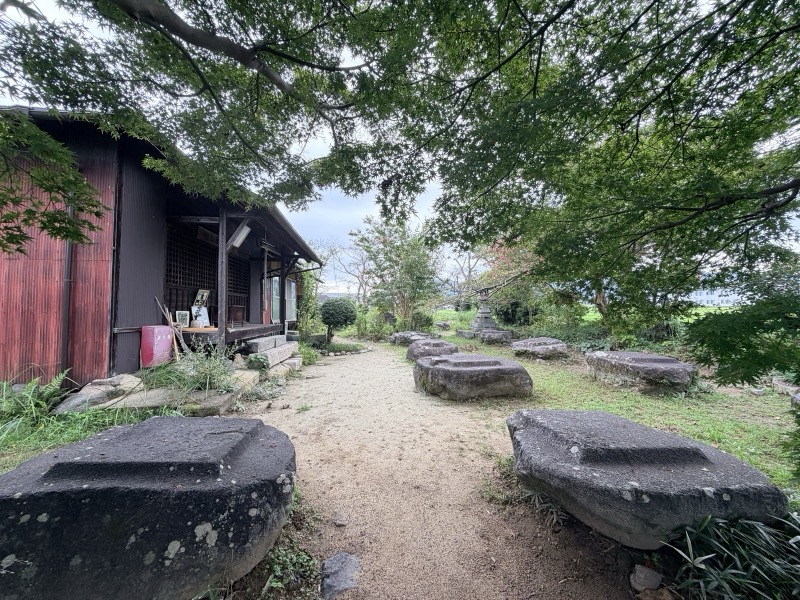
本薬師寺跡
The site of a state temple with twin pagodas, where foundation stones remain in their original positions.
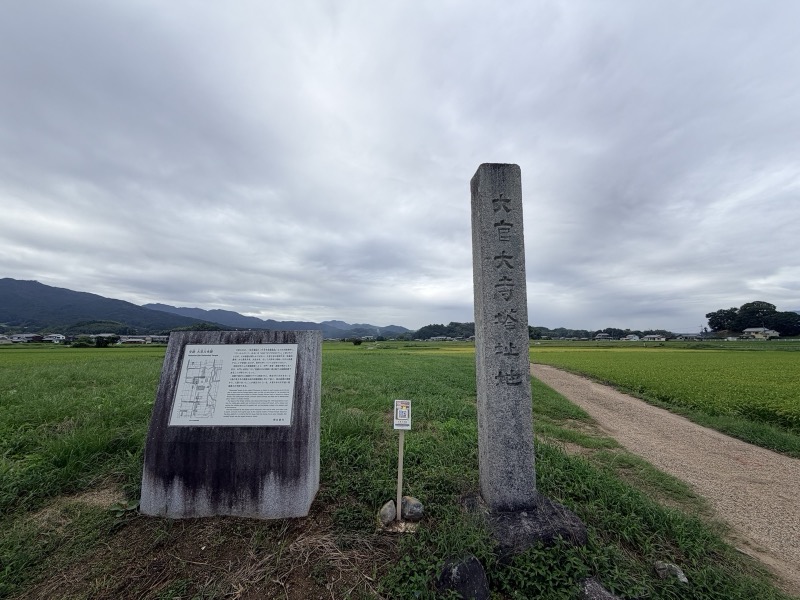
大官大寺跡
The site of the largest state temple of Asuka-Fujiwara, once crowned by a nine-storey pagoda.
RELATED COLUMN
The Original Didn't Follow the Book: Fujiwara-kyō Seen from Chang'anFujiwara-kyō placed its palace at the centre of the capital, just as the Chinese classic the Rites of Zhou…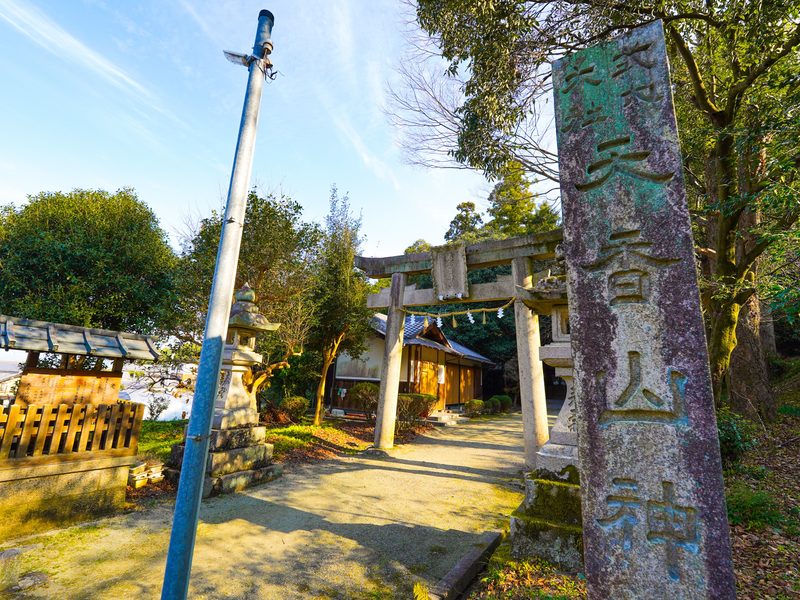 What Did the White Robes Announce? Empress Jitō's Poem of Heavenly Mount KaguEmpress Jitō's poem about Mount Kagu begins "Spring has passed, and summer seems to have come." It is loved…
 Asuka-Fujiwara World Heritage: All 19 Component Sites and How to Visit Them, with Half-Day, One-Day and Two-Day Routes"Asuka-Fujiwara" was inscribed on the World Heritage List in 2026. We list all 19 component sites with their…