1 / 5
本薬師寺跡(もとやくしじあと)
The site of a state temple with twin pagodas, where foundation stones remain in their original positions.
This is the site of a state temple laid out to plan within the street grid in the south-west of Fujiwara-kyō (the Fujiwara capital). Emperor Tenmu is said to have vowed to found it in 680, praying for the recovery of his empress (later Empress Jitō) from illness.
It was designated a Historic Site of Japan in 1921 and a Special Historic Site in 1952.
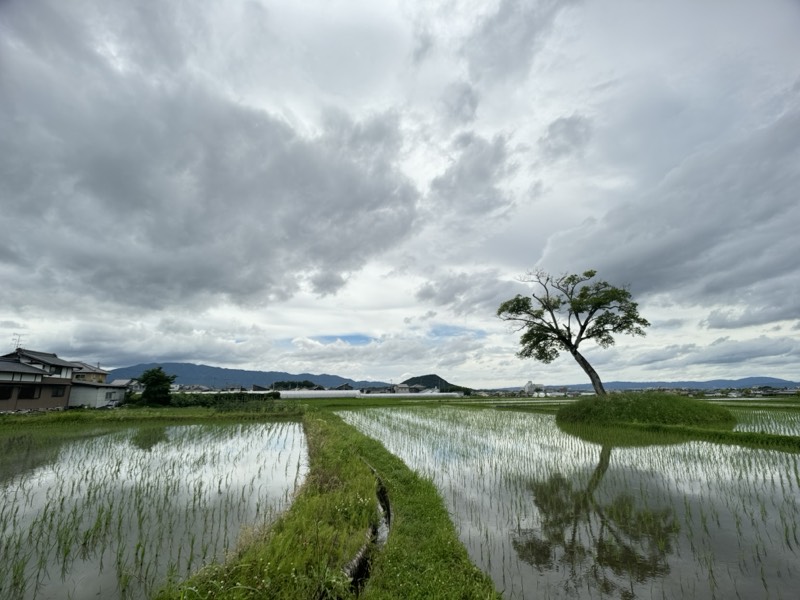
The platforms of the main hall, the East Pagoda and the West Pagoda are well preserved. On the main hall site, where a temple building called Iō-in now stands, the foundation stones remain exactly where they were originally placed.
The platforms of the two pagodas survive as raised mounds among the rice fields. On the East Pagoda platform are the central pillar stone (shinso) and foundation stones, and on the West Pagoda platform the central pillar stone remains.
It is rare for foundation stones to survive unmoved. Here you can see for yourself where the pagodas stood.
Excavations began in 1979. They revealed the size of the main hall, the East and West Pagodas, the middle gate, the roofed corridor and other buildings, so it is now possible to tell where in the temple complex each visible feature belongs.
The middle gate, main hall and lecture hall stand in a straight line from south to north, with two pagodas, east and west, placed between the main hall and the middle gate. This twin-pagoda arrangement is called the "Yakushi-ji style layout," and Motoyakushiji is the temple that gave it its name.
After the capital moved to Heijō-kyō (Nara) in 710, Yakushi-ji Temple was built in Nara, inheriting the layout and scale of this temple. The prototype of the Yakushi-ji you see in Nara today lies here among the rice fields.
The name Motoyakushiji came into use to mean "the original Yakushi-ji," as opposed to the Yakushi-ji in Heijō-kyō.
An old stone pillar in the grounds is engraved "Historic Site, Motoyakushiji Ruins" using a different character for "moto." Both characters, 本 and 元, have been used.
On 26 July 2026 it was inscribed on the World Heritage List as one of the component parts of "Asuka-Fujiwara: Archaeological Sites of Japan's Ancient Capitals and Related Properties."
About 10 minutes on foot east of Kintetsu Unebigoryōmae Station, in the Kidono-chō neighbourhood. The hall of Iō-in stands on the main hall site, with foundation stones dotted around it. In summer the surrounding rice fields are known for being filled with the flowers of water hyacinth.
Published
READ MORE
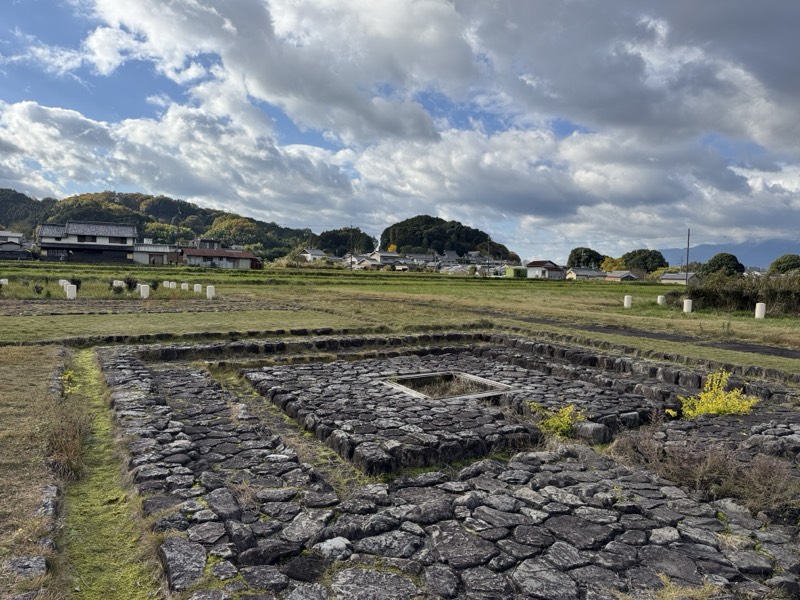 Asuka-Fujiwara World Heritage: All 19 Component Sites and How to Visit Them, with Half-Day, One-Day and Two-Day Routes"Asuka-Fujiwara" was inscribed on the World Heritage List in 2026. We list all 19 component sites with their…
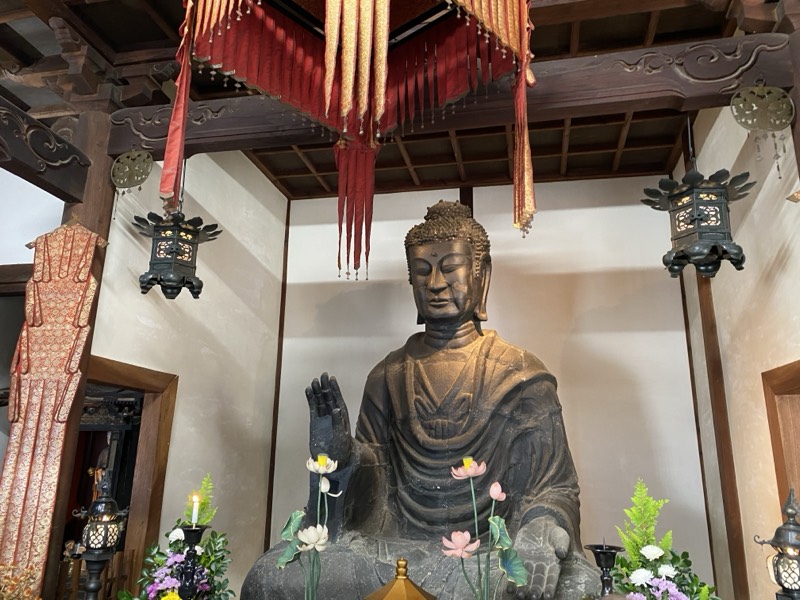 How a Foreign Buddha Became a Japanese Face: Buddhist Statues of Asuka and FujiwaraFrom the Asuka Daibutsu to the Yakushi Triad of Yakushi-ji Temple took about a hundred years. Over that…
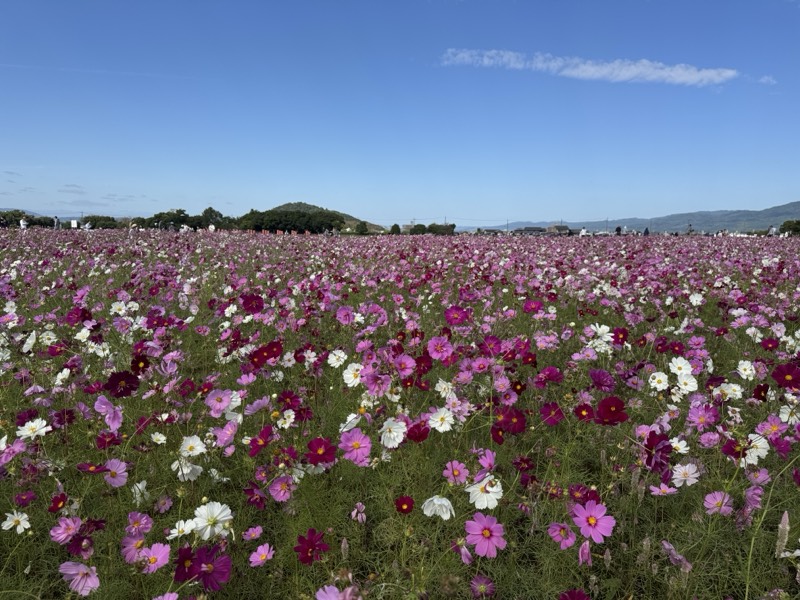 Why Was Fujiwara-kyō Abandoned After Only Sixteen Years?Japan's first full-scale planned capital was abandoned after just sixteen years. Poor drainage, the position…