
Published
From the Asuka Daibutsu to the Yakushi Triad of Yakushi-ji Temple took about a hundred years. Over that century the faces of Buddhist statues changed dramatically, depending on who commissioned them and on contact with lands across the sea.
In the mid-6th century, King Seong of Baekje (a kingdom on the Korean Peninsula) sent a gilt-bronze statue of Shaka (Shakyamuni Buddha) and sutras. This was the official introduction of Buddhism to Japan. The year is given as either 552 or 538, and there are historical sources for each.
The court split over whether to worship this Buddha. Soga no Iname argued that since all the neighbouring countries worshipped it, Japan should follow suit; Mononobe no Okoshi objected that it would bring down the anger of the country's own gods. Emperor Kinmei entrusted the statue to Iname on a trial basis and let him worship it.
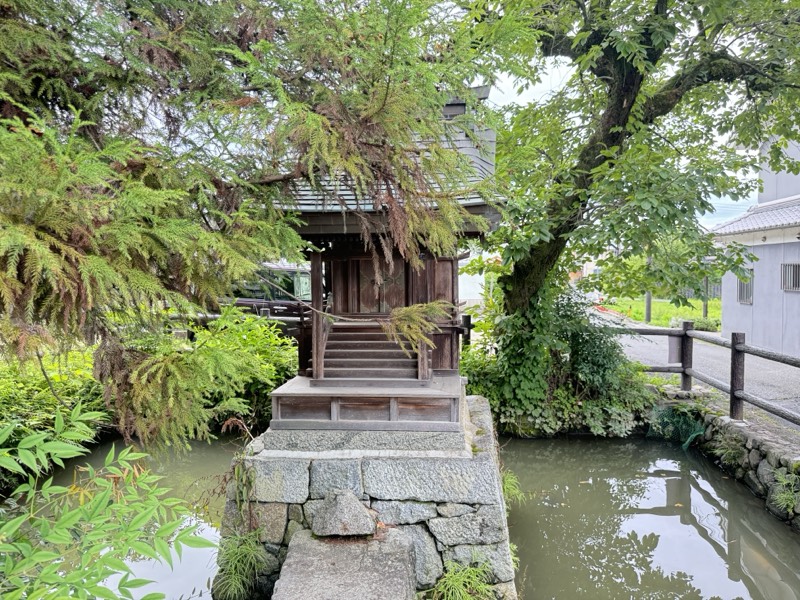
Soon afterwards an epidemic broke out. The Mononobe side declared it the anger of the gods, burned the temple and threw the statue into the Horie canal at Naniwa (present-day Osaka), according to the Nihon Shoki (Japan's oldest official chronicle, compiled in 720). The first Buddhist statue to come to Japan, then, was thrown away before it could be worshipped.
The conflict passed to the next generation. In 587 Soga no Umako and Mononobe no Moriya went to war, and the Soga side won. Prince Umayado (Prince Shōtoku), who had sided with Umako, went on to build Shitennō-ji Temple, and Umako built Asuka-dera Temple.

The principal image of Asuka-dera is a bronze seated Shaka Nyorai (Shakyamuni Buddha) known as the Asuka Daibutsu (Great Buddha of Asuka). According to the Nihon Shoki it was completed in 606, while an inscription handed down at the temple gives 609; two dates have come down to us.
It was made by Kuratsukuri no Tori, also written Tori Busshi, a craftsman of immigrant descent. It is a jōroku-size Buddha (a standard large size), about 2.75 m tall in its seated pose.
The Nihon Shoki tells how the Buddha was taller than the door of the Golden Hall and could not be brought inside. Everyone said the door would have to be broken down, but Tori found a way to install it without damaging the door, and for this he was granted court rank.
Today the central figure sits alone, but the pedestal bears traces where attendant figures seem to have stood, so it is thought to have originally been a triad.
The face is dark and the seams stand out because the temple buildings burned after a lightning strike in 1196, at the start of the Kamakura period (1185–1333). The Great Buddha was badly damaged too and was repaired many times afterwards.
How much of the original statue survives in the Buddha after the fire? This has long been debated.
Older studies held that only part of the face and the fingers of the right hand were original and that the rest was later repair, and for many years that was the accepted view. Some readers may have heard it said that "only the face of the Asuka Daibutsu is old."
In 2012 a team from Waseda University measured the composition of the bronze with a portable X-ray device. Finding no marked difference between the face and right hand, long considered original, and the body, long considered a later repair, they announced that most of the Buddha's body was very likely original.
In 2016 a team led by Osaka University and others put up scaffolding and took measurements at 137 points. They concluded that the original part of the face may extend to the cheeks and chin, while the body is thought to be a later repair. How much is original has not been settled. But in one respect both surveys point the same way: more survives than the old view that only the area around the eyes and the fingertips remain.
A Buddha made 1,400 years ago, still seated in the very place where it was made: that is what you can see in the main hall of Asuka-dera.
Buddhist statues of this period follow a clear type, called the Asuka style or the Tori style.
The eyes are shaped like apricot stones, and a faint smile plays about the lips. The figures are strictly symmetrical, made on the assumption that they would be viewed from the front. The hems of the robes flare out from both sides of the body like fins. The Guze Kannon of the Yumedono (Hall of Dreams) at Hōryū-ji Temple is a good example to picture.
Traced back, it is a style that arose in Northern Wei China and reached Japan by way of the Korean Peninsula. It became the standard in the era of the Soga clan, who built temples in Asuka.
The Shaka Triad in the Golden Hall of Hōryū-ji is also the work of Kuratsukuri no Tori. The inscription on its halo records that it was begun as a prayer for recovery when Prince Umayado and his consort fell ill, that despite this the two died one after the other, and that the statue was completed in 623. It began as a Buddha for healing and was finished as a Buddha praying for the dead to be reborn in paradise.
In 645 the main line of the Soga clan was destroyed in the Isshi Incident (the coup in which Soga no Iruka was assassinated).
The greatest patron of temples and Buddhist statues was gone. With it, the Asuka style, the type of the Soga era, quickly began to disappear.
In fact, the seeds of a new style had arrived earlier. The first mission to Tang China was sent in 630, and the new forms of Tang Buddhist statues had begun to reach Japan. But while the Soga were in power, they never became mainstream.
Only after the Soga fell did the change come to the surface: Buddhas closer to the human form, conveying the depth and roundness of the body rather than just a frontal view. Figures in the middle of this transition can be seen in the half-seated bodhisattva of Chūgū-ji Temple and in the group of small gilt-bronze Buddhas that Hōryū-ji presented to the Imperial Household, now in the Gallery of Hōryū-ji Treasures at Tokyo National Museum.
Around this time temples began to be built across the country. Small gilt-bronze Buddhas with very similar faces survive in many places, and one explanation is that regional temples modelled their principal images on famous Buddhas.
In 660 Baekje was destroyed by Tang China and Silla. In 663 the forces of Wa (early Japan), which had crossed the sea to restore Baekje, suffered a crushing defeat at the Battle of Baekgang (Hakusukinoe).
After this defeat, the routes by which new designs came directly from the continent and the peninsula narrowed. What the makers had at hand were the forms of Buddhas that had already arrived. What to keep from among them, and how to change it: an era began in which the makers chose for themselves.
There is a Buddha from around this time whose date is clearly known: the gilt-bronze pensive bodhisattva Miroku (Maitreya) of Yachū-ji Temple in Habikino, Osaka Prefecture. Its pedestal bears the inscription "fourth month of the year hinoe-tora," which corresponds to 666. It can be read as saying that 118 chishiki (fellow believers bound by faith) made it to pray for the recovery of the ailing "Chūgū Tennō." Who Chūgū Tennō refers to is disputed. There was also a theory that the inscription was carved later, but today the view that it is original has grown stronger.

What becomes prominent in this period are Buddhas made of clay, known as sozō. Rope is wound around a wooden core and clay is built up in layers to create the form. Unlike bronze, there is no need to make a mould and pour in metal, so the facial expression and the softness of the robes can be worked directly by hand.
In 1974, on the hill behind Kawara-dera Temple in Asuka Village, large numbers of clay sculpture fragments and senbutsu (fired clay Buddhas pressed from moulds) were discovered. They are thought to have been buried together after the temple suffered a fire. The site is known as the Kawara-dera Urayama site, and it was excavated by a team from Kansai University.
Taking the forms that had come from across the sea and drawing them towards what their own eyes found beautiful: for that endeavour, clay, which could be shaped directly by hand, was ideal.

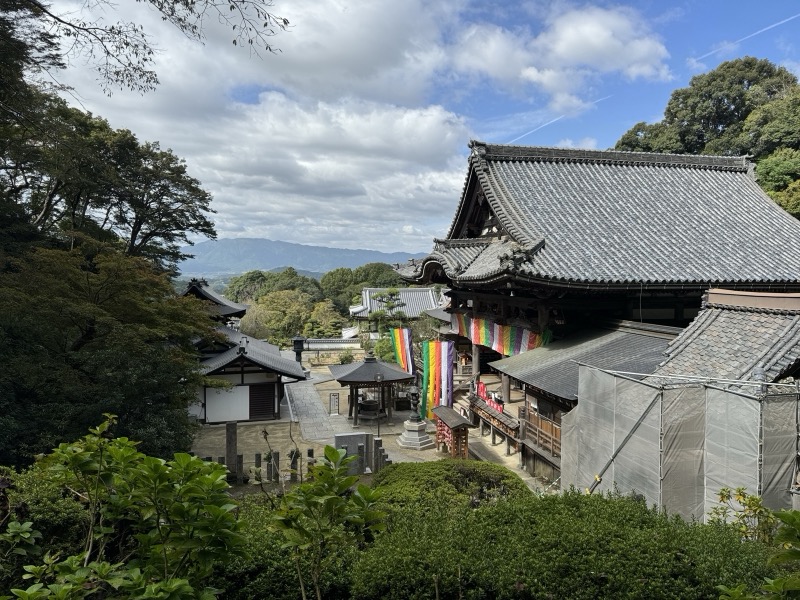
The principal image of Oka-dera Temple in Asuka Village, a seated Nyoirin Kannon, is also a clay sculpture. It is thought to date from the Nara period (710–794) and is 4.6 m tall, said to be the largest clay Buddhist statue in Japan.

In 680 Emperor Tenmu vowed to build Yakushi-ji Temple to pray for the empress's recovery from illness. The empress, later Empress Jitō, took over the construction after Tenmu's death. The temple stood within Fujiwara-kyō (the Fujiwara capital), in what is now Kidono-chō, Kashihara City.
When the capital moved to Heijō-kyō (Nara) in 710, Yakushi-ji also moved, to Nishinokyō in Nara. The temple left behind in Fujiwara-kyō is Motoyakushi-ji (the "original Yakushi-ji").
The question is where the Yakushi Triad now seated in the Golden Hall of Yakushi-ji in Nara was made. The "relocation theory" holds that it was made at Motoyakushi-ji in Fujiwara-kyō and brought to Nara when the capital moved. The "new-casting theory" holds that it was newly made after the temple moved to Heijō-kyō. The debate has continued since the Meiji era (1868–1912) and is still unresolved.
The relocation theory rests mainly on old temple records stating that a Buddha was welcomed from the original temple. That the statues' bronze is close in composition to 7th-century gilt-bronze Buddhas, and that the bronze is of even thickness throughout, are also cited in support.
Others point out, however, that bronze at the time was sometimes made by melting down and reusing old bronze objects, so it is hard to fix the date of manufacture from composition alone.
The new-casting theory rests on the newness of the forms. The attendant bodhisattvas Nikkō and Gakkō stand in a pose called sankyoku ("three bends"), with the neck, waist and knees each turned in opposite directions. The pedestal is carved with grapevine scrolls, the Four Directional Gods and figures of foreigners. The view is that these are new designs of the Heijō-kyō era.
Some compare fragments of Buddhas found at the Motoyakushi-ji site with the Yakushi-ji triad. But whether they look alike tends to depend on who is looking, and the discussion makes little headway.
Another approach is to compare the triad with Buddhas of known date. Records show that the principal image of Yamada-dera Temple was consecrated in 685, and its head still survives at Kōfuku-ji Temple. Some researchers think that comparisons with such securely dated Buddhas could help establish which came first.
From the Asuka Daibutsu to the Yakushi Triad is about a hundred years. The course of events can be summarised like this.
First, under the Soga, Buddhas were made that inherited the types from the continent as they were. When the Soga fell, the new Tang forms brought back by the missions to China came to the fore. After Baekgang, as contact with lands across the sea narrowed, a period began of choosing and developing, from the forms at hand, those that suited their own eyes. And by the time the capital moved to Nara, a distinctively Japanese Buddha face, such as that seen in the Ashura statue of Kōfuku-ji, was taking shape.
Buddhas that arrived as foreign gods, and were once thrown away, took a hundred years to acquire the faces of the people of this land. The Buddhist statues of Asuka and Fujiwara-kyō show them partway along that path.
The Asuka Daibutsu can be viewed in the main hall of Asuka-dera. As a Buddha still seated in the place where it was made, it is irreplaceable.
The Kawara-dera, Yamada-dera and Motoyakushi-ji sites are now only foundation stones and platforms, but you can stand where the Buddhas once sat. The Buddha head from Yamada-dera is at Kōfuku-ji in Nara City, and the Yakushi Triad is at Yakushi-ji in Nara City.
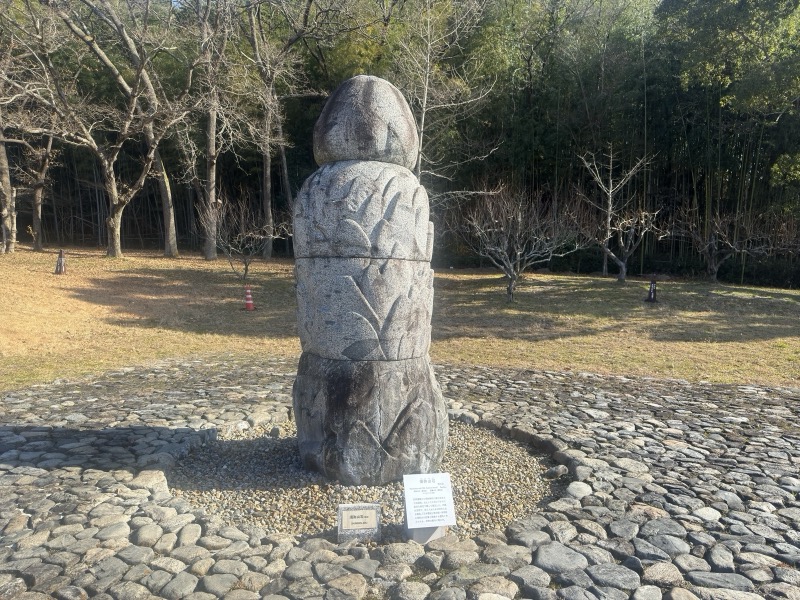
The Asuka Historical Museum displays roof tiles and Buddha fragments from Asuka's temples, as well as a section of the Yamada-dera corridor, among other things. Walk the sites in the village and see the Buddhas in Nara: follow both, and the changes of that century join up into a single line.
RELATED SPOT
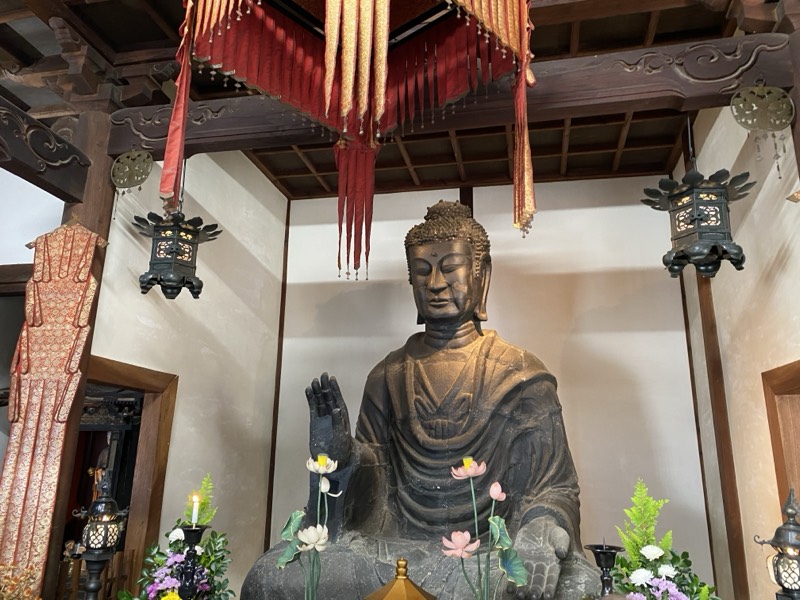
飛鳥寺・蘇我入鹿首塚
Japan's first full-scale Buddhist temple. The Great Buddha of Asuka still sits on the spot where it was made, 1,400 years ago.
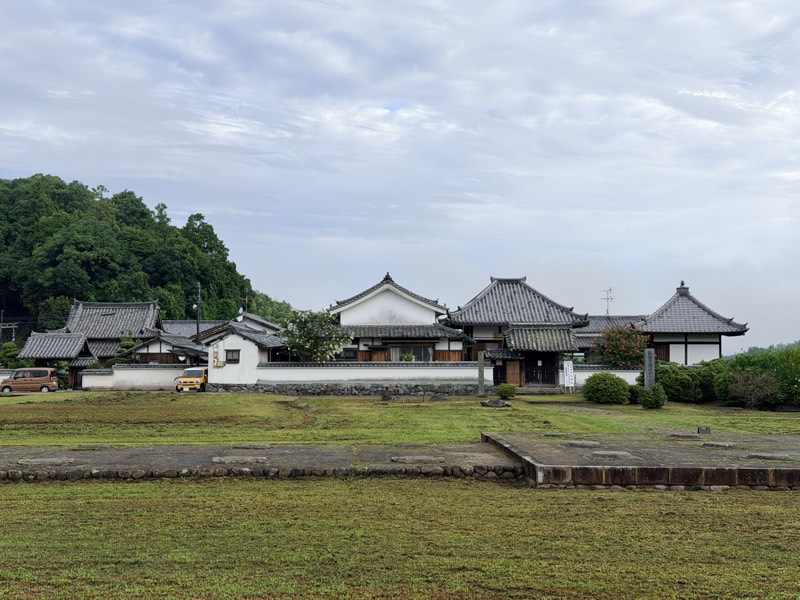
川原寺跡(弘福寺)
One of the four great temples of Asuka. Its foundation stones still show how large its halls once were.
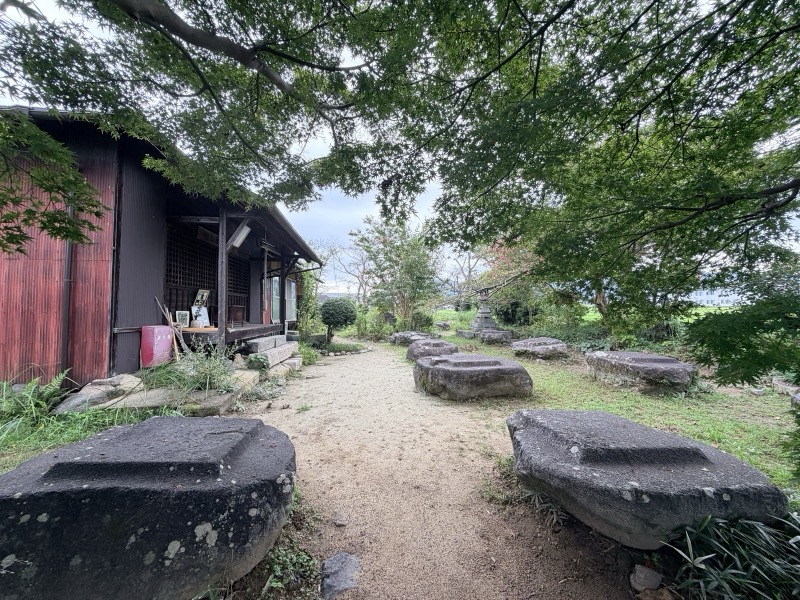
本薬師寺跡
The site of a state temple with twin pagodas, where foundation stones remain in their original positions.
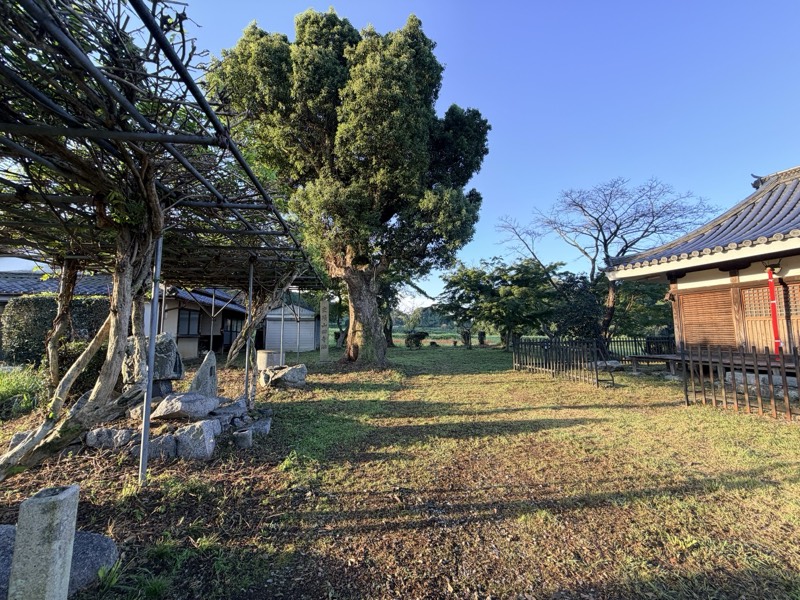
山田寺跡
A temple site where a corridor was excavated just as it had collapsed and been buried.
岡寺(龍蓋寺)
Japan's first temple for warding off misfortune, home to a huge clay statue of Nyoirin Kannon.
奈良文化財研究所 飛鳥資料館
The Nara National Research Institute's museum, displaying finds from Asuka and the east corridor of Yamada-dera Temple.
RELATED COLUMN
 Where Was the Naniwa Canal? A Discarded Buddha's Road to Zenkō-jiA waterway in Osaka near the sea, or a small pond in Asuka? The "Naniwa no Horie", which the Nihon Shoki…Clan temples and state temples: telling apart the temples of AsukaAsuka-dera, Toyura-dera, Yamada-dera, Kawahara-dera, Daikandai-ji, Moto-Yakushi-ji. Who built them, and for…The Asuka Daibutsu: How Much of It Is 1,400 Years Old?In the Kamakura period (1185–1333), lightning set Asuka-dera Temple ablaze. All that survived, the records…