1 / 3
岡寺(龍蓋寺)(おかでら(りゅうがいじ))
Japan's first temple for warding off misfortune, home to a huge clay statue of Nyoirin Kannon.
Its formal name is Tōkōzan Shinju-in Ryūgai-ji, but it is commonly called Oka-dera after the name of the area. It belongs to the Buzan school of Shingon Buddhism.
It is said to be "Japan's first sacred site for warding off misfortune" (yakuyoke), and it is still known for prayers to ward off bad luck. Five-coloured curtains hang in the grounds, and banners for protection from misfortune line the paths. From the New Year until Setsubun in early February, people in their unlucky years (yakudoshi) come from all over Nara and beyond.
The temple is said to have been founded around 663 by the priest Gien.
Gien was a scholar-monk of the Hossō school, also known as the teacher of Rōben of Tōdai-ji and of Gyōki, who later went out to work among ordinary people. He was, in other words, the teacher of the monks who shaped Buddhism in the Nara period (710–794).
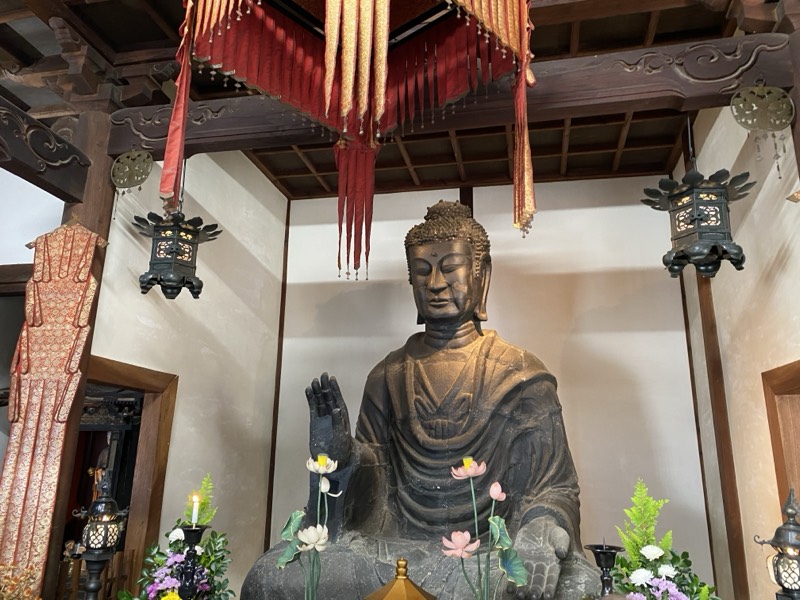
The principal image is a seated statue of Nyoirin Kannon (the wish-granting Bodhisattva of Compassion). At about 4.85 m tall, it is the largest clay statue in Japan, and it is designated an Important Cultural Property.
Tradition says that Kōbō Daishi (the monk Kūkai) made it from earth brought from three countries: Japan, China and India. Stepping into the hall, you are overwhelmed by a figure so large you have to crane your neck to look at it. Because it is made of clay rather than wood or bronze, its surface looks soft and full of volume.
The name Ryūgai-ji ("Dragon Lid Temple") comes from the Ryūgai Pond in the grounds.
The story goes that an evil dragon was ravaging the farmland and harming people, until Gien used his spiritual powers to trap it in the pond and seal it in with a large stone lid. The stone visible in the middle of the pond is said to be that lid.
A tale of subduing a dragon is also a tale of taming water. The temple's name preserves the memory of a land long at the mercy of drought and flood.
Oka-dera is the seventh temple on the Saigoku Thirty-Three Kannon Pilgrimage. The route spans the whole Kinki region and Gifu, and is said to be one of the oldest pilgrimages in Japan.
As a result there is a constant stream of visitors, and pilgrims can be seen at the office where they receive temple seals. Temple No. 6, Tsubosaka-dera, and No. 8, Hase-dera, are both in Nara Prefecture as well.
The Niōmon gate was rebuilt in 1612 and is an Important Cultural Property. It is the oldest building in the grounds.
The main hall was rebuilt in 1805. The three-storey pagoda at the back of the grounds had long been lost and was rebuilt in 1986.
The grounds climb steeply up the mountainside, and from in front of the main hall you can look out over the villages of Asuka.
In spring, rhododendrons cover the slopes. About 3,000 bushes have been planted, and they are at their best from late April to early May.
From early summer to autumn, the temple creates its "flower ponds" by floating dahlias in the water basins and ponds. The sight of the water surface covered in colourful blooms has become well known in recent years.
About 10 minutes on foot from the "Okadera-mae" stop on the Asuka loop bus from Kintetsu Kashiharajingu-mae Station. The road from the bus stop to the temple is uphill all the way. There is an admission fee.
It is about 15 minutes' walk from Ishibutai Kofun. The Asuka Palace Site and the Sakafuneishi site are also nearby.
Published
NEARBY
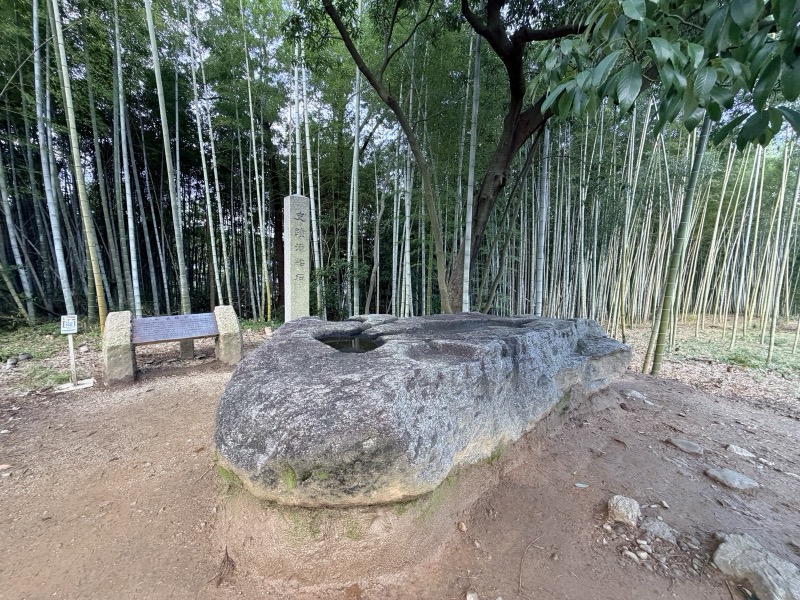
酒船石
A mysterious stone carved with circles and channels, lying in a bamboo grove on top of a hill.
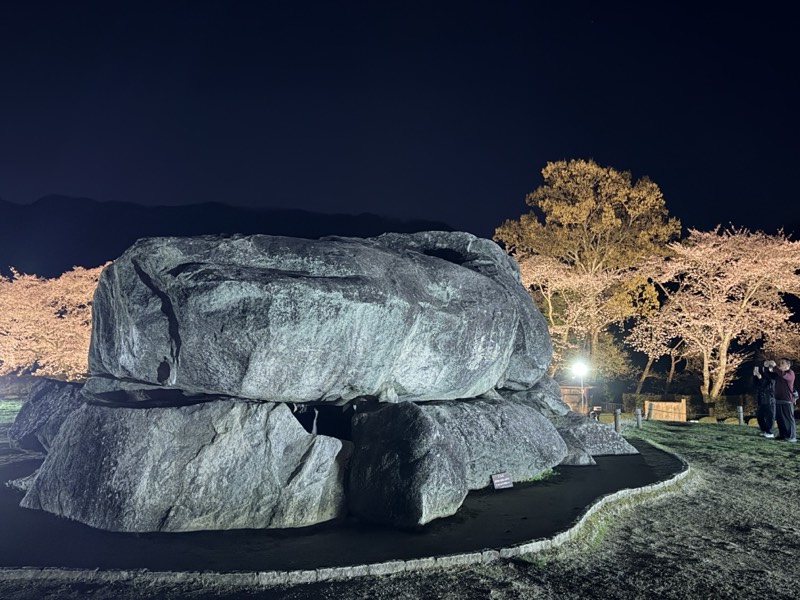
石舞台古墳
One of the largest stone burial chambers in Japan, its giant boulders left bare to the sky. The image most people picture when they think of Asuka.
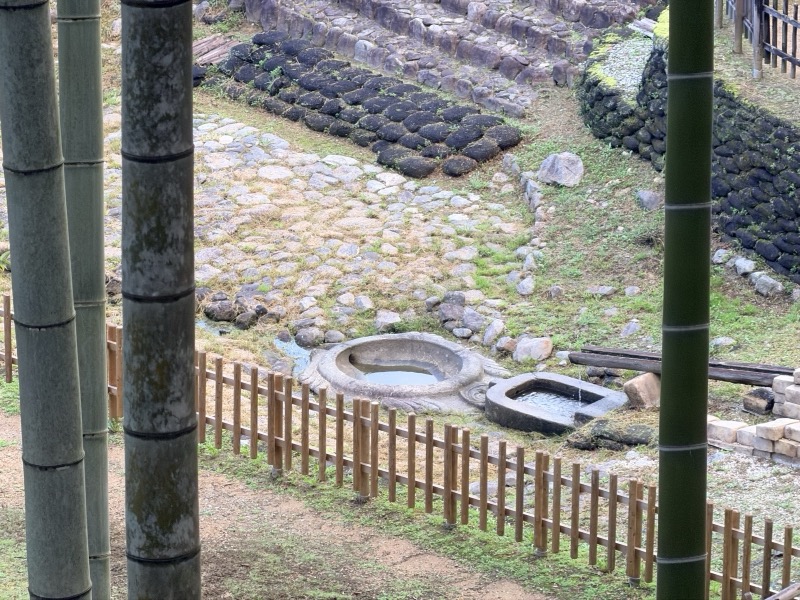
亀形石造物
A ritual site from the reign of Empress Saimei, with stonework designed to channel water.