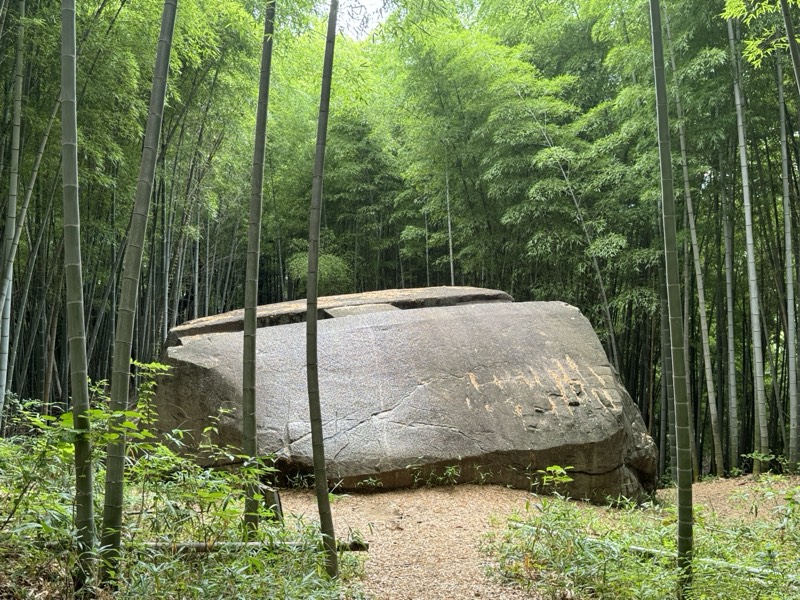
亀形石造物(かめがたせきぞうぶつ)
A ritual site from the reign of Empress Saimei, with stonework designed to channel water.
These stone structures were found in an excavation in 2000, at the northern foot of the hill where Sakafuneishi stands.
Water from a spring collects in a stone tank, flows into an oval stone basin, and then on into a turtle-shaped stone basin. The area around them was neatly paved with stones and enclosed by stone walls on both sides.
The turtle-shaped basin is about 2.4 m long and 2 m wide. It was hollowed out of granite, with the shell, head and four legs carved in relief.
Water enters through the head, collects in the hollow of the shell, and flows out at the tail end. It was made to hold water and display it.
The oval basin in front is also a tank for holding water, and the two are connected in a line.
This area is thought to have been a ritual site in the time of Empress Saimei. Spring water was guided into the stone basins and allowed to flow on stage by stage. It seems that rites of displaying the water itself and of purification were performed here again and again.
The Nihon Shoki, Japan's oldest official chronicle, records that Empress Saimei built the "Futatsuki Palace" on a hill enclosed by stone walls. Sakafuneishi on the hilltop and this facility at its foot are regarded as a single site, the Sakafuneishi Remains, and it has been suggested that they may be connected with that palace.
On 26 July 2026 it was inscribed as a World Heritage Site, as one of the components of "Asuka-Fujiwara: Archaeological Sites of Japan's Ancient Capitals and Related Properties."
Take the Asuka loop bus from Kintetsu Kashiharajingu-mae Station to the "Man'yō Bunkakan Nishiguchi" stop, then walk about 3 minutes. There is an admission fee, and the site has set opening hours.
Sakafuneishi on the hilltop is free to see at any time. Visit both the top and the bottom and you will see that the whole hill was a constructed site.
Published
NEARBY
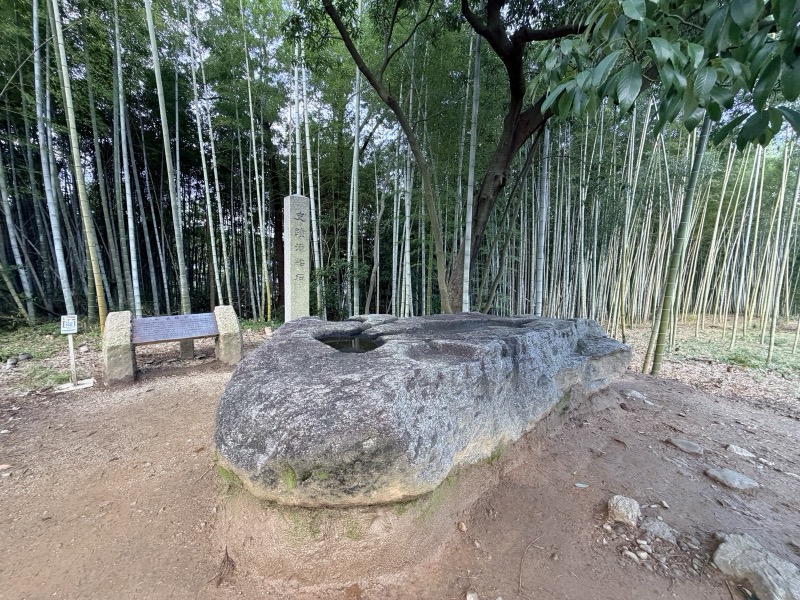
酒船石
A mysterious stone carved with circles and channels, lying in a bamboo grove on top of a hill.
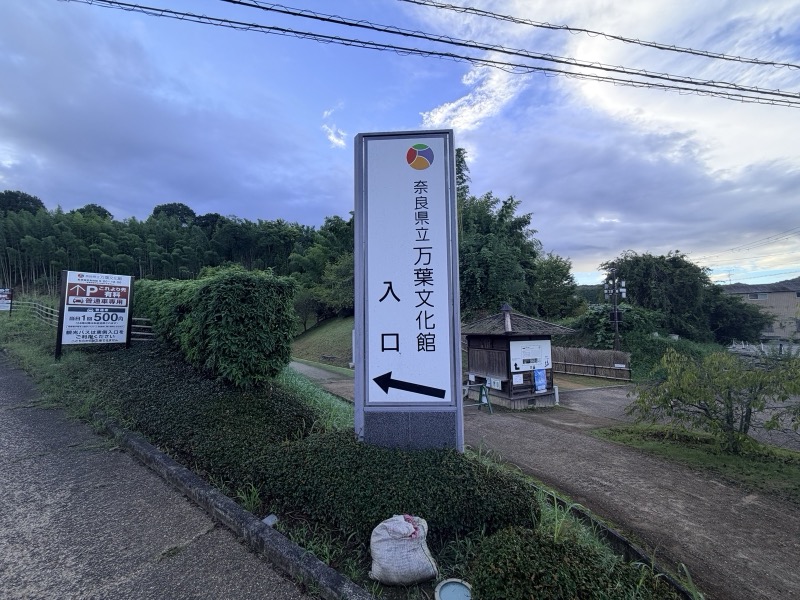
奈良県立万葉文化館
A centre for ancient culture built around the Man'yōshū.
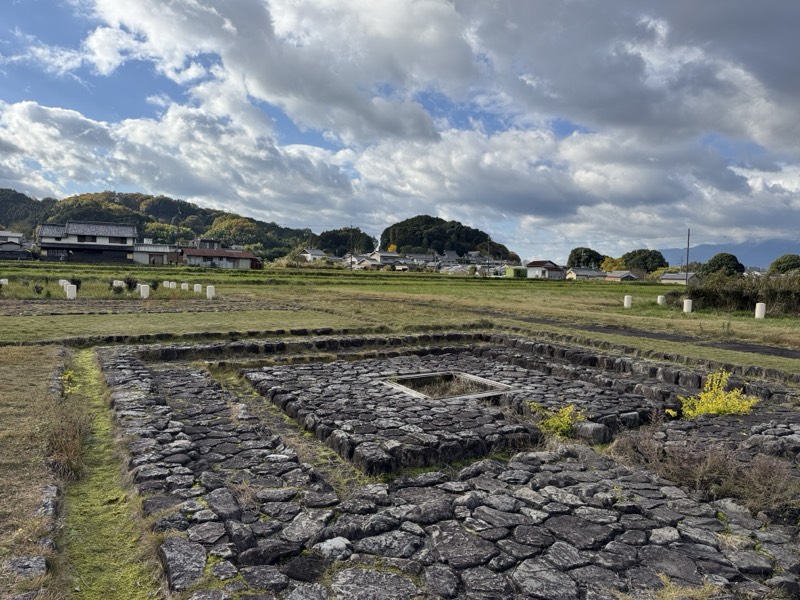
飛鳥宮跡(伝 飛鳥板蓋宮跡)
The political heart of Asuka, where several palaces were built one on top of another.