


1 / 2
石舞台古墳(いしぶたいこふん)
One of the largest stone burial chambers in Japan, its giant boulders left bare to the sky. The image most people picture when they think of Asuka.
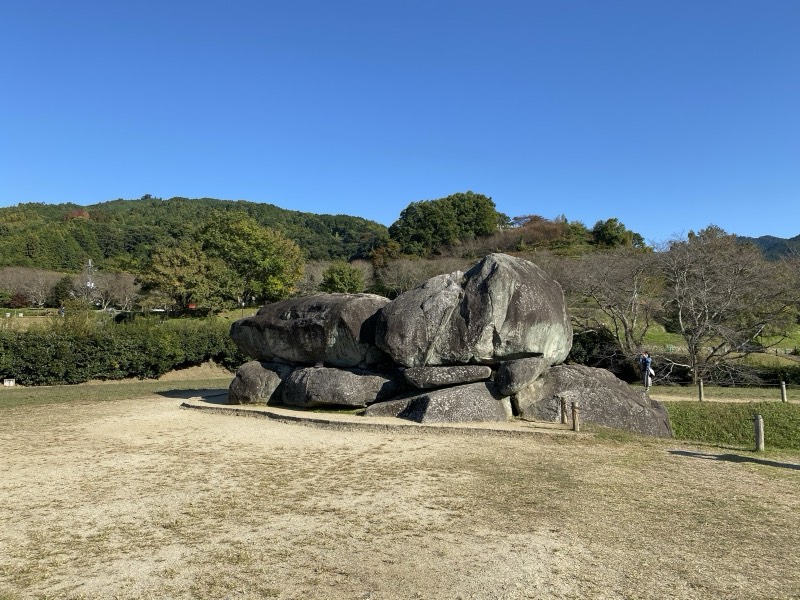
In the middle of the rice fields stands a pile of enormous stones. Japanese kofun (ancient burial mounds) are normally covered by a mound of earth, but here the earth has worn away, leaving only the stone chamber that was once inside. The flat capstone on top looks like a stage, and at some point people began calling it Ishibutai, the "stone stage."
It is thought to have been built in the early 7th century. It was designated a Special Historic Site of Japan in 1952, and it has become the symbol of Asuka Village: the first scene most visitors have in mind before they arrive.
The chamber is made of about 30 stones with an estimated total weight of around 2,300 tonnes. The largest are the two capstones: about 77 tonnes on the north side and 64 tonnes on the south. More than 140 tonnes of rock rest overhead with nothing holding them up but the walls.
The stones are granite, probably brought from the Tonomine hills to the southeast. They were moved several kilometres and lifted high into place in an age with no wheels or machinery. Wooden sledges called shura and ramps of piled earth are thought to have been used, but how the work was actually done is not known.
You can walk into the chamber. It is one of the largest corridor-style stone chambers in Japan. The burial room is about 7.7 m long, 3.5 m wide and 4.7 m high, and the passage leading to it is about 11 m long.
Standing inside, you feel the thickness and weight of the capstone right above your head. There is hardly a gap between the stones; their faces were fitted carefully against one another.
Fragments of tuff found inside suggest that a house-shaped stone coffin was once placed here. The coffin itself has not survived.
The tomb was originally a square mound about 50 m on each side. Excavations show that it was surrounded by a moat, with an embankment beyond it. The stone paving and steps you see around the chamber today mark out that original footprint on the ground.
No one knows when or why the earth was removed. Some think it simply eroded away; another story says it was torn open out of hatred for the person buried here.
The leading theory is that this is the tomb of Soga no Umako, the powerful minister who dominated the court in the reign of Empress Suiko, founded Asuka-dera temple, and died in 626. The Nihon Shoki, Japan's oldest official chronicle, records his grave as the "Momohara tomb."
Several points support the theory: the old local place name Shimanoshō is thought to come from Umako's residence, known as the Shima no Ie; the tomb is among the largest of its time; and it lies a convenient distance from Asuka-dera. However, no inscription has been found, and the identification is not certain.
The first full excavations were carried out in 1933 and 1935 by Hamada Kōsaku and his team from Kyoto Imperial University. They showed that the mound had been square and that it had a moat and an outer embankment.
The strange sight of the stones had been known for centuries, but this was the first time it was scientifically confirmed to be a kofun.
The origin of the name is unclear. One legend says a fox took the form of a woman and danced on the stone; another says travelling performers used it as a stage.
Both are probably later inventions, but they show how villagers made sense of the giant, exposed stones by telling stories about them.
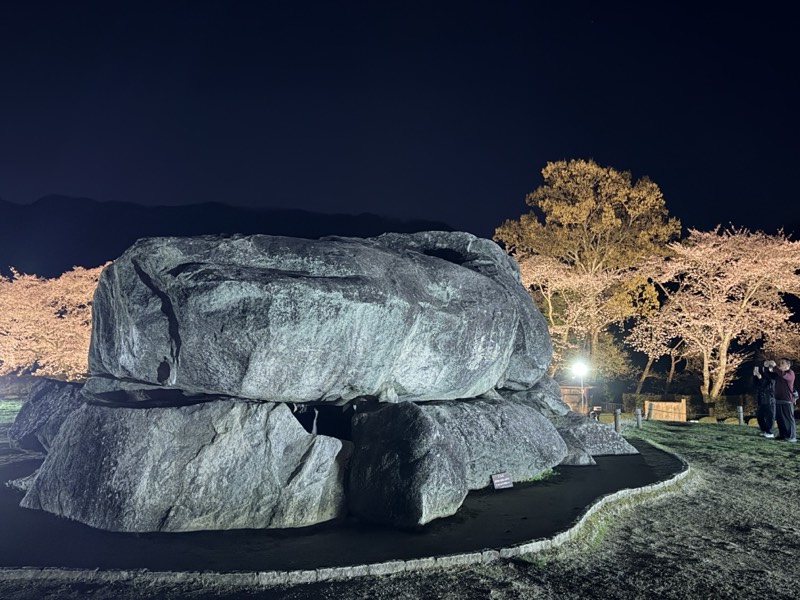
The tomb stands in the Ishibutai area of the Asuka Historical National Government Park, surrounded by a lawn. It is lit up at night in spring and autumn, and in cherry blossom season you can see the chamber framed by blossoms after dark. There is an admission fee.
Miyakozuka Kofun, Oka-dera temple and the Asuka Palace site are all within walking distance. Heading uphill to the south takes you to the Inabuchi terraced rice fields and Oku-Asuka.
Published
READ MORE
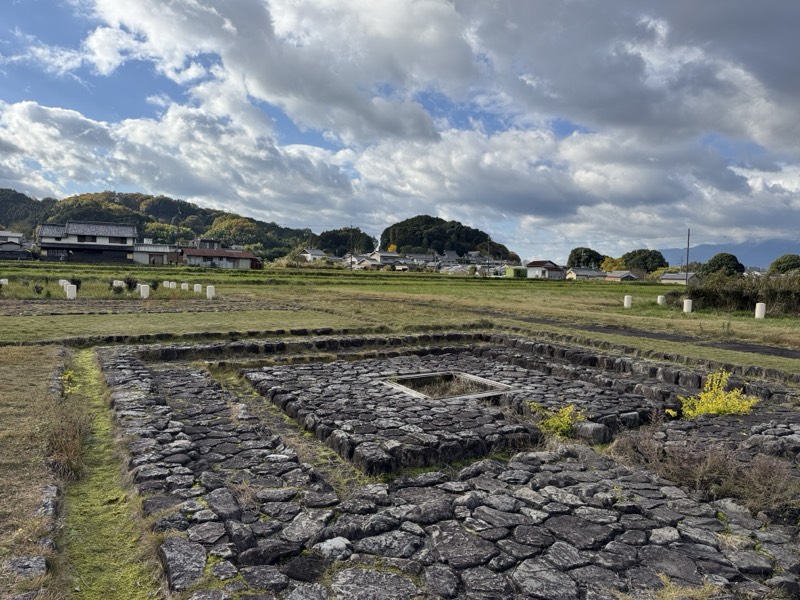 Asuka-Fujiwara World Heritage: All 19 Component Sites and How to Visit Them, with Half-Day, One-Day and Two-Day Routes"Asuka-Fujiwara" was inscribed on the World Heritage List in 2026. We list all 19 component sites with their…
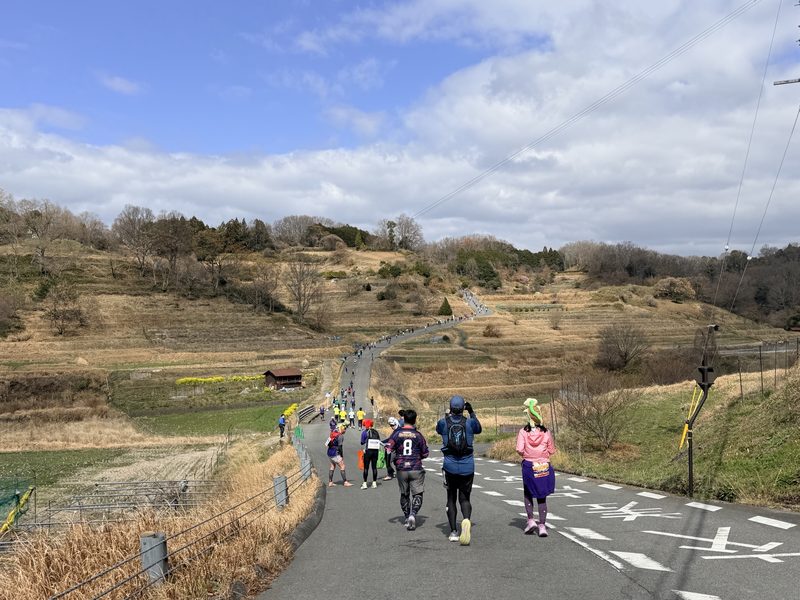 Remembered, Not Timed: Running the Asuka Half Marathon Past Ruins and Rice TerracesEvery March, 3,000 runners race past the historic sites and terraced rice fields of Asuka Village. Starting…
 Was Prince Shōtoku Really Soga no Umako? Reading the "Prince = Umako" TheoryAlmost every achievement of Prince Shōtoku comes with the name of Soga no Umako beside it. What if the man…Where Japan as a State Began: The 19 Sites of the Asuka-Fujiwara World Heritage PropertyIt was inscribed on 26 July 2026. All that was chosen were the remains of palaces, temples and tombs, and…
 Why Did People Stop Building Kofun?For more than three hundred years, burial mounds kept growing larger. During the 7th century they shrank, and…
NEARBY
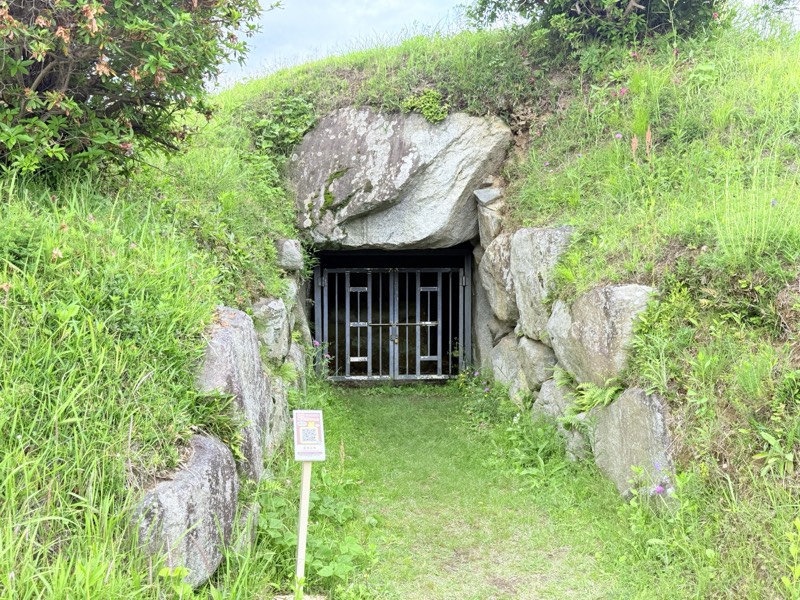
都塚古墳
A square burial mound built of stepped stone, like a step pyramid.
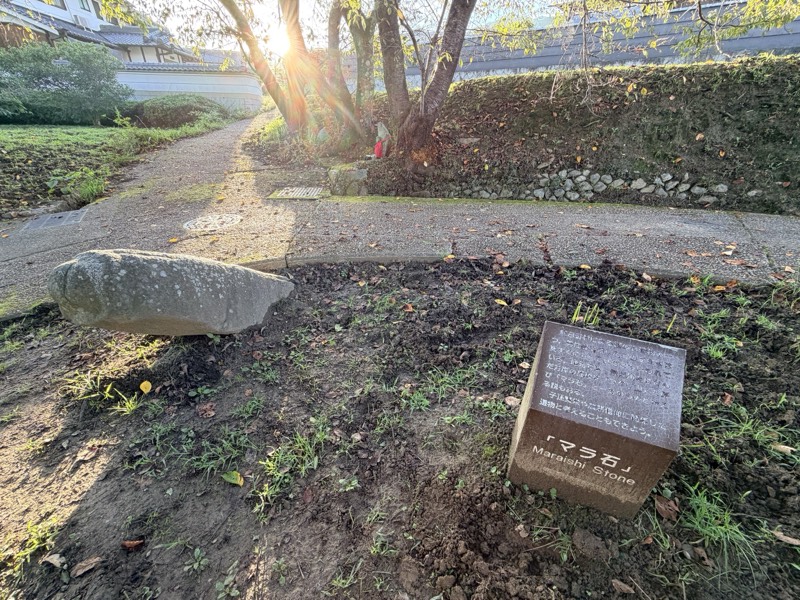
マラ石
A phallus-shaped stone lying by the roadside. One theory pairs it with "Fuguri-yama" on the opposite bank.
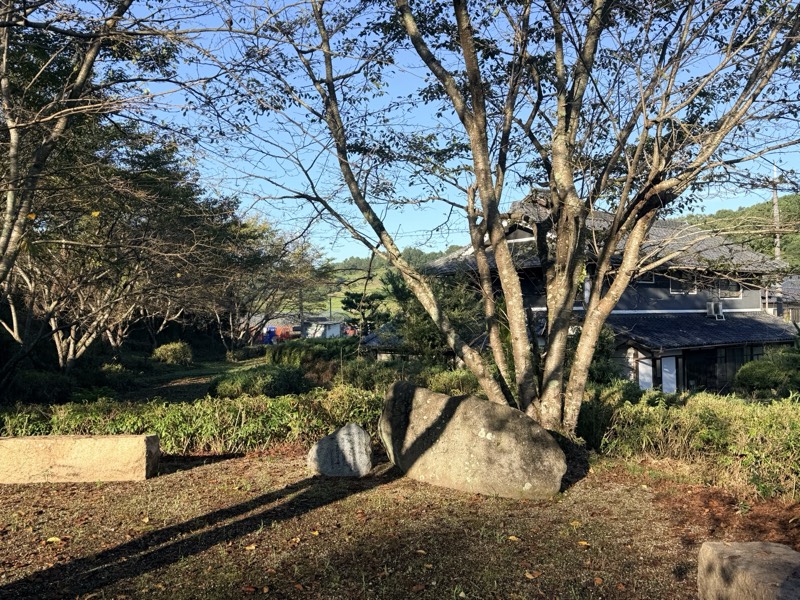
坂田寺跡
The family temple of the clan of Kuratsukuri no Tori, maker of the Asuka Daibutsu. One of Asuka's oldest temples, it was also a nunnery.