
Published
For more than three hundred years, burial mounds kept growing larger. During the 7th century they shrank, and in the early 8th century they disappeared. There was more than one reason.
From the late 3rd century, keyhole-shaped kofun (ancient burial mounds) were built across the land of Wa (early Japan). Daisen Kofun in Sakai, Osaka Prefecture, is 486 m long. Carrying earth, piling it up, laying facing stones and setting up haniwa clay figures took years of labour.
Why go to such lengths? Because the tomb was a device for displaying the power of the person buried in it. Who could mobilise how many people, who ranked above whom: the mound showed this in visible form.
From around the end of the 6th century, this shape stopped being built. And throughout the 7th century, tombs grew steadily smaller.
The only keyhole tomb in Asuka Village is Umeyama Kofun, identified as the tomb of Emperor Kinmei. It is about 140 m long, and is the last tomb in this area from the age when rulers competed in size using this shape.

Look at Asuka's kofun in order of age and you can follow this trend directly.
Ishibutai Kofun dates from the first half of the 7th century. Its mound has been lost, but the stones of its chamber are estimated to weigh 2,300 tonnes in all, with 77 tonnes in a single capstone. The way of displaying power by hauling and stacking giant stones still lingers here.
By the mid-7th century, as at Iwayayama Kofun, construction changed to stones cut with dressed faces and fitted together without gaps. The stones became smaller, and the precision of the work rose instead.
In the late 7th century, at Kengoshizuka Kofun, the burial chamber was hollowed out of a single stone. The mound measures about 22 m across. Then, in the early 8th century, the stone chamber of Nakaoyama Kofun was just a small box to hold cremated bones.

In less than a hundred years, from a tomb of 2,300 tonnes of stacked stone to a box just big enough for an urn.
In 646 the court issued an edict on tombs, later called the Hakusōrei (Edict on Simple Burials).
Its contents were specific. For each rank, it set upper limits on the dimensions of the burial chamber, the number of workers who could be mobilised and the number of days the work could take. Common people were simply to be buried in the earth. It also banned following the dead in death and spending wealth for the sake of the dead.
Why were such detailed rules needed? Read the other way round, they show that until then each clan had been building tombs as if in competition, swallowing up labour and time.
It cannot be said, however, that tombs got smaller because of the edict. The shrinking of mounds was already under way before it. To some extent, the state was simply ratifying and formalising a change that was already happening.
More significant was that the means of showing rank itself changed.
In 603 the Twelve Level Cap and Rank System was established, and from then on a system of official ranks was gradually built up. Who stood above whom came to be fixed by the colour of one's cap, court rank, office and the household registers.
As the state was assembled on the basis of ritsuryō (law codes), status was decided within the system and displayed within the system. There was no longer any need to show it off with a large tomb. The tomb was no longer the yardstick of power.
In its place came ranking by shape. Octagons for emperors, hexagons for those of princely rank, and below them square and round mounds. The competition in size was over, and shape came to show rank. Nakaoyama Kofun is only 19 m across, yet because it is octagonal, it can be read as an emperor's tomb.
Around the same time, powerful clans began to build temples.
The Soga clan's Asuka-dera Temple; Soga no Kurayamada no Ishikawamaro's Yamada-dera Temple. Wealth and labour that had once been poured into kofun moved to the building of temple complexes. The Nihon Shoki (Japan's oldest official chronicle, compiled in 720) also contains a passage to the effect that people began building temples instead of kofun.
A pagoda rises, roofs are covered in tiles, and a Buddha is enshrined in the main hall, visible from anywhere in the village. As a device for display, a temple works better than a mound. What is more, a temple was also a place where ancestors could go on being mourned.

In short, the place for honouring the dead moved from the tomb to the temple.
And then came cremation.
In 700, the monk Dōshō died and, at his own request, was cremated. The Shoku Nihongi (the official chronicle that continues the Nihon Shoki) states: "Cremation in the realm began with him." Dōshō had studied under Xuanzang in Tang China and built a meditation hall at Asuka-dera Temple.
Two years later, in 702, Empress Jitō was cremated, the first time a Japanese ruler was cremated. Emperor Monmu, too, was cremated after his death in 707.
Cremation changed the construction of tombs at the root. To lay a body to rest, you need a stone chamber that can hold a coffin and that people can enter. The burial room of Ishibutai was 7.7 m long. But to hold just an urn of bones, a box less than 1 m on each side is enough.
The reason to haul giant stones disappeared. The small stone chamber of Nakaoyama Kofun is the result.
There is one more thing that cannot be overlooked: labour was now needed elsewhere.
In the late 7th century the state began building capitals. In 694 the capital moved to Fujiwara-kyō. Roads were laid out on a grid, a palace built, and Daikandaiji and Moto-Yakushiji temples erected. Canals were dug to transport timber and roof tiles were fired. The number of people mobilised was on a different scale from any kofun.
At the same time, irrigation works and road building also went ahead. Construction to run the state replaced construction to build tombs.
Labour is finite. A state that was building a capital had no capacity left to build giant tombs.
The last tomb that can be called a kofun is Nakaoyama Kofun, thought to be the tomb of Emperor Monmu, who died in 707.

After that, imperial tombs were still built, but they lost the character of a mound raised for display. The tombs of the Nara-period emperors are in the hills, and in scale and structure they became something quite different.
The kofun way of burial, which had lasted more than four hundred years, ended here.
In Asuka you can walk through this process of shrinking in a single day.
See the giant stones of Ishibutai Kofun, step into the cut-stone chamber of Iwayayama Kofun, look at the octagonal slopes of Kengoshizuka Kofun, and go on to Nakaoyama Kofun. The stones gradually get smaller, the workmanship finer, and in the end it is a box for an urn.
Within one village, the hundred years in which the kofun came to an end are laid out side by side.
RELATED SPOT
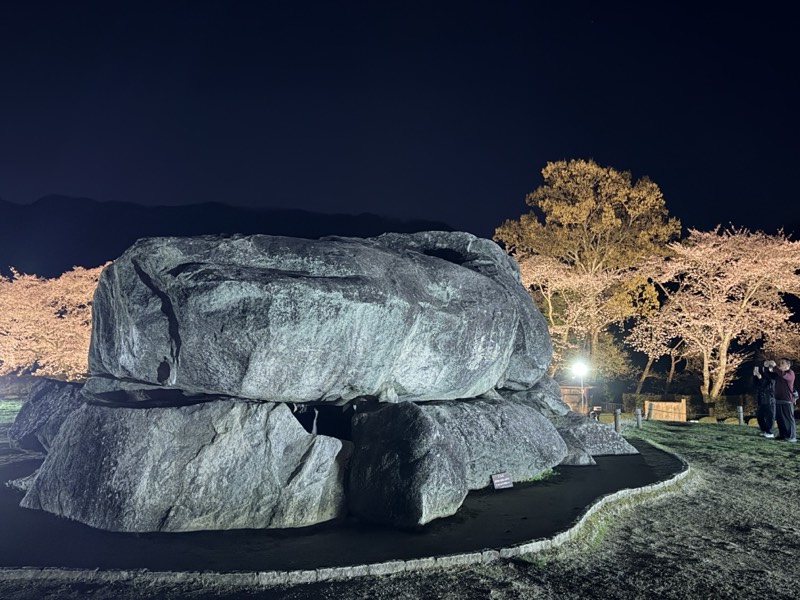
石舞台古墳
One of the largest stone burial chambers in Japan, its giant boulders left bare to the sky. The image most people picture when they think of Asuka.
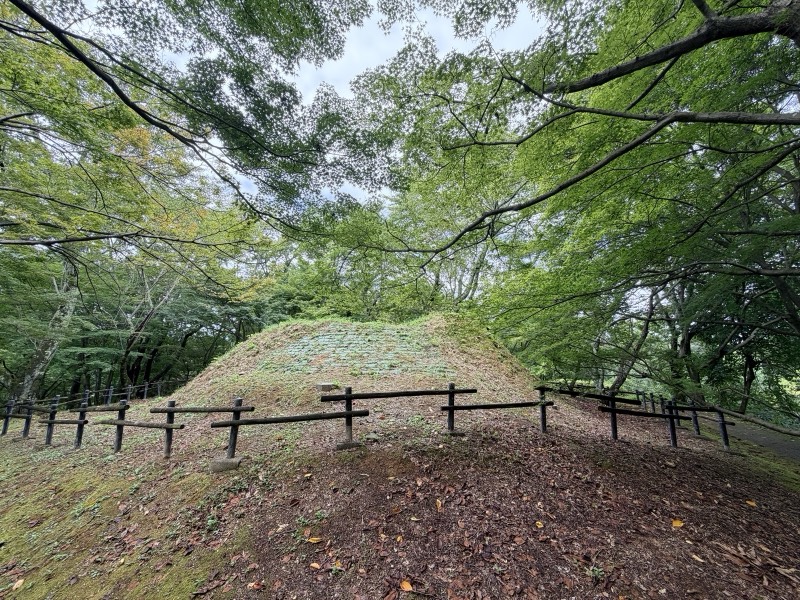
中尾山古墳
A small octagonal mound thought to be the tomb of the cremated Emperor Monmu.
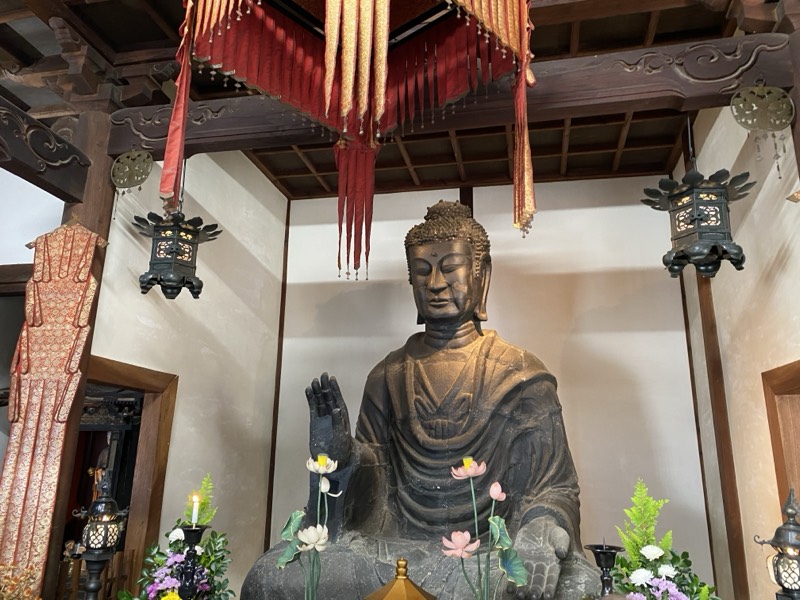
飛鳥寺・蘇我入鹿首塚
Japan's first full-scale Buddhist temple. The Great Buddha of Asuka still sits on the spot where it was made, 1,400 years ago.
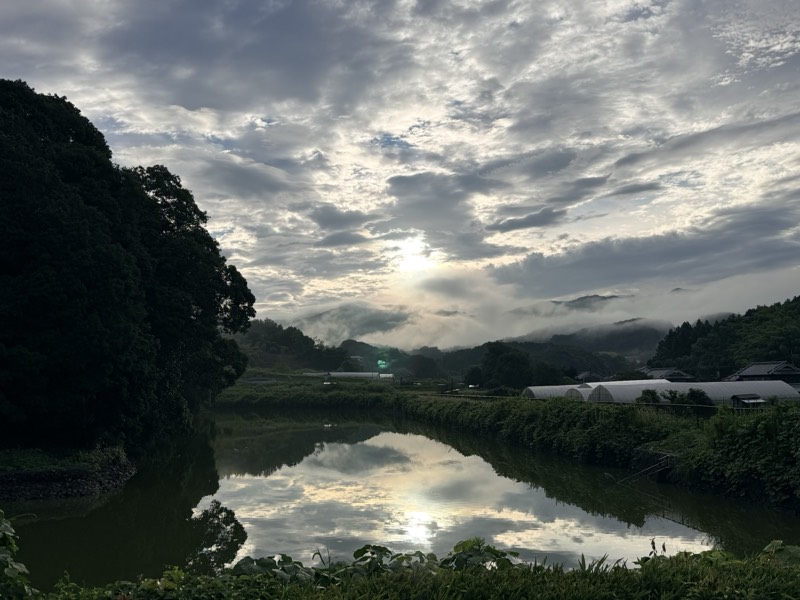
欽明天皇陵
One of the few large keyhole-shaped burial mounds in Asuka Village.
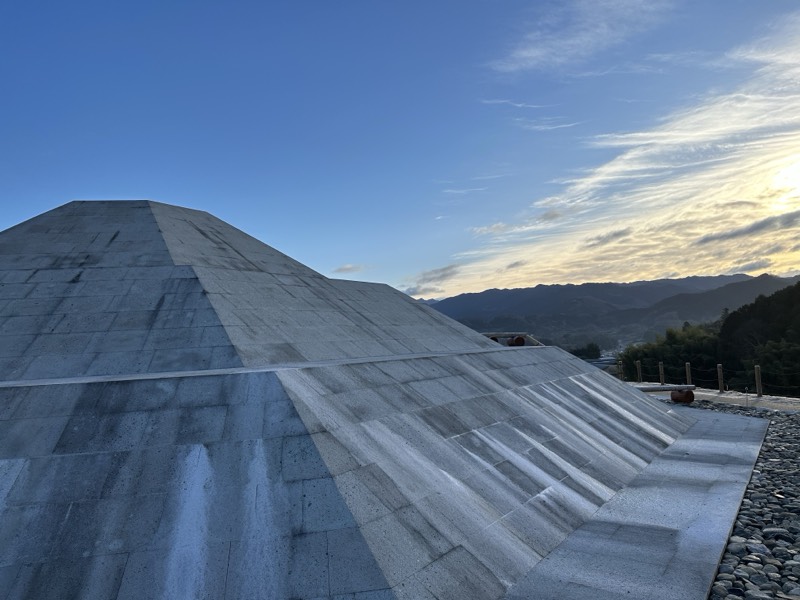
牽牛子塚古墳
An octagonal burial mound, now widely thought to be the tomb of Empress Saimei.
RELATED COLUMN
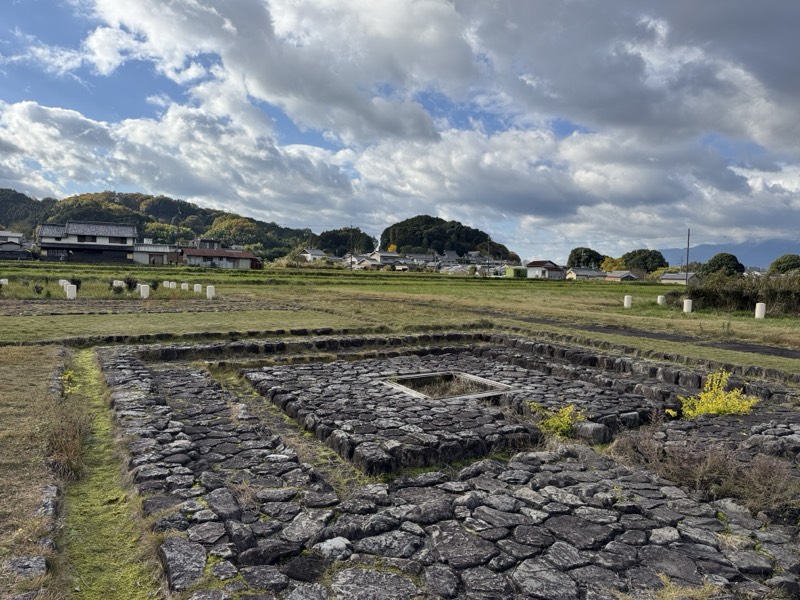 Asuka-Fujiwara World Heritage: All 19 Component Sites and How to Visit Them, with Half-Day, One-Day and Two-Day Routes"Asuka-Fujiwara" was inscribed on the World Heritage List in 2026. We list all 19 component sites with their…Where Japan as a State Began: The 19 Sites of the Asuka-Fujiwara World Heritage PropertyIt was inscribed on 26 July 2026. All that was chosen were the remains of palaces, temples and tombs, and…
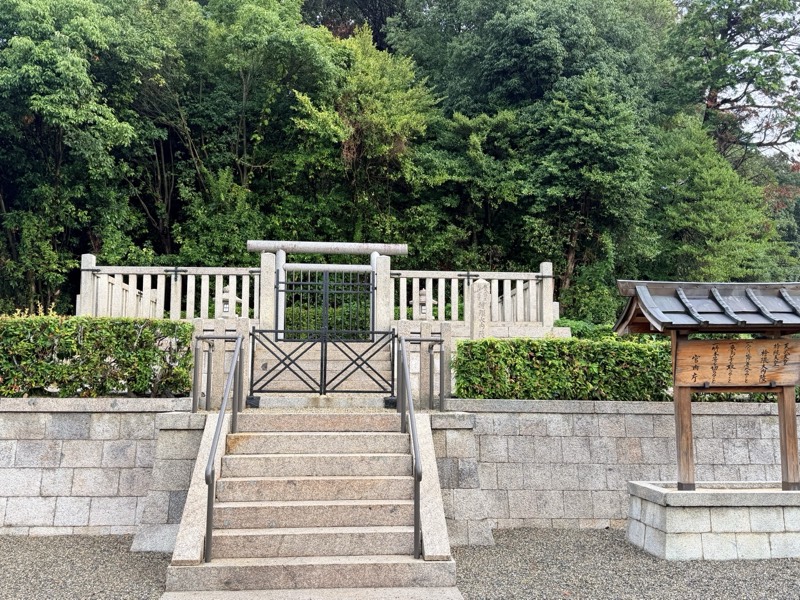 The record of a robbery that saved a tomb: the Mausoleum of Emperor Tenmu and Empress JitōVery few imperial tombs can be attributed to their occupants with near certainty. This one can because the…