


1 / 2
牽牛子塚古墳(けんごしづかこふん)
An octagonal burial mound, now widely thought to be the tomb of Empress Saimei.
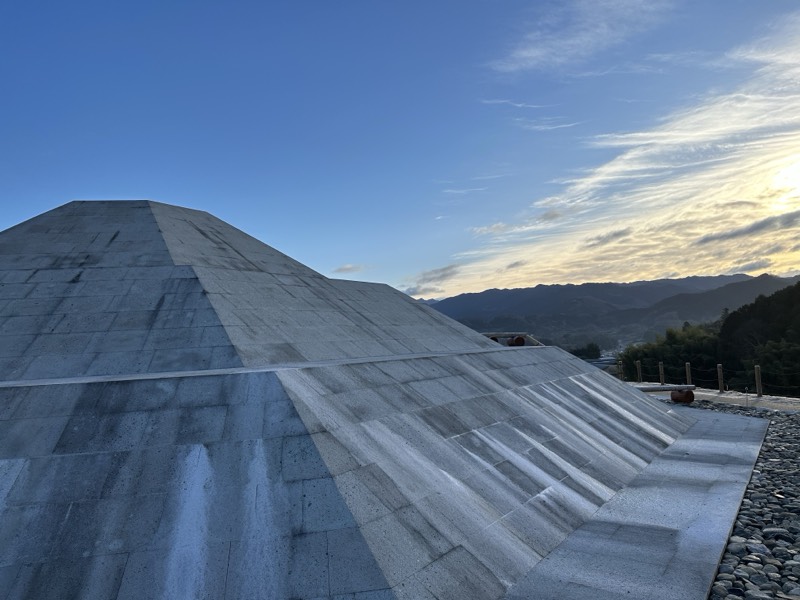
This octagonal kofun (ancient burial mound) was built in the second half of the 7th century. It measures about 22 m between opposite sides and about 4.5 m high, and was built in three tiers. The earth was raised by pounding it firm in layers, a technique called hanchiku, and the outside was covered entirely with cut blocks of tuff.
The important thing is the octagonal shape. In this period, eight-sided mounds were used only for the tombs of emperors: the tomb of Emperor Tenji, the joint tomb of Emperor Tenmu and Empress Jitō, and Nakaoyama Kofun all take this form. Neither round nor square, the octagon is thought to have signified the tomb of one who ruled all eight directions of the realm.
The burial chamber is a stone box with a side entrance, hollowed out of a huge block of tuff brought from Mt Nijō. A partition was left standing in the middle of the single hollowed-out stone, dividing it into two burial rooms.
In other words, it was made from the start to hold two people. Nothing was added later; the joint burial was decided at the design stage.
Inside were found fragments of a kyōcho-kan, a coffin made of cloth hardened with layers of lacquer, tortoiseshell-shaped fittings decorated with cloisonné, and parts of human bones. The kyōcho-kan was the highest grade of coffin, used in Japan at that time only for a very few people.
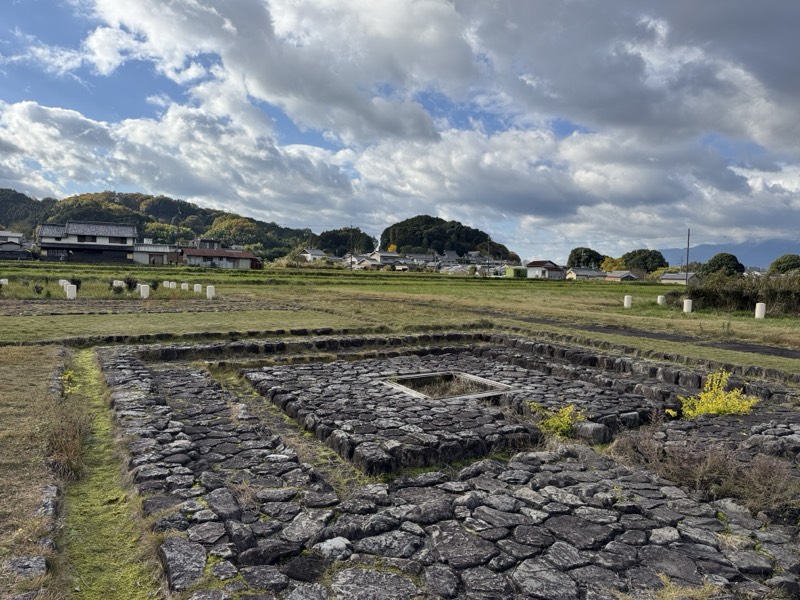
An investigation in 2010 confirmed that the tomb is octagonal. At the same time, a new small kofun was found to the southeast of the mound.
The position of this tomb, named Koshitsuka Gomon Kofun, matched an account in the Nihon Shoki, Japan's oldest official chronicle: that Empress Saimei was buried together with her daughter Princess Hashihito, and that her granddaughter Princess Ōta was buried in front of their tomb.
A chamber built for two, an octagon reserved for emperors, and a small tomb found exactly where the chronicle places it. With all three together, the theory that Kengoshizuka is the tomb of Empress Saimei suddenly became the leading one.
The tomb that the Imperial Household Agency designates as Empress Saimei's is not this one but Kurumagi Kennō Kofun in neighbouring Takatori Town. Officially, therefore, the occupant has not been confirmed.
The shape, the structure, the finds and the location all support the leading theory, yet the official designation has not changed. Gaps like this are not unusual in Japan's ancient history.
The tomb was designated a National Historic Site in 1923. For a long time it was overgrown with scrub, and the shape of the mound could hardly be made out.
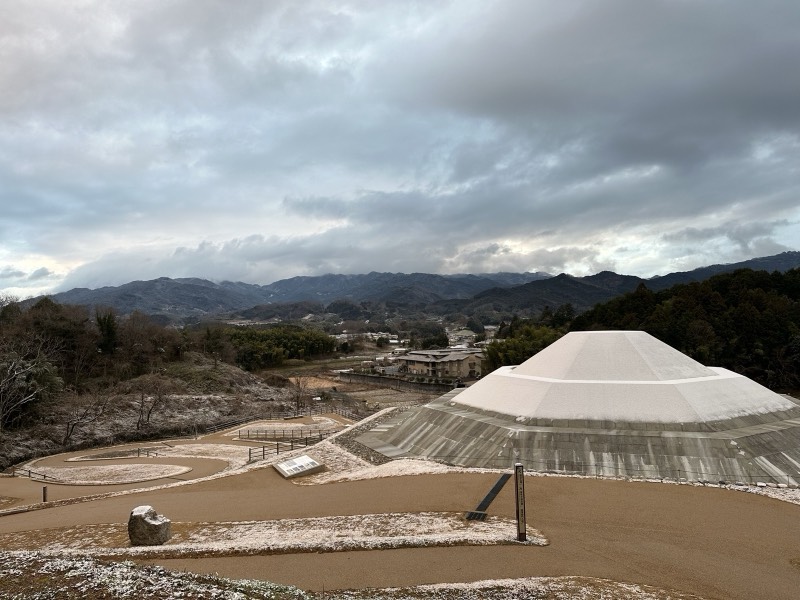
Following the 2010 investigation, restoration work began and was completed in March 2022. The slopes of stacked cut stone shine brightly in the sun and stand out strikingly among Asuka's green hills. You can sense how conspicuous this tomb must have been when it was built.
About 25 minutes on foot from Kintetsu Asuka Station. The tomb stands on a hill, and from the top you can look out over the villages of Asuka. The site of Koshitsuka Gomon Kofun has also been laid out right next to it.
In the evening, when the western sun falls on it, the whiteness of the cut stone is even more striking.
Published
READ MORE
 Asuka-Fujiwara World Heritage: All 19 Component Sites and How to Visit Them, with Half-Day, One-Day and Two-Day Routes"Asuka-Fujiwara" was inscribed on the World Heritage List in 2026. We list all 19 component sites with their…
 Women Who Soared through Asuka: The Five at the Heart of a Japan Heritage StoryThree reigning empresses (Suiko, Kōgyoku/Saimei and Jitō), the poet Nukata no Ōkimi, and the nun Zenshin-ni…
 Octagonal Tombs: A Shape Reserved for EmperorsNeither round nor square, but a mound with eight sides. For about sixty years, from the mid-7th to the early…
 Why Did People Stop Building Kofun?For more than three hundred years, burial mounds kept growing larger. During the 7th century they shrank, and…
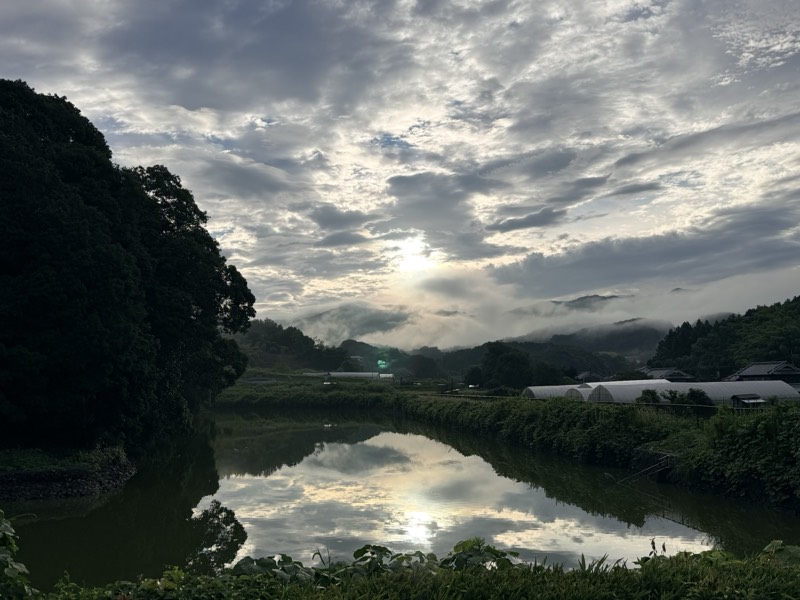 Asuka's Valley of the Kings: imperial tombs within walking distance of the stationAround Kintetsu Asuka Station, in Hirata, Noguchi and Koshi, a number of kofun said to be the tombs of…
NEARBY
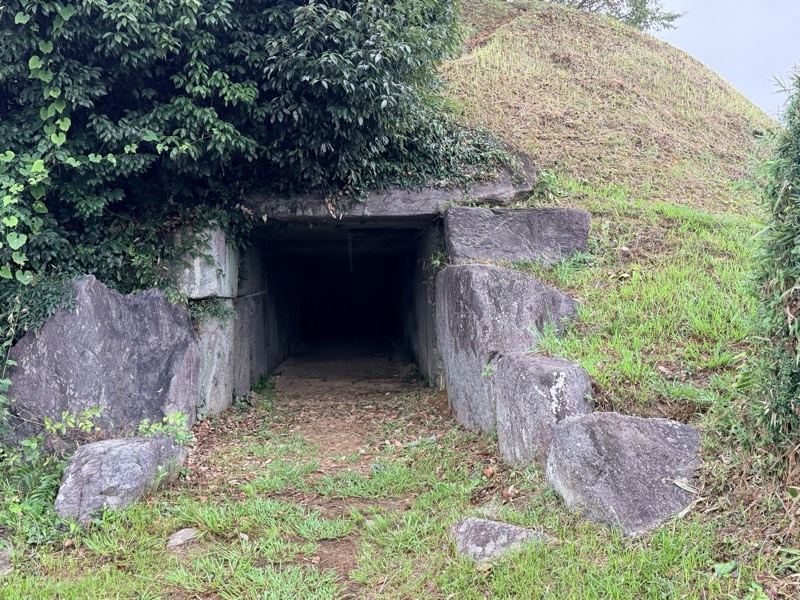
岩屋山古墳
Five minutes from the station: walk straight into a burial chamber built of tightly fitted cut stone.
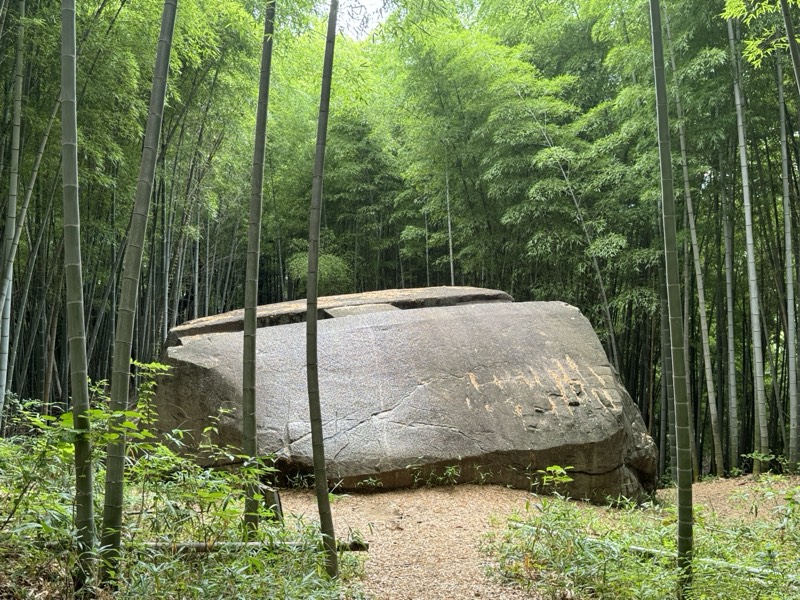
益田岩船
A giant stone lying deep in a bamboo grove. No one knows what it was made for.
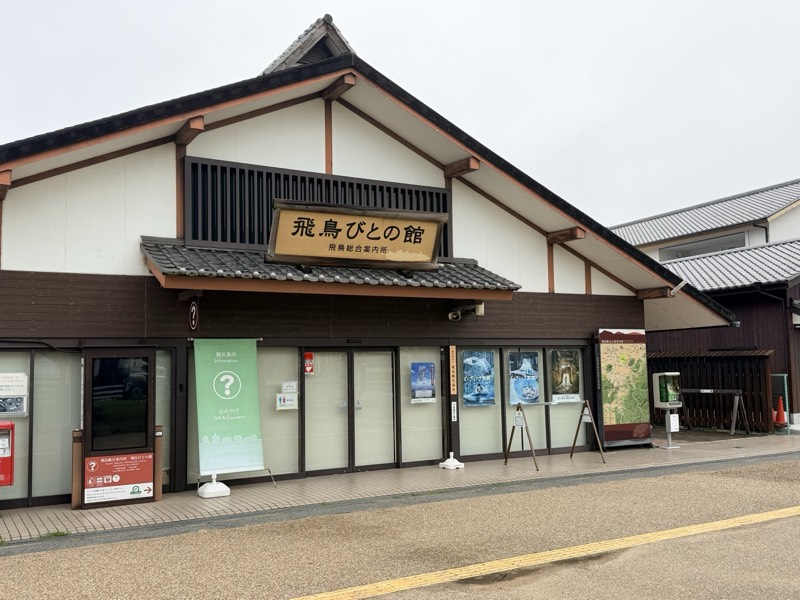
飛鳥びとの館
The tourist information centre at the Asuka roadside station. A good place to start exploring.