


1 / 2
岩屋山古墳(いわややまこふん)
Five minutes from the station: walk straight into a burial chamber built of tightly fitted cut stone.
About five minutes on foot from Kintetsu Asuka Station, the entrance to a stone chamber gapes open on the south side of a small hill. There is no fence and no door, so you can walk right in.
Standing inside, you are struck by how flat the walls are. The granite was cut, its faces dressed, and the blocks stacked without gaps. It is the opposite of Ishibutai Kofun, where giant boulders were boldly heaved into place: this is the work of an age when the skill had shifted towards shaping the stone.
The burial room is about 4.7 m long, 2.7 m wide and 3 m high. The passage leading to it is about 12 m long and 1.9 m wide.
The side walls are built in two courses, with the upper course leaning slightly inward. The back wall is built the same way, so the chamber narrows gently towards the ceiling. At the entrance end of the passage the stones are set one step higher, which is also considered a feature of this chamber.
A drainage channel runs along the floor of the passage, roughly down its centre. Even the means of draining water was built into the design.
It is thought to have been built around the middle of the 7th century. Its stonework is so precise that it has long been treated as the benchmark for cut-stone chambers of the Asuka period.
Chambers built the same way are found in other places, and they are called the "Iwayayama type" after this tomb. The name of a single kofun has become the name of a type of chamber, which shows how accomplished the work is.
The mound is thought to have been square, about 54 m on each side and about 12 m high. The western half, however, has been cut away, and only the eastern side remains.
Some believe the upper tier was octagonal, and the shape of the mound is still debated. In this period, octagonal mounds were the shape used for emperors' tombs.
Who was buried here is not known. Theories include the first tomb of Empress Saimei, or the tomb of her mother, Princess Kibitsuhime, but nothing has been confirmed.
About 5 minutes on foot from Kintetsu Asuka Station. A stone monument reading "Historic Site Iwayayama Kofun" and an information board stand by the road, and steps lead up from there.
Inside the chamber it is dark, and it is hard to see your footing. If you bring a light, you can see right to the joints in the back wall. In summer, grass grows thick around the entrance.
Kengoshizuka Kofun is about 20 minutes away on foot. Since you can drop in right after arriving at Asuka Station, it is easy to fit in at the start of a walk.
Published
NEARBY
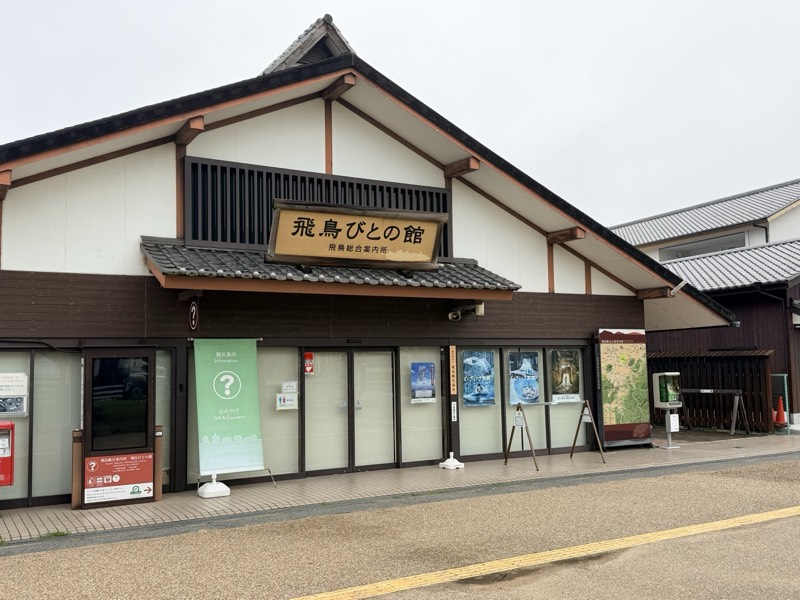
飛鳥びとの館
The tourist information centre at the Asuka roadside station. A good place to start exploring.
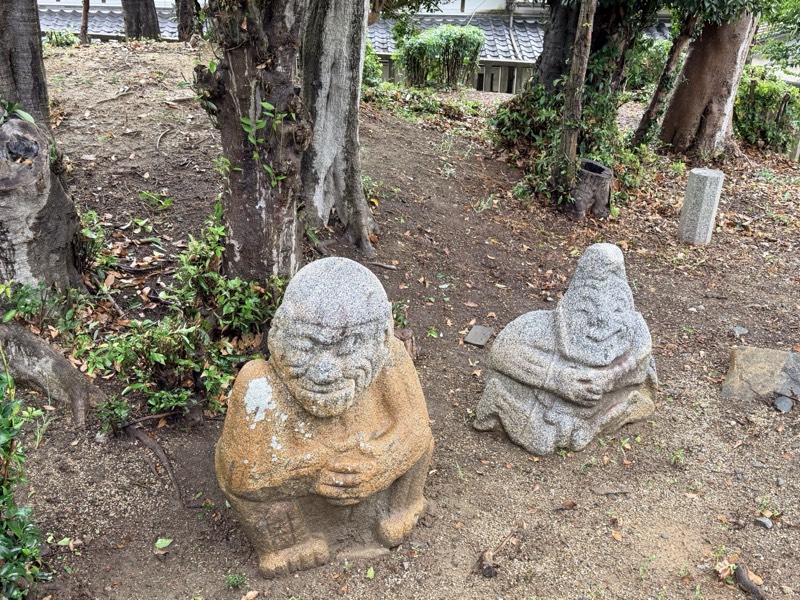
吉備姫王墓・猿石
Four stone figures known as the Saruishi stand in the tomb grounds. What they were for is still a mystery.
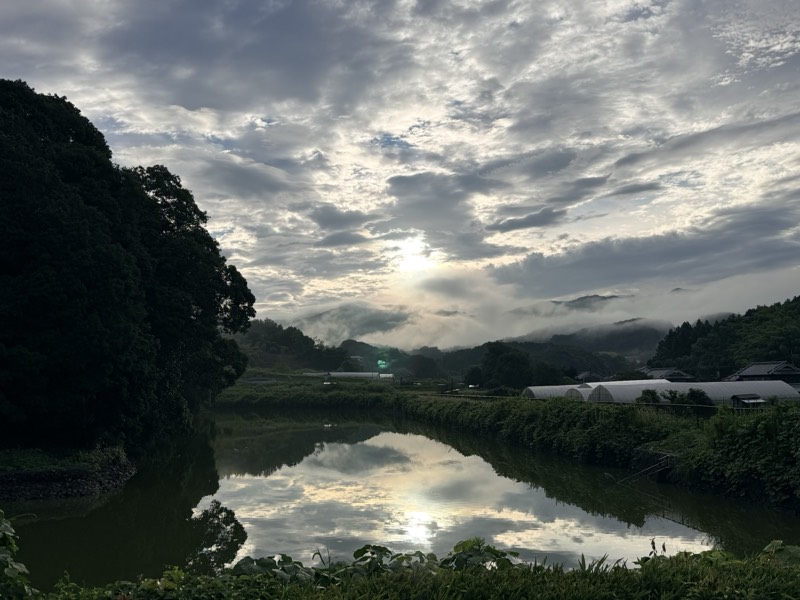
欽明天皇陵
One of the few large keyhole-shaped burial mounds in Asuka Village.