


1 / 3
吉備姫王墓・猿石(きびひめのおおきみのはか・さるいし)
Four stone figures known as the Saruishi stand in the tomb grounds. What they were for is still a mystery.
This is the tomb of Princess Kibihime, just south of the tomb of Emperor Kinmei. It is managed by the Imperial Household Agency.
What makes it well known is the four strange stone figures standing inside the fence. They are called the Saruishi, the "Monkey Stones."
Princess Kibihime was a granddaughter of Emperor Kinmei. With Prince Chinu she had two children who became Empress Kōgyoku (who later reigned again as Empress Saimei) and Emperor Kōtoku.
In other words, she was the mother of two sovereigns. According to the Nihon Shoki, Japan's oldest official chronicle, she died in 643.
The four figures did not originally stand here. Records say they were dug up from a nearby rice field in 1702.
They were later moved into the grounds of this tomb. The field where they were found is said to have been south of Emperor Kinmei's tomb, and where and how they originally stood is not known.
The four are popularly called "the Woman," "Sannō Gongen" (a mountain deity), "the Priest" and "the Man." Each has faces carved on both front and back; none is carved on one side only.
They are called Monkey Stones because they look like monkeys, but what they actually represent is unknown. Theories include figures of immigrants from the mainland, memories of seeing foreign visitors given shape in stone, or something like dōsojin, the guardian deities of roads and boundaries.
When they were made is also unclear. The Asuka period is the common view, but there is no proof.
Asuka Village is dotted with stone monuments whose purpose is unknown, such as Kameishi (Turtle Stone), Sakafuneishi, Oni no Manaita and Oni no Setchin, and Nimenseki. The Saruishi are among them.
So many survive together both because this land was the capital for a long time and because it was not heavily developed from the Middle Ages onward. Stones that no one can explain have simply stayed where they are, in the fields and on the hills.
About 10 minutes on foot from Kintetsu Asuka Station. You view the figures from outside the fence. There is no admission fee.
There is also one more Saruishi along the road to the ruins of Takatori Castle. It is said to be one of the figures dug up here, carried there later.
Published
READ MORE
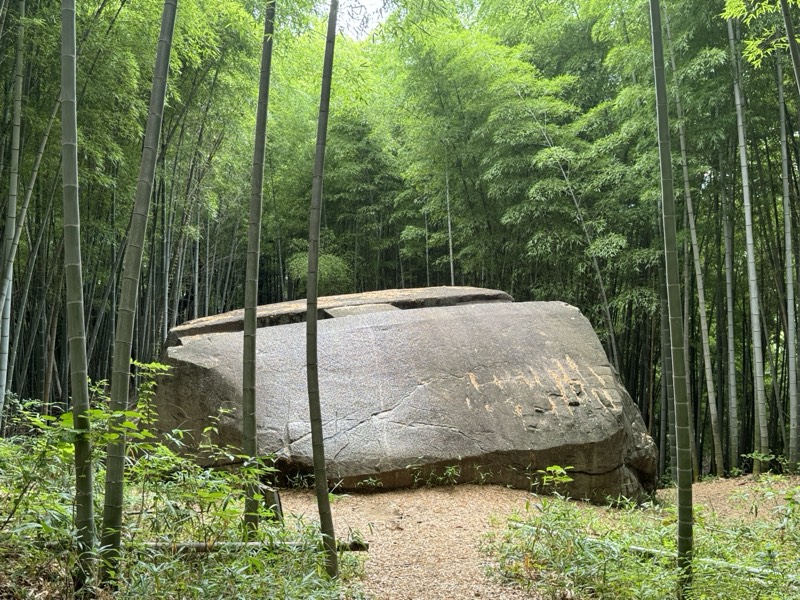 What Were They Made For? Asuka's Mysterious StonesTwo holes cut into an 800-tonne boulder, a slab carved with circles and channels, a turtle with a face…
 Whose Tomb Is the Mausoleum of Emperor Kinmei?Several theories have been put forward about who is buried in the largest keyhole-shaped tomb in Asuka…
NEARBY
欽明天皇陵
One of the few large keyhole-shaped burial mounds in Asuka Village.
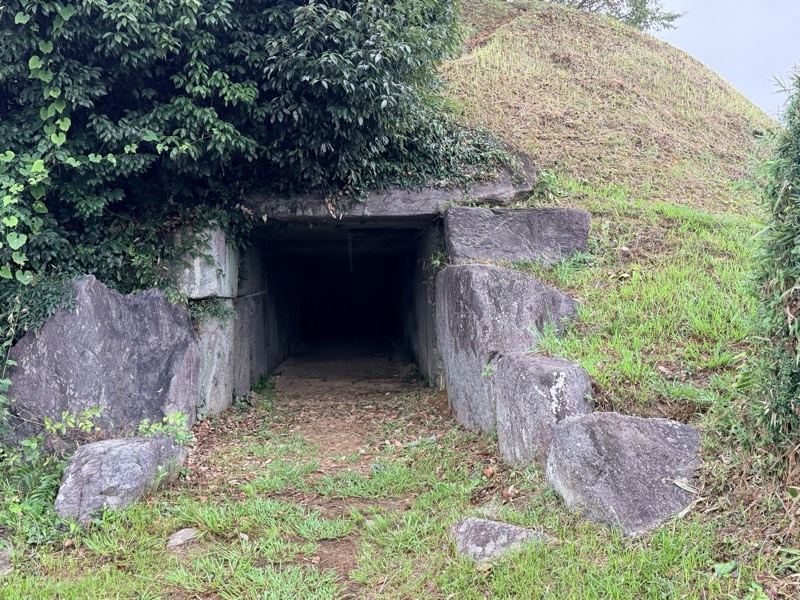
岩屋山古墳
Five minutes from the station: walk straight into a burial chamber built of tightly fitted cut stone.
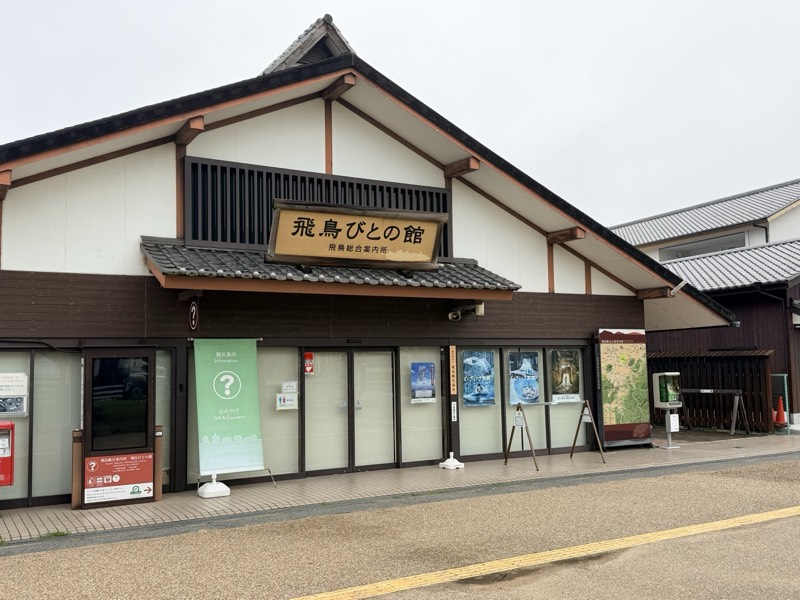
飛鳥びとの館
The tourist information centre at the Asuka roadside station. A good place to start exploring.