
Published
Several theories have been put forward about who is buried in the largest keyhole-shaped tomb in Asuka Village.

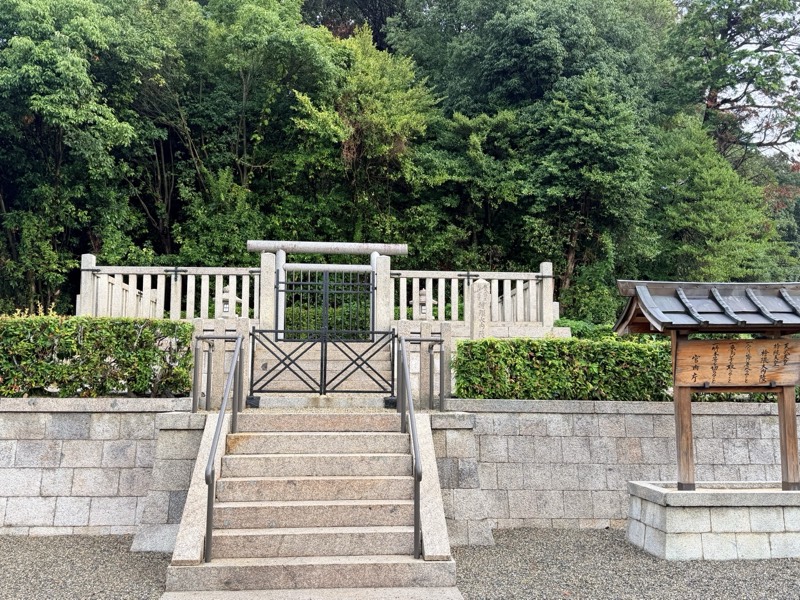
The Mausoleum of Emperor Kinmei in Hirata, Asuka Village, is a keyhole-shaped kofun (ancient burial mound) with a mound about 140 m long. It is among the largest in the village, and the Imperial Household Agency manages it as Emperor Kinmei's Hinokuma no Sakaai no Misasagi. In archaeology it is also called the Umeyama Kofun.
However, whether this tomb really is Emperor Kinmei's has been debated since long ago. Here are the two main views.
One view is that this tomb was not originally a single keyhole-shaped mound, but that two tombs were built side by side and joined to form its present shape.
Linked to this theory are the "twin tombs" recorded in the Nihon Shoki (Japan's oldest official chronicle, compiled in 720). It relates that Soga no Emishi built tombs for himself and his son Iruka side by side while they were still alive, making the larger one his own and the smaller one Iruka's. On the basis of this record, some researchers think the present Mausoleum of Emperor Kinmei is in fact the twin tombs of Emishi and Iruka.
The Soga clan was based around Asuka, and the Nihon Shoki records that Emishi and Iruka had their residences on Amakashi Hill. This geographical closeness is also part of the background to the theory.
The other is the theory that the nearby Gojōno Maruyama Kofun (also called the Mise Maruyama Kofun) is the true Mausoleum of Emperor Kinmei.
The Gojōno Maruyama Kofun is a huge keyhole-shaped tomb in Kashihara City, with a mound more than 310 m long. It is the largest in Nara Prefecture and among the largest in Japan. It is dated to the latter half of the 6th century, which does not seriously conflict with the year of Emperor Kinmei's death. On size alone, it is far larger than the present Mausoleum of Emperor Kinmei, and it has been considered more fitting as the tomb of a great king.
Does that make the larger Gojōno Maruyama Kofun the stronger candidate? It is not so simple.
Size is not the only measure of a kofun. The quality of a tomb also shows in its construction: the shape of the mound, the care with which it was built, the structure of the stone chamber and the way the surrounding moat is laid out. On these grounds, there is also a view that the tomb now designated as Emperor Kinmei's was built in a manner more fitting for an emperor's mausoleum.
Imperial tombs are under the control of the Imperial Household Agency, and no excavations have been carried out. With no decisive evidence available, every theory remains in the realm of conjecture.
Walk around it with the shape of the mound in mind, and you will start to see where the waist narrows and how the moat runs. Walking with an unanswered question in mind should change how this tomb looks to you, at least a little.
Right next door is the Tomb of Princess Kibi, and inside its fence stand the four Saruishi (Monkey Stones). Do visit them too.
RELATED SPOT
欽明天皇陵
One of the few large keyhole-shaped burial mounds in Asuka Village.
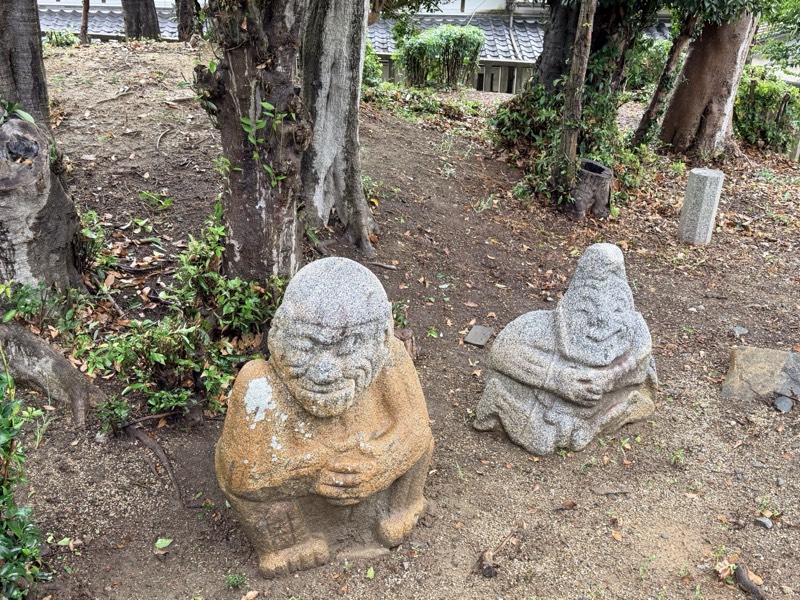
吉備姫王墓・猿石
Four stone figures known as the Saruishi stand in the tomb grounds. What they were for is still a mystery.
RELATED COLUMN
 The record of a robbery that saved a tomb: the Mausoleum of Emperor Tenmu and Empress JitōVery few imperial tombs can be attributed to their occupants with near certainty. This one can because the…Asuka's Valley of the Kings: imperial tombs within walking distance of the stationAround Kintetsu Asuka Station, in Hirata, Noguchi and Koshi, a number of kofun said to be the tombs of…Was Emperor Tenmu Really the Younger Brother? Prince Aya, the Name That VanishedBefore she married Emperor Jomei, Empress Kōgyoku had already borne a son: Prince Aya (Aya no Miko). The…