


1 / 3
欽明天皇陵(きんめいてんのうりょう)
One of the few large keyhole-shaped burial mounds in Asuka Village.
This is the kofun (ancient burial mound) designated by the Imperial Household Agency as the tomb of Emperor Kinmei. As an archaeological site it is called Umeyama Kofun.
It is a keyhole-shaped mound, round at the back and square at the front, about 140 m long in total and surrounded by a moat. It is the only keyhole-shaped tomb in Asuka Village. In the Asuka period, tombs changed to square, round and then octagonal shapes, so the keyhole shape itself shows how early this tomb is.
Emperor Kinmei reigned in the mid-6th century, and Buddhism is said to have arrived from the Korean kingdom of Baekje during his reign. It was also in his time that the Soga and Mononobe clans began to clash over whether to embrace Buddhism or reject it.
He took daughters of Soga no Iname as consorts, and three later sovereigns, Emperor Yōmei, Emperor Sushun and Empress Suiko, were all their children. He belongs to the generation of the fathers of the people who shaped the Asuka period. He died in 571.
There is, however, some debate over whether this is really Emperor Kinmei's tomb.
It is thought to have been built in the late 6th century, so the date is not a major problem. In terms of size, though, the leading theory is that Kinmei's tomb is Mise Maruyama Kofun in Kashihara City (about 318 m long, the largest keyhole-shaped tomb in Nara Prefecture).
Mise Maruyama Kofun was built in the late 6th century, and its size befits the most powerful ruler of the time. The Imperial Household Agency treats it as a "possible imperial tomb," and the official designation has not changed.
Just south of the tomb is the grave of Princess Kibihime. It is known for the four stone figures, the Saruishi (Monkey Stones), lined up inside its fence.
You can visit the two together.
The tomb is managed by the Imperial Household Agency, and you cannot enter the mound. You view the tree-covered mound from the road outside the moat.
About 10 minutes on foot from Kintetsu Asuka Station. The tomb of Emperor Tenmu and Empress Jitō and Oni no Manaita and Oni no Setchin are all within walking distance.
Published
READ MORE
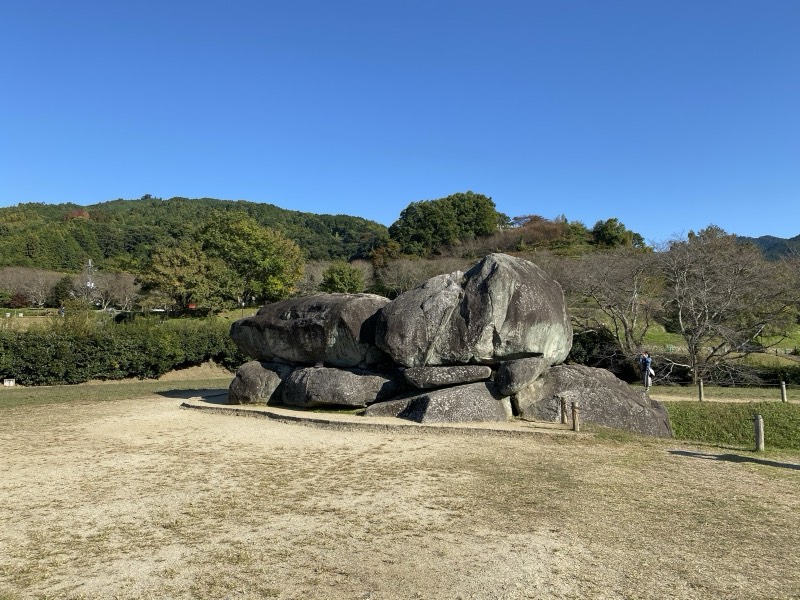 Why Did People Stop Building Kofun?For more than three hundred years, burial mounds kept growing larger. During the 7th century they shrank, and…
 Asuka's Valley of the Kings: imperial tombs within walking distance of the stationAround Kintetsu Asuka Station, in Hirata, Noguchi and Koshi, a number of kofun said to be the tombs of…
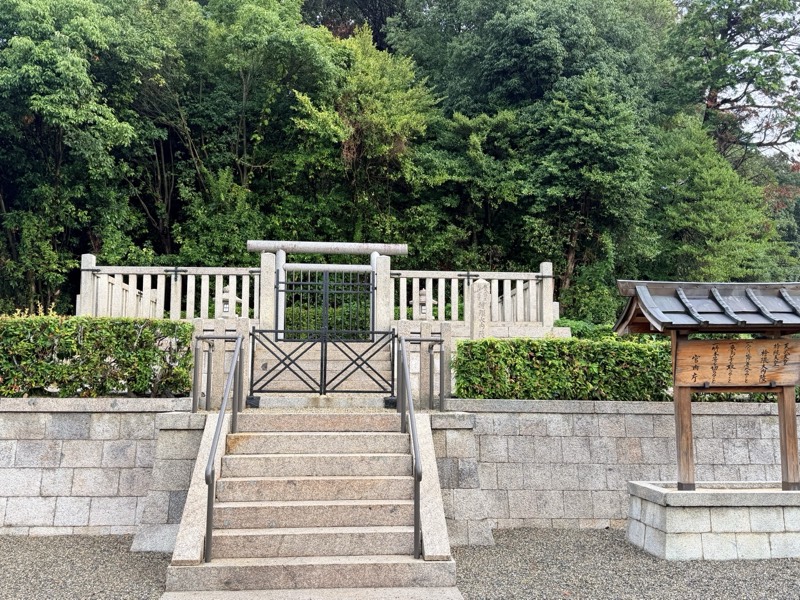 The record of a robbery that saved a tomb: the Mausoleum of Emperor Tenmu and Empress JitōVery few imperial tombs can be attributed to their occupants with near certainty. This one can because the…Whose Tomb Is the Mausoleum of Emperor Kinmei?Several theories have been put forward about who is buried in the largest keyhole-shaped tomb in Asuka…
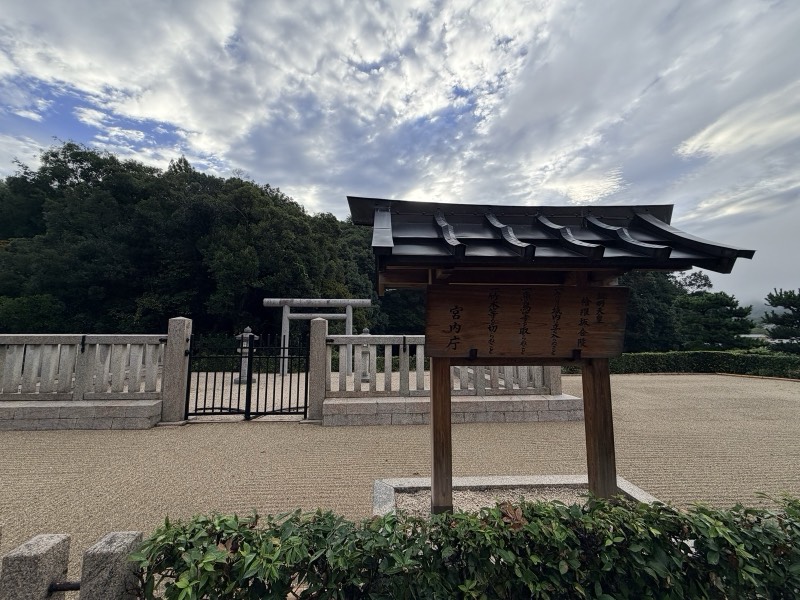 Emperor Kinmei, the Link in the Chain: The Bloodline Leading to Today's Imperial FamilyFrom the accession of his father, Emperor Keitai, to the reigns of the children who took the throne one after…
NEARBY
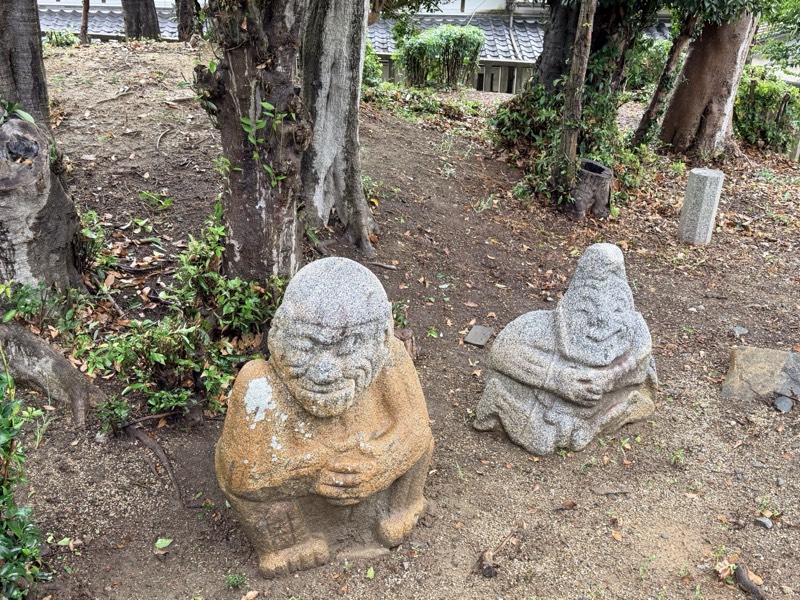
吉備姫王墓・猿石
Four stone figures known as the Saruishi stand in the tomb grounds. What they were for is still a mystery.
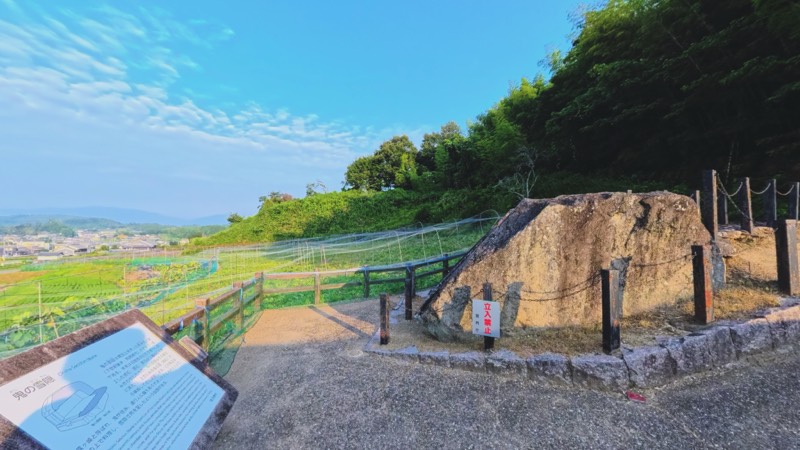
鬼の俎・鬼の雪隠
The pieces of a kofun burial chamber, split apart on either side of a slope.
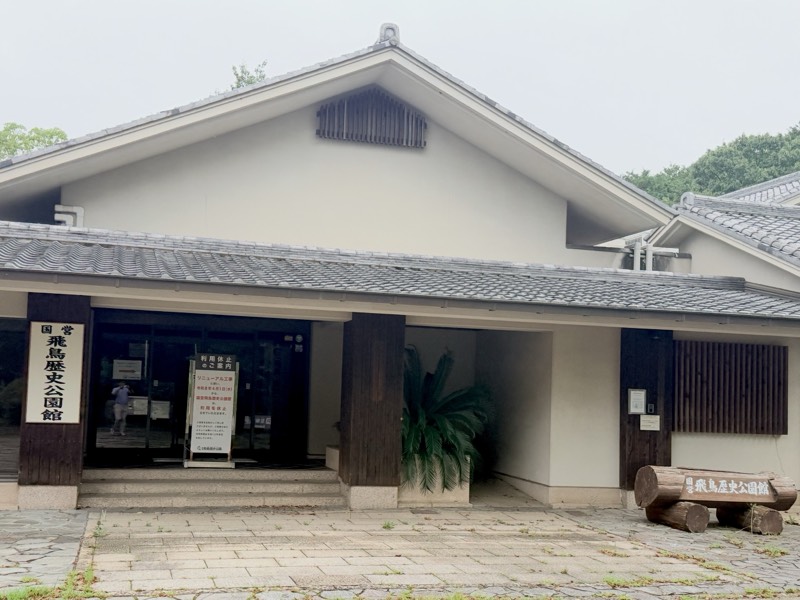
飛鳥歴史公園館
The information centre for the Asuka Historical National Government Park.