
Published
Around Kintetsu Asuka Station, in Hirata, Noguchi and Koshi, a number of kofun said to be the tombs of emperors lie within a few kilometres of one another. Nowhere else are they packed so densely.
Get off at Kintetsu Asuka Station and walk about ten minutes east, and you come to a huge mound surrounded by a moat. It is the Mausoleum of Emperor Kinmei.

Head south along the road from there and you reach Oni no Manaita and Oni no Setchin (the Ogre's Chopping Board and the Ogre's Toilet), and the Mausoleum of Emperor Tenmu and Empress Jitō. Turn west and there are Takamatsuzuka Kofun and Nakaoyama Kofun. Go round to the other side of the station and you find Iwayayama Kofun and Kengoshizuka Kofun. A little further afield are Kitora Kofun and Marukoyama Kofun.
You can walk to all of them in half a day. And almost all of them are thought to be the tombs of emperors or people close to them in rank.
Here is what you will find in this area, in the order it was built.
The Mausoleum of Emperor Kinmei (Umeyama Kofun). A keyhole-shaped kofun (ancient burial mound) about 140 m long, and the only keyhole-shaped mound in Asuka Village. Late 6th century.
Iwayayama Kofun. A square mound from the mid-7th century. You can enter its stone chamber, built of cut granite stacked without gaps: the work of a time when stone-working skills had taken a step up.
Kengoshizuka Kofun. An octagonal mound from the late 7th century. The leading theory is that it is the tomb of Empress Saimei. Koshitsuka Gomon Kofun was discovered just to its south.
The Mausoleum of Emperor Tenmu and Empress Jitō (Noguchi no Ōbo). An octagonal mound about 37 m across from side to side, and one of the very few imperial tombs whose occupants are considered almost certain.
Takamatsuzuka Kofun and Kitora Kofun. Both are small round mounds with wall paintings, from the late 7th to early 8th century.
Nakaoyama Kofun. An octagonal mound about 19 m across, thought to be the tomb of Emperor Monmu. It is the last of the octagonal mounds.
There are also Marukoyama Kofun, a hexagonal mound; Oni no Manaita and Oni no Setchin, whose stone chamber survives broken into pieces; and the Tomb of Princess Kibihime, known for its Saruishi (Monkey Stones).
Walk them in this order and you can see with your own eyes how the tombs get smaller.
They begin with a keyhole-shaped mound 140 m long, become square, then octagonal, and finally shrink to 19 m across. The stonework changes too, from chambers roofed with giant boulders, to cut and stacked stones, to a single block hollowed out.

What happened in that century or so is covered in another column. The point here is that the change is laid out within an area you can walk in a day.
This area has two of Japan's very few kofun with wall paintings.

Takamatsuzuka Kofun was discovered in 1972. Its brilliantly coloured group of women came to be called the "Asuka Beauties" and made the village's name known throughout Japan.

At Kitora Kofun, all four of the Four Guardian Beasts were confirmed: the Azure Dragon, the White Tiger, the Vermilion Bird and the Black Tortoise. It is the only kofun in Japan where all four have been found. Its ceiling bore an astronomical chart considered the oldest surviving star chart based on actual observation.
From outside, both are no more than small grassy hills. I can think of few places where what is inside is so out of proportion to what you see outside.

In the same area are tombs that have lost their mounds and survive only as stones.
Oni no Manaita and Oni no Setchin were originally a single stone chamber. The lower stone was hollowed out to make the room, and the upper stone was carved into the shape of a roof to serve as the lid. That lid rolled down the slope and now lies upside down by the road.
Surfaces that would normally be inside and out of sight now face outward. Protected imperial tombs and an abandoned, scattered stone chamber sit within a few hundred metres of each other.
There is no definite answer, but a few factors can be suggested.
One is the land. This area has long been called Hinokuma. The name the Imperial Household Agency gives the Mausoleum of Emperor Kinmei is "Hinokuma no Sakaai no Misasagi", and the Tomb of Princess Kibihime is "Hinokuma no Haka". It lies 2 to 3 km southwest of the Asuka palaces, in a stretch of low hills that was hard to turn into rice fields.
Another is people. Hinokuma was also a base for immigrants from the Asian mainland. The site of Hinokuma-dera Temple survives here, and in Yora in neighbouring Takatori Town to the west there is a group of kofun thought to be theirs. People with the skills to cut, stack and move stone were living close at hand.
And then, probably, distance from the palace: separate from the places where people lived, but not too far. Considering that people and stone had to be moved for every construction, nearer was more convenient.

Walking through this area, you will see Imperial Household Agency notice boards again and again. Yet the occupants named on them often differ from the occupants that archaeology points to.
Kengoshizuka Kofun is regarded as the likely tomb of Empress Saimei, but the officially designated tomb is Kurumagi Kennō Kofun in Takatori Town. Nakaoyama Kofun is thought to be the tomb of Emperor Monmu, but the official designation is Kurihara Tsukaana Kofun. As for the Mausoleum of Emperor Kinmei, debate continues over whether his real tomb is Maruyama Kofun in Kashihara City.
Sites managed as imperial tombs cannot be excavated. So research progresses at the kofun that are not officially designated, and the leading theories come from there. This arrangement keeps the discrepancies locked in place.
The only tomb whose occupants are considered almost certain is that of Emperor Tenmu and Empress Jitō. That is because, when it was robbed in the Kamakura period (1185–1333), a record was made of an inspection of its interior.
The tombs of a particular royal line gathered in a small area; wall paintings; tomb robbery; continuing debate over who is buried where. There is certainly some overlap with Egypt's Valley of the Kings.
But it is not an official name, and the differences are large.
The royal tombs in the Valley of the Kings are underground tombs cut into rocky hills. No markers were made above ground; the aim was concealment. Asuka's imperial tombs, by contrast, were built as mounds to be seen. Kengoshizuka Kofun, its slopes faced with white cut stone, must have gleamed in the sun.
Tombs made to be hidden, and tombs made to be seen. Though both are clustered together, the thinking behind them points in opposite directions.
Even so, walking here, you can understand the urge to call it a "valley". Nowhere else are so many tombs packed into such a narrow space between the hills.

Starting from Kintetsu Asuka Station, the following order makes for an easy walk.
Station → Iwayayama Kofun (5 min) → Kengoshizuka Kofun (20 min) → back to the station → Mausoleum of Emperor Kinmei and Tomb of Princess Kibihime (10 min) → Oni no Manaita and Oni no Setchin (just nearby) → Mausoleum of Emperor Tenmu and Empress Jitō (5 min) → Takamatsuzuka Kofun (15 min) → Nakaoyama Kofun (5 min) → station (15 min).
Kitora Kofun and Marukoyama Kofun are a little further away, so add them if you have time.
You can enter the stone chamber of Iwayayama Kofun. At Kengoshizuka Kofun you can see the octagonal slopes from outside. The Mausoleums of Emperor Tenmu and Empress Jitō and of Emperor Kinmei are managed by the Imperial Household Agency, and you pay your respects from in front of the torii gate.
If you are going into a stone chamber, bring a light. In summer the grass grows thick and there are mosquitoes.

This area has rice fields and houses, and people live here. Rice grows right next to the imperial tombs, and light trucks drive past Oni no Setchin.
You may come away feeling not that this is a fenced-off, preserved site, but that there is a village among the tombs. And in fact it has probably been that way for 1,300 years.
Stones were carried away, the Saruishi were rearranged in front of a tomb, and one of them was even taken over the mountain to Takatori Castle. The tombs remain; only the ways they are used keep changing.
RELATED SPOT
欽明天皇陵
One of the few large keyhole-shaped burial mounds in Asuka Village.
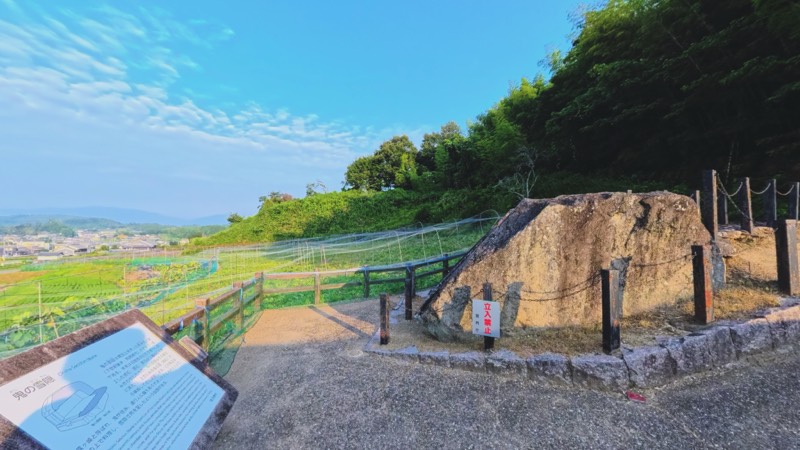
鬼の俎・鬼の雪隠
The pieces of a kofun burial chamber, split apart on either side of a slope.
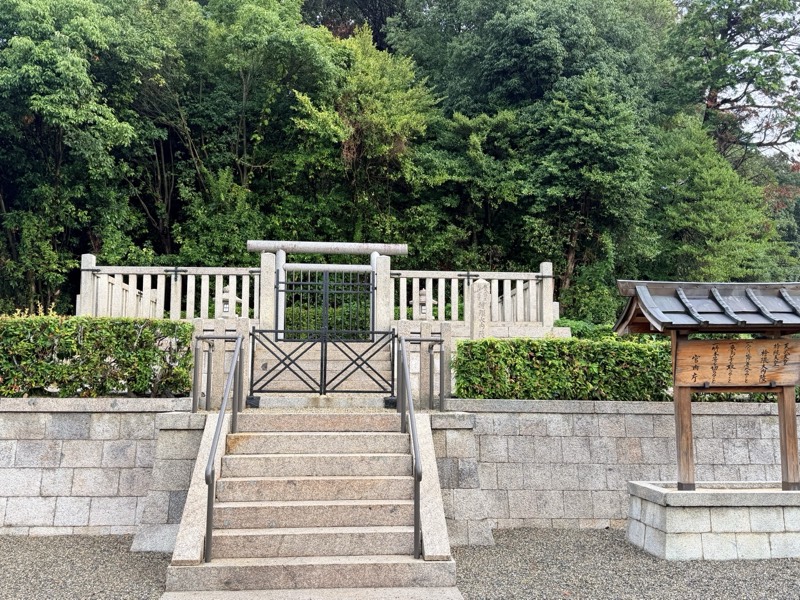
天武・持統天皇陵
One of the few octagonal imperial tombs whose occupants can be confirmed from written records.
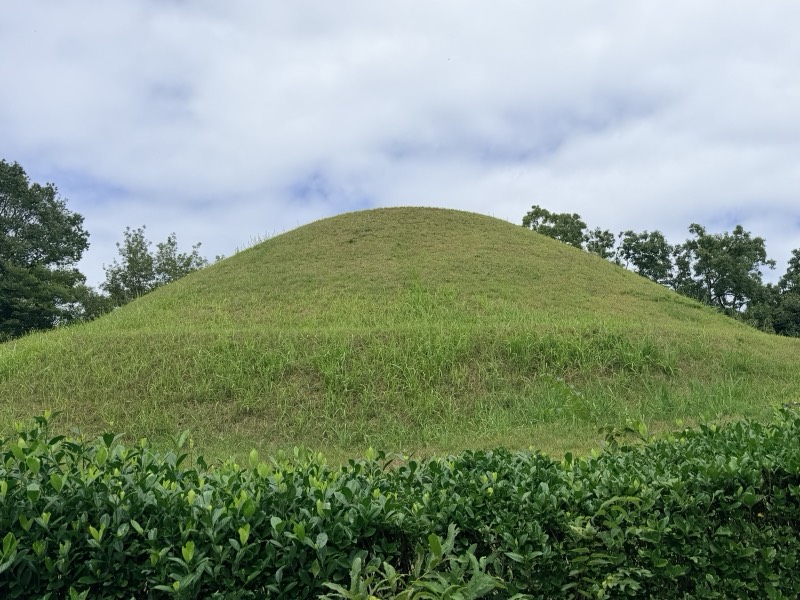
高松塚古墳
A round burial mound where brilliantly coloured paintings of court ladies were found: the defining archaeological discovery of post-war Japan.
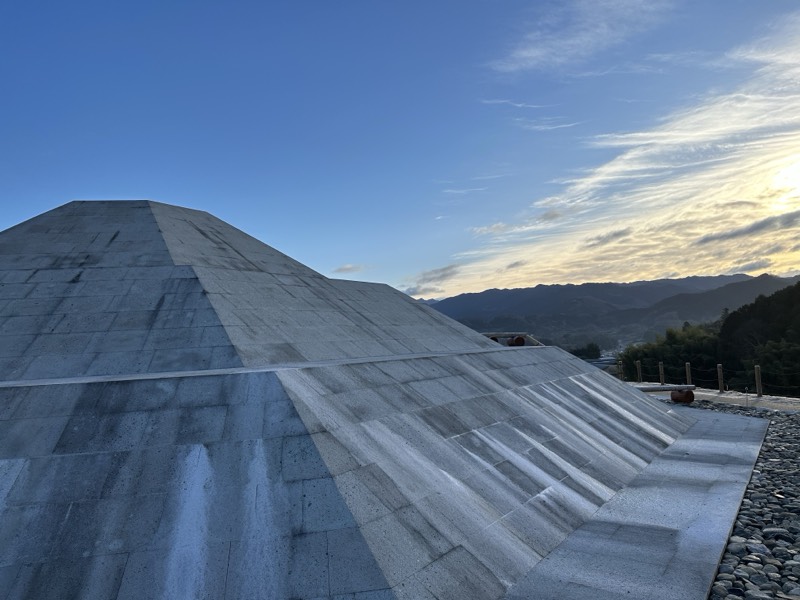
牽牛子塚古墳
An octagonal burial mound, now widely thought to be the tomb of Empress Saimei.
RELATED COLUMN
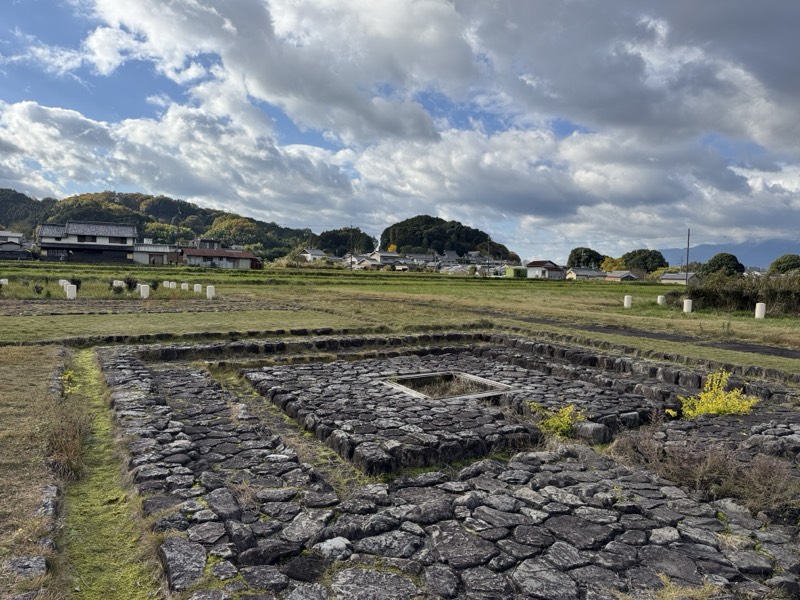 Asuka-Fujiwara World Heritage: All 19 Component Sites and How to Visit Them, with Half-Day, One-Day and Two-Day Routes"Asuka-Fujiwara" was inscribed on the World Heritage List in 2026. We list all 19 component sites with their…The record of a robbery that saved a tomb: the Mausoleum of Emperor Tenmu and Empress JitōVery few imperial tombs can be attributed to their occupants with near certainty. This one can because the…
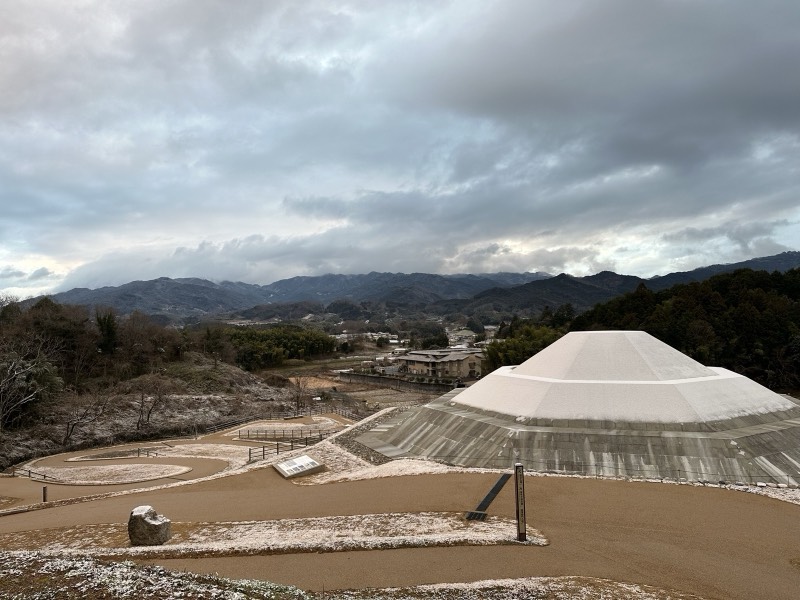 Octagonal Tombs: A Shape Reserved for EmperorsNeither round nor square, but a mound with eight sides. For about sixty years, from the mid-7th to the early…