


1 / 2
高松塚古墳(たかまつづかこふん)
A round burial mound where brilliantly coloured paintings of court ladies were found: the defining archaeological discovery of post-war Japan.
This round kofun (ancient burial mound) was built in the late 7th or early 8th century. In March 1972 a villager digging a pit to store ginger came across the stone chamber, and that led to an excavation.
During the dig, the inner walls of the chamber turned out to be covered in vividly coloured paintings. They were the first murals ever confirmed inside a kofun chamber in Japan. The discovery was front-page news day after day and is called one of the greatest finds of post-war Japanese archaeology. The tomb was made a Historic Site the same year and a Special Historic Site of Japan in 1973.
The chamber at the heart of the mound was a box built from 16 cut blocks of tuff. Inside it measures 265.5 cm long, 103.4 cm wide and 113.5 cm high: barely enough room for a person to lie down, a space meant only to hold the coffin.
The joints between the stones are precise, keeping out both light and water. That tight seal is what preserved the paintings for 1,300 years.
The murals were painted on a coat of lime plaster spread over the inner walls. The east and west walls each show a group of men and a group of women. The Azure Dragon is on the east wall, the White Tiger on the west and the Black Tortoise on the north, together with images of the sun and moon. On the ceiling, the constellations are marked in gold leaf.
The group of women on the west wall, known as the "Asuka Beauties," is especially famous and has been designated a National Treasure. Four women in colourful robes stand in a row holding fans and fly whisks.
Plaster-painted mural tombs like this have been found in only two places in Japan: here and Kitora Kofun.
The chamber was robbed in the Middle Ages, and the south wall was broken through. Most of the grave goods are gone, but fittings from a sword, a bronze mirror of the type called kaijū budō-kyō ("sea beast and grape" mirror), glass beads and fragments of a lacquered wooden coffin were found.
Ironically, the air that came in through the robbers' hole dried out the paintings, and this is thought to have helped preserve them in some respects.
After the discovery, a conservation facility was built on the south side of the chamber so the paintings could be kept in place. But temperature and humidity could not be controlled well enough, and mould began to damage them.
In 2005 it was decided to remove the whole chamber for repair. In 2007 the chamber was dismantled and taken out of the mound, and work continues in a temporary conservation facility about 500 m away. The murals themselves are not normally open to the public.
The mound you see today has been restored to its original appearance based on the excavation results. It was built in two tiers, 23 m across at the base and 18 m across the upper tier. Covered in grass, its gentle shape blends into the surrounding hills.
Who was buried here is not known. Theories include a son of Emperor Tenmu, a high-ranking court official, or an immigrant from the Asian mainland, but none is conclusive.
The tomb is in the Takamatsuzuka area of the Asuka Historical National Government Park. At the neighbouring Takamatsuzuka Mural Hall you can see copies of the paintings as they are now and as they originally looked, along with a model of the stone chamber. About 15 minutes on foot from Kintetsu Asuka Station. You can walk over the hill to Kitora Kofun.
Published
READ MORE
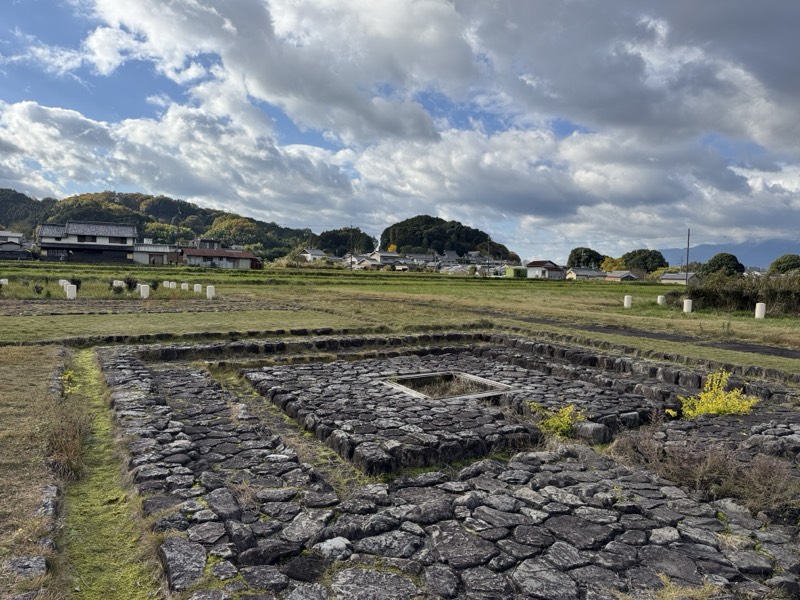 Asuka-Fujiwara World Heritage: All 19 Component Sites and How to Visit Them, with Half-Day, One-Day and Two-Day Routes"Asuka-Fujiwara" was inscribed on the World Heritage List in 2026. We list all 19 component sites with their…Where Japan as a State Began: The 19 Sites of the Asuka-Fujiwara World Heritage PropertyIt was inscribed on 26 July 2026. All that was chosen were the remains of palaces, temples and tombs, and…
 The night sky over Asuka: when watching the stars was the state's businessWith few street lights, the sky seems to come closer once the sun goes down. And in this village, how the…
 Asuka's Valley of the Kings: imperial tombs within walking distance of the stationAround Kintetsu Asuka Station, in Hirata, Noguchi and Koshi, a number of kofun said to be the tombs of…
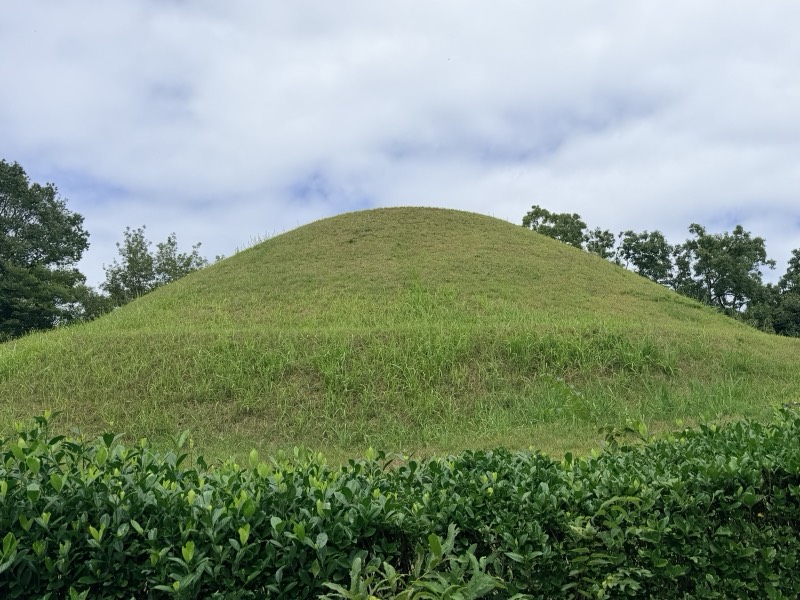 They Didn't Stop at Digging: Half a Century of Asuka Village and Kansai UniversityThe team that uncovered the wall paintings of Takamatsuzuka Kofun in 1972 came from Kansai University. A…
NEARBY
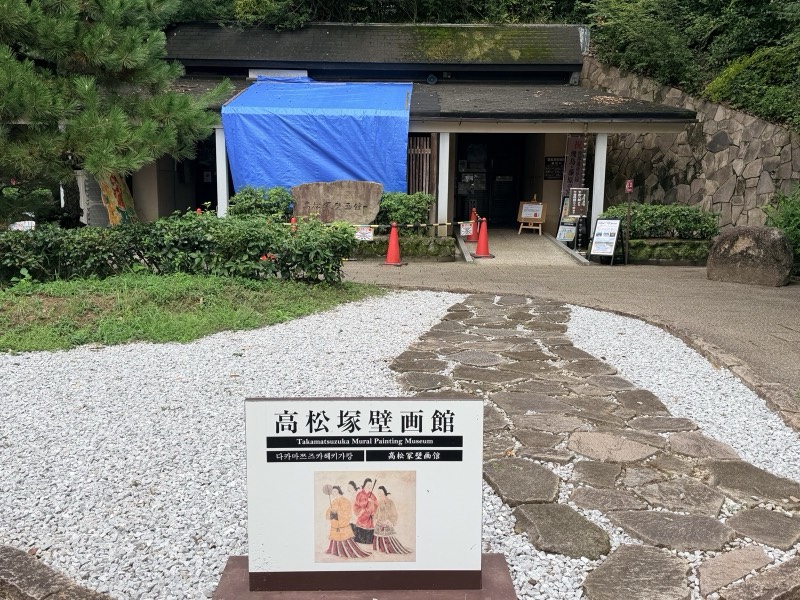
高松塚壁画館
A museum that presents the murals of Takamatsuzuka Kofun through replicas and models.
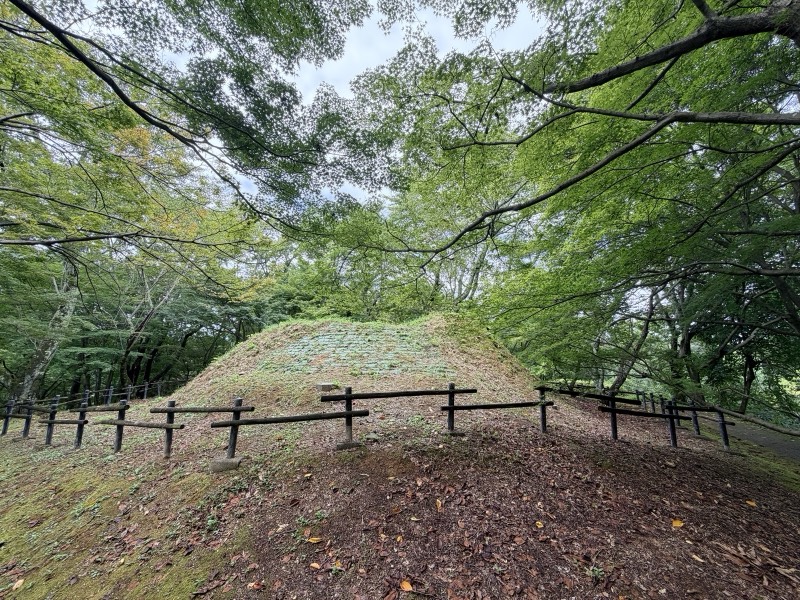
中尾山古墳
A small octagonal mound thought to be the tomb of the cremated Emperor Monmu.
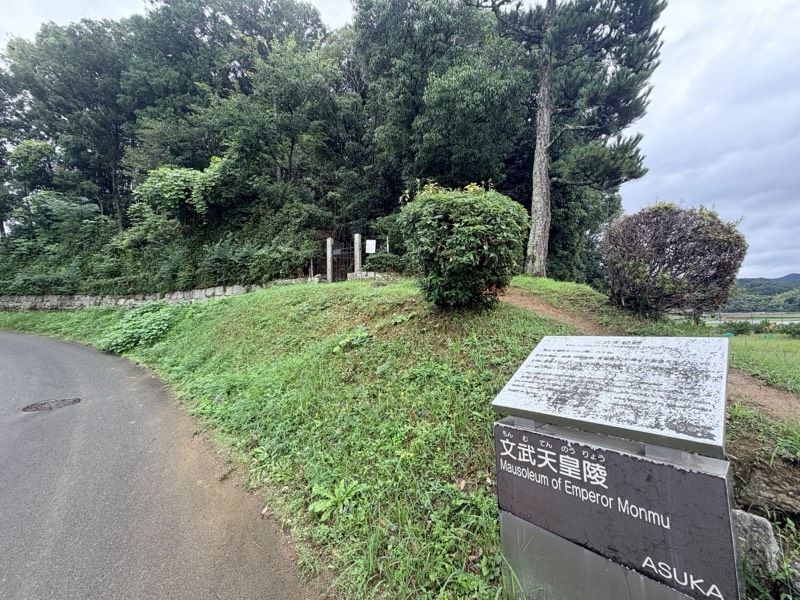
栗原塚穴古墳(文武天皇陵)
The tomb designated by the Imperial Household Agency as Emperor Monmu's, at odds with the archaeological view.