
Published
The team that uncovered the wall paintings of Takamatsuzuka Kofun in 1972 came from Kansai University. A public lecture series it started in the village three years later is still running today.

It began with a villager digging a hole in a field. The story goes that he was digging a pit to store ginger when he struck an old cut stone. That was in 1970.
Following his report, an excavation was carried out in March 1972. When the stone burial chamber was opened, its plastered inner walls turned out to be covered in brilliantly coloured paintings.
The Azure Dragon, the White Tiger and the Black Tortoise. The sun and the moon. Gold-leaf stars on the ceiling. And on the west wall, a group of women: the painting later nicknamed the "Asuka Beauties."
It was the first time richly coloured wall paintings had ever been found in the history of excavating Japan's cultural heritage. The discovery made the front pages, and the name of this village became known across the country.
The excavation was directed by Aboshi Yoshinori of Kansai University, an archaeologist who later became professor emeritus there.
Aboshi worked not only at Takamatsuzuka but at sites all over Asuka, including the Kawaradera Urayama site and Kengoshizuka Kofun, in partnership with the Archaeological Institute of Kashihara, Nara Prefecture, and Asuka Village.
Had it ended there, it would simply be the story of university researchers who came to dig in a village. In this village, though, the story kept going.
In 1975, three years after the paintings were found, Kansai University started a public lecture series in Asuka Village, called the Asuka Lectures on History and Literature.
Born out of the discovery of the paintings, the series brings researchers to speak a dozen or so times a year, at venues such as the village's Central Community Hall. Anyone can attend.
The lectures are still going. The 2026 academic year is their 52nd. They have passed 500 sessions in total, with a cumulative attendance of around 110,000. No other university public lecture series in Japan has run for so long.
In other words, rather than keeping their findings inside academic societies and journals, the researchers have kept on talking about them at the very place they dug, to the people who live there and the people who visit.
Kansai University runs the Institute of Asuka Culture in Inabuchi, Asuka Village. Its full name is the Institute of Asuka Culture – Ueda Memorial Hall.
The building was paid for by a donation. Ueda Masamichi, who chaired the university's educational support association, put his own money into it in the hope of advancing education and research, and the main building was completed in March 1975: three years after the paintings were dug up, and the same year the public lectures began in the village.
What makes the difference is that people can stay there. It has Japanese- and Western-style rooms for about 72 guests, and a bath. Fieldwork cannot be done in day trips. Once there was a place where the excavators could sleep and live in the village, they could settle in for proper, long-term investigation.
Ueda later made two further donations, and the university set up the Ueda Fund for the Promotion of Education. With that fund a new building was put up next door in March 1987. In 1991 it received the Nara Prefecture Landscape Harmony Design Award: it stands in the Inabuchi hamlet, famous for its terraced rice fields, in a form that blends into the scenery.
Today it is used not only for research and fieldwork but also for off-campus classes, seminars and study groups. The university describes it as a seminar house where teachers and students can debate through the night.
Coming only to dig and leaving as soon as it was over: that is not how the university chose to be involved. That, I think, is what has defined this half-century.
Surprisingly, the relationship was only put in writing quite recently.
On 28 September 2020, Asuka Village and Kansai University signed a memorandum on academic and cultural exchange. Its purpose was to push forward together on events marking the 50th anniversary of the paintings' discovery in 2022, on the excavation of kofun (ancient burial mounds) and other sites, and on the bid for World Heritage inscription.
With half a century of work already behind them, they rebuilt the framework afresh.

On 26 July 2026, "Asuka-Fujiwara: Archaeological Sites of Japan's Ancient Capitals and Related Properties" was inscribed as a World Heritage Site. Both Takamatsuzuka Kofun and Nakaoyama Kofun are among its component parts.
On 30 August that year, a special symposium of the Asuka Lectures on History and Literature was held at the Asuka Village Central Community Hall to celebrate the inscription: 54 years after the 1972 excavation.
The university that dug up the paintings was, half a century later, holding the event marking the World Heritage inscription in the same village. The line runs unbroken.
One thing needs adding. After their discovery, the Takamatsuzuka paintings deteriorated.
Mould kept growing, and in 2007 the stone chamber was dismantled and removed; restoration is still going on. There are no longer any paintings inside the tomb.
Instead, the Takamatsuzuka Mural Hall right next to the tomb conveys them. It displays two kinds of copy: faithful copies of the paintings as they were when found, and partial reconstructions that fill in the lost areas, so you can see what survives and what has been lost.
Kansai University's own museum (in Suita, Osaka Prefecture) also has a room recreating the Takamatsuzuka wall paintings. The university that excavated them shows the results in its own museum too.
Excavation is also an act of destroying a place once. You remove the soil, open the stones and expose what lies inside to the outside air. The deterioration of the Takamatsuzuka paintings is not unrelated to their having been opened.
That is exactly why what you do after digging matters: keeping records, making them public, handing them on to the next generation.
The half-century between this village and this university is, I think, an example of that part carrying on without a break. A dozen or so lectures a year in the village community hall is not a flashy story, but the figure of 500 sessions is the sum of exactly that kind of quiet persistence.
The Asuka Lectures on History and Literature are still open to the public. They are held at the Asuka Village Central Community Hall, with a schedule set each academic year. Please check Kansai University's announcements for details.
If a lecture falls on a day you are walking around the village, you could see the kofun in the morning and listen to a lecture in the afternoon. The place that was dug and the place where it is talked about are within walking distance of each other.
RELATED SPOT
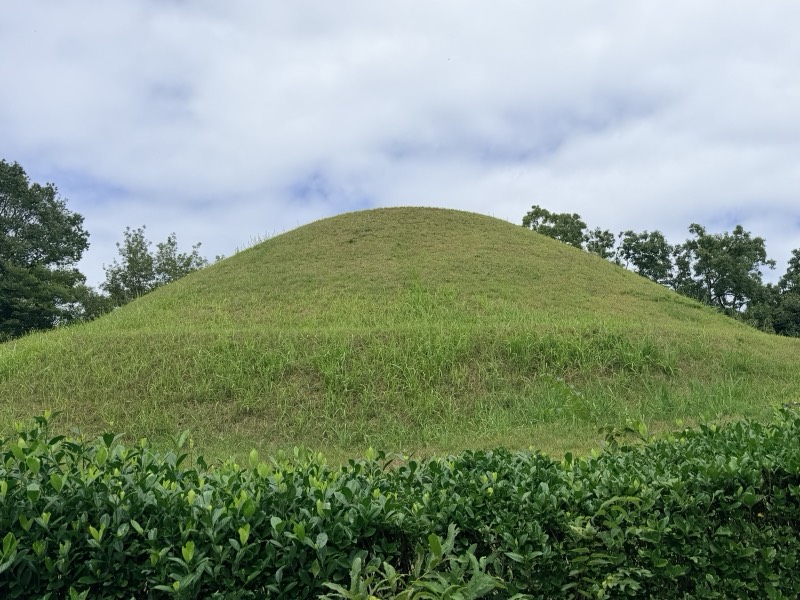
高松塚古墳
A round burial mound where brilliantly coloured paintings of court ladies were found: the defining archaeological discovery of post-war Japan.
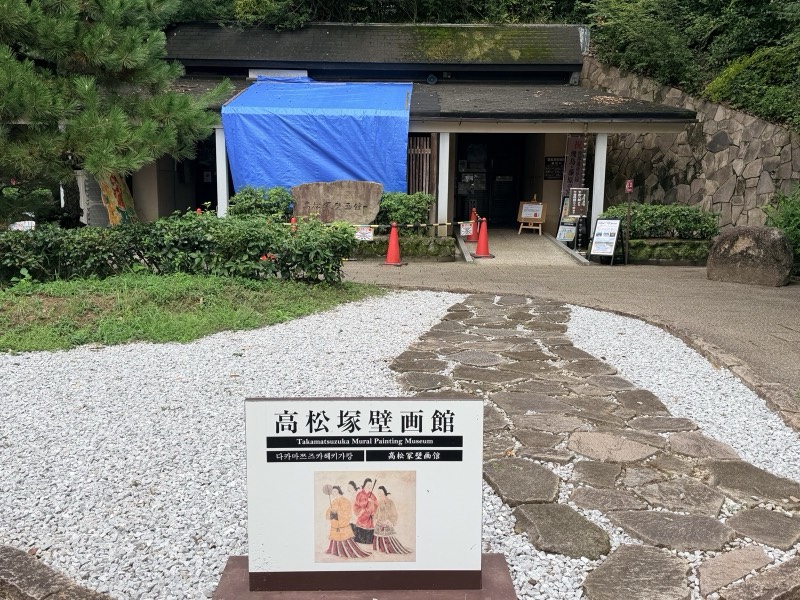
高松塚壁画館
A museum that presents the murals of Takamatsuzuka Kofun through replicas and models.
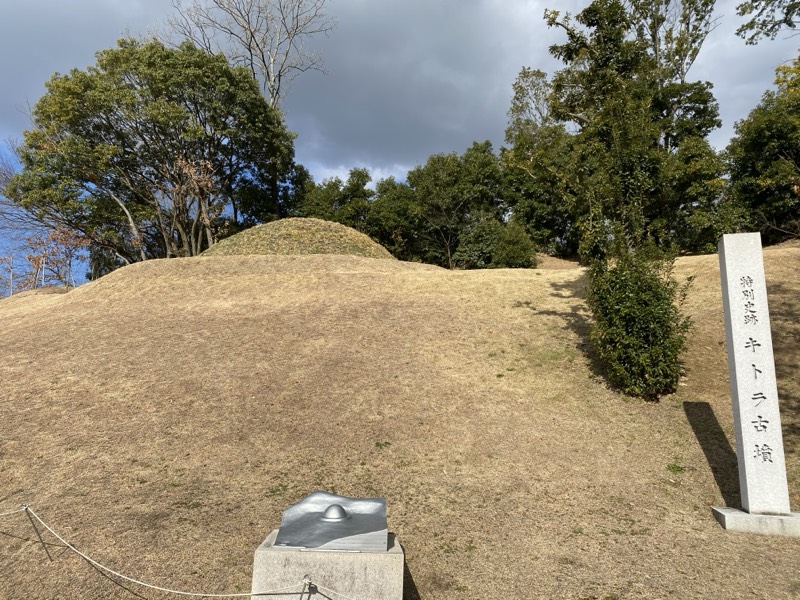
キトラ古墳
A two-tiered round burial mound famous for its chamber painted with the Four Gods and a map of the stars.
RELATED COLUMN
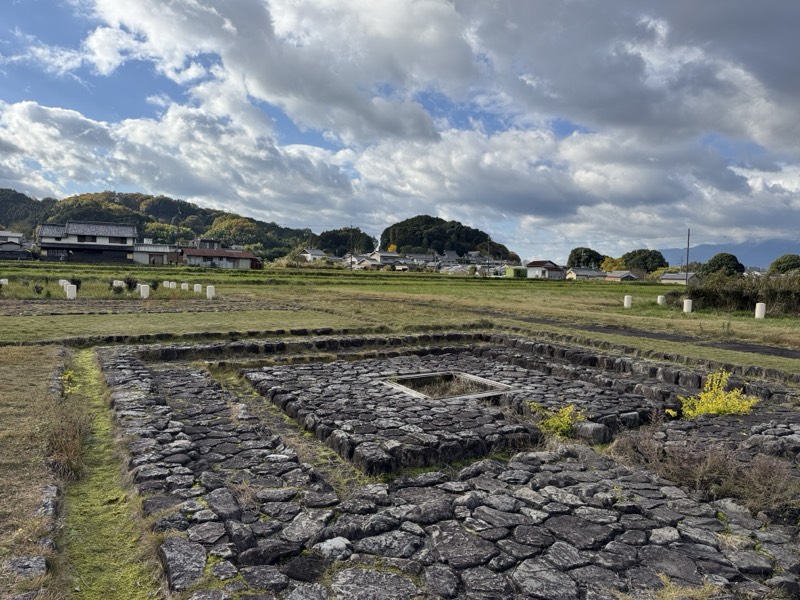 Asuka-Fujiwara World Heritage: All 19 Component Sites and How to Visit Them, with Half-Day, One-Day and Two-Day Routes"Asuka-Fujiwara" was inscribed on the World Heritage List in 2026. We list all 19 component sites with their…
 The night sky over Asuka: when watching the stars was the state's businessWith few street lights, the sky seems to come closer once the sun goes down. And in this village, how the…
 Remembered, Not Timed: Running the Asuka Half Marathon Past Ruins and Rice TerracesEvery March, 3,000 runners race past the historic sites and terraced rice fields of Asuka Village. Starting…