
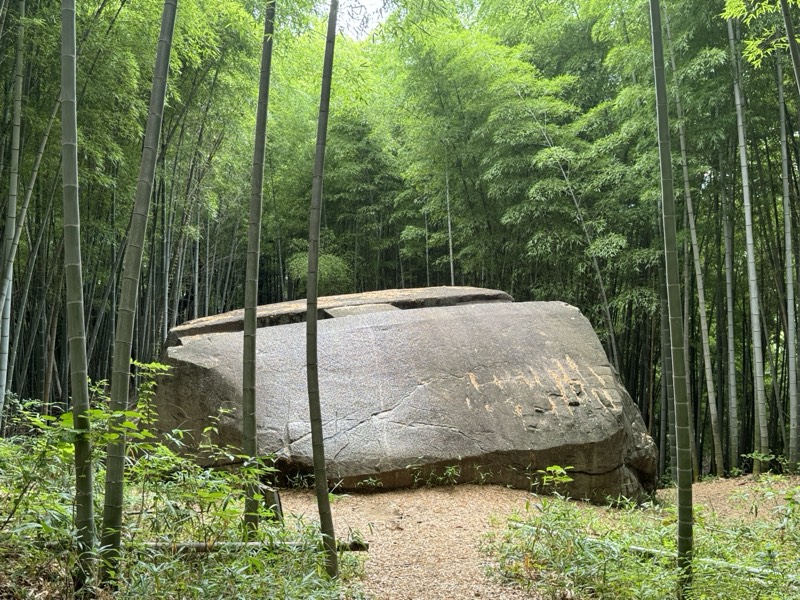
Two holes cut into an 800-tonne boulder, a slab carved with circles and channels, a turtle with a face, statues with faces on both sides: in Asuka, stones whose purpose no one knows still lie scattered among the fields and hills. We tour them, sorted into mysteries solved, half-solved, and still completely open.
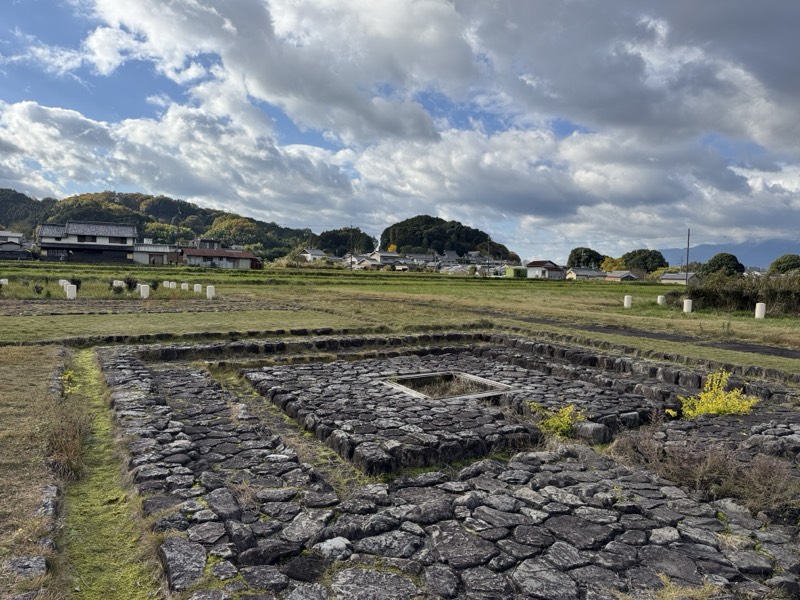
"Asuka-Fujiwara" was inscribed on the World Heritage List in 2026. We list all 19 component sites with their locations and highlights at a glance, and suggest a classic walk from Asuka Station, half-day routes for three areas, a walk into Oku-Asuka, and one- and two-day routes that cover them all.
It was inscribed on 26 July 2026. All that was chosen were the remains of palaces, temples and tombs, and most of them lie underground. What these 19 sites show is the hundred-odd years in which the institutions of the Japanese state took shape.
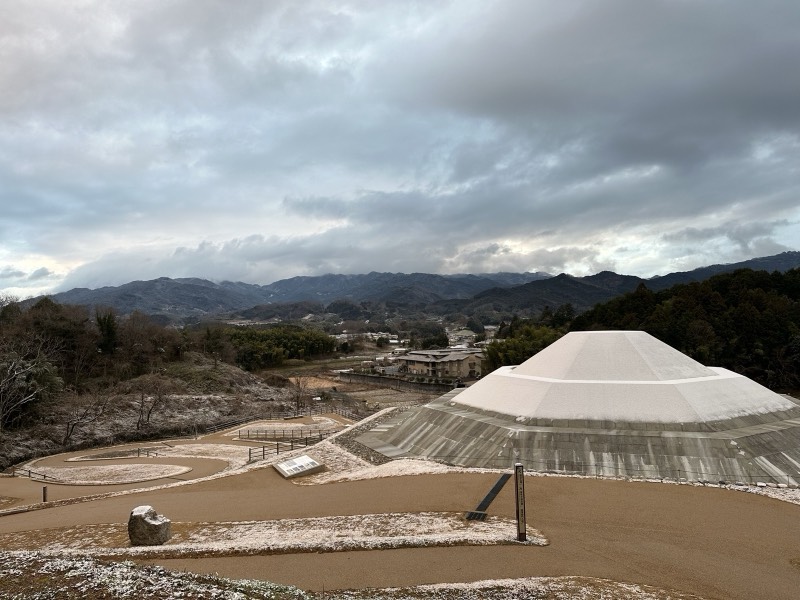
Neither round nor square, but a mound with eight sides. For about sixty years, from the mid-7th to the early 8th century, this shape was used only for the tombs of emperors.
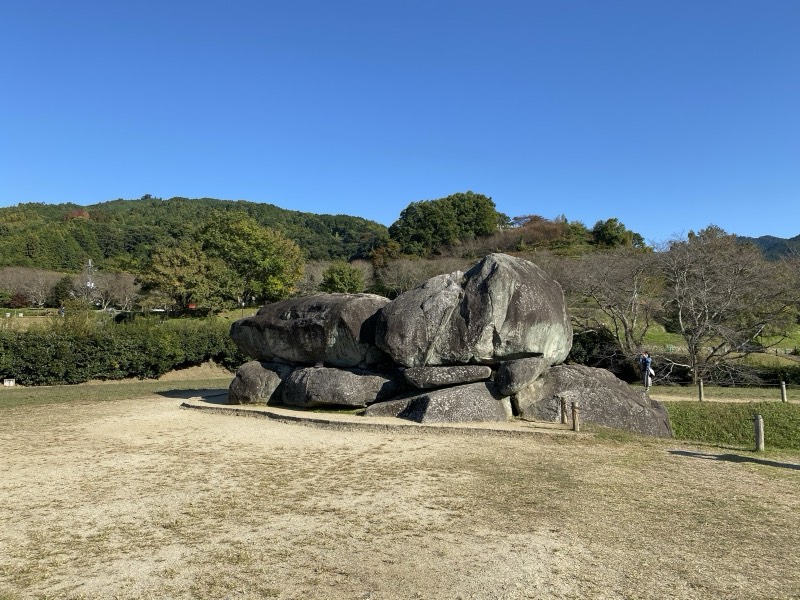
For more than three hundred years, burial mounds kept growing larger. During the 7th century they shrank, and in the early 8th century they disappeared. There was more than one reason.
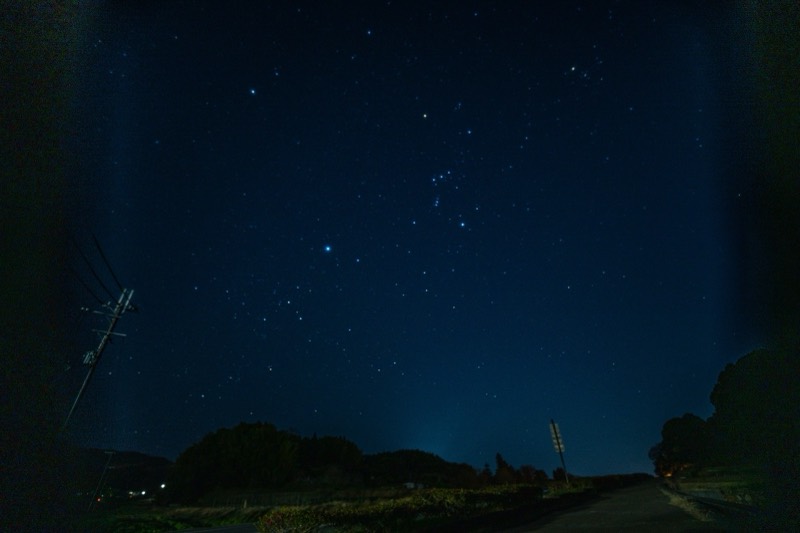
With few street lights, the sky seems to come closer once the sun goes down. And in this village, how the people of the Asuka period looked at the stars has survived intact.
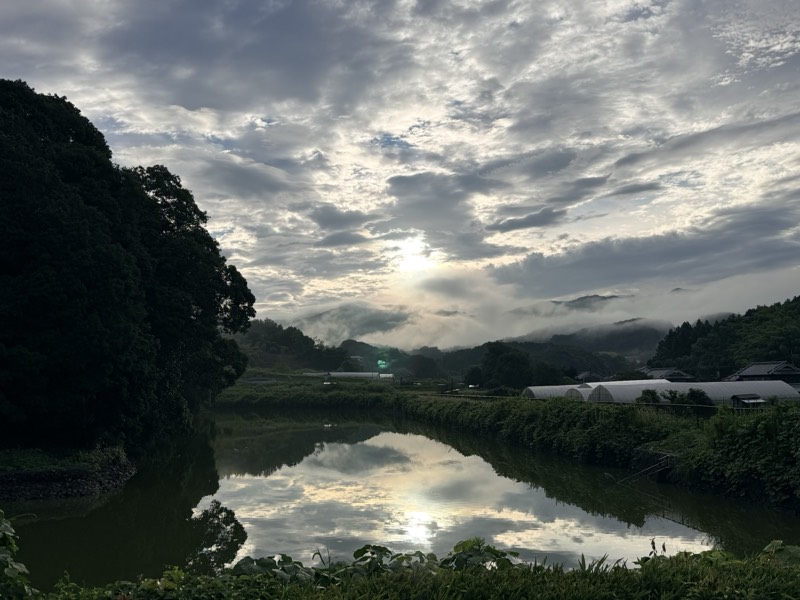
Around Kintetsu Asuka Station, in Hirata, Noguchi and Koshi, a number of kofun said to be the tombs of emperors lie within a few kilometres of one another. Nowhere else are they packed so densely.
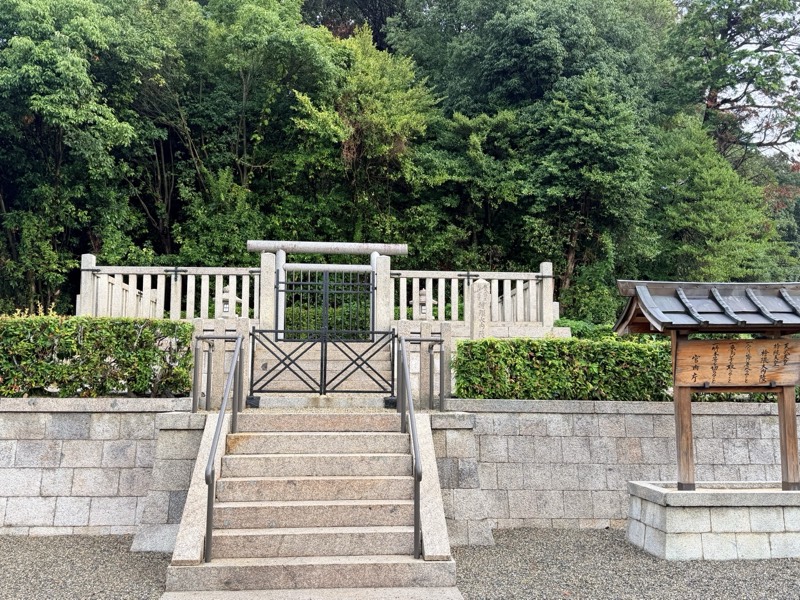
Very few imperial tombs can be attributed to their occupants with near certainty. This one can because the investigation report from a tomb robbery in 1235 survived.