
Published
Neither round nor square, but a mound with eight sides. For about sixty years, from the mid-7th to the early 8th century, this shape was used only for the tombs of emperors.
From the 3rd to the 6th century, the rulers of Wa (early Japan) were buried in keyhole-shaped kofun (ancient burial mounds). These huge keyhole mounds displayed the power of the person buried there directly through their size.
Towards the end of the 6th century, this shape stopped being built. Instead, the tombs of the great kings became square mounds. Kasuga Mukaiyama Kofun, identified as the tomb of Emperor Yōmei, and Yamada Takatsuka Kofun, identified as the tomb of Empress Suiko, are both square. Ishibutai Kofun in Asuka, though it has lost its earth covering, was also a square mound.
Then, in the mid-7th century, the octagon suddenly appeared.
The earliest example is considered to be Dannozuka Kofun at Oshisaka in the city of Sakurai. It is identified as the tomb of Emperor Jomei, and archaeologists have raised almost no objection to this identification.
Its upper tier is octagonal, about 42 m across from side to side, with three square terraces projecting from its front. Emperor Jomei died in 641 and was buried in 643.
After that, the shape continued: Gobyōno Kofun (Yamashina Ward, Kyoto), identified as the tomb of Emperor Tenchi; Noguchi Ōbo Kofun, where Emperor Tenmu and Empress Jitō were buried together; and Nakaoyama Kofun, thought to be the tomb of Emperor Monmu. Kengoshizuka Kofun, believed to be the tomb of Empress Saimei, is octagonal too.
In number, there are five or six of them. They were built over a period of about sixty years, and then the shape vanished.
No clear document tells us what this shape meant. The leading theory is that it marks the tomb of one who ruled the eight directions of the realm.
In Chinese thought, the number eight stands for every direction in the world: north, south, east and west, plus the four directions in between, make eight. One who rules the eight directions is one who rules the realm. The theory is that this idea was translated into the shape of the mound.
This reading has a weakness, however. No earlier octagonal tombs have been found in China or on the Korean peninsula. Even if the idea came from the continent, the notion of turning it into the shape of a burial mound would have originated in Japan.
Another theory looks to the octagonal halls of Buddhism. But octagonal halls in Japan, starting with the Yumedono (Hall of Dreams) at Hōryū-ji Temple, were built only from the 8th century onwards, so the order does not fit.
What matters is that the octagon was not used for any other tombs.
Tombs of this period were ranked by shape. At the top was the octagon. Just below it was the hexagon: Marukoyama Kofun in Mayumi, Asuka Village, is a hexagonal tomb and is thought to belong to someone of the rank of a prince. Below that came square mounds, and then round ones.
The age of showing power through the size of the mound was over, and an age of showing rank through shape had begun. Nakaoyama Kofun measures only about 19 m across, roughly half the size of the Tenmu–Jitō tomb. Yet because it is octagonal, it can be read as an emperor's tomb.
Tsukamyōjin Kofun in the town of Takatori has a polygonal mound, and some believe it to be octagonal. The person buried there is thought to be Prince Kusakabe.
Prince Kusakabe was the son of Emperor Tenmu and Empress Jitō, and was expected to become the next emperor. He died in 689 without ever taking the throne. If he was buried not as an emperor but as someone of equivalent standing, the octagonal rule still holds.
Whether this tomb really is octagonal is still debated. But the way the debate over the occupant's status and the debate over the mound's shape match up so neatly is a problem typical of this period.
After Nakaoyama Kofun, no more octagonal tombs were built. Emperor Monmu died in 707.
The reason is that the way of burial itself changed. Empress Jitō became the first Japanese ruler to be cremated, and Emperor Monmu followed. A stone chamber to hold bones could be small, and there was no longer any need to build a large mound.
In addition, the ritsuryō (law codes) were put in place and Buddhism became the religion of the state. The place for honouring the dead moved from the tomb to the temple. The emperors of the Nara period no longer built huge mounds.
The octagon was the final shape of the kofun way of burial.
What complicates matters is that the sites the Imperial Household Agency manages as imperial tombs do not match the sites archaeology points to.
Kengoshizuka Kofun is widely seen as the tomb of Empress Saimei, but the Imperial Household Agency's official designation is Kurumagi Kennō Kofun in the town of Takatori. Nakaoyama Kofun is thought to be the tomb of Emperor Monmu, but the official designation is Kurihara Tsukaana Kofun. Neither designation has been changed.
Sites managed as imperial tombs cannot be excavated. So research progresses on undesignated tombs, and strong theories emerge from them. This structure keeps the discrepancies locked in place.
The place where you can actually see the octagonal shape with your own eyes is Kengoshizuka Kofun. Restoration work was completed in 2022, recreating slopes faced with cut blocks of tuff. From outside, you can see the eight faces turning at sharp angles.

The tomb of Emperor Tenmu and Empress Jitō is managed by the Imperial Household Agency, and visitors pay their respects from in front of the torii gate. The mound is covered in trees and its shape cannot be seen. Nakaoyama Kofun is also covered over for its protection.


Iwayayama Kofun, near Kintetsu Asuka Station, is considered a square mound, but some now think its upper tier was octagonal. Here you can enter the stone chamber. If the theory is correct, it would be an octagonal tomb you can go inside.
RELATED SPOT
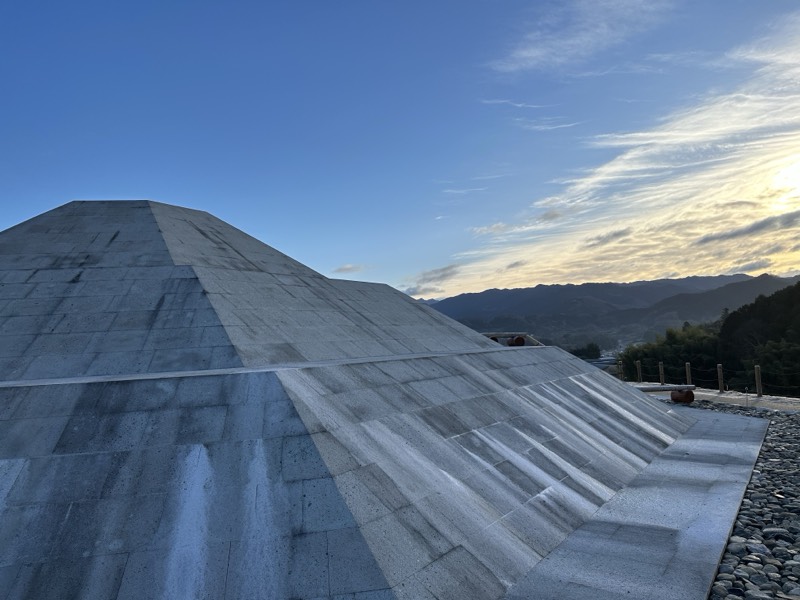
牽牛子塚古墳
An octagonal burial mound, now widely thought to be the tomb of Empress Saimei.
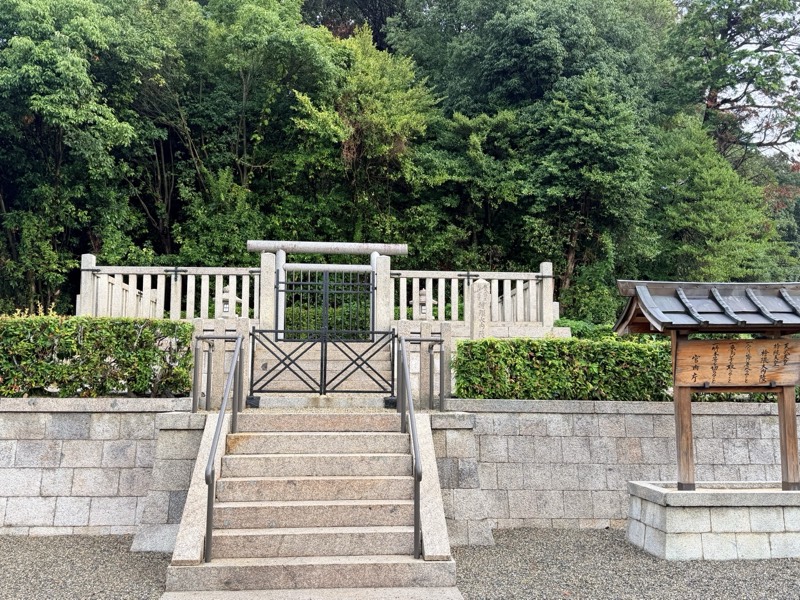
天武・持統天皇陵
One of the few octagonal imperial tombs whose occupants can be confirmed from written records.
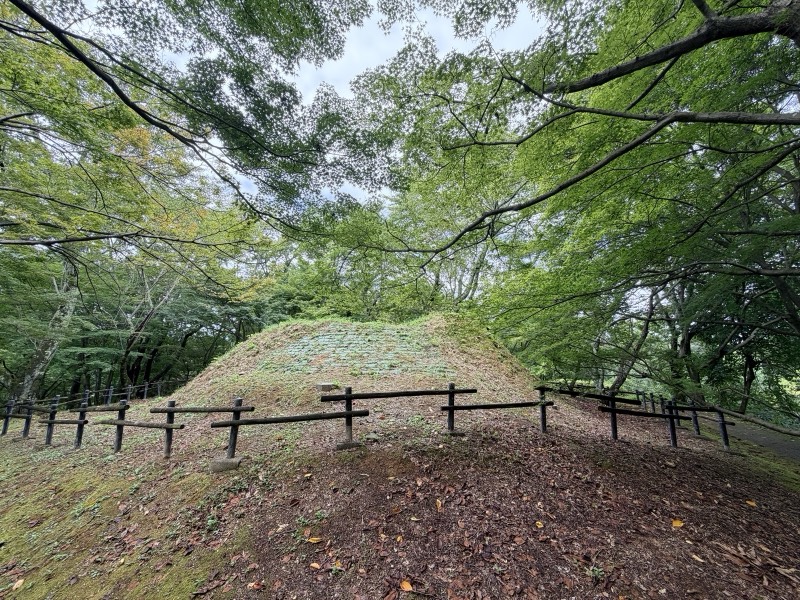
中尾山古墳
A small octagonal mound thought to be the tomb of the cremated Emperor Monmu.
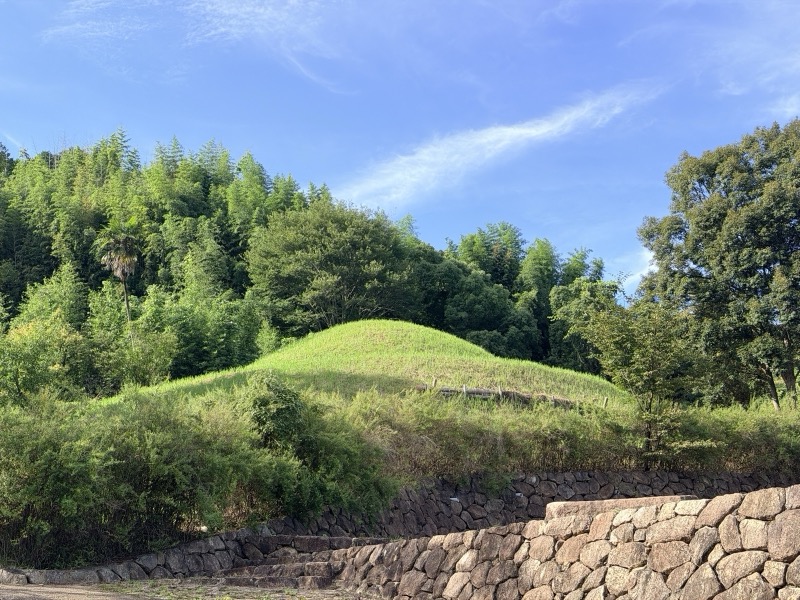
マルコ山古墳
A hexagonal burial mound 24 m across between opposite sides, a shape rarely found anywhere in Japan.
RELATED COLUMN
The record of a robbery that saved a tomb: the Mausoleum of Emperor Tenmu and Empress JitōVery few imperial tombs can be attributed to their occupants with near certainty. This one can because the… Asuka's Valley of the Kings: imperial tombs within walking distance of the stationAround Kintetsu Asuka Station, in Hirata, Noguchi and Koshi, a number of kofun said to be the tombs of…
 Asuka-Fujiwara World Heritage: All 19 Component Sites and How to Visit Them, with Half-Day, One-Day and Two-Day Routes"Asuka-Fujiwara" was inscribed on the World Heritage List in 2026. We list all 19 component sites with their…