1 / 4
マルコ山古墳(まるこやまこふん)
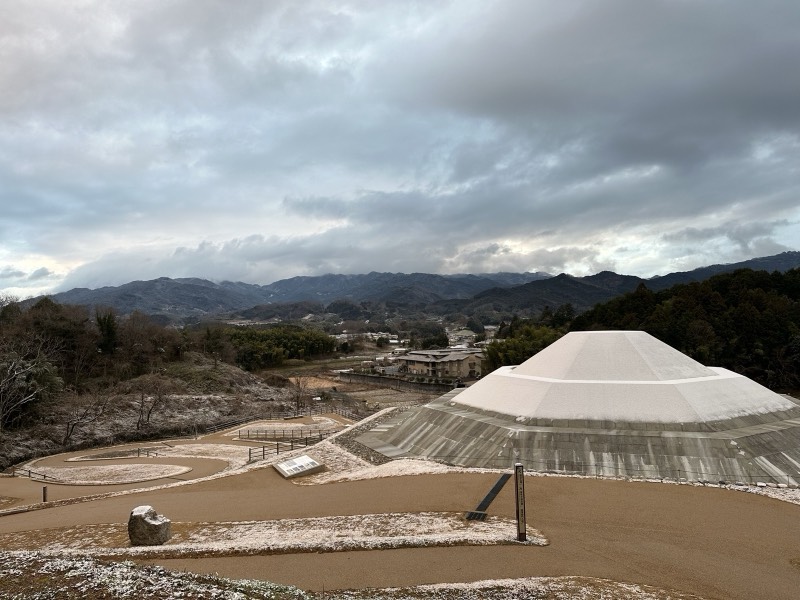
A hexagonal burial mound 24 m across between opposite sides, a shape rarely found anywhere in Japan.
This kofun (ancient burial mound) on the Mayumi hills dates from the late 7th or early 8th century. It is a rounded, grass-covered hill, and at first glance it looks like nothing more than a round mound.
For a long time it was thought to be round, but investigations showed that it is hexagonal. It measures 24 m between opposite sides and appears about 5.3 m high. It was built in two tiers, with earth pounded firm in layers, a technique called hanchiku.
While the octagon was the shape used for emperors' tombs, the hexagon is thought to have been the rank just below, for princes. Hexagonal mounds are rare in Japan, and the shape is a key clue to the character of this tomb.
This area, to the southwest of the tomb of Emperor Tenmu and Empress Jitō, is where Asuka's late kofun (second half of the 7th century) are most concentrated, and it has long been called Mayumi no Oka.
Marukoyama Kofun lies on the south slope of a ridge running east to west from the Mayumi hills, about 120 m above sea level. Kengoshizuka Kofun and Iwayayama Kofun are nearby, suggesting that these hills were a burial ground for powerful figures.
The burial chamber is a stone box with a side entrance, built from cut blocks of tuff. Inside it measures 271.9 cm long, 128.5 cm wide and 143.3 cm high, and it opens to the south.
It is built the same way as those of Takamatsuzuka Kofun and Kitora Kofun, and the whole of the interior, floor included, was coated with lime plaster. But no paintings were found. Plaster, but no pictures: this suggests a tomb from just before the mural tombs appeared, or from the same period.
On the north side of the mound, paving stones were laid in a semicircle, with a gravel-filled underground drain beneath them, a device to carry water away.
Excavations were carried out in 1977 and 1978, and again in 1990 and 2004.
Inside the chamber were found fragments of a lacquered coffin (a kanshitsu coffin), nails, gilt-bronze coffin fittings in the shape of six-petalled flowers, sword fittings, a buckle, and parts of human bones thought to belong to the person buried here. A kanshitsu coffin was made of cloth hardened with lacquer, a laborious technique used for burials of high-ranking people.
Who was buried here is not known. The information board on site says only that "it is still unclear, but a person of the rank of the imperial family is considered likely."
One theory names Prince Kawashima, a son of Emperor Tenji. The hexagonal shape, a chamber close to those of Takamatsuzuka and Kitora, and the location at Mayumi all point to someone of imperial rank, but nothing is conclusive.
About 20 minutes on foot from Kintetsu Asuka Station. The mound sits above a slope faced with stone walls at the far end of the village. Kushitamanomikoto Shrine is close by.
The chamber is not open to the public. What you can see is the grass-covered mound and the information board at its foot. Unlike Takamatsuzuka Kofun or Kitora Kofun, it has not been developed for visitors, and hardly anyone comes here. Visit it together with Kengoshizuka Kofun and you will see an octagon and a hexagon one after the other.
Published
NEARBY
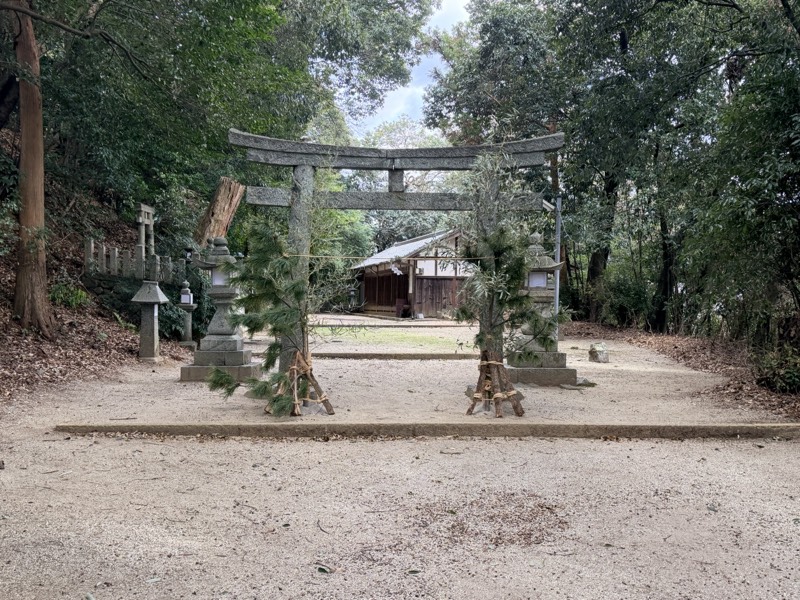
櫛玉命神社
An ancient listed shrine to four deities, in a sacred grove overlooking the village of Mayumi.
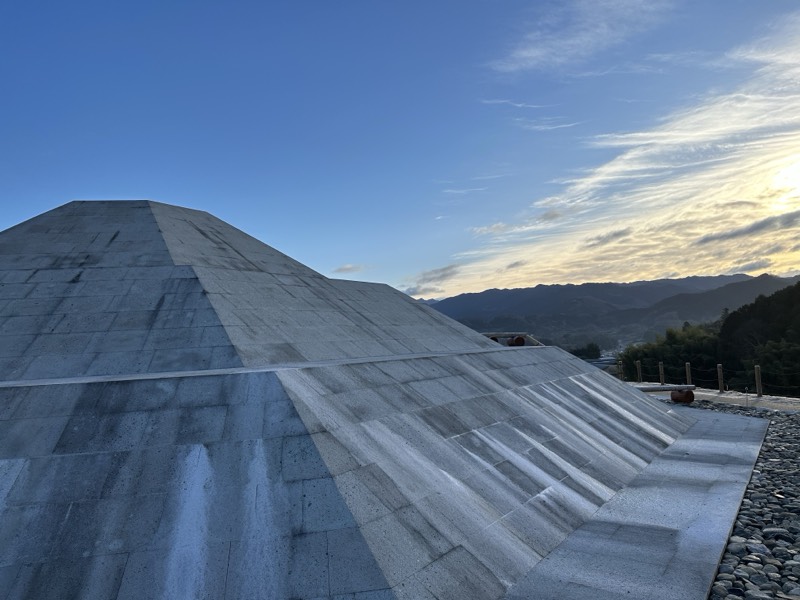
牽牛子塚古墳
An octagonal burial mound, now widely thought to be the tomb of Empress Saimei.
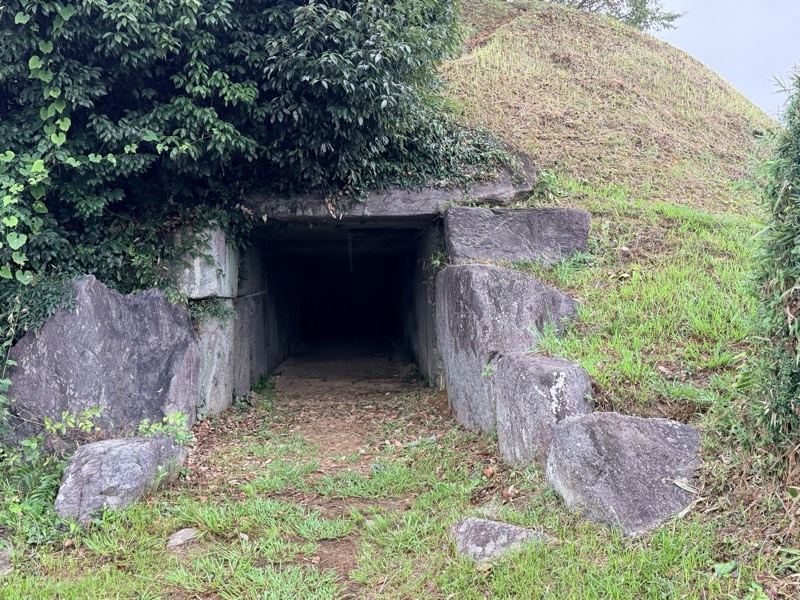
岩屋山古墳
Five minutes from the station: walk straight into a burial chamber built of tightly fitted cut stone.