
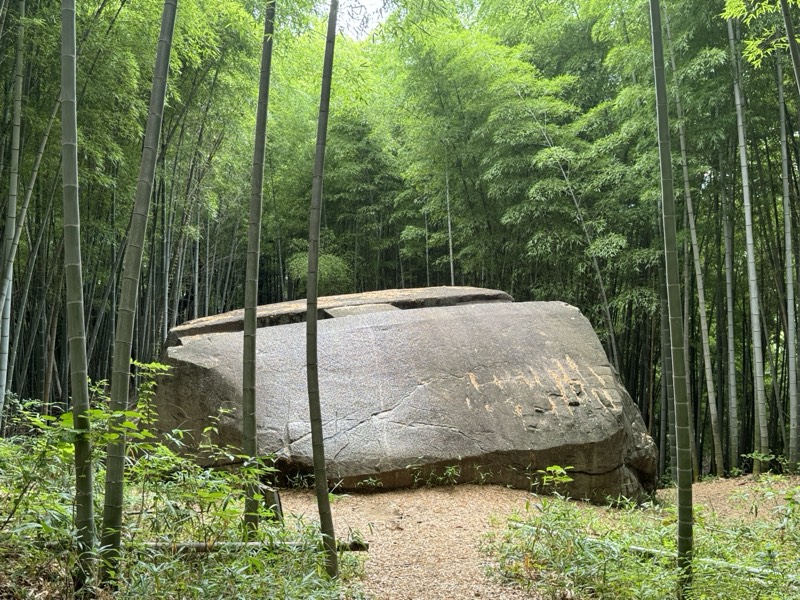
Two holes cut into an 800-tonne boulder, a slab carved with circles and channels, a turtle with a face, statues with faces on both sides: in Asuka, stones whose purpose no one knows still lie scattered among the fields and hills. We tour them, sorted into mysteries solved, half-solved, and still completely open.
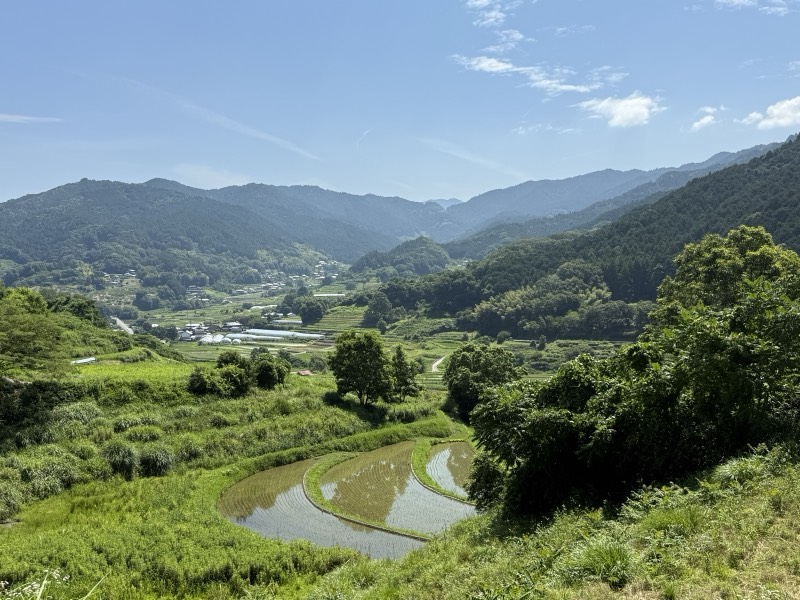
Two ropes of rice straw hang across the Asuka River. Downstream in Inabuchi a Shinto priest is invited; upstream in Kayanomori a Buddhist monk chants sutras. The same rite has carried on in a different form in each village.
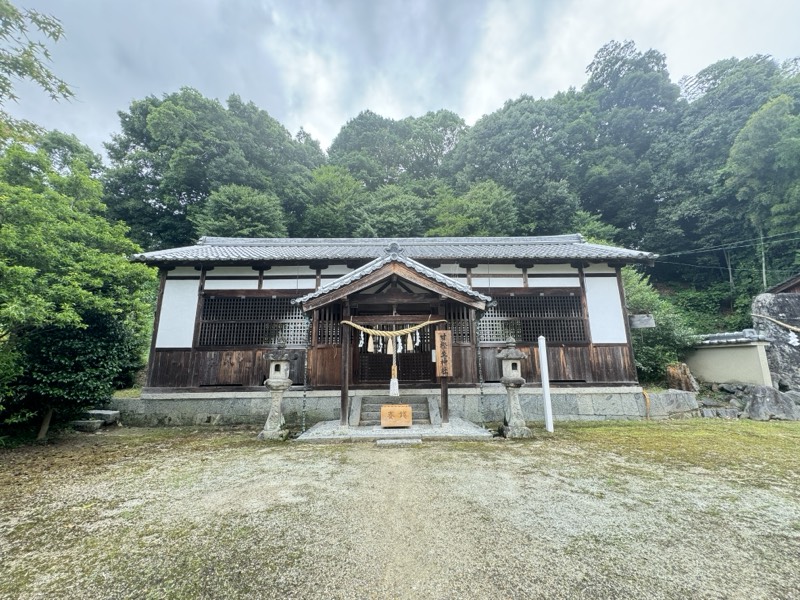
Those who lie are scalded; the honest come away unhurt. According to the Nihon Shoki, this trial was held on Amakashi Hill. The rite survives to this day at Amakashi-niimasu Shrine.
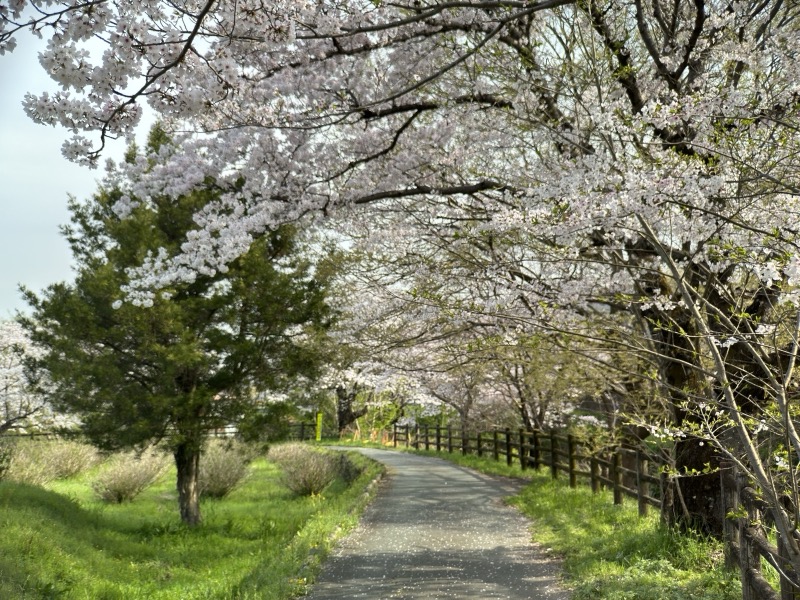
Three kinds of rain-making were tried in turn, and when at last the empress prayed upstream on the Asuka River, it rained for five days. There is a reason the Nihon Shoki was so careful to set out that sequence.
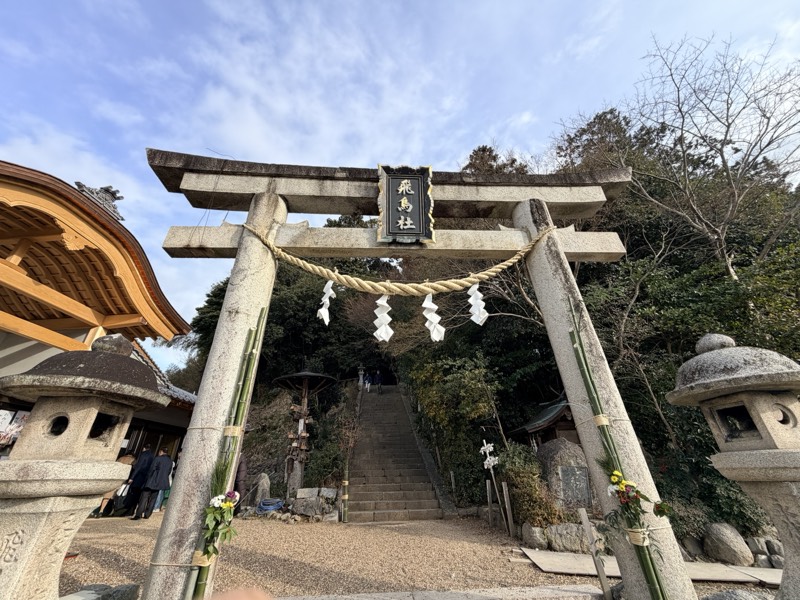
On the first Sunday of February, the grounds of Asuka-niimasu Shrine fill with people for a festival in which a tengu (long-nosed goblin) spanks visitors on the bottom, ploughs a rice field and finally acts out a married couple's lovemaking.