
Home/Columns/Where Japan as a State Began: The 19 Sites of the Asuka-Fujiwara World Heritage Property
Published
It was inscribed on 26 July 2026. All that was chosen were the remains of palaces, temples and tombs, and most of them lie underground. What these 19 sites show is the hundred-odd years in which the institutions of the Japanese state took shape.
On 26 July 2026, "Asuka-Fujiwara: Archaeological Sites of Japan's Ancient Capitals and Related Properties" was inscribed on the World Cultural Heritage list. Nineteen sites spread across Asuka Village, Kashihara City and Sakurai City are inscribed together as a single property.

Unlike shrines, temples or castles, these are not places where buildings survive. Of the 19, about the only one with a building standing is Asuka-dera Temple; the rest are foundation stones, platforms or flat ground among the rice fields.
An information board puts it this way: "The 19 component parts are preserved in good condition underground." It is a heritage that assumes you will not see it.
So what were these 19 sites chosen for?
"They bear witness to the process by which a centralised state was born and established in the Japanese archipelago." That is the claim this property makes.
From the late 6th to the early 8th century, two successive palace-capitals were placed in two neighbouring areas, Asuka and Fujiwara: the Asuka capital from 588 to 694, and the Fujiwara capital from 694 to 710. The first represents the "birth" of the centralised state, the second its "establishment".
In other words, it uses land and ruins to show the hundred-odd years in which the institutions of one state took shape.
The 19 sites fall into just three categories: palace and government office sites, Buddhist temple sites, and tombs.
These three were indispensable for governing a state in ancient East Asia: a place to conduct government, a place of prayer to protect the state, and a place to bury those who ruled. Without any one of them, the shape of the state could not stand up.
That is why no scenic spots or old highways are included. Being limited to three kinds is itself the argument this property makes.
Before Asuka, the sovereign's palace moved to a new location with every new reign. Because the residence kept moving, political continuity could not be maintained, and nothing like a palace-capital took shape.
At the Asuka Palace Site, four palaces were built in the same position, one on top of another, between 630 and 694. Rebuilding on the same spot means that this place had become fixed as the place where power gathered.
Spaces for government and ceremony were added to the palace, and facilities handling the practical work of government were placed around it: the Asuka Palace Garden Site, the Asuka Mizuochi Site and the Sakafuneishi Site. A garden, a water clock, a place of ritual. Functions were added with the palace at the centre.

Fujiwara-kyō, to which the capital moved in 694, was Japan's first full-scale capital laid out on a grid of streets, and the capital area was about 5 km square. At its centre stood the Fujiwara Palace.
The palace precinct was about 1 km square, surrounded by a great wall pierced by twelve gates. At its centre stood the Daigokuden (Great Hall of State), built in the Chinese palace style, and the Chōdōin (state halls compound) and government offices were gathered inside the palace. A system placing the sovereign at the centre of the social order took shape in the arrangement of buildings.
Buddhism reached the archipelago in the middle of the 6th century. Born in India, it arrived by way of China and the Korean peninsula.
Asuka-dera was the first full-scale temple built in Japan. And building this temple was what set off the serious construction of a palace-capital in the Asuka basin.

After that, members of the royal family and clans built temples in their own territories in and around the basin: Tachibana-dera, Yamada-dera, Kawara-dera, Hinokuma-dera. The information board describes them as "symbols of authority replacing the building of kofun (ancient burial mounds) in the previous age". The means of displaying power shifted from tombs to temples.
When the capital moved to the Fujiwara Palace, temples of a different character appeared: state temples, intended to protect the nation through Buddhism. Two were placed within the city plan of Fujiwara-kyō as a whole. At Daikandaiji, a nine-storey pagoda, the symbol of state Buddhism, was newly adopted; at Moto-Yakushiji, a twin-pagoda layout with two pagodas side by side.
Until the 6th century, tombs expressed the structure of power through fixed shapes, typified by the keyhole-shaped tomb, and differences in size. This was a method that developed independently in the Japanese archipelago.
In the Asuka capital, this changed. Square tombs, influenced by China, were adopted for powerful figures. At the same time, because building temples had become the way to display authority, tombs shrank in scale and fewer were built. The Ishibutai Kofun and the Shōbuike Kofun date from this period.

And in this period a tomb shape unique to Japan was born: the octagonal tomb. The Kengoshizuka Kofun is an example.
In the Fujiwara capital, the shape of the tomb itself became a ranking. At the top were octagonal tombs (the Mausoleum of Emperor Tenmu and Empress Jitō, and the Nakaoyama Kofun), and next came round tombs (the Kitora Kofun and the Takamatsuzuka Kofun). Who stood above whom was made visible in the shape of the mound.
These tombs show strong East Asian influence: the ideas of feng shui, hanchiku (a technique of ramming earth in layers), and murals painted in the stone chambers.
Twelve from the Asuka capital (588–694): the Asuka Palace Site, the Asuka Palace Garden Site, the Asuka Mizuochi Site, the Sakafuneishi Site, the Asuka-dera Temple Site, the Tachibana-dera Temple Site, the Yamada-dera Temple Site, the Kawara-dera Temple Site, the Hinokuma-dera Temple Site, the Ishibutai Kofun, the Shōbuike Kofun and the Kengoshizuka Kofun.
Seven from the Fujiwara capital (694–710): the Fujiwara Palace Site, the Daikandaiji Temple Site, the Moto-Yakushiji Temple Site, the Mausoleum of Emperor Tenmu and Empress Jitō, the Nakaoyama Kofun, the Kitora Kofun and the Takamatsuzuka Kofun.
The Yamada-dera Temple Site is in Sakurai City; the Fujiwara Palace Site, the Daikandaiji Temple Site, the Moto-Yakushiji Temple Site and the Shōbuike Kofun are in Kashihara City. You will need to venture beyond the village too.
Most of the 19 sites lie under the ground. Many of them, when you visit, are nothing but grass and an information board.
But if you know what lies beneath your feet, the same patch of grass looks different. Here four palaces stood one on top of another. Here a nine-storey pagoda rose. Here an octagonal mound was built.
Being able to walk around thinking such thoughts may be the biggest thing the inscription has changed.
RELATED SPOT
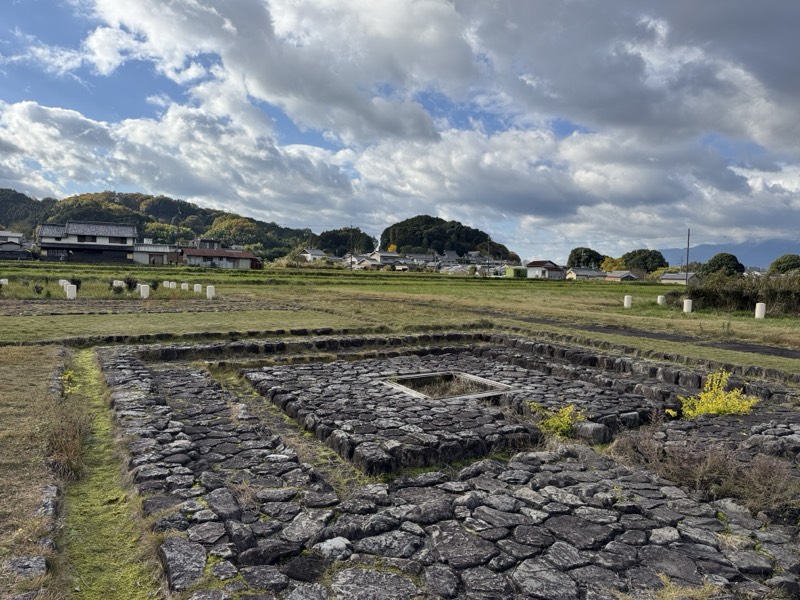
飛鳥宮跡(伝 飛鳥板蓋宮跡)
The political heart of Asuka, where several palaces were built one on top of another.
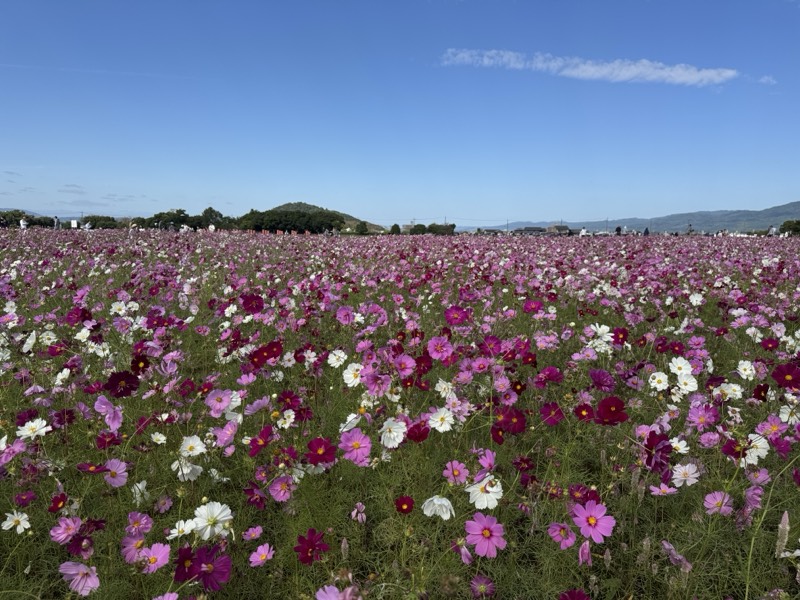
藤原宮跡
The heart of Japan's first full-scale planned capital, also known for its seasonal flower fields.
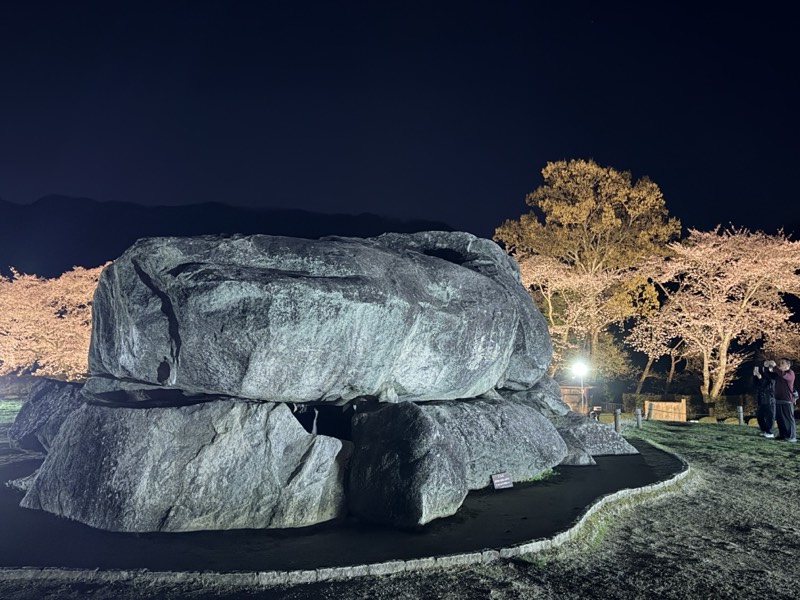
石舞台古墳
One of the largest stone burial chambers in Japan, its giant boulders left bare to the sky. The image most people picture when they think of Asuka.
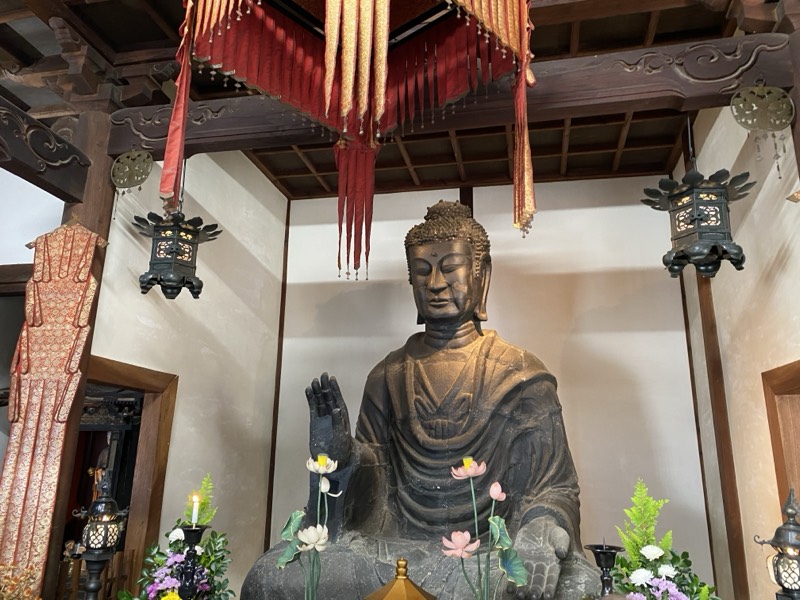
飛鳥寺・蘇我入鹿首塚
Japan's first full-scale Buddhist temple. The Great Buddha of Asuka still sits on the spot where it was made, 1,400 years ago.
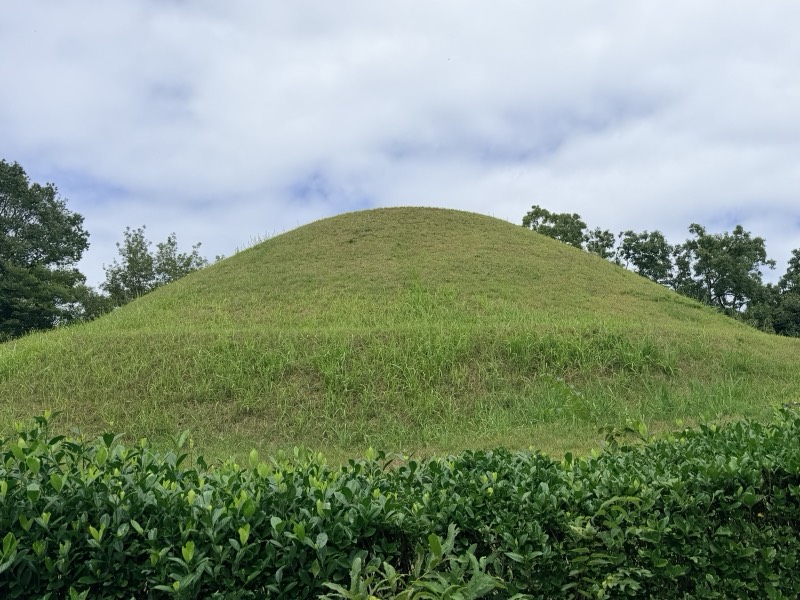
高松塚古墳
A round burial mound where brilliantly coloured paintings of court ladies were found: the defining archaeological discovery of post-war Japan.
RELATED COLUMN
Asuka-Fujiwara World Heritage: All 19 Component Sites and How to Visit Them, with Half-Day, One-Day and Two-Day Routes"Asuka-Fujiwara" was inscribed on the World Heritage List in 2026. We list all 19 component sites with their…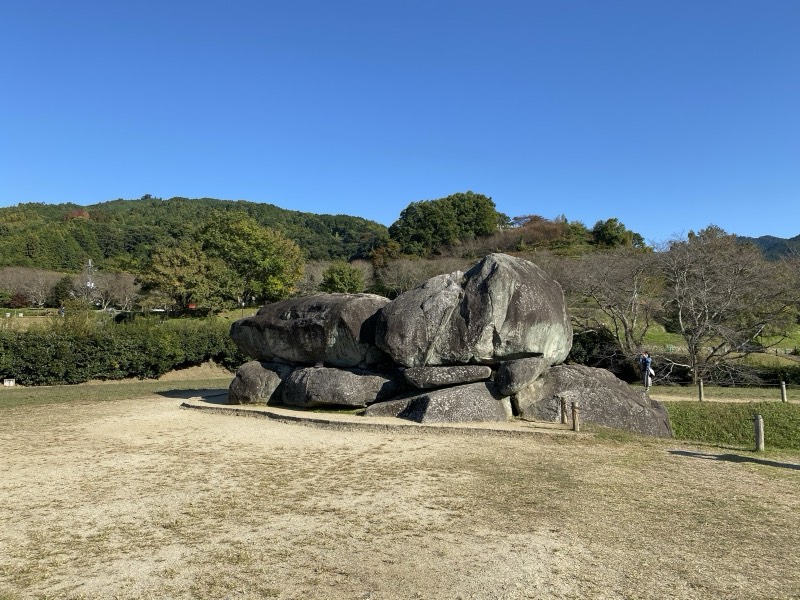 Why Did People Stop Building Kofun?For more than three hundred years, burial mounds kept growing larger. During the 7th century they shrank, and…
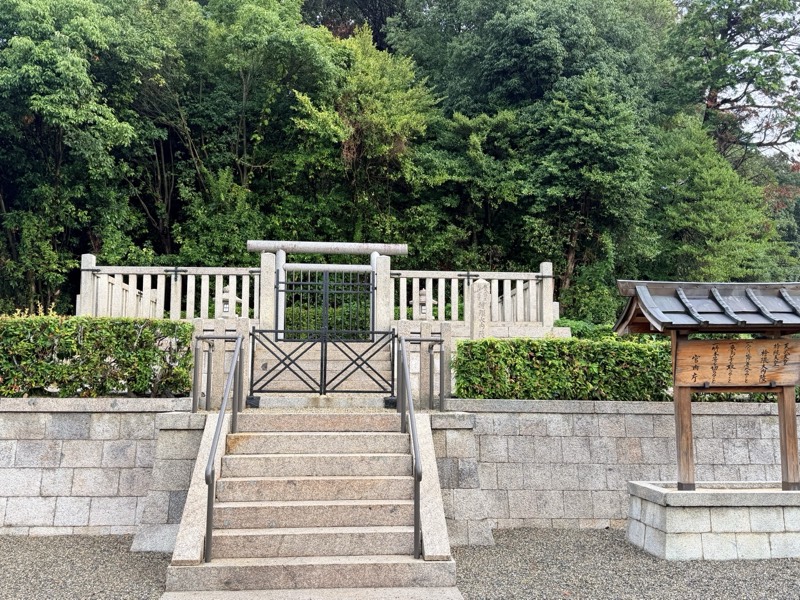 A Century of Women Rulers: Empress Jitō and East Asia in Her TimeIn 690, the year Empress Jitō took the throne in Japan, Wu Zetian became emperor in Tang China. Half a…