
Published
In 690, the year Empress Jitō took the throne in Japan, Wu Zetian became emperor in Tang China. Half a century earlier, Silla in Korea had also had a queen. Why did female rulers follow one another in 7th-century East Asia?
In the first month of 690, Empress Jitō took the throne. Four years had passed since the death of her husband, Emperor Tenmu, years in which she had governed while still empress consort.
In the 9th month of the same year, Wu Zetian ascended the throne as emperor in Tang China. She changed the name of the dynasty from Tang to Zhou and styled herself the Holy and Divine Emperor. She is the only woman in Chinese history ever to become emperor.

In two countries separated by sea, women reached the top in the same year. That was a coincidence. But look across East Asia in this period and it becomes clear that it was not an isolated event.
Let us line them up.
Empress Suiko (Japan, 592–628), Queen Seondeok (Silla, 632–647), Empress Kōgyoku (Japan, 642–645), Queen Jindeok (Silla, 647–654), Empress Saimei (Japan, 655–661; Empress Kōgyoku taking the throne a second time), Wu Zetian (Tang, 690–705), Empress Jitō (Japan, 690–697).
Over a little more than a hundred years, female rulers followed one another in three states: Japan, Silla and Tang. And the first was Japan. Empress Suiko took the throne in 592, forty years before Queen Seondeok of Silla and nearly a century before Wu Zetian.
But the circumstances in which they came to the throne were completely different in each country. It looks like the same phenomenon, but what lay inside it was not.
Silla had a strict system of hereditary rank, the bone-rank system. Only the highest bloodline, the seonggol or "sacred bone", could become king.
When King Jinpyeong died in 632, there was no male of sacred-bone rank. So his daughter took the throne: Queen Seondeok, the first queen regnant on the Korean peninsula.
The next ruler, Queen Jindeok, was also a sacred-bone woman. When she died in 654, the sacred-bone line died out. From then on, kings came from the rank below, the jingol or "true bone".
In other words, Silla's queens were a product of the system. The bloodline requirements were so strict that when the males ran out, there was no choice but for a woman to rule.
Wu Zetian first entered the harem of Emperor Taizong, and then became empress consort to the next emperor, Gaozong. When Gaozong fell ill, she governed in his place, and after her husband's death she set up her own sons as emperor and deposed them one after another.
Finally, in 690, she became emperor herself. She brought the Tang dynasty to a temporary end and founded a new dynasty, Zhou.
It was neither bloodline nor a stopgap. It was the result of taking the throne by her own strength. In 705, while lying ill, she was forced to abdicate, and died that same year. The Tang dynasty was restored.
Japan's female sovereigns were at first largely stopgaps.
Empress Suiko took the throne to settle the turmoil after Emperor Sushun was assassinated. Empress Kōgyoku took the throne when no successor had been decided after Emperor Jomei's death. Both were in the position of holding the throne until the next generation was settled.

Empress Jitō was different.
Emperor Tenmu died in 686. Jitō did not take the throne, but governed as empress consort, an arrangement called shōsei (ruling without formal enthronement). This lasted four years.
During that time she carried on the work Tenmu had begun. In 689 she put into effect the Asuka Kiyomihara Code, the first coherent attempt to set out the running of the state in law.
After taking the throne in 690, she moved the capital to Fujiwara-kyō in 694. It was Japan's first full-scale capital laid out on a grid of streets, with the palace at its centre. Tenmu conceived it, and Jitō completed it.

In 697 she handed the throne to her grandson, Emperor Monmu, and became daijō tennō (retired sovereign). She was the first to give up the throne while still alive, and the first to remain as retired sovereign afterwards. Jitō created a system that would later become standard in Japan.
She did not just hold the throne as a stopgap; she set the system in motion herself, prepared the next stage and then stepped down. That is Jitō's place among Japan's female sovereigns.
There is no clear answer. Since circumstances differed in each of the three countries, no single cause can explain it.
There is, however, a common background. In 7th-century East Asia, every state was in the middle of rebuilding its institutions. It was the period when the Tang was completed as an empire governed by ritsuryō (law codes), Silla was moving towards unifying the peninsula, and Japan was trying to assemble a centralised state.
When an old order is shaken, room opens up for other principles, such as bloodline or ability, to come into play. Perhaps it was in that gap that women came to the throne.
And none of the three simply sat on the throne. Wu Zetian expanded the imperial examinations and changed where officials were drawn from; Queen Seondeok is said to have built the Cheomseongdae observatory; Jitō put the code into effect and moved the capital. At a time when institutions were changing, they were the ones changing them.
Empress Jitō died in 703. She was the first Japanese sovereign to be cremated, and her ashes were placed in an urn and buried in the same tomb as her husband, Emperor Tenmu.
That tomb is the Noguchi Ōbo Kofun (kofun: ancient burial mound). Its mound is octagonal, a shape reserved for sovereigns alone. Two sovereigns in a single tomb is without parallel.
She carried on her husband's work, completed it, and sleeps in the same place. In Asuka, this is still where you can meet Empress Jitō.
RELATED SPOT
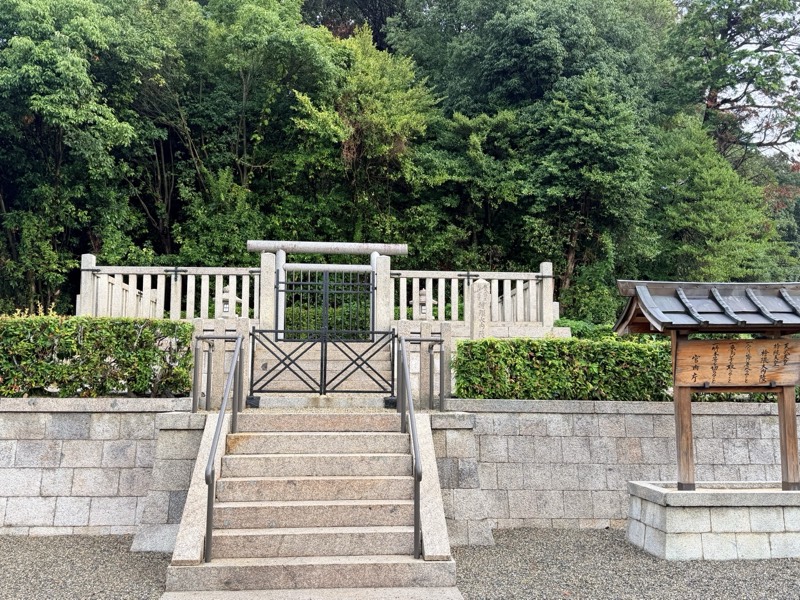
天武・持統天皇陵
One of the few octagonal imperial tombs whose occupants can be confirmed from written records.

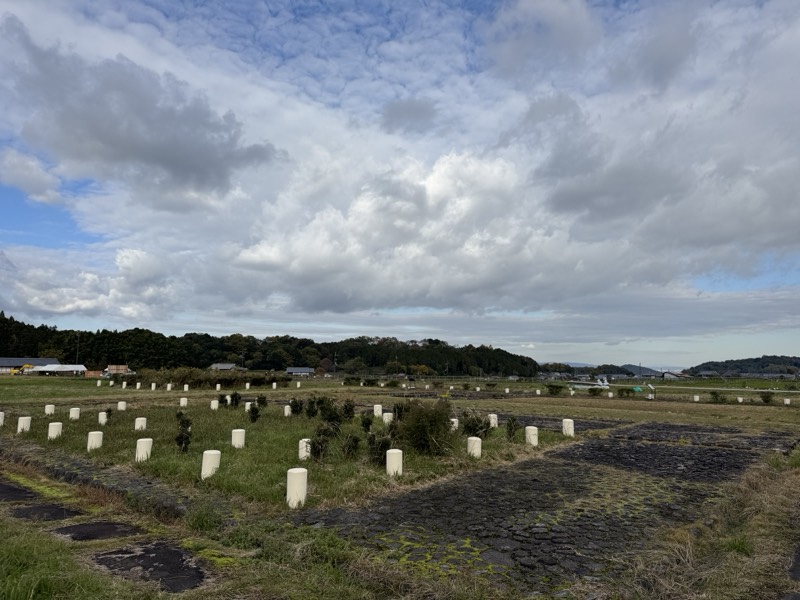
藤原宮跡
The heart of Japan's first full-scale planned capital, also known for its seasonal flower fields.
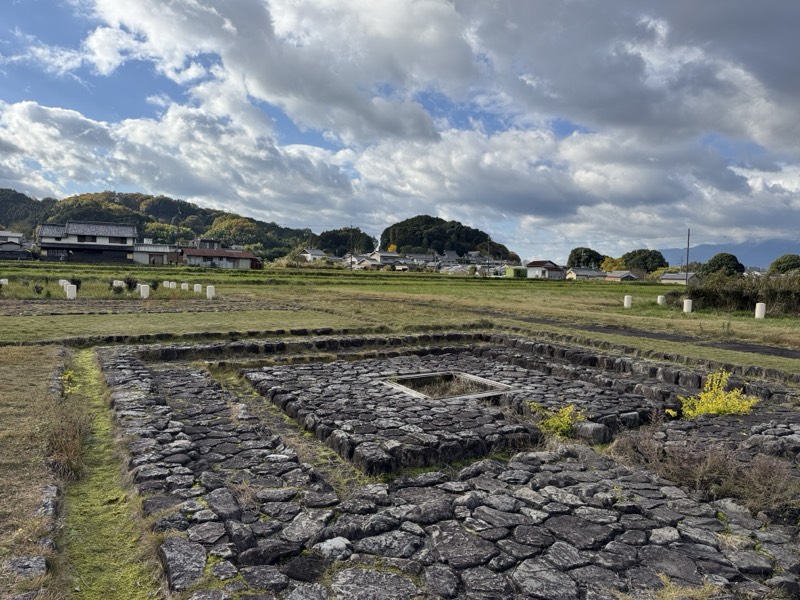
飛鳥宮跡(伝 飛鳥板蓋宮跡)
The political heart of Asuka, where several palaces were built one on top of another.
RELATED COLUMN
 Whose Successor Was Empress Jitō? Tenmu's Empress, and Tenchi's DaughterAs the empress who completed the ritsuryō state (a state governed by law codes), she is usually spoken of in…No Longer from Brother to Brother: Succession through the Direct LineIn ancient Japan the throne often passed from elder brother to younger. One attempt to draw a line from…Was Emperor Tenmu Really the Younger Brother? Prince Aya, the Name That VanishedBefore she married Emperor Jomei, Empress Kōgyoku had already borne a son: Prince Aya (Aya no Miko). The…